




Skip to content
JoruJoru
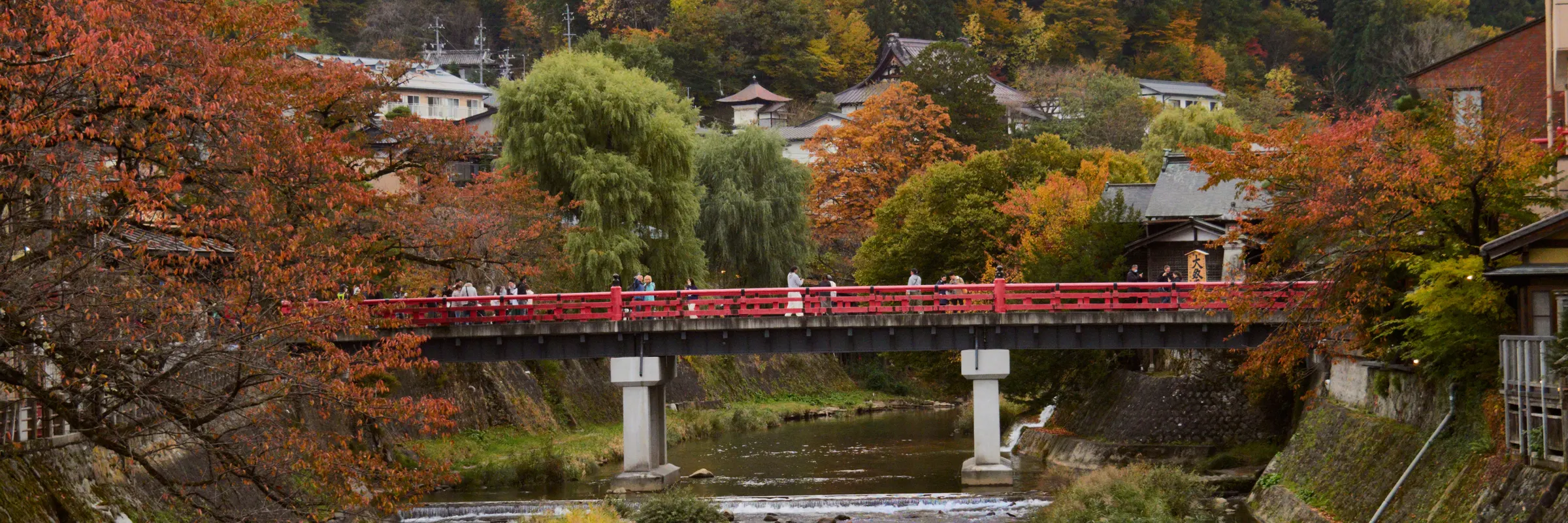
Takayama: The red Nakabashi bridge over the Miya River in autumn

Hida, Japan

Takayama: how many days you need and the best months to go

Photo: lumoplank · CC0

Takayama grew rich on timber and carpentry in a valley so cut off by mountains that it developed its own way of building, cooking and celebrating. Its old merchant streets, lined with low wooden houses, sake breweries and shops, are among the best preserved in Japan, and twice a year its festival rolls out floats so elaborate that they are counted among the finest in the country. The town itself is small and easy. The planning problem is everything around it: one railway line, buses across the mountains to Shirakawa-gō and Kanazawa, a national park that closes for the winter, and a route that only works if it is planned as a route.

Short answers

What people ask before booking

How many days do you need in Takayama?

Takayama needs two days: one for the morning markets, the old merchant streets and the open-air farmhouse museum, and one for Shirakawa-gō or the hot-spring villages and ropeway of Okuhida. Add a third to do both. The festival days, the fourteenth and fifteenth of April and the ninth and tenth of October, sell out months ahead.

What is the best month to visit Takayama?

April and May — The spring festival, cherry blossom and fresh green. October and November — The autumn festival and the colours.

Work out how many hours you will have in Takayama on your dates
When to go, and what each month costs you

Takayama sits in a mountain valley, so it is colder than the coasts in every season: winters of frost and snow, cool spring and autumn nights, and summer days that are hot while the evenings cool. The two festivals fix the busiest days of the year, on the same dates every year, and the mountain roads around the town decide what is open.

  1. January: Worth it, but
  2. February: Worth it, but
  3. March: Worth it, but
  4. April: Go now
  5. May: Go now
  6. June: Worth it, but
  7. July: Worth it, but
  8. August: Worth it, but
  9. September: Worth it, but
  10. October: Go now
  11. November: Go now
  12. December: Worth it, but
  • April and May

    Go now

    The spring festival, cherry blossom and fresh green

    The spring festival falls on the fourteenth and fifteenth of April. The cherry trees bloom later than in Tokyo or Kyoto, usually around the middle or end of April, and the dates move every year. Nights are still cold, and snow lingers in the mountains, where Kamikochi opens in the middle of the month. Golden Week, at the start of May, fills the town.

  • October and November

    Go now

    The autumn festival and the colours

    The autumn festival falls on the ninth and tenth of October. The leaves turn on the hills and in the mountains from late October into November. Days are clear and crisp, and the first frosts come by November; the mountain buses thin out and Kamikochi closes in mid-November.

  • June and July

    Worth it, but

    Green valleys and the rainy season

    The rainy season brings frequent rain in June and into July, and the valleys are at their greenest. Crowds are lighter. By late July the days are hot, and the mountain paths are clear of snow.

  • August and September

    Worth it, but

    Summer in the mountains, and typhoons

    Hot days in town and cooler air higher up: this is the season for the Alps, the ropeway and Kamikochi. The Obon holiday in mid-August fills everything. September brings typhoons, which can close the railway and the mountain roads for a day or more.

  • December to March

    Worth it, but

    Snow on the old town, and real cold

    Cold, with frost on most nights and snow on the roofs of the old town, which is beautiful and quiet. Winter tyres are needed on every road, buses run fewer services, and Kamikochi is closed. Shirakawa-gō under snow is magnificent; its evening illuminations run on a few dates and need booking. March is still winter here.

What to pack for Takayama, month by month

How many days Takayama needs

One full day covers the town: the morning markets, the old merchant streets, the shogunate's government house, the hall where the festival floats are kept, and in the afternoon the open-air museum of farmhouses on the hill. The town is ten minutes' walk across, and the day goes slowly because it is meant to.

The second day is for what surrounds it: Shirakawa-gō, the village of thatched farmhouses, under an hour away by bus; or the hot-spring villages of Okuhida and the ropeway into the Northern Alps; or, from mid-April to mid-November, the mountain valley of Kamikochi. A third day lets you do two of these without hurrying. One night is too short for a place that is hard to reach and best in the early morning.

How the town is arranged

Takayama is a small grid on the flat floor of a valley, with the Miya River running through it. The station and the bus terminal are side by side on the west; the old town is a ten-minute walk east, across the river, and the temples climb the wooded hill beyond it. Everything a visitor needs is within half an hour on foot.

  • Sanmachi — the three parallel streets of the old merchant town: dark wooden houses, sake breweries with balls of cedar hanging over the door, shops and cafés.
  • The Miya River — the morning market along its east bank, and the red-lacquered bridge that is the town's picture.
  • Takayama Jinya — the government house of the shogunate, by the second morning market, south of the old town.
  • Higashiyama — the temple walk along the foot of the eastern hills, quiet and wooded.
  • Hida no Sato — the open-air museum of old farmhouses, on a hill a short bus ride west of the station.

Where to stay, and what each area costs you

Takayama is the place in this part of Japan to stay in a ryokan, a traditional inn with dinner and breakfast served in the house, and much of the choice is between an inn and a hotel. Ryokan serve dinner at a fixed early hour, and in a town where restaurants close early that decides the evening.

Rooms fill on the festival days in April and October, in the cherry blossom and autumn colour, and in the Golden Week and Obon holidays. On those dates book months ahead or stay in a town along the railway.

AreaWho it suitsThe catch
Around the stationAnyone on a route: trains and every bus out leave from beside the station, and the old town is ten minutes' walk.Plain modern hotels, and the streets around them are the least pretty part of town.
The old town and the riverInns and small hotels in wooden houses, with the markets and the merchant streets at the door.Few rooms, and the streets go dark and silent early, with almost every restaurant closed.
Okuhida hot-spring villagesOpen-air baths, the Northern Alps outside the window and the ropeway nearby.About an hour by bus from town, and dinner is whatever the inn serves.

Compare these areas against your priorities

Getting in and out: one railway and the mountain buses

One railway line serves Takayama. The limited express from Nagoya takes about two and a half hours through the river gorges, with a stop at the hot-spring town of Gero; one train a day runs through from Osaka and Kyoto. The same line continues north to Toyama, on the bullet-train line to Tokyo and Kanazawa. Landslides and floods close parts of it from time to time, so check it before a fixed connection.

Buses do the rest, and they are the better way west. They run from the terminal beside the station to Shirakawa-gō and on to Kanazawa, to the Okuhida villages and the ropeway, to Matsumoto in Nagano over the mountains, and to Tokyo. That makes the classic route a line, not a loop: Kanazawa, Shirakawa-gō, Takayama and then Nagoya or Matsumoto, or the same in reverse.

  • Book the bus to Shirakawa-gō and Kanazawa. Seats sell out in season and walk-up places are not guaranteed.
  • A car makes sense here more than almost anywhere in Japan: for the Okuhida villages, the mountain roads and Shirakawa-gō. In winter only with snow tyres and experience.
  • Kamikochi is closed to private cars all year and closed entirely in winter. Buses run from Takayama and from the car parks at its edge, from mid-April to mid-November.
  • The town itself needs no transport. A bicycle helps for Hida no Sato and the temple walk.

The festival, the markets and the mountains

The Takayama Festival is held twice a year, on fixed dates: the fourteenth and fifteenth of April and the ninth and tenth of October. Floats from the Edo period, carved, lacquered and hung with silk, are drawn through the streets; some carry mechanical puppets that perform on the roof; at night they are lit with lanterns. It is listed by UNESCO with the other great float festivals of Japan. The rest of the year, several of the floats stand in a hall by the town's main shrine.

  • The morning markets — two of them, every morning: along the river and in front of the government house. Pickles, vegetables, miso, crafts and grilled snacks. They are over by midday.
  • Takayama Jinya — the only surviving regional government office of the shogunate, with its tatami halls, storehouses and interrogation room.
  • The sake breweries — several in the old streets offer tastings; the ball of cedar over the door is green when the new sake is pressed and turns brown as it ages.
  • Hida no Sato — farmhouses moved from the region's villages, including steep thatched ones like those of Shirakawa-gō, around a pond. Quiet, and good in any weather.
  • Shirakawa-gō — the World Heritage village of thatched farmhouses, under an hour away by bus. Go on an early bus, before the tour coaches.
  • Okuhida and the ropeway — hot-spring villages in the valleys below the Northern Alps, and a two-stage ropeway with double-decker cabins that climbs to a viewpoint over the peaks.
  • Hida-Furukawa — a smaller old town fifteen minutes north by train, with carp in its canals and fewer visitors.

How eating works here

Takayama's food is mountain food: beef from cattle raised in the region, river fish, mountain vegetables, miso and pickles to see the valley through winter, and sake from rice grown and water drawn in the same valley. The town also eats on the street: skewers of grilled beef, rice cakes and dumplings sold from the shopfronts of the old town to people walking past.

The town keeps early hours. Restaurants serve lunch, close in the afternoon and finish dinner early, and many shut entirely on one day a week. If you are not eating at your inn, book dinner or eat early.

  • Eat your way along the old town, but finish each thing by the stall that sold it: many shops ask you not to walk off eating.
  • The beef is expensive in a restaurant and cheap on a skewer. The grilled skewers and the beef sushi sold in the old streets are the easy way to try it.
  • At an inn, dinner is several courses and arrives at the time you agree on arrival. It usually includes the beef, cooked on a magnolia leaf.
  • Tipping is not done, at inns or anywhere else.

Where to eat in Takayama, and what to order

Takayama's dishes are those of a mountain valley that had to feed itself: beef, miso, rice cakes and noodles, and the sake to go with them. Most of what is worth eating is cheap and eaten standing, from the shopfronts of the old town and the stalls of the morning markets. The beef is the exception, and even that can be had on a skewer.

  • Hida beef

    What to order

    The beef the region is known for

    Marbled beef from black cattle raised in the prefecture, served grilled, as a steak, in a hot pot or as raw slices on sushi rice seared with a torch. The skewers and the beef sushi sold in the old town are the inexpensive way to taste it; at a restaurant, a small portion of grilled beef is enough. At an inn it usually comes cooked on a leaf with miso.

    Check it on Wikidata
  • Takayama ramen

    What to order

    The local bowl, called by an older name

    Thin curly noodles in a clear, dark soy broth with a few slices of pork, onion and bamboo shoot. Locals call it by the older name for ramen, Chinese noodles, and it is lighter and simpler than the pork-bone bowls of the big cities. The ideal lunch on a cold day, and a quick one.

    Check it on Wikidata
  • Mitarashi dango

    What to order

    Rice dumplings that are not sweet

    Small rice dumplings on a skewer, grilled and brushed with soy sauce. Elsewhere in Japan they come in a sweet sticky glaze; in Takayama the glaze is plain soy, savoury and a little smoky, which surprises everyone who has eaten them elsewhere. Sold hot from the windows of the old town.

    Check it on Wikidata
  • Miyagawa Morning Market

    Market

    A morning walk along the river stalls

    Stalls along the east bank of the river every morning, run by farmers and their families: pickles, vegetables, miso, apples, crafts and small things to eat. Arrive early, buy a snack, and walk on to the old town before the tour groups arrive. A second, smaller market stands in front of the government house.

    Check it on Wikidata
  • Hōba miso

    What to order

    Miso grilled on a magnolia leaf

    A dried magnolia leaf laid over a small charcoal brazier, spread with miso, spring onion and mushrooms, and grilled at the table until it bubbles, sometimes with beef added. It is the region's oldest table dish, eaten with rice, and it is served at breakfast in many inns. The smell is the smell of a Hida inn in the morning.

    Check it on Wikidata
  • Goheimochi

    What to order

    The mountain snack on a flat stick

    Crushed rice pressed onto a flat wooden stick, grilled, and brushed with a sweet sauce of miso or soy, often with walnut or sesame. It is a snack of the mountain villages of central Japan, made to be eaten outdoors, and it is sold in the old town and at Shirakawa-gō. Filling: one is a meal between meals.

    Check it on Wikidata

Things that change the trip

  1. Plan the route before the town. Decide whether you arrive from Kanazawa or from Nagoya and leave the other way.
  2. Book the bus to Shirakawa-gō and the inn as soon as your dates are fixed, and months ahead for the festival days.
  3. Go to the morning markets early; by midday they have packed up.
  4. Stay two nights. One night leaves you no early morning, and the early morning is when the old town is at its best.
  5. Eat early or at your inn. Most restaurants have stopped serving by the time a city would be starting.
  6. Check whether Kamikochi is open before planning it: the road is closed from mid-November to mid-April.

Plan Takayama as a route through the Alps

A trip of more than three days, or one that joins Kanazawa, Shirakawa-gō, Takayama and Nagoya with the buses and trains between them, is what Premium is for. The free version covers one destination of up to three days.

Destinations