




Skip to content
JoruJoru
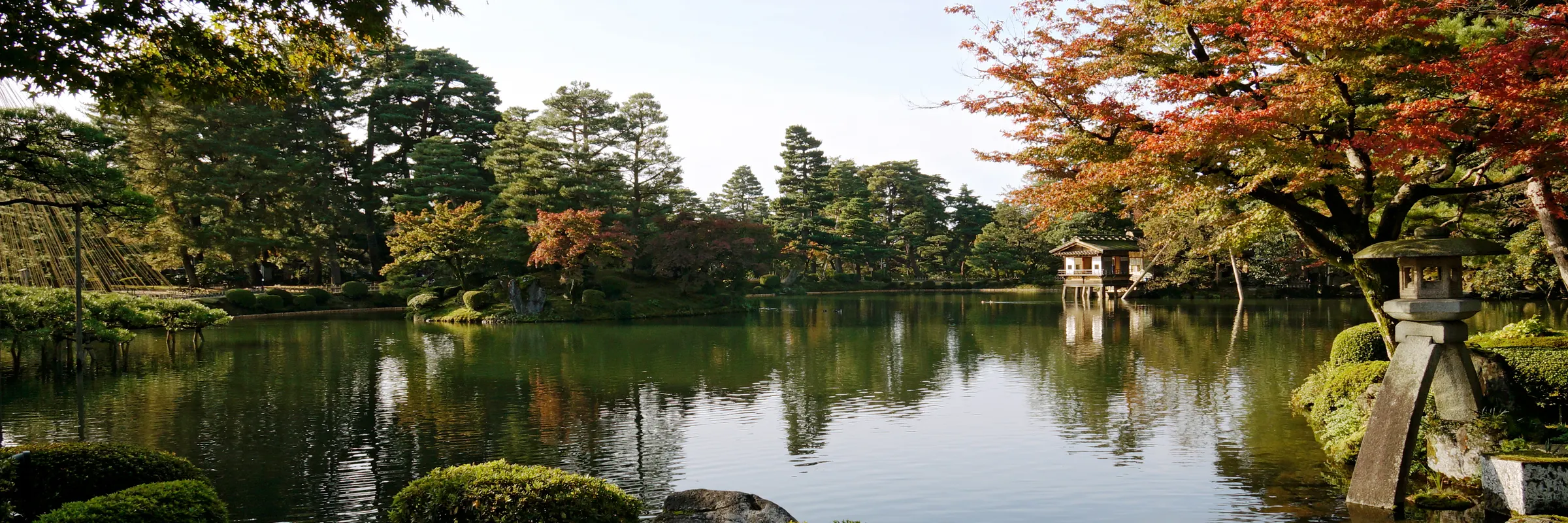
Kanazawa: The Kasumiga-ike pond in Kenroku-en in autumn, with the two-legged stone lantern

Hokuriku, Japan

Kanazawa: how many days you need and the best months to go

Photo: 663highland · CC BY 2.5

Kanazawa is what a Japanese castle town looks like when nothing destroyed it. For nearly three centuries it was the seat of the Maeda family, the richest lords in Japan after the shoguns themselves, and they spent their money on gardens, crafts, tea and theatre. The city was never bombed in the war, so their streets survived: the teahouse districts, the samurai lanes behind their earth walls, one of the three great gardens of Japan. Since the bullet train arrived it is two and a half hours from Tokyo, and it is often squeezed into one night between Tokyo and Kyoto. It deserves two, and an umbrella for both.

Short answers

What people ask before booking

How many days do you need in Kanazawa?

Kanazawa needs two days — the garden of Kenroku-en and the castle park, then the teahouse district, the samurai quarter and the fish market — and a third for the thatched village of Shirakawa-gō, which also leads on to Takayama. Book the bus there ahead, and pack an umbrella in every season.

What is the best month to visit Kanazawa?

April and May — Cherry blossom, then the freshest weeks. October and November — Autumn colour, and the ropes go up on the pines.

Work out how many hours you will have in Kanazawa on your dates
When to go, and what each month costs you

Kanazawa is wet in every season and wettest in winter, when cold air off the Sea of Japan brings rain, sleet and snow on most days. A local saying tells you to forget your lunch before your umbrella. Spring and autumn are the drier, milder windows, and winter has a beauty, and a crab season, of its own.

  1. January: Worth it, but
  2. February: Worth it, but
  3. March: Worth it, but
  4. April: Go now
  5. May: Go now
  6. June: Worth it, but
  7. July: Worth it, but
  8. August: Worth it, but
  9. September: Worth it, but
  10. October: Go now
  11. November: Go now
  12. December: Worth it, but
  • April and May

    Go now

    Cherry blossom, then the freshest weeks

    The cherry trees in the garden and the castle park usually bloom in early April, for about a week, and the dates move every year. May is mild and green, with fewer wet days than almost any other month. The long holidays at the start of May fill the city, so book early for those days.

  • October and November

    Go now

    Autumn colour, and the ropes go up on the pines

    October is mild and settled. In November the maples in the garden turn and the gardeners tie the pines with ropes for the winter, the most photographed sight of the year. Showers become more frequent through November, and the crab season opens at the start of the month.

  • June and July

    Worth it, but

    Green gardens and the rainy season

    The rainy season brings frequent rain from June until mid-July, and the garden's moss and trees are at their greenest. Crowds are lighter. Late July turns hot and humid, and the summer begins.

  • August and September

    Worth it, but

    Hot days, then typhoon season

    August is hot and humid, with the Obon holiday in the middle of the month filling trains and hotels across Japan. September cools slowly and is the peak of the typhoon season, which can stop trains for a day. The city is green and its gardens are quiet.

  • December to March

    Worth it, but

    Snow on the garden, and the crab season

    Cold, grey and wet, with rain, sleet or snow on most days and short daylight. When snow does settle, the garden under its rope-tied pines is the image of the city, and winter is the season of crab and yellowtail. Wear waterproof shoes, check the weather before a trip into the mountains, and expect March to stay cold.

What to pack for Kanazawa, month by month

How many days Kanazawa needs

Two days cover the city at the pace it asks for. One for the garden of Kenroku-en, the castle park beside it and the contemporary art museum across the road, all within a few minutes of each other; one for the teahouse district of Higashi Chaya, the samurai quarter of Nagamachi and the fish market of Ōmichō. Each half is compact, and the walk between them crosses the centre.

The third day is for Shirakawa-gō, the village of steep thatched farmhouses in the mountains to the south, about an hour and a quarter by bus. It is also the natural link to Takayama, which makes Kanazawa the hinge of the classic route through the Japan Alps rather than a dead end off the Tokyo–Kyoto line.

How the city is arranged, around the castle hill

Kanazawa sits between two rivers, the Sai and the Asano, with the castle on the rise between them. The sights form a ring around the castle and the garden, and none of them is more than half an hour's walk from the others. The station is on the edge of this ring, which is why the first thing every visitor does is take a bus into it.

  • Kenroku-en and the castle park — the garden and the reconstructed gates and turrets of the castle, side by side on the hill in the middle of the city.
  • Higashi Chaya and the Asano River — the largest of the three teahouse districts, two streets of wooden facades across the river to the east.
  • Nagamachi — the samurai quarter west of the centre: earth walls, narrow lanes, small canals and one family house open with its garden.
  • Kōrinbō and Katamachi — the commercial centre between them: department stores, the main bus stops, and the bars and restaurants of the evening.
  • Ōmichō and the station — the fish market halfway between the centre and the station, and the station itself, with its huge wooden gate.

Where to stay, and what each area costs you

The city is small and the buses are frequent, so the choice is about mornings and evenings. The station is easiest for arriving, leaving and the early bus to Shirakawa-gō; the centre is better for walking to everything; and the teahouse district is the prettiest place to wake up, if you can find a room in it.

Rooms fill in spring and autumn, during the cherry blossom in early April and the long holidays at the start of May, when the city is busier than its size suggests.

AreaWho it suitsThe catch
Around the stationShort stays and day trips: the bullet train, the airport buses and the buses to Shirakawa-gō all leave from here.A plain district of chain hotels; the sights are a bus ride or a long walk away.
Kōrinbō and the castle sideThe most central base: Kenroku-en, the art museum and Nagamachi on foot, and the main bus stops at the door.Department stores and office blocks; it is quiet at night.
Katamachi and Kigura-machiAnyone who wants the evening outside: the city's bars, izakaya and restaurants, a short walk from the garden.Noisy late at weekends, and the bar streets are not pretty by day.
Higashi Chaya and the Asano RiverOld wooden houses converted into guesthouses and rentals, in the most beautiful streets of the city.Few rooms, and the district empties in the evening, when most restaurants are elsewhere.

Compare these areas against your priorities

Getting there, and getting around without a subway

The Hokuriku bullet train links Kanazawa with Tokyo in about two and a half hours, and since 2024 it continues south-west to Tsuruga. From Kyoto and Osaka the limited express now stops at Tsuruga, where you change to the bullet train for the last stretch: one change, and a tighter connection to check. Komatsu airport, south of the city, is linked by bus.

The station's front is a huge wooden gate shaped like two hand drums under a glass dome, and it is worth stepping outside to see it before boarding the bus.

  • The city buses are the transport. Loop routes link the station with the main sights in both directions; a one-day bus pass pays for itself if you ride more than a few times.
  • Walking is the other half. The centre is compact and flat, and the walk from Kenroku-en to Higashi Chaya takes about a quarter of an hour.
  • The city has a bicycle-sharing scheme, and on a dry day it is the fastest way to link the samurai quarter, the market and the teahouses.
  • The bus to Shirakawa-gō should be booked. It runs from the station and is often full in season; reserve a seat as soon as your date is fixed.

The garden, the teahouses and the village in the mountains

Kenroku-en is one of the three great gardens of Japan, on the hill in the middle of the city. Its name means a garden that combines six qualities that were thought impossible to have together, among them spaciousness and seclusion. It changes completely with the season: plum and cherry in spring, irises along its streams in May, red maples in autumn, and in winter the pines held up by ropes tied from a central pole, which stops the snow from breaking their branches.

  • Kenroku-en — go at opening time, when it is quiet. The two-legged stone lantern beside the pond is the city's emblem.
  • Higashi Chaya — one teahouse is open as a museum, the others are shops, cafés and still, in a few cases, working teahouses where geisha entertain by invitation. Gold leaf is sold everywhere: almost all of Japan's comes from this city.
  • The 21st Century Museum of Contemporary Art — a round glass building with free areas and paid galleries; the swimming pool you can stand beneath works on timed entry, so book or arrive early.
  • Nagamachi — the samurai quarter, at its best in the late afternoon. The Nomura family house has a small garden that is one of the loveliest in the city.
  • Shirakawa-gō — the village of thatched farmhouses, a World Heritage Site, a day trip by bus that also works as a stop on the way to Takayama. It is crowded by midday; go early or stay overnight in one of the farmhouses.
  • The Noto Peninsula — the coast to the north was badly damaged by the earthquake of New Year's Day 2024. Rebuilding is under way and some places have reopened; check what is open before you go.

How eating works here

Kanazawa has the Sea of Japan on one side and the money of a great feudal court behind it, and it eats like it. The fish is the reason: the cold sea off the coast gives some of the best in Japan, and the market in the middle of the city is where it is sold. The other inheritance is refinement: the court cooking of the old domain, and a sweet-making tradition that places the city alongside Kyoto as one of the capitals of Japanese confectionery.

The rhythm is earlier than in a big city. Many restaurants close between lunch and dinner, the market's counters are busiest at lunch, and outside Katamachi the streets are quiet by nine.

  • The market counters queue at lunchtime. Go at opening or in the middle of the afternoon to sit down without waiting.
  • The seafood bowl is the market's dish: rice under raw fish, prawns, crab and roe. Look at the menu outside before you sit; quality and price vary a great deal between counters.
  • Winter is crab season. The snow crab caught off this coast comes in from early November, and the city's restaurants plan their winter menus around it.
  • Tea and a sweet in a teahouse is the local pause, in Higashi Chaya or in the garden itself.

Where to eat in Kanazawa, and what to order

Kanazawa eats from the cold sea and from an old court kitchen, and it does both well. The market is the place to start, and the city's own dishes — a duck stew, a curry, a ramen chain — are worth trying once each. Between meals, the sweets are a reason to come in themselves.

  • Ōmichō Market

    Market

    Fish from the cold sea, at the counter

    A covered market of fishmongers, greengrocers and small restaurants that has fed the city for about three hundred years. The counters inside serve bowls of rice heaped with the morning's fish, crab and roe, and the stalls grill scallops and oysters to eat standing. Come early or late: at lunchtime the queues fill the lanes.

    Check it on Wikidata
  • Jibu-ni

    What to order

    The dish of the old court

    Duck or chicken coated in flour and simmered in a sweet soy broth with wheat gluten, vegetables and a dab of wasabi, served in a deep lacquered bowl. It is the signature of the cooking of the old domain, and it appears in the set meals of the city's traditional restaurants rather than on its own.

    Check it on Wikidata
  • Kanazawa curry

    What to order

    The city's own curry

    A thick, dark curry sauce poured over rice, topped with a breaded pork cutlet and served with shredded cabbage on a stainless-steel plate, eaten with a fork. It is Kanazawa's everyday comfort food, and the local chains that serve it are found all over the city. Heavy, fast and very cheap.

    Check it on Wikidata
  • Hachiban Ramen

    Chain

    The ramen chain that grew up here

    A chain born in the region in the late 1960s, recognisable by the number eight on its bowls, serving ramen loaded with stir-fried vegetables and dumplings on the side. For most people from the region it is the taste of home, and it is the cheapest hot meal near any station in the area.

    Check it on Wikidata
  • Kaiten-zushi

    What to order

    Conveyor-belt sushi that is not a compromise

    Sushi on a moving belt, ordered from the passing plates or from the chef. In Kanazawa the local chains serve fish landed that morning on the coast, and the conveyor-belt restaurants are good enough that locals queue for them. Go before seven on a weekend evening, or expect a wait.

    Check it on Wikidata
  • Wagashi

    What to order

    Tea, and the sweets of a confectionery capital

    Small sweets of bean paste, rice and sugar, shaped and coloured for the season and served with green tea. The city's sweet makers worked for the court and the tea ceremony, and many of the old shops still trade. Try one in a teahouse of Higashi Chaya or in the garden, and buy dry sweets to take away: the fresh ones last a day.

    Check it on Wikidata

Things that change the trip

  1. Carry an umbrella every day, whatever the morning looks like.
  2. Book the bus to Shirakawa-gō as soon as your date is fixed, and take one of the first departures.
  3. Be in Kenroku-en at opening time. By mid-morning the tour groups arrive.
  4. Use the city bus pass; the station is too far from the sights to walk both ways every day.
  5. Plan Kanazawa with Takayama, not as a detour from Kyoto. The bus through Shirakawa-gō joins them in a day.
  6. Before going to the Noto Peninsula, check which places and roads have reopened since the 2024 earthquake.

Plan Kanazawa as part of the Alps route

A trip of more than three days, or one that joins Kanazawa, Shirakawa-gō and Takayama with the buses and trains between them, is what Premium is for. The free version covers one destination of up to three days.

Destinations