
Skip to content
JoruJoru
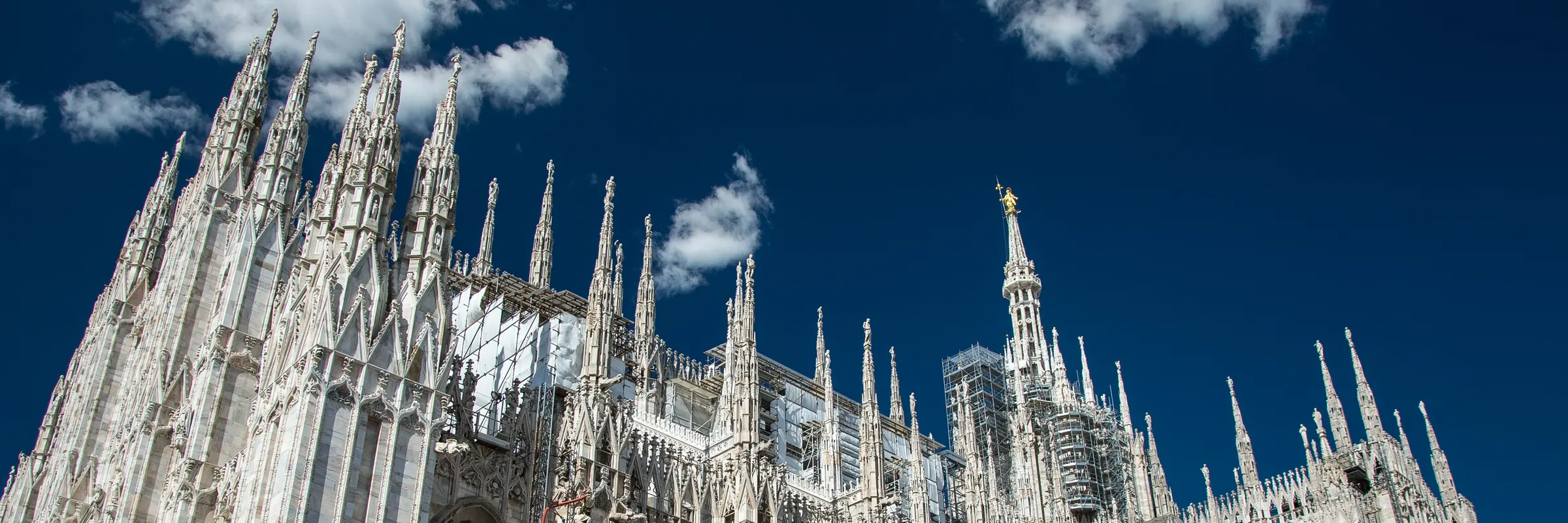
Milan: The spires of the cathedral, with the gilded Madonna on the tallest
Photo: kuhnmi · CC BY 2.0
Lombardy, Italy

Milan: how many days you need and the best months to go

Milan is the Italian city that does not perform for visitors. It is where the country works, and what it offers — a cathedral six centuries in the making, one painting on a refectory wall, the opera, the shops, the best-run transport in Italy — is spread through a place that would carry on without you. That makes it easy to use and slightly hard to read. The two things that go wrong are both about the calendar: the Last Supper sells out long before most people think of booking it, and the weeks of the design and fashion fairs multiply hotel prices without the visitor understanding why.

Short answers

What people ask before booking

How many days do you need in Milan?

Milan needs two days — the cathedral and its roof, the Last Supper, Brera and the canals — and a third for Lake Como or Bergamo, each about an hour away by train. Book the Last Supper weeks ahead, and avoid the design week in April and the fashion weeks, when hotel prices multiply.

What is the best month to visit Milan?

September and October — The city back at work, in mild weather. June — Long warm days before the heat.

Which months are worth avoiding in Milan?

August — Hot, and half closed.

Work out how many hours you will have in Milan on your dates

How many days Milan needs

Two days cover the city: the cathedral and its roof, the gallery beside it, the castle and the Brera picture gallery on one; the Last Supper, the basilica of Sant'Ambrogio, the canals at dusk and the new skyline on the other. It is a compact list, and the city is fast to cross.

The third day is what the city is best placed for. Milan is the rail hub of northern Italy: Lake Como is an hour away, Bergamo less, Turin and Verona about an hour by high-speed train. Many visitors treat the city as one night between an airport and the lakes, which is enough to see the cathedral and not enough to see why people choose to live here.

How the city is arranged, in rings

Milan is a wheel. The cathedral square is the hub, and the streets run out from it like spokes to gates that still give the districts their names. Two rings cross them: an inner one that follows the line of the medieval canals, filled in during the last century, and an outer one along the Spanish walls, of which only the gates remain.

Everything a first visit needs is inside or just outside the second ring, and all of it is flat. The centre holds the monuments; the life is in the ring of districts around it, each a few metro stops from the cathedral and from each other.

  • The centre — the cathedral, the glass-roofed gallery, the opera house, and the few streets of fashion houses known as the Quadrilatero.
  • Brera — just north of the centre: cobbled lanes, the picture gallery and the art academy, small restaurants and expensive quiet.
  • The Navigli — the two surviving canals in the south-west, lined with bars: the city's evening district, loud at night and calm on a Sunday morning.
  • Porta Venezia — east of the centre: Art Nouveau apartment buildings, a public garden, the long shopping avenue, and the city's most mixed bars and restaurants.
  • Porta Nuova and Isola — north, around Garibaldi station: the new glass towers, including the pair planted with trees, and behind them a former working district of bars and workshops.

Where to stay, and what each area costs you

Milan's hotels are priced for business travellers, so the usual logic is reversed: weekends are cheaper than weekdays, and August is the cheapest month of the year. The exception is the weeks of the big fairs, when prices across the city double or triple and rooms sell out months ahead.

The metro makes distance cheap. A hotel three or four stops from the cathedral costs much less than one beside it and loses you ten minutes. What you are really choosing is the neighbourhood you come back to in the evening.

AreaWho it suitsThe catch
The centre, around the cathedralA first visit of one or two nights. The cathedral, the gallery, the opera and the shopping streets are on foot.The most expensive rooms in the city, and streets that empty once the shops close.
BreraPretty lanes, the picture gallery, good restaurants, and a ten-minute walk to the cathedral or the castle.Small hotels at high prices, and little choice. Book early.
The NavigliThe evening at the door: canal-side bars, restaurants and a Sunday antiques market, with a metro and trams to the centre.Loud until late, especially at weekends, and crowded at aperitivo hour. Ask for a room away from the canal.
Porta VeneziaGood value on a metro line straight to the cathedral, with neighbourhood restaurants, bars and a park.The main avenue is busy and plain; the charm is in the side streets, and quality varies block by block.
Around the Central StationThe cheapest rooms and the best connections: airport trains and coaches, two metro lines and every long-distance train.Functional rather than pleasant, and the streets beside the station are uncomfortable late at night.

Compare these areas against your priorities

Three airports, the stations and the metro

Check which airport your ticket says. Linate is the city airport, a short metro ride from the centre. Malpensa, where most long-haul flights land, is far out to the north-west and linked by an airport train to two different stations. Bergamo, which the low-cost airlines sell as Milan, is another city, an hour away by coach; a railway to it has been under construction for years, so check whether it is running.

Trains matter as much as planes. High-speed trains from Rome, Florence, Venice and Turin end at the Central Station, a monument in itself; some use a second station, Garibaldi, and one of the two airport trains ends at a third, Cadorna. Know which station your train uses before you book a hotel near 'the station'.

  • The metro gates take a contactless bank card. Tap in and tap out with the same card and the system charges the right fare; no ticket is needed for an ordinary journey.
  • The old trams are transport, not an attraction. The wooden-benched cars from the 1920s run ordinary routes through the centre, and a ride on one costs a normal fare.
  • The centre charges cars to enter on weekdays, and cameras do the enforcing. Do not drive into it with a hire car; leave it at a park-and-ride on the metro.
  • Transport strikes are announced in advance and usually fall on a Friday. Services are guaranteed in the morning and evening rush hours; check the day before a flight or a timed visit.

The Last Supper, the roof and the lakes

The one thing in Milan that cannot be improvised is Leonardo's painting. The Last Supper is seen in small groups, for fifteen minutes, with a timed ticket, and the tickets are released in batches weeks or months ahead and go within hours. Book it first and build the trip around the slot. If the official tickets are gone, guided tours hold their own allocation at a higher price.

  • The cathedral roof — stairs or a lift take you up among the spires and statues, with the Alps behind the city on a clear day. Buy the ticket ahead and go early or late: the marble is blinding at midday in summer.
  • The Brera picture gallery — the city's great collection, in the palace that houses the art academy: Mantegna, Raphael, Caravaggio. Two hours, and rarely crowded.
  • The castle — a brick fortress with a park behind it and several museums inside, one of which holds Michelangelo's last, unfinished sculpture.
  • Lake Como — an hour by train to the town of Como, or to Varenna on the eastern shore, which is the better base for the boats to the villages in the middle of the lake. A full day; in high season the boats have queues.
  • Bergamo — a walled upper town on a hill, reached by funicular from the lower one, under an hour away by regional train. The easiest half-day out of the city.

How eating works here

Milan eats earlier and more briskly than the south: lunch from half past twelve, dinner from half past seven. Its own cooking is northern — butter, rice, veal, long braises — and was built for cold and fog, which is why the classic dishes make most sense in winter.

The ritual the city has given the rest of Italy is the aperitivo. From about six to nine in the evening, a drink at a bar comes with food: at the least olives and crisps, at many places a buffet or a plate brought to the table, for the price of the drink. It is a pause before dinner, though for many it replaces it.

  • Coffee is drunk standing at the bar. At a table, and above all in the cathedral square and the gallery, the same coffee costs several times as much, and the price list says so.
  • A cover charge on the bill is normal, and it is not a tip. Tipping is rounding up.
  • Many restaurants close on Sunday, and a great many close for two or three weeks in August. Check before crossing the city for one.

Where to eat in Milan, and what to order

Milanese cooking is the least Mediterranean in Italy: rice rather than pasta, butter rather than oil, with saffron, veal and slow-cooked pork. The city is also the country's best place to eat everything else, from the cooking of every Italian region to Japanese and Chinese, because this is where people from all of them moved for work. Eat the local dishes once each, then follow the neighbourhood.

  • Risotto alla milanese

    What to order

    The dish that gives the city its colour

    Rice cooked slowly in broth with butter, beef marrow and saffron until it is yellow, loose and glossy. It is served on its own as a first course, or as the bed for braised veal shank, the one case in Italian cooking where rice and meat share a plate. Order it where it is made to order and wait the twenty minutes: a risotto that arrives at once was not made for you.

    Check it on Wikidata
  • Cotoletta alla milanese

    What to order

    A cutlet the size of the plate

    A veal chop on the bone, breaded and fried in clarified butter until the crust is golden and the meat still pink. Vienna claims the same dish, and the argument is an old one; the Milanese version keeps the bone and is thicker. A thin, wide, boneless one, known as an elephant's ear, is also sold, so ask which you are getting.

    Check it on Wikidata
  • Cassoeula

    What to order

    The winter dish the city waits for

    Savoy cabbage stewed for hours with the cheaper parts of the pig — ribs, rind, sausage — until it is soft, sticky and rich. Tradition holds that it is made only after the first frost, which sweetens the cabbage. It is on menus from late autumn to the end of winter, usually with polenta, and it is not a dish for a warm day.

    Check it on Wikidata
  • Panettone

    What to order

    The Christmas bread, in the city it comes from

    A tall, domed loaf of sweet, slow-risen dough with candied orange peel and raisins. It is from Milan, and here it is seasonal: bakeries make it from November to early January, and keeping a slice for the third of February is an old local custom. Buy it from a pastry shop rather than a supermarket, and eat it plain, at room temperature.

    Check it on Wikidata
  • Campari

    What to order

    The drink before dinner, where it became a ritual

    A bitter red liqueur of herbs and orange peel, drunk with soda or in a cocktail before the meal. Its inventor opened a café in the cathedral gallery when the gallery was new, in the 1860s, and a bar founded by his son still stands at the gallery's entrance. The cocktail that swaps the gin for sparkling wine began as a Milanese barman's mistake, and the name says so.

    Check it on Wikidata
  • Navigli

    Where to look

    An evening by the canals

    The two canals in the south-west and the dock where they meet, lined on both banks with bars and restaurants. This is where the city goes for aperitivo, and it is better for the drink and the walk than for dinner: the canal-side restaurants trade on their position. Come before sunset, drink by the water, and eat in the streets behind.

    Check it on Wikidata

What a trip to Milan costs, and how to pay there

When to go, and what each month costs you

Milan has a continental climate: hot, humid summers, cold winters with frost at night, and rain spread through the year, with May and November the wettest months. The weather matters less than the trade-fair calendar. The design week in April and the fashion weeks in late February and late September fill every hotel and multiply prices, and their dates shift a little every year.

  • September and October

    Go now

    The city back at work, in mild weather

    August is over, everything has reopened and the days are warm, turning mild by October. It is the best time for the city and for the lakes without their summer crowd. One week in the second half of September belongs to the fashion shows: prices jump and restaurants fill. Check the dates and step around them.

  • June

    Go now

    Long warm days before the heat

    Warm and bright, with the longest evenings of the year and aperitivo outdoors. Showers still pass through. The city is fully open, the lakes are at their best, and the big fairs are over until autumn.

  • April and May

    Worth it, but

    Spring, showers and the design week

    Mild days and the parks in leaf, with rain on a good number of days, May above all. The design fair in April is the most expensive week of the Milanese year: the whole city becomes an exhibition, which is worth seeing, and a hotel room costs several times its usual price. Easter moves between March and April and adds a busy long weekend.

  • July

    Worth it, but

    Hot, humid and still open

    Heat that sits on a flat city with little wind, and warm nights. Everything is open, the summer sales begin, and locals leave for the lakes and the coast at weekends. Sightsee early and late, and use the day trips to reach higher, cooler places.

  • November to March

    Worth it, but

    Cold, grey and cheap, with one bright week in December

    Short days, frost at night in midwinter and the fog the city is known for, though there is less of it than a generation ago. Museums, opera and restaurants are at full strength and the winter dishes are in season. The seventh of December, the patron saint's day and a fixed date, opens the opera season and a street fair beside the castle. Fashion weeks in January and at the end of February push prices up for a few days each.

  • August

    Think twice

    Hot, and half closed

    The hottest stretch of the year coincides with the national holiday: around the middle of the month many family restaurants, shops and bars close for two or three weeks. Hotels are at their cheapest and the museums are open and empty, so a visit is possible; but the point of this city is its life, and in August the life is somewhere else.

What to pack for Milan, month by month

Things that change the trip

  • Book the Last Supper before anything else, even before the hotel if your dates are flexible. If it is sold out, look again: returned tickets reappear.
  • Look up the trade-fair calendar for your dates. The design week in April and the fashion weeks can triple the price of the same room.
  • Check the airport code on your ticket. Linate is in the city; Malpensa and Bergamo are each about an hour away, and they are nowhere near each other.
  • Pay for the metro with a contactless card at the gate, and tap out at the end.
  • Go up on the cathedral roof as well as inside. The roof is the part that exists nowhere else.
  • Give one day to a train. Lake Como, Bergamo or Turin each change the trip more than a third day of city sights.

Plan Milan around the calendar

A trip of more than three days, or one that adds the lakes, Turin, Venice or Bergamo and the trains between them, is what Premium is for. The free version covers one destination of up to three days.

Destinations