

Skip to content
JoruJoru
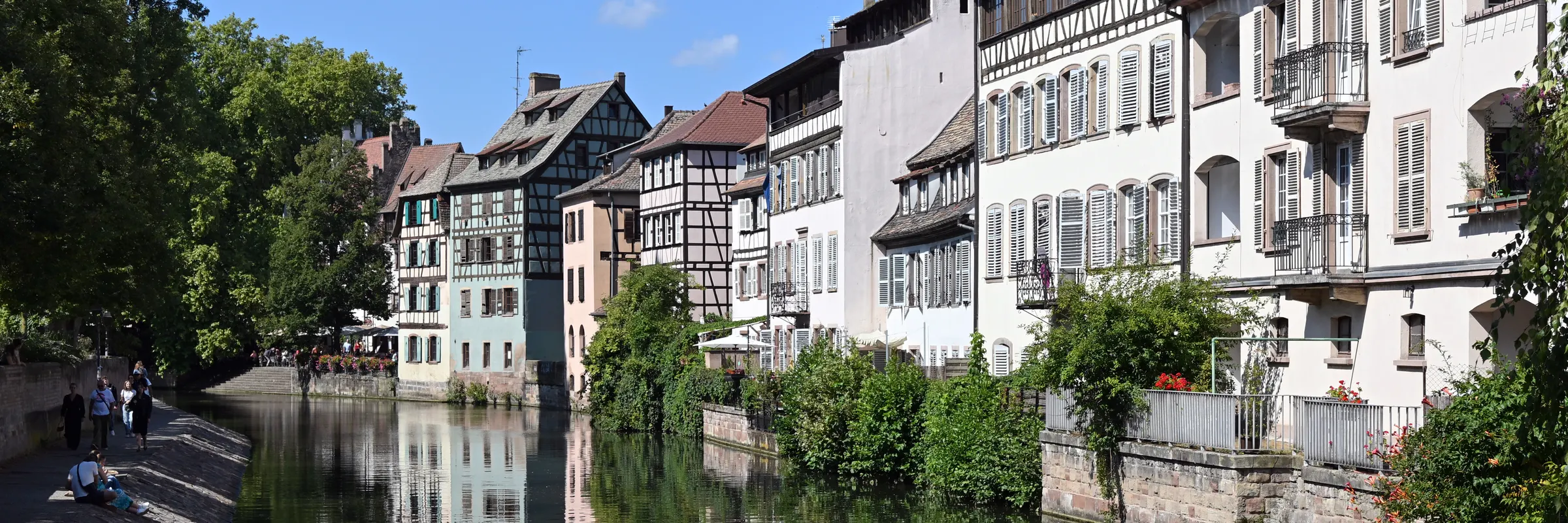
Strasbourg: Half-timbered houses on the Ill in Petite France

Alsace, France

Strasbourg: how many days you need and the best months to go

Photo: DimiTalen · CC0

Strasbourg changed nationality four times between 1870 and 1945, and it shows the best of both sides of the Rhine. Its old town, on an island ringed by the river Ill, is a World Heritage Site: a Gothic cathedral of pink sandstone whose single spire was for more than two centuries the tallest structure in the world, streets of carved half-timbered houses, and the canals of the Petite France quarter, where tanners and millers once worked. Beyond it lies the grand German imperial town of the late nineteenth century, and beyond that the modern buildings of the European Parliament and the Council of Europe. It is a city of bicycles and trams, of wine taverns serving sauerkraut and flambéed tarts, and of Christmas, which it has celebrated with a market since the sixteenth century. The planning problem is the calendar. In Advent the Christmas market brings millions of visitors and the old town is packed; and almost every month the European Parliament sits for a week, filling the hotels. Check both before you book, and use the city as a base for the villages of the Alsace wine route.

Short answers

What people ask before booking

How many days do you need in Strasbourg?

Strasbourg needs two days: one for the cathedral, its astronomical clock and Petite France on the old town's island, one for a boat on the Ill, the German imperial quarter and the European institutions. A third day is for the Alsace wine route or Colmar. Check the Parliament's session weeks and the Christmas market before you book.

What is the best month to visit Strasbourg?

May to September — Terraces, boats and the wine route.

Work out how many hours you will have in Strasbourg on your dates
When to go, and what each month costs you

Strasbourg has a continental climate: warm summers, cold winters with frost and fog, and pleasant springs and autumns. The warm months are best for the city and the wine route; December belongs to the Christmas market.

  1. January: Worth it, but
  2. February: Worth it, but
  3. March: Worth it, but
  4. April: Worth it, but
  5. May: Go now
  6. June: Go now
  7. July: Go now
  8. August: Go now
  9. September: Go now
  10. October: Worth it, but
  11. November: Worth it, but
  12. December: Worth it, but
  • May to September

    Go now

    Terraces, boats and the wine route

    Warm days, long evenings, terraces on the canals and the cathedral lit at night in summer. The best time for the wine villages; check the Parliament's session weeks, which fill the hotels.

  • October and November

    Worth it, but

    The end of the harvest, then the grey

    The end of the grape harvest and golden vineyards in early October, then cool, grey and foggy days. The quietest weeks of the year come in November, before the Christmas market opens late in the month.

  • December

    Worth it, but

    The Christmas market

    Cold days and the city lit for its Christmas market, one of the oldest in Europe, held since the sixteenth century. Unforgettable and packed, with security checks and the highest hotel prices of the year; book months ahead.

  • January to April

    Worth it, but

    Cold, quiet and cheap

    Cold, often grey days, the quietest months, and lower prices. A good time for the museums and the winstubs; spring arrives in April.

What to pack for Strasbourg, month by month

How many days Strasbourg needs

Two days cover the city. One for the island: the cathedral, its astronomical clock and the climb to the platform, the museums of the Rohan palace, and the lanes of Petite France with the covered bridges and the Vauban dam. One for the rest: a boat tour on the Ill, the German imperial quarter, the European institutions, and an evening in a wine tavern.

A third day is for the wine route: the villages of half-timbered houses and vineyards south of the city, Colmar with its canals and its great altarpiece, or the castle of Haut-Kœnigsbourg on its ridge. Germany is across the river, a tram ride away.

How the city is arranged, around an island

The old town fills the Grande Île, an island between two arms of the Ill, with the cathedral at its centre and Petite France at its western tip. The railway station is just west of the island; the German imperial quarter lies to the north-east, the European institutions further north on the water, and the Rhine and the German border to the east.

  • The Grande Île — the old town: the cathedral, its square, the Rohan palace, the squares and the shopping streets.
  • Petite France — the western tip of the island, with half-timbered houses, canals, locks and the covered bridges.
  • The Neustadt — the German imperial quarter, with grand avenues, the palace of the Rhine and the university.
  • The European quarter — the Parliament, the Council of Europe and the Court of Human Rights, by the river and the Orangerie park.
  • Krutenau and the station — a lively student quarter south-east of the island, and the area around the glass-covered station to the west.

Where to stay, and what each area costs you

The island is small enough to walk across in twenty minutes, so staying on it or near it puts everything on foot. The station area is cheaper and practical for day trips; the European quarter is quiet outside the session weeks.

Before booking, check the European Parliament's session weeks and the Christmas market: both fill the hotels and raise prices sharply. The city charges a tourist tax per person and per night.

AreaWho it suitsThe catch
The Grande ÎleThe cathedral, Petite France, the restaurants and the evening walks on foot.The dearest rooms, and packed in Advent.
Around the stationTrains for day trips, the airport shuttle and cheaper hotels, ten minutes from the island.Busy streets with less charm.
KrutenauA lively student quarter of bars and restaurants beside the island.Noisy at night.
The Neustadt and the European quarterCalm, grand streets and parks, close to the institutions.Further from the old town, and full in the Parliament's weeks.

Compare these areas against your priorities

Getting there, and getting around

Strasbourg is under two hours from Paris by high-speed train, and well connected to Germany and Switzerland. Its small airport is linked to the station by a shuttle train; the airports of Basel-Mulhouse and Frankfurt are further away but have more flights.

The island is for walking. Trams cover the city and cross the Rhine to the German town of Kehl, and Strasbourg has one of the largest cycle networks in France, with bicycles to rent.

  • Take the boat tour on the Ill: it passes Petite France, the locks and the European quarter.
  • Regional trains run to Colmar and the wine villages, but a car or a tour is easier for the wine route itself.
  • In Advent, security checks control access to the island, and cars are restricted.
  • Watch the astronomical clock's procession at half past noon, and arrive early for a place.

The cathedral, Petite France and the wine route

Strasbourg Cathedral is one of the great Gothic churches of Europe: a façade of pink sandstone carved like lace, a single spire that was the tallest structure in the world for more than two centuries, medieval stained glass and, inside, an astronomical clock whose figures of the apostles parade every day. Climb to the platform for the view over the roofs to the Black Forest and the Vosges.

  • Petite France — the old quarter of tanners, millers and fishermen, with half-timbered houses leaning over the canals.
  • The covered bridges and the Vauban dam — medieval towers on the river and a seventeenth-century dam with a terrace on its roof and the best view of Petite France.
  • The Rohan palace — the bishops' palace by the cathedral, with museums of fine arts, decorative arts and archaeology.
  • The Alsatian Museum — the rural life of the region in old houses on the river.
  • The European Parliament — the glass building of the Parliament, with a free visitor centre and, in the session weeks, the debates from the public gallery.
  • The wine route — villages of half-timbered houses among the vineyards, from Obernai to Riquewihr and Colmar.

How eating works here

Alsatian food is French in its refinement and German in its generosity: sauerkraut with sausages and pork, a thin tart of cream, onions and bacon baked in a wood oven, a stew of meats and potatoes slow-cooked in a clay dish, and the white wines of the region. The traditional place to eat it is a winstub, a wood-panelled wine tavern.

French hours apply: lunch from noon, dinner from seven. The menu of the day at lunch is the best value, and the flambéed tart is a cheap, shared dinner.

  • The Alsatian wines are mostly white: riesling, gewurztraminer, pinot gris and the sparkling crémant.
  • The flambéed tart is ordered by the board and shared at the table.
  • The strong Munster cheese is served with caraway seeds.
  • Service is included: rounding up or a few euros is enough.

Where to eat in Strasbourg, and what to order

Strasbourg eats Alsatian: sauerkraut with sausages and pork, a thin flambéed tart, a slow stew in a clay dish, a ring cake with almonds, and the little Christmas biscuits of Advent. Eat in a winstub, and drink the white wines of the route.

  • Choucroute garnie

    What to order

    Sauerkraut with sausages and pork

    Fermented cabbage cooked with white wine and juniper, piled with sausages, smoked pork, bacon and potatoes. It is the great dish of Alsace, served in every winstub, and best with a glass of the local riesling.

    Check it on Wikidata
  • Tarte flambée

    What to order

    The flambéed tart

    A very thin bread dough spread with soft cheese and cream, topped with onions and bacon, and baked in seconds in a wood oven. It is shared at the table, one board after another; the evening dish of the taverns.

    Check it on Wikidata
  • Baeckeoffe

    What to order

    The baker's oven stew

    Pork, beef and lamb marinated in white wine and layered with potatoes and onions in a clay dish sealed with dough, then slow-cooked for hours. It was once taken to the baker's oven on washing day; order it ahead in some restaurants.

    Check it on Wikidata
  • Kougelhopf

    What to order

    The ring cake with almonds

    A tall, ring-shaped yeast cake with raisins and almonds, baked in a fluted clay mould and dusted with sugar. It is the Sunday breakfast cake of Alsace, sold in every bakery.

    Check it on Wikidata
  • Bredele

    What to order

    The little Christmas biscuits

    Dozens of kinds of small biscuits, with butter, anise, cinnamon, almonds or jam, baked in Alsatian homes for Advent. They fill the bakeries and the Christmas market stalls in December.

    Check it on Wikidata

Things that change the trip

  1. Check the Parliament's session weeks and the Christmas market before booking.
  2. Climb to the cathedral platform, and see the clock's procession at half past noon.
  3. Take the boat tour on the Ill on your first day.
  4. Eat in a winstub, and order the flambéed tart to share.
  5. Give a day to the wine route, by car or tour.
  6. Rent a bicycle: the city is flat and has lanes everywhere.

Plan Strasbourg with Alsace

A trip of more than three days, or one that joins Strasbourg with Colmar, the wine route, the Black Forest or Paris and the trains between them, is what Premium is for. The free version covers one destination of up to three days.

Destinations