Skip to content
JoruJoru
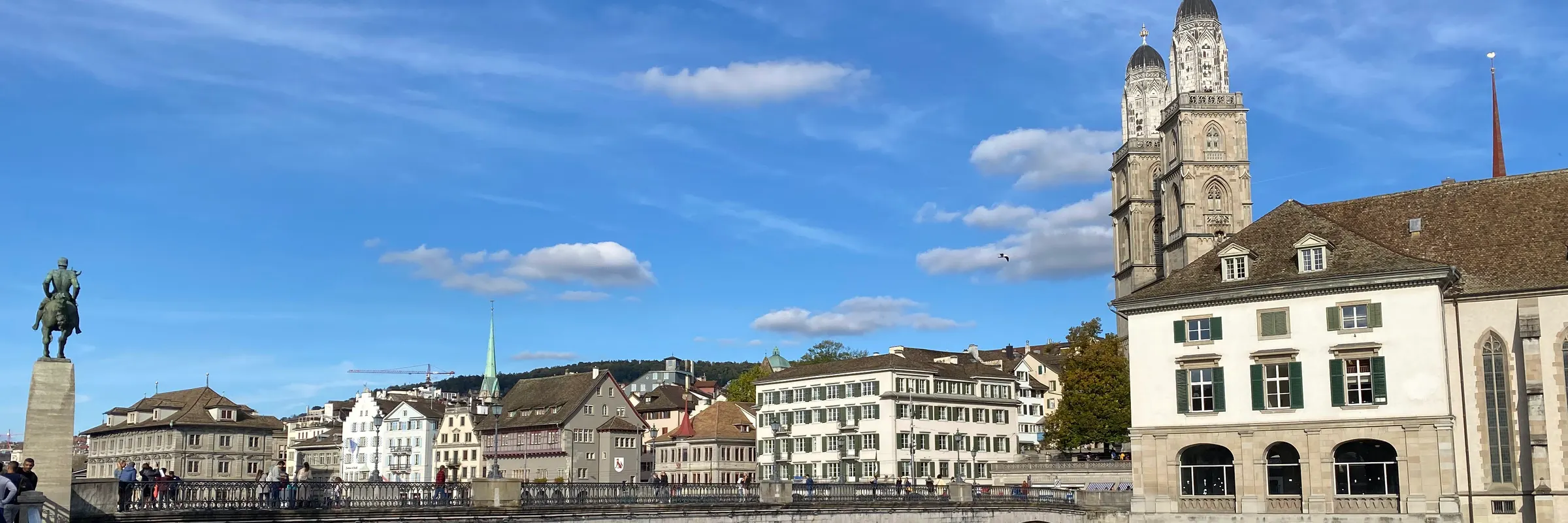
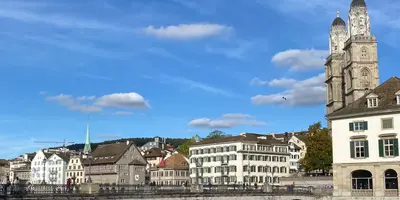
Zurich: The Grossmünster and the Limmat in the old town

Canton of Zurich, Switzerland

Zurich: how many days you need and the best months to go

Photo: -wuppertaler · CC BY 4.0

Zurich is often described as a city of banks, and it is, but it is also one of the most pleasant cities in Europe to spend a summer day in. Its old town climbs both banks of the river Limmat where it leaves the lake, with church towers, guild houses and narrow lanes; the lake itself is clean enough to swim in, and on warm days the whole city goes to the wooden bathing huts on its shores and floats down the river. Around it are excellent museums, a lively nightlife in the old industrial districts, and the best railway network in the world, which puts Lucerne, the Rhine Falls and the mountains within an hour or so. The planning problem is the price. Zurich is among the most expensive cities on Earth, for hotels, meals and drinks alike; the way to manage it is to choose the season, use the transport passes, eat well at lunch, and treat the city as a base for day trips across Switzerland.

Short answers

What people ask before booking

How many days do you need in Zurich?

Zurich needs two days: one for the old town on both banks of the Limmat, its churches and the lakeshore, and one for the museums and, in summer, a swim in the lake or the river. A third day is for a trip out: the Uetliberg, Lucerne, the Rhine Falls or the mountains, each within an hour or so by train.

What is the best month to visit Zurich?

June to August — The lake season. May and September — Mild days, fewer people.

Work out how many hours you will have in Zurich on your dates
When to go, and what each month costs you

Zurich has a central European climate: warm summers with thunderstorms, cold, grey winters with some snow, and changeable springs and autumns. Summer, when the city lives on the lake, is the best season; winter brings Christmas markets and the mountains.

  1. January: Worth it, but
  2. February: Worth it, but
  3. March: Worth it, but
  4. April: Worth it, but
  5. May: Go now
  6. June: Go now
  7. July: Go now
  8. August: Go now
  9. September: Go now
  10. October: Worth it, but
  11. November: Worth it, but
  12. December: Worth it, but
  • June to August

    Go now

    The lake season

    Warm days, long evenings, and the lake and river baths open. The city's great techno parade fills the lakeshore one Saturday in August; summer thunderstorms are short.

  • May and September

    Go now

    Mild days, fewer people

    Mild to warm days, green parks and the first or last swims in the lake. The best time for day trips to the mountains, though some high passes open only in June, and stay open through September.

  • April and October

    Worth it, but

    Changeable, and the spring festival

    Cool, changeable days, with rain and sun in turns. In April the guilds parade through the city and burn a snowman on a pyre to see how summer will be, a festival whose date moves every year; at the turn of September and October the film festival fills the cinemas.

  • November to March

    Worth it, but

    Cold, grey and Christmas

    Cold, often grey days with some snow, and short evenings. The Christmas markets light up the old town and the station, and the mountains are an hour away for snow; the lake is for walking, not swimming.

What to pack for Zurich, month by month

How many days Zurich needs

Two days cover the city. One for the old town: the Grossmünster and the Fraumünster with its Chagall windows, the lanes of the Niederdorf, the view from the Lindenhof, the Bahnhofstrasse and the lakeshore. One for the museums and the water: the art museum or the national museum, a swim in the lake or the river in summer, and the evening in the old industrial districts of the west.

A third day is for a trip out: the Uetliberg, the city's own mountain, by train; a boat on the lake; or, an hour or less away, the Rhine Falls, Lucerne and its lake, or the first mountains of central Switzerland.

How the city is arranged, around the lake and the river

Zurich sits at the northern end of its long lake, where the river Limmat flows out of it through the old town. The main station is at the northern edge of the old town; the Bahnhofstrasse runs from it to the lake; the old town spreads over both banks; and the districts of the west and the north are the newer city.

  • The old town, left bank — the Lindenhof hill, the Fraumünster, St Peter's church and the guild houses, with the Bahnhofstrasse behind.
  • The Niederdorf — the old town on the right bank, with the Grossmünster, lanes of bars and restaurants, and the university above.
  • The lake shore — promenades, parks and bathing huts on both sides of the lake, with Seefeld on the eastern side.
  • Zurich West and Kreis 4 — the old industrial districts west of the station, with bars, restaurants, shops under railway arches and the nightlife.
  • The Uetliberg — the wooded ridge on the south-western edge of the city, with the view over the lake to the Alps.

Where to stay, and what each area costs you

The centre is compact, and the trams make everywhere close, so the choice is about mood: the old town and the lake for beauty, the station for trains, the west for nightlife and lower prices.

Hotels are expensive all year, and peak during the big trade fairs, the great economic forum held in the mountains in January, and the summer. A day pass or the city card covers all public transport.

AreaWho it suitsThe catch
The old town and the NiederdorfThe sights, the lanes and the river on foot, and the evening in the old town.Very expensive, and noisy around the bars of the Niederdorf.
Around the main stationDay trips by train, the airport and the shops, with trams to everywhere.Busy, with business hotels and little character.
Seefeld and the lakeA calm, elegant district on the eastern shore, near the lake baths and the opera.Among the dearest areas, and quiet at night.
Kreis 4 and Zurich WestNightlife, the best bars and restaurants, and somewhat lower prices.Noisy at night, and the street of the red-light district runs through Kreis 4.
Oerlikon and the northCheaper modern hotels near the exhibition centre and the airport, minutes from the centre by train.Outside the old town, in a plain district.

Compare these areas against your priorities

Getting there, and getting around

Zurich's airport is Switzerland's largest, about ten minutes from the main station by train. The main station is the hub of the Swiss railways, with trains to every corner of the country and fast trains to Germany, Austria, Italy and France.

Trams are the way to get around the city, with buses, trains, boats on the lake and the river, and the cable cars all on the same tickets. The old town itself is for walking.

  • A day pass for the city zone covers trams, buses, trains and the river boats; the city card also covers the airport and the Uetliberg line, and adds free or reduced entry to many museums.
  • A Swiss travel pass covers trains, buses and boats across the country, and pays off with several day trips.
  • Buy the ticket before you board: inspectors check, and fines are steep.
  • Drink from the fountains: the city has more than a thousand, with clean drinking water.

The old town, the lake and the mountains

In summer, Zurich lives on the water. The lake and river baths, the «Badis», are wooden bathing huts and platforms on the lake and the Limmat, open from late spring to the end of summer, some turning into bars in the evening. Swimming in the river through the city, with your clothes in a waterproof bag, is a local ritual on hot days.

  • The Grossmünster — the twin-towered church where the Swiss Reformation began, with a tower to climb.
  • The Fraumünster — the church across the river, with stained-glass windows by Marc Chagall.
  • The Kunsthaus — the city's great art museum, with a large modern extension.
  • The Swiss National Museum — the history of the country in a fairy-tale castle of a building behind the station.
  • The Uetliberg — the city's mountain, a short train ride away, with the view of the lake and the Alps.
  • The Rhine Falls and Lucerne — one of Europe's most powerful waterfalls, and the lake city in the mountains, each under an hour away.

How eating works here

Zurich's own dish is sliced veal in a cream and mushroom sauce with a crisp potato cake, and the rest of Swiss food is everywhere: melted cheese dishes in winter, sausages from street stalls, chocolate and pastries. The city also eats very well from the rest of the world, and prices are high everywhere.

Lunch from noon and dinner from seven, earlier than in the south. The menu of the day at lunch is the best value in the city, and the supermarkets and bakeries make good picnics for the lake.

  • Service is included in prices: rounding up or a few francs is enough.
  • The currency is the Swiss franc; cards are accepted almost everywhere, but carry a few coins.
  • Melted cheese dishes are a winter tradition, best in the old town's traditional restaurants.
  • Sausages from the street stalls are the cheap meal of the city.

Where to eat in Zurich, and what to order

Zurich eats Swiss: veal in cream sauce with a potato cake, melted cheese in winter, tiny macaroons from the old confectioners, and spiced honey biscuits at Christmas. Eat the dish of the day at lunch, and save the classics for one dinner.

  • Zürcher Geschnetzeltes

    What to order

    Veal in cream sauce, the Zurich way

    Thin strips of veal cooked with white wine, cream and mushrooms, served with a crisp potato cake. It is the city's own dish, on the menu of every traditional restaurant in the old town.

    Check it on Wikidata
  • Rösti

    What to order

    The crisp potato cake

    Grated potatoes fried in butter into a golden cake, crisp outside and soft inside. It is served with the veal, or on its own with cheese, bacon or an egg, and it is the side dish of German-speaking Switzerland.

    Check it on Wikidata
  • Luxemburgerli

    What to order

    The tiny macaroons of the old confectioners

    Small, light almond macaroons filled with cream, in many flavours, the speciality of one of the city's oldest confectioners. Buy a small box and eat them fresh; they do not keep.

    Check it on Wikidata
  • Käsefondue

    What to order

    Cheese fondue in winter

    A pot of melted cheese with white wine and kirsch, kept warm at the table, into which you dip cubes of bread on long forks. It is a winter dish, shared, and the old town's traditional restaurants serve it in the cold months.

    Check it on Wikidata
  • Tirggel

    What to order

    The honey biscuits of Christmas

    Thin, hard biscuits of honey and flour, stamped with pictures from wooden moulds and baked pale. They are a Zurich tradition of the Christmas season, sold by the confectioners and bakers of the old town.

    Check it on Wikidata

Things that change the trip

  1. Buy a day pass or the city card, and use the trams everywhere.
  2. Eat the dish of the day at lunch, when prices are lower.
  3. In summer, swim in the lake or the river, at one of the city's bathing huts.
  4. Fill your bottle at the fountains: the water is excellent.
  5. Take a day trip by train to Lucerne, the Rhine Falls or the mountains.
  6. Carry a few francs in coins for the small things.

Plan Zurich with Switzerland

A trip of more than three days, or one that joins Zurich with Lucerne, Interlaken, Zermatt or Geneva and the trains between them, is what Premium is for. The free version covers one destination of up to three days.

Destinations