Skip to content
JoruJoru
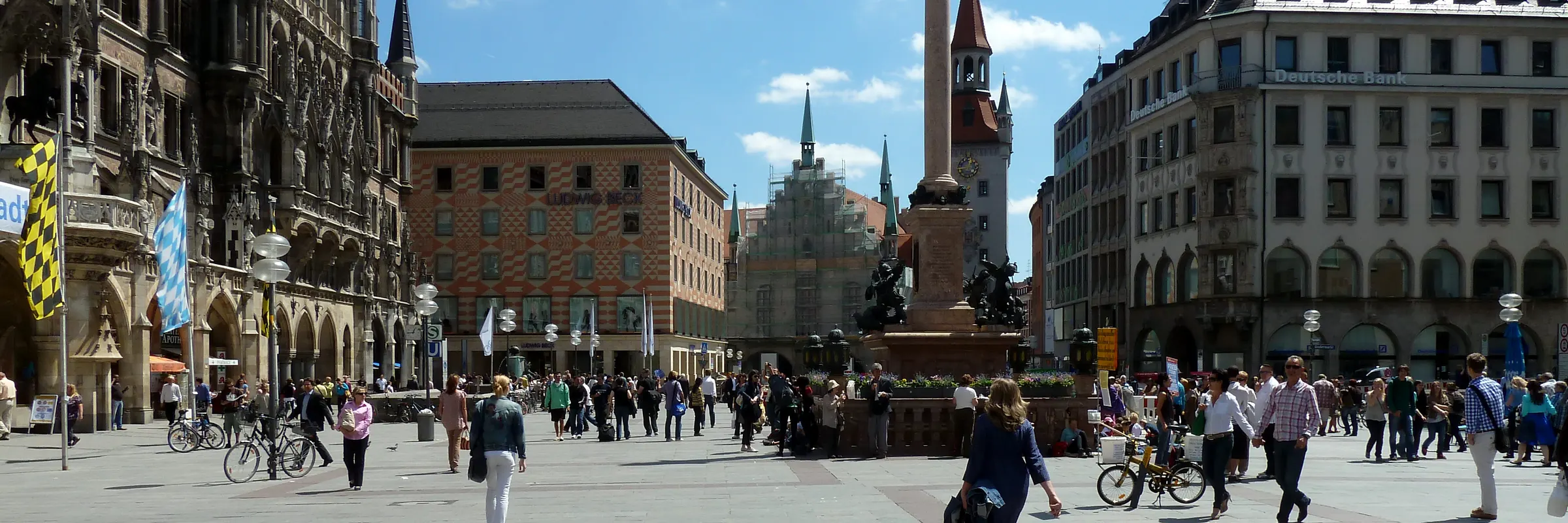
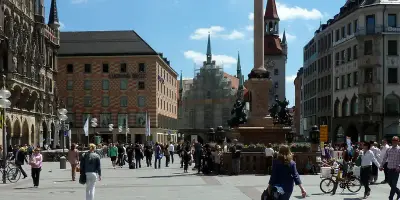
Munich: Marienplatz, with the new town hall and the Marian column
Photo: EuguenyIr · CC BY 3.0
Bavaria, Germany

Munich: how many days you need and the best months to go

Munich is the capital of Bavaria and behaves like the capital of a separate country, which historically it was — a kingdom until 1918, Catholic where the north is Protestant, and with its own dialect, dress and law. Ninety per cent of the old town was destroyed in the war and rebuilt to look as it had, which is worth knowing while you walk through it. Two days covers the centre. Three is right, and the month you pick matters more than usual because of one festival.

Short answers

What people ask before booking

How many days do you need in Munich?

Munich needs two days for the old town and the museums, three to add a day trip to the Alps or Dachau. Check the Oktoberfest dates first: it is mostly in September, it moves every year, and it multiplies hotel prices city-wide.

What is the best month to visit Munich?

May and June — Beer garden season starts, and nothing is full. July — Warmest, with the lakes in reach.

Which months are worth avoiding in Munich?

January, February, March and November — Cold, grey, and the outdoor city closed.

How many days Munich needs

Two days covers the core: Marienplatz, the Viktualienmarkt and the old town on one, and a museum plus the English Garden on the other. Munich's museums are unusually strong — the Alte Pinakothek for old masters, the Deutsches Museum for science and technology, the BMW Welt if that is your thing — and any of them can absorb a half day.

Three days is the right number, and the third is for a day trip, because Munich is the best-placed base in southern Germany. Neuschwanstein, the castle that inspired the Disney one, is about two hours south; Salzburg is under two hours by train and in another country; and the Zugspitze, Germany's highest mountain, is a train and a cable car away. Dachau is forty minutes out, and it is the other kind of day trip: the first Nazi concentration camp, now a memorial, and the reason many people come to this region at all.

Oktoberfest, and the thing everyone gets wrong

It is mostly in September. The festival runs about sixteen to eighteen days and ends on the first Sunday of October, which means it starts in the second half of September — the name is a historical leftover, not a description. The dates move every year, so check the year you are travelling rather than assuming a month.

What it does to the city is total. Six million people come, hotel rates multiply several times over and rooms are booked out many months ahead, the U-Bahn is packed and the whole centre reorients around the Theresienwiese. Inside, the beer is served in one-litre glasses of a stronger festival brew, the tents are free to enter but a table effectively requires a reservation made long in advance, and it is a great deal more of a family event in the daytime than the international reputation suggests.

The practical rule is simple: either come for it, book in spring and accept the prices, or avoid the second half of September entirely. Turning up unaware is how people end up paying peak rates for a city they cannot move around.

  • Marienplatz — the main square, the neo-Gothic new town hall and its clockwork figures. The centre of everything, and the point to start.
  • Viktualienmarkt — the daily food market since 1807, with a beer garden in the middle of it.
  • English Garden — bigger than New York's Central Park, with a permanent standing wave that surfers ride in the middle of the city.
  • Residenz and Nymphenburg — the Wittelsbach town palace and their summer one. The dynasty ruled Bavaria for seven hundred years.
  • Dachau — the memorial at the first concentration camp, forty minutes out. Half a day, and not something to combine with anything.

The beer garden law, and how to use it

This is the single most useful thing to know about eating in Munich, and it is a genuine legal quirk. In a traditional Bavarian beer garden you are allowed to bring your own food, buy only the drink, and sit down at a shared table — the tradition dates back to the nineteenth century and was reaffirmed after protests in the 1990s.

How to tell which part is which: a beer garden usually has a self-service area with plain wooden tables where the rule applies, and a served area with tablecloths where it does not. Buy a bread roll, some cheese and a radish at the Viktualienmarkt, walk to a garden, buy a beer and sit down. It is what locals do, it costs very little, and it is more characteristic of the city than any restaurant.

The other custom is the shared table. Sitting down at an occupied table is normal and expected — you ask if the seat is free and then leave people alone. Refusing to share a table marks you as a visitor faster than anything else.

The rebuilt city, and the museums

Munich was heavily bombed and the city made a deliberate decision after the war: rather than rebuild in a modern style, it reconstructed the old town largely as it had been. That is why Marienplatz looks medieval and why so little of the centre is tall. Knowing it changes how the place reads — it is a careful copy of itself, and Bavaria is open about that.

The museums are the other half of the city and they are underrated by visitors who come for the beer. The Pinakotheken are three linked galleries covering old masters, the nineteenth century and modern art, and the Deutsches Museum is one of the largest science and technology museums in the world. Munich also has Sunday admission of one euro at several state museums, which is worth planning around — it is a real saving and the galleries are correspondingly busy.

The Alps are ninety minutes away

Munich sits on a plain with the Alps on the horizon, and on a clear day you can see them from the city. The mountains are close enough that a day in them is a normal Munich activity rather than a separate trip: the Bavarian lakes, Garmisch-Partenkirchen and the Austrian border are all within about ninety minutes by train.

This is worth building into a trip, and it changes what the seasons mean. A summer visit can include a lake; a winter one can include snow, and the regional train network makes both straightforward without a car. If you have four days rather than three, this is the better use of the fourth than another museum.

What to eat in Munich, and where

Bavarian food is pork, bread and beer, and it is heavier than the rest of German cooking rather than lighter: eat the big things at lunch. The one rule that surprises people is that a particular sausage has a time of day attached to it.

  • Weißwurst

    What to order

    The sausage with a deadline

    A pale veal and pork sausage flavoured with parsley and lemon, poached rather than grilled, served in the water with sweet mustard and a pretzel. Tradition holds that it must be eaten before midday, because it was made overnight without preservatives — the reason is obsolete, the custom is not. You peel the skin off and do not eat it.

    Check it on Wikidata
  • Brezel

    What to order

    The bread that goes with everything

    A knot of dough dipped in lye before baking, which is what gives it the dark shiny crust and the particular taste. It is a bread, not a snack — served with butter, with sausage, and at breakfast — and the good ones are baked several times a day and are best within hours. Ask for a fresh one rather than taking the one on the counter.

    Check it on Wikidata
  • Schweinshaxe

    What to order

    The dish to order once, at lunch

    A roasted pork knuckle with crackling, usually with a dumpling and cabbage, and it is a large plate. Do not confuse it with Eisbein, which is the boiled northern German version and a different dish entirely. Roasted is the Bavarian way. One is easily enough for two moderate appetites.

    Check it on Wikidata
  • Biergarten

    Where to look

    The institution, and the rule that makes it one

    An outdoor area under chestnut trees with shared wooden tables, where Bavarian law allows you to bring your own food and buy only the drink — a tradition from the nineteenth century, reaffirmed after public protests in the 1990s. The self-service section is where the rule applies; the section with tablecloths is a restaurant.

    Check it on Wikidata
  • Viktualienmarkt

    Market

    Where to buy what you take to the beer garden

    A permanent open-air food market in the middle of the old town, running since 1807, with cheese, bread, charcuterie and produce — and its own beer garden in the middle. This is where you assemble the picnic that the beer garden law lets you carry in. Busy, not cheap, and the quality is why.

    Check it on Wikidata

When to go, and what each month costs you

Two things govern this calendar: the weather, which is continental and colder than most of Germany because of the Alps, and Oktoberfest, which is mostly in September and reprices the entire city. Everything else follows from those.

  • May and June

    Go now

    Beer garden season starts, and nothing is full

    The best window of the year: warm enough for the beer gardens and the English Garden, long days, everything open, and no festival crowd. This is Munich as it actually lives, and the Alps are at their best for a day out. Book normally; prices are ordinary and rooms are available.

  • July

    Go now

    Warmest, with the lakes in reach

    The warmest month, with the beer gardens full every evening and the Bavarian lakes an easy train ride away. Summer thunderstorms are common and brief. German school holidays begin, which lifts prices somewhat, but nothing like the September peak. Excellent value for what you get.

  • September and October

    Worth it, but

    Oktoberfest: extraordinary, and the worst value of the year

    The festival runs roughly the last two weeks of September into the first Sunday of October, and the dates move every year. Six million visitors, hotel rates several times normal, rooms gone months ahead. Come for it deliberately or avoid the window entirely. The rest of October, once it has packed up, is a lovely quiet autumn city.

  • December

    Worth it, but

    Christmas markets, in cold and short days

    The Christkindlmarkt on Marienplatz and a dozen smaller ones, mulled wine, and a city that does this properly. It is genuinely cold — Munich is colder than Berlin — and the days are short. Prices rise through the month. Worth it if the markets are the reason; not if you wanted to walk around.

  • August

    Worth it, but

    Hot, busy and the locals are away

    Warm and full of visitors, with peak European holiday traffic and some smaller businesses closed while their owners are on holiday themselves. The beer gardens and the parks carry it, and the Alps are the escape. Fine, and a slight step down from July on price and atmosphere.

  • April

    Worth it, but

    Spring arriving, unreliably

    The city thaws, the gardens start opening and prices are low, but the weather is genuinely changeable and it can snow. Easter moves between late March and April and fills the city for a week. A gamble that often pays, with the museums as the fallback.

  • January, February, March and November

    Think twice

    Cold, grey, and the outdoor city closed

    Munich's winter is longer and colder than most of Germany's, and the beer gardens and parks — which are the point of this city — are shut or empty. The museums and the Christmas-free calm are real compensations, and prices are the lowest of the year. But you are visiting a different, smaller version of the place.

Things that change the trip

  • Check the Oktoberfest dates for your year. It is mostly in September, it moves, and it multiplies hotel prices across the whole city.
  • Buy food at the Viktualienmarkt and take it into a beer garden. Bavarian law allows it in the self-service section, and it is what locals do.
  • Eat Weißwurst before midday. The reason is obsolete and the custom is not, and ordering it at dinner marks you out.
  • Sit at an occupied table and ask if the seat is free. Shared tables are normal here and refusing one is the visitor move.
  • Give Dachau a half day of its own. It is forty minutes out and it is not something to slot between other sights.
  • Use the fourth day for the Alps, not another museum. Garmisch and the lakes are ninety minutes by train and no car is needed.

Plan Munich and Bavaria

A trip beyond four days, or one that pairs Munich with Salzburg, Neuschwanstein or the Bavarian Alps — with the Oktoberfest dates, the train times and the museum hours worked out around it — is exactly what Premium is for. The free version covers one destination for up to three days.

Destinations