Skip to content
JoruJoru
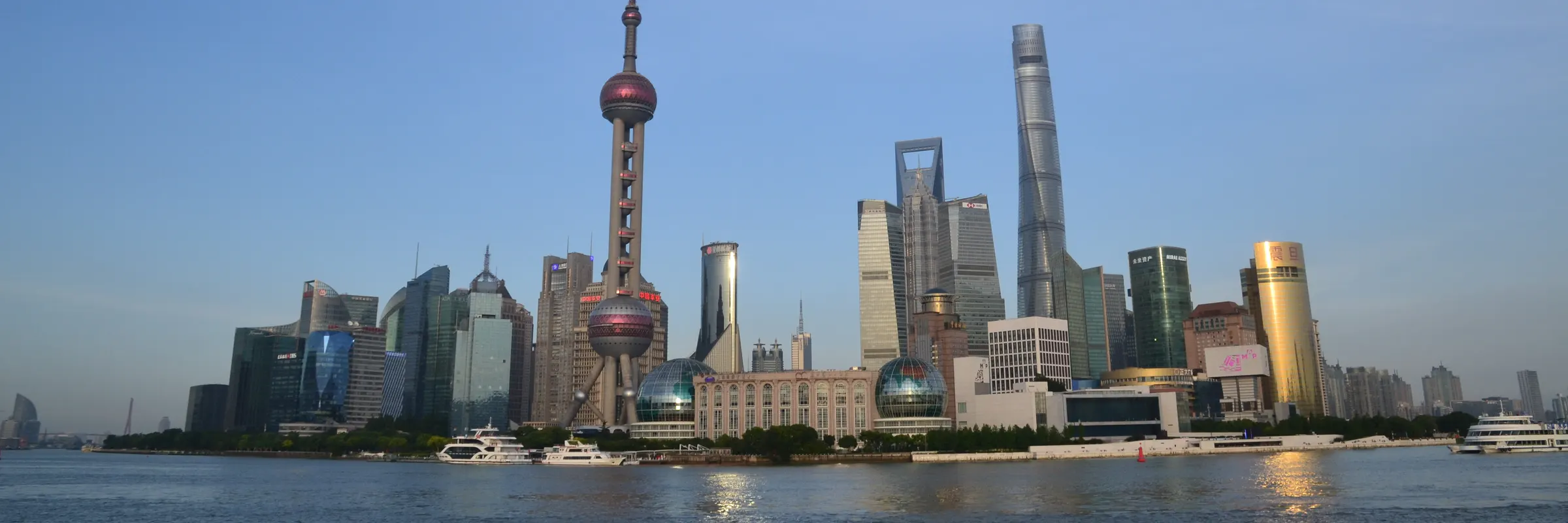
Shanghai: The Pudong skyline, seen from the Bund
Photo: Ernest Jourdier · CC BY 4.0
China

Shanghai: how many days you need and the best months to go

Shanghai is not an imperial capital and never pretends to be. It was a walled market town on a muddy river until 1842, when a treaty forced it open to foreign trade, and almost everything visitors come for was built after that. The skyline everyone photographs is younger still — Pudong was farmland and warehouses until 1990. Three days covers the city properly. A fourth buys a water town or Suzhou, which is where the older China actually is.

Short answers

What people ask before booking

How many days do you need in Shanghai?

Shanghai needs three days for the Bund, the old concession and Pudong, and a fourth for Suzhou or a canal town. Avoid the first week of October, when the national holiday puts the whole country on the move, and check the year's Chinese New Year date, which moves between late January and mid-February.

What is the best month to visit Shanghai?

October and November — The best window, minus its first week. April and May — Warm, green and before the rains.

Which months are worth avoiding in Shanghai?

July and August — Hot, humid and the typhoon window. January and February — Damp cold, and Chinese New Year moves through it.

How many days Shanghai needs

Three days is the honest number. One goes to the Bund and the old city — the colonial waterfront, the Yu Garden, the streets behind it — one to the former French Concession on foot, and one to Pudong across the river for the towers and the museums at their feet. The metro makes distances irrelevant; what eats the day is the scale of each individual place.

A fourth day should leave the city. Zhujiajiao, a canal town with Ming and Qing bridges, is inside the metropolitan area and reachable by metro. Suzhou, with the classical gardens that are the real thing rather than a reconstruction, is well under an hour by high-speed train. Both give you the pre-1842 China that Shanghai itself does not have, and either is a better use of a day than a fourth museum.

The river splits the city in two, and one half is new

The Huangpu divides Shanghai into Puxi, west of the river, and Pudong, east of it. Puxi is the historic city: the Bund, the old walled town, the concessions, the plane-tree streets. Pudong is the skyline, and it is younger than most of the people looking at it — the area was designated for development in 1990, and before that it was farmland, docks and warehouses.

That single fact organises the visit. The famous view is *from* Puxi *of* Pudong: you stand on the nineteenth-century embankment and look at towers built in your lifetime. Doing it in both directions is worth the crossing — from a Pudong viewing deck the Bund reads as a low curved row of stone, which is what it is. The ferry across is cheap, slow and better than the tunnel attraction, and the metro crosses in a couple of minutes.

  • The Bund — the curve of 1920s and 1930s banks and trading houses along the water. Free, and best at night when they are lit.
  • Lujiazui — the tower cluster in Pudong, all built since 1990. One viewing deck is enough; pick by which shape you like.
  • Yu Garden — a Ming-era classical garden in the old city, small, crowded, and surrounded by a bazaar that is mostly souvenirs.
  • The former French Concession — low buildings and plane trees planted by French planners. This is the walking, not the sightseeing.
  • Shanghai Museum — bronzes, ceramics and calligraphy, on People's Square. The single best indoor half-day in the city.

The weeks when the whole country travels

This is the planning fact that matters most and it has nothing to do with weather. China's National Day holiday starts on 1 October and runs about a week — the Golden Week — and hundreds of millions of people travel during it. Trains sell out, sights queue for hours, hotel prices jump. The dates are fixed, so it can be planned around, and October is otherwise the best month of the year here.

Chinese New Year is the bigger one and it moves, falling somewhere between late January and mid-February depending on the lunar calendar. The city empties of migrant workers and fills with families; many small restaurants and shops close for days, and long-distance transport is at its yearly peak. Check the year's date before booking anything in that window. The upside is that the streets are quiet and decorated, which some people specifically want.

Why winter feels colder than the numbers

Shanghai's winter is not severe on paper, and visitors are still cold. The reason is a line: China's centralised municipal heating system was built only north of the Qinling–Huai River divide, and Shanghai sits south of it. Older buildings were therefore designed without central heating, and the damp river air does the rest.

In practice that means indoors is not reliably a refuge in January and February — you dress for the temperature inside as well as outside, and modern hotels are fine while older buildings, restaurants and shops may not be. It is the single most useful thing to know about a Shanghai winter, and it is not something a temperature forecast will tell you.

Practical things worth knowing

Payment is overwhelmingly by phone, through apps tied to Chinese systems, and cash acceptance is uneven. Foreign cards can now be linked to the main apps, but the setup is best done before arriving rather than in a queue. Visa rules for China change and have changed repeatedly — including the transit exemptions that let travellers stop over without a full visa — so verify the current rule for your nationality close to the trip and do not rely on any guide, this one included.

Two more. The maglev from Pudong airport is the fastest commercial train in the world and does not go to the centre — it ends at a metro interchange, so it is a ride worth taking for its own sake rather than the obvious way in. And parts of the internet many travellers depend on are not reachable from inside the country; whatever you plan to use for maps, messaging and email, test it before you need it.

What to eat in Shanghai, and where

Shanghai cooking is sweeter and oilier than the rest of China's, and its signature dishes are small, steamed or fried, and eaten in the morning. The one thing that is genuinely seasonal here is a crab, and it is worth arranging a trip around.

  • Xiaolongbao

    What to order

    The dish the city is known for

    Thin-skinned dumplings with pork and a mouthful of hot broth inside, steamed in bamboo baskets. The soup gets in because the stock is set into jelly, wrapped cold, and melts in the steamer — which is also why you lift them carefully, bite a hole, and drink before you eat. They come from Nanxiang, on the city's edge, and the good ones have thin skins and a lot of folds.

    Check it on Wikidata
  • Shengjian mantou

    What to order

    The breakfast version, fried

    The pan-fried cousin: thicker dough, pork and broth inside, crisped flat on the bottom in a wide iron pan and finished with sesame and spring onion. This is a Shanghai breakfast rather than a restaurant dish, sold from small shops with a queue in the morning and gone by lunch. Eat it standing up, and let it cool first — the inside is molten.

    Check it on Wikidata
  • Cangrejo peludo chino

    What to order

    The one thing that is strictly seasonal

    Freshwater mitten crab, steamed whole and eaten with vinegar and ginger, and it is an autumn dish only — the season runs roughly from September into December, peaking in October and November, and outside it you are eating something frozen or something else. The prized ones come from lakes near Suzhou. If you are here in autumn, this is the meal to plan.

    Check it on Wikidata
  • Jardín Yuyuan

    Where to look

    The old city, and the honest warning

    The classical garden in the middle of the old walled town, laid out in the Ming dynasty: rockeries, ponds, dragon walls and pavilions in a very small space. It is genuinely old and genuinely crowded, and the bazaar around it is a shopping district rather than a historic one. Go at opening, keep it to an hour, and eat somewhere else.

    Check it on Wikidata
  • El Bund

    Where to look

    The waterfront, and when to walk it

    The mile of stone banks, hotels and trading houses along the Huangpu, built when this was a treaty port and foreign powers ran their own quarters. Walk it twice: once in daylight for the buildings themselves, once after dark for the towers opposite. The riverside promenade is raised above the traffic and continuous, and it is the one walk everybody does for good reason.

    Check it on Wikidata

When to go, and what each month costs you

Shanghai's year is squeezed at both ends: a hot, wet, typhoon-prone summer and a damp winter with no reliable indoor heating. The two shoulder seasons are short, excellent, and the reason to plan ahead.

  • October and November

    Go now

    The best window, minus its first week

    Dry, clear, mild and the nicest the city gets, and it is also hairy crab season, which is the one genuinely seasonal thing on the menu. The catch is the start: the national holiday from 1 October fills trains, sights and hotels for about a week, at fixed dates you can simply plan after. From the second week onward, this is the month to pick.

  • April and May

    Go now

    Warm, green and before the rains

    The other good window: plane trees in leaf in the old concession, comfortable walking weather, and the summer humidity not yet arrived. A national holiday around the start of May moves domestic crowds for a few days but is far shorter than the October one. Rain is possible and passing rather than settled.

  • March

    Worth it, but

    Cool and grey, but the city is yours

    Winter is letting go and the crowds have not returned. Days are cool and often overcast, and the trees are bare, so the French Concession is at its least attractive. Prices are low and queues are short, which for a city this size is worth a jacket.

  • September

    Worth it, but

    The heat breaking, the storms not quite done

    Noticeably better than August and improving week by week, with the crab season starting at the end of it. The typhoon season is not over until late in the month, so a washed-out day or a disrupted flight is a real possibility. Late September is close to October quality without the holiday.

  • June

    Worth it, but

    The plum rains, which are a season of their own

    East China has a distinct early-summer rainy period — the plum rains — that settles in around mid-June and lasts into July: persistent grey drizzle rather than storms, with high humidity throughout. It is not a washout and it is cheaper than the months either side, but plan indoor alternatives and expect laundry not to dry.

  • December

    Worth it, but

    Cold, clear and the last of the crab

    Drier and brighter than the deep winter months, with the crab season tailing off. The heating problem is already in play, so this is a coat-indoors month. Quiet, cheap by local standards, and fine for museums and eating.

  • July and August

    Think twice

    Hot, humid and the typhoon window

    The hardest months by a distance: heat plus humidity that makes walking the concession streets unpleasant, and this is when typhoons reach the coast, which can mean a lost day or a cancelled flight rather than just rain. It is also Chinese school holidays, so domestic tourism peaks. Cheap flights, and a reason for them.

  • January and February

    Think twice

    Damp cold, and Chinese New Year moves through it

    Cold, grey and damp, and Shanghai sits south of the line where China built centralised heating, so older buildings indoors are cold too. Chinese New Year falls between late January and mid-February and moves every year: transport is at its annual peak and many small businesses close for several days. Check the date before you book anything.

Things that change the trip

  • Do not arrive in the first week of October. The national holiday starts on 1 October, the dates are fixed, and the whole country is travelling.
  • Check the year's Chinese New Year date, somewhere between late January and mid-February. It moves, and it closes small businesses for days.
  • Set up phone payment before you fly. It is how the city pays for things, and doing it in a queue on arrival is the bad version.
  • Pack for a cold indoors in winter. Shanghai is south of China's central-heating line and older buildings were built without it.
  • Cross the river both ways. The Bund looks like a skyline from Pudong and Pudong looks like a skyline from the Bund; the ferry is the cheap way.
  • Give a day to Suzhou or a canal town. Shanghai is a modern city by construction; the older China is under an hour away by train.

Plan Shanghai and eastern China

A trip beyond four days, or one that pairs Shanghai with Suzhou, Hangzhou or Beijing — with the holiday weeks, the crab season and the train times worked out around it — is exactly what Premium is for. The free version covers one destination for up to three days.

Destinations