
Skip to content
JoruJoru
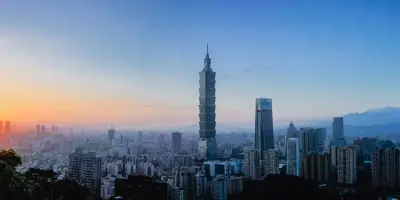
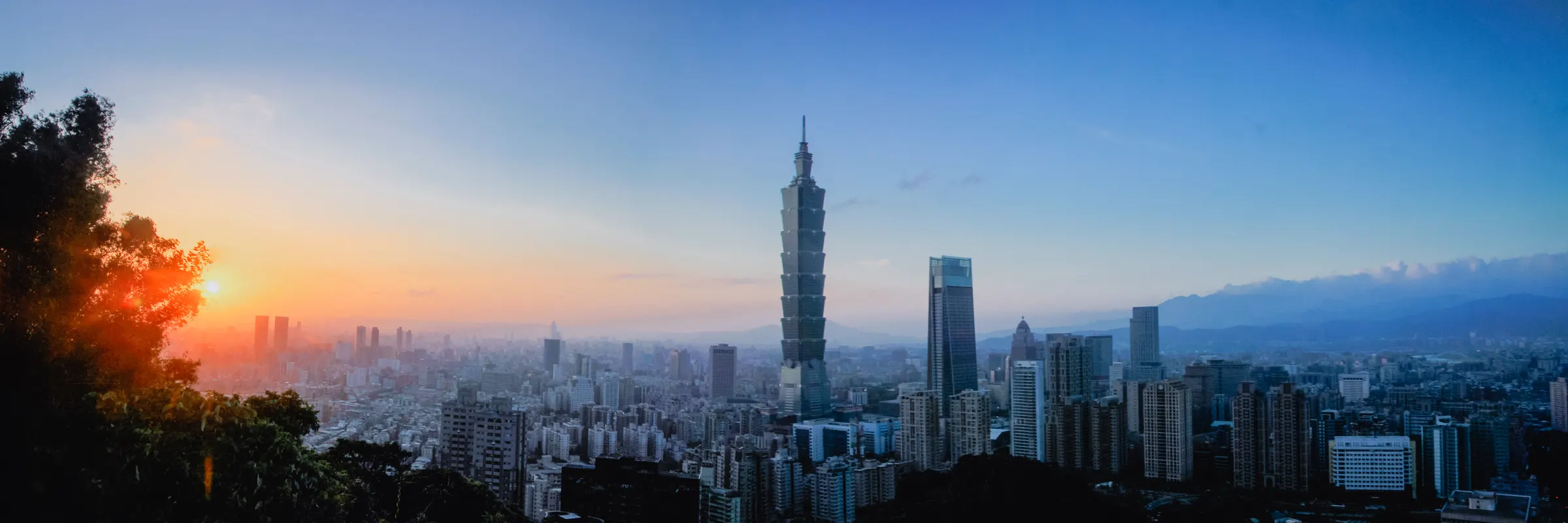
Taipei: the skyline at sunset from Elephant Mountain
Photo: Man Ng · CC BY 2.0
Taipei, Taiwan

Taipei: how many days you need and the best months to go

Taipei sits in a basin surrounded by hills, which is why the mountains are twenty minutes from the centre by underground train and why there are hot springs at the end of one of the lines. It is also, quietly, one of the easiest large cities in Asia to be a visitor in: the metro is spotless and signed in English, people will walk you to where you are going, and the food is cheap and safe and everywhere. Three days covers the city. A fourth is the mountains, the coast or the hot springs.

Short answers

What people ask before booking

How many days do you need in Taipei?

Taipei needs three days — the centre and the tower, the museum and the old streets, and one built entirely around eating — and a fourth for the hot springs, the tea hills or the coast.

What is the best month to visit Taipei?

October and November — The best window of the year. March and April — Spring, and the drizzle lifting.

Which months are worth avoiding in Taipei?

June — Humid, wet, and the season starting. July, August and September — The peak of typhoon season, and the peak of the heat.

How many days Taipei needs

Three days is the working figure: one for the centre and the tower, one for the museum and the old streets, and one built entirely around eating, which is what people actually come for.

The fourth day leaves the basin, and there are three good options in three directions. The hot spring valley at the end of a metro line, the tea terraces in the hills to the south, or the north coast — and all three are reachable on public transport in under an hour, which is not true of most Asian capitals.

The night markets, and how to use one

Night markets are not a tourist attraction here; they are how a large part of the city eats dinner. Every district has one, they run from late afternoon until well past midnight, and they are a working part of the food economy rather than a performance. The famous one in the north is the largest and the most visited; the ones locals use are smaller and closer to where they live.

The method is the same everywhere. Walk the whole length before buying anything, order one thing from each of several stalls rather than a meal from one, and use the queue as the review. Almost everything is eaten standing or walking, prices are low, and cash is still king at the stalls even in a city that is otherwise thoroughly card-friendly.

  • Walk the length first. Committing at the first stall is the classic mistake and the stalls are not evenly good.
  • One thing per stall. The point is breadth, and portions are sized for that.
  • Carry cash in small notes. The stalls take it, the metro card works at some, and neither takes a foreign credit card.
  • The smaller neighbourhood markets are better. They are cheaper, less crowded and cook for people who come back.

How the city works, and the metro card

The metro here is the thing visitors mention afterwards. It is clean to an unusual degree — eating and drinking are prohibited on trains and platforms and the rule is genuinely observed — it is signed and announced in English, and it reaches almost everything a visitor wants, including a national park, a hot spring valley and the tallest building.

The card that runs it does more than transport. It works on the buses, in convenience stores, at some night market stalls, at supermarkets and for the bike share, and it is refundable at the end. Buying one in the first hour removes almost every small friction of the trip.

  • Buy a stored-value card at any station. It covers metro, buses, bike share and convenience stores.
  • Do not eat or drink on the metro, including water. It is enforced and it is the one rule visitors break.
  • Queue markings on the platform are followed. People form lines and let passengers off first.
  • Convenience stores are genuinely useful here — bill payment, hot food, luggage delivery, decent coffee, and one on every other corner.

The tower, the museum and the two things worth queueing for

Taipei 101 was the tallest building in the world from 2004 to 2010 and is still worth going up for one specific reason: it contains a seven-hundred-tonne steel damper suspended near the top, visible to visitors, which sways to counteract typhoons and earthquakes. It is the largest of its kind open to the public, and it is more interesting than the view.

The other is the National Palace Museum, which holds the imperial collection moved from Beijing before and during the civil war — roughly seven hundred thousand pieces, of which a small fraction is displayed at a time. It is one of the great collections of Chinese art anywhere, and it is in Taipei for reasons of twentieth-century history rather than geography.

Hot springs, and where they are

Taipei sits on volcanic geology, and there are hot springs at the northern end of one of the metro lines. Beitou has been a spa district since the Japanese colonial period, which began in 1895, and the bathing culture here is Japanese in origin rather than Chinese — public baths, private rooms, and a set of rules about washing first that are worth knowing before you arrive.

There are two kinds of water in the valley: white sulphur and a rarer acidic green sulphur, which is found in only a couple of places in the world. The public baths are cheap and communal and require a swimming costume; the private ones at hotels are hired by the hour and do not.

Typhoons, earthquakes, and the practical version

Taiwan sits in the western Pacific typhoon belt and on an active plate boundary, and both facts are managed rather than dramatic. Typhoon season runs roughly from July to October, with the peak in August and September, and a direct hit closes the city for a day: transport stops, shops shut, and the government declares a typhoon day.

Earthquakes are frequent and mostly small. Buildings here are built for them, phones receive government alerts, and the practical advice is the same as in Japan: stay inside, away from windows, and follow what everyone around you does. Neither is a reason not to come; both are a reason to keep an itinerary that can absorb a lost day.

  • Typhoon days are announced the evening before and mean the city stops. Keep a day of slack in an August or September trip.
  • Travel insurance that covers weather disruption is worth having in those months specifically.
  • The mountains behind the city close in heavy rain, and the trails become genuinely dangerous rather than merely wet.
  • English is common in the centre and thinner outside it. Translation apps and pointing work everywhere.

What to eat in Taipei, and where

Taiwanese food is its own thing: a base of Fujianese and Hakka cooking, fifty years of Japanese rule, and then the cuisines of every Chinese province arriving at once in 1949. The result is a city where the best food is cheap and the cheapest food is very good, and where a bowl of noodles has a genealogy.

  • Beef noodle soup

    What to order

    The national dish, and its origin story

    Beef shin braised for hours in a soy and spice broth, over noodles, with pickled mustard greens. It was created in Taiwan after 1949 by soldiers from Sichuan cooking with what they could find, which is why it has a Sichuan chilli-bean base and a Taiwanese soy backbone. The city runs an annual competition to decide who makes it best.

    Check it on Wikidata
  • Lu rou fan

    What to order

    The cheap bowl that everyone eats

    Finely chopped pork belly braised in soy, five spice and fried shallots, spooned over rice. It costs almost nothing, it is on every menu in Taiwan, and it is the dish people miss when they leave. Order it as a side to something else and then order another one.

    Check it on Wikidata
  • Xiaolongbao

    What to order

    The soup dumpling, and how not to burn yourself

    A thin-skinned dumpling holding pork and a mouthful of hot soup, steamed in a bamboo basket. The technique matters: lift it by the top knot, put it in a spoon, bite a small hole, drink the soup, then eat the rest. Biting into a whole one delivers scalding broth in the wrong direction.

    Check it on Wikidata
  • Stinky tofu

    What to order

    The one you will smell before you see

    Tofu fermented in a brine of vegetables and herbs, then deep-fried and served with pickled cabbage and chilli. The smell is genuinely powerful and the taste is much milder than the smell promises. It is a night-market staple and the single most Taiwanese thing you can order.

    Check it on Wikidata
  • Bubble tea

    What to order

    The drink Taiwan gave the world

    Tea with milk and chewy tapioca pearls, invented in Taiwan in the 1980s and now everywhere on earth. Here you order it by sugar level and ice level, both as percentages, and the default is sweeter than most visitors want. Ask for half sugar the first time.

    Check it on Wikidata
  • Shilin Night Market

    Market

    The biggest night market, and what it is for

    The largest and best-known of the city's night markets, in the north and reachable by metro. It is the busiest and the most visitor-heavy, and it is still worth one evening — the food section is underground and the stalls above it sell everything else. Go on a weekday if you can.

    Check it on Wikidata
  • Din Tai Fung

    Chain

    The restaurant that made Taiwanese food famous

    A dumpling restaurant that started as a cooking-oil shop in Taipei in 1958, turned to soup dumplings in 1972, and now has branches across Asia and beyond. It is a chain, it is reliably excellent, and the original branch has a queue. Take a number, walk the neighbourhood, come back.

    Check it on Wikidata

When to go, and what each month costs you

Taipei is humid subtropical and sits in a basin, which traps both heat and rain. The year is shaped by two things: the typhoon season from July to October, and the winter drizzle that settles on the north of the island from December to March. The two short shoulders between them are the answer.

  • October and November

    Go now

    The best window of the year

    Warm days, low humidity, clear skies and the typhoon risk falling away through October. This is when the mountains behind the city are actually visible and the hiking works. The single best month here is November, and it is not close.

  • March and April

    Go now

    Spring, and the drizzle lifting

    The winter damp clears and the temperature rises without the summer humidity arriving yet. The tea hills and the mountain trails are at their greenest. Occasional rain, and nothing like the summer version of it.

  • December, January and February

    Worth it, but

    Cool, grey and drizzly — and the hot springs make sense

    Mild by most standards and persistently damp, with weeks of low cloud over the north of the island. This is the season the hot springs are for, and the city's indoor life — museums, markets, tea houses — is unaffected. Lunar New Year falls between late January and late February and moves every year; the city empties, many restaurants close for several days and transport fills.

  • May

    Worth it, but

    Warming, and the plum rains

    The pre-summer rainy period arrives towards the end of the month, bringing sustained rain rather than storms. Still comfortable in the morning, and the prices are below the autumn peak.

  • June

    Think twice

    Humid, wet, and the season starting

    The humidity settles in and the first typhoons become possible. Hot, sticky and frequently grey. Everything indoors runs normally and the night markets do not care, but the mountains and the coast are largely off the table.

  • July, August and September

    Think twice

    The peak of typhoon season, and the peak of the heat

    Hot, extremely humid and the months when a typhoon is most likely to stop the city for a day. A direct hit closes transport, shops and offices and is announced the evening before. Prices are lower, the food is unaffected, and the outdoors is a gamble.

Things that change the trip

  • Buy a stored-value metro card in the first hour. It covers buses, bike share and convenience stores, and it is refundable.
  • Do not eat or drink anything on the metro, water included. The rule is enforced and it is the one visitors break.
  • Walk the whole night market before buying. Order one thing per stall and use the queue as the review.
  • Go up Taipei 101 for the damper rather than the view. The seven-hundred-tonne steel ball is the most interesting thing in the building.
  • Keep a spare day in an August or September trip. A typhoon closes the city for a day and is announced the night before.
  • Order bubble tea at half sugar the first time. The default is sweeter than almost any visitor wants.

Plan Taipei and the island around it

A trip beyond four days, or one that adds Taroko Gorge, the east coast or a loop of the island by train, is exactly what Premium is for. The free version covers one destination of up to three days.

Destinations