
Skip to content
JoruJoru
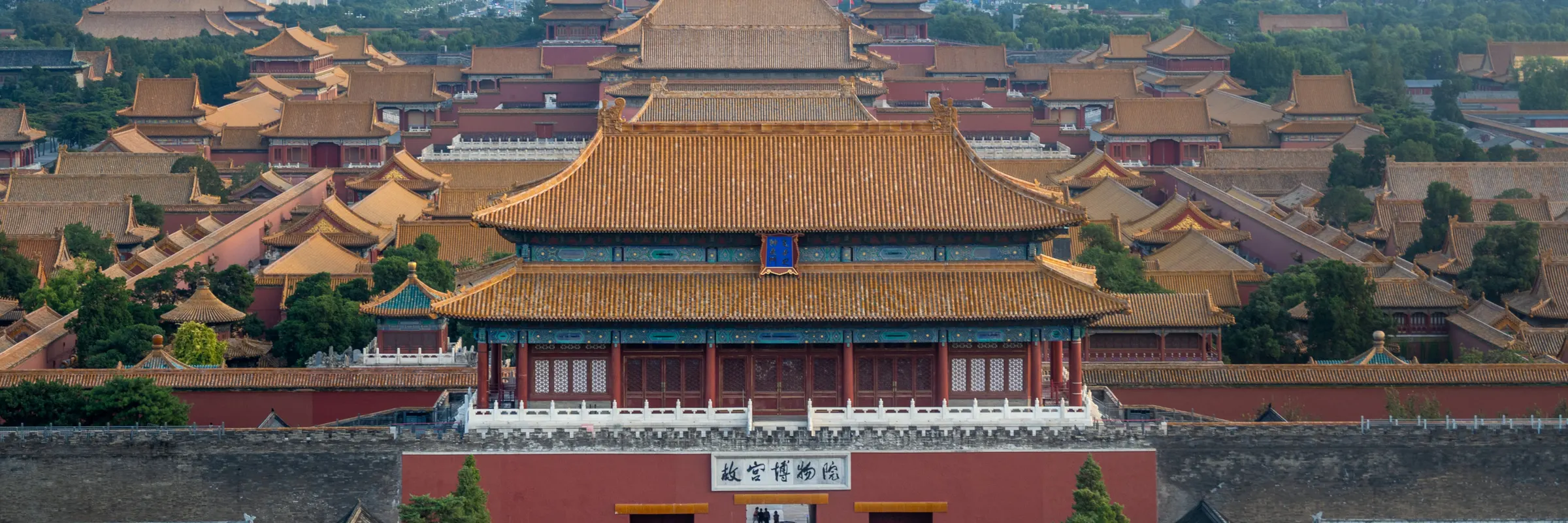
Beijing: The Forbidden City, seen from the hill in Jingshan Park
Photo: xiquinhosilva · CC BY 4.0
China

Beijing: how many days you need and the best months to go

Beijing is not difficult, but it does not improvise well. The sights are enormous and far apart, the best of them sell a fixed number of passport-linked tickets a day, and the Great Wall is not one place but a choice between several, each a different day out. On top of that sit two practical layers that catch first-time visitors: a phone that stops doing what it does at home, and a holiday calendar that can put half the country in the same courtyard as you.

Short answers

What people ask before booking

How many days do you need in Beijing?

Beijing needs four days at a minimum: one for the Forbidden City, one for the Great Wall, one for the Temple of Heaven and the hutongs, and one for the Summer Palace. Avoid the first week of October, a fixed national holiday, and book the Forbidden City ahead, because its tickets are capped and tied to your passport.

What is the best month to visit Beijing?

September and October — The golden autumn: clear and mild. May — Warm and long, before the heat.

Which months are worth avoiding in Beijing?

July and August — Heat, humidity, downpours and school holidays.

Work out how many hours you will have in Beijing on your dates

How many days Beijing needs

Four days is the honest minimum. One goes to the Forbidden City, the hill behind it and the lakes to the north; one to the Great Wall, a full day whichever section you choose; one to the Temple of Heaven and the hutong lanes; and one to the Summer Palace on the north-western edge of the city. None of these can be halved: the palace alone is a morning of walking in a single direction.

The fifth day is the one people are glad of. It takes the Lama Temple and the Confucius Temple beside it, the 798 art district in the old factory zone, or simply a day without a ticket — the only way to see how the city actually lives.

How the city is arranged, and why the map lies about distance

Beijing is built on a north–south axis and wrapped in ring roads. The Forbidden City sits at the centre; the Second Ring Road follows the line of the old city walls, pulled down in the 1960s to make way for it and for the subway beneath; and almost everything a first visit wants is inside that ring or a short ride beyond it.

The trap is scale. The city was laid out for processions, not pedestrians, so a block on the map can be a kilometre long, and a single sight is larger than the old centre of most European cities. Plan one area per half-day, and count the walk from the subway exit to the ticket gate as part of the visit.

  • The imperial centre — Tiananmen Square, the Forbidden City and Jingshan, the hill behind it, in a straight line from south to north. Jingshan was raised from the earth dug out of the palace moat.
  • The lakes and the hutongs — north of the palace: Beihai and the Shichahai lakes, the Drum and Bell Towers, the Lama Temple, and the best surviving grid of alley neighbourhoods, built of single-storey courtyard houses.
  • The south — the Temple of Heaven in its enormous park, and the old commercial quarter around Qianmen and Dashilar.
  • Chaoyang — the modern east: embassies, the towers of the business district, the bars and restaurants of Sanlitun and, further out, the 798 art district.
  • The north-west — the Summer Palace and the university district, far enough from the centre to be a half-day of their own.

Where to stay, and what each area costs you

The useful question in Beijing is which subway line is at the door, not how central the address looks. Journeys across the city are long whatever you do, a hotel beside a station on the right line saves an hour a day, and at rush hour a taxi is slower than the train.

The second decision is old city or new. The courtyard hotels in the hutongs are the most memorable rooms in Beijing and come with the lanes' limits: no car reaches the door, drivers struggle to find the address, and the walls are thin.

AreaWho it suitsThe catch
WangfujingA first visit. The Forbidden City and Tiananmen within walking distance, large hotels, and two subway lines.A district of malls and wide roads, priced for its location. The old city is somewhere else.
The hutongs around the Drum TowerCourtyard hotels, lanes on a human scale, cafés and bars on the doorstep, and the lakes a walk away.No car reaches the door, the address is hard to find, and the bar streets are loud at night.
Qianmen and DashilarBudget rooms and hostels just south of Tiananmen, close to the Temple of Heaven.The main street is a rebuilt stage set full of tour groups; the real lanes are behind it.
SanlitunThe best concentration of restaurants and bars in the city, and international hotels used to foreign guests.A long ride from every major sight, and nothing around it is old.
The business district (Guomao)Modern towers, easy rooms, and a station where the east–west line meets the loop line.Offices and ring roads: efficient, anonymous, and far from anything you came to see.

Compare these areas against your priorities

Two airports, several stations and the subway

Beijing has two international airports, sixty-five kilometres apart, and the first thing to check on any ticket is which one it means. Capital, to the north-east, is the older and the closer; Daxing, far to the south, opened in 2019. Each has its own express rail line into the subway network.

The same check applies to trains: the city has several main-line stations serving different directions, nowhere near each other. Inside the city the subway is the answer to almost everything. It is signed and announced in English, and immune to the traffic above it.

  • Every subway station has a security check. Bags go through a scanner at each entrance, which adds a few minutes to every journey and a queue at rush hour.
  • Carry your passport every day. Tickets for the major sights and for trains are sold against its number, and it is what you show at the gate.
  • Set up a payment app before you land. Daily life runs on Alipay and WeChat Pay, and both can be linked to a foreign bank card. Cash is accepted, but small vendors often cannot make change.
  • Many foreign websites and apps do not load on Chinese networks — the usual search, map, mail and messaging services among them. Hotel wifi is affected; a roaming plan or travel eSIM from home generally is not.
  • Have every address in Chinese characters. Drivers do not read romanised names.

The Great Wall: which section, and the other days out

The Wall near Beijing is a set of separate stretches, some restored and some not, each reached by a different road, and choosing the section is the whole decision. All of them take a full day. None is improved by arriving at midday with the coaches.

  • Mutianyu — restored, steep and wooded, seventy kilometres north-east of the centre, with a cable car up. Far fewer people than Badaling, and the right choice for most first visits. No train goes there: it is a hired car, a tour, or a bus and a transfer.
  • Badaling — the first section opened to visitors and still the most visited, with a high-speed train from the city to a station at its foot. The easiest to reach and by far the most crowded.
  • Jinshanling — further out, part restored and part left as it was, for people who want to walk along the Wall for hours rather than stand on it. It needs an early start and private transport.
  • The Summer Palace — inside the city, but far enough north-west to take half a day: a man-made lake, a hill built from what was dug out of it, and a long painted gallery along the shore.

How eating works here

Northern Chinese food is built on wheat, not rice: noodles, dumplings, steamed buns and flatbreads, with lamb and beef alongside the pork. Dishes are ordered for the table and shared, rice arrives only if you ask for it, and a meal for two works better as three dishes in the middle than as one large plate each.

In ordinary restaurants the menu is often a code on the table that opens inside a payment app, with photographs and little English. Pointing at pictures is normal — and it is one more reason to have the app working before the first meal.

  • Dinner is early. Everyday kitchens wind down by mid-evening, far sooner than in southern Europe.
  • Dumplings are boiled unless you ask otherwise, ordered by the portion or by weight, and dipped in dark vinegar rather than soy sauce.
  • Tap water is not drunk. Hotels provide a kettle and bottled water, and hot water is what a restaurant brings without being asked.
  • There is no tipping, in restaurants or in taxis.

Where to eat in Beijing, and what to order

Beijing's own dishes are few and specific, and the city knows exactly which they are. The mistake is to spend every meal on them. As the capital it has restaurants from every province, and a visitor who eats one roast duck and then follows the lunchtime queues of office workers will eat better than one working down a list.

  • Peking duck

    What to order

    The one dish to book a table for

    A duck roasted until the skin is glass-crisp, carved in thin slices and eaten rolled in a small pancake with spring onion, cucumber and sweet bean sauce. The two oldest houses roast it in different ovens, and both go back centuries. Order half a duck for two, and say yes to the broth made from the carcass.

    Check it on Wikidata
  • Zhajiangmian

    What to order

    A bowl of noodles for lunch, the local way

    Thick wheat noodles served plain, with a dish of dark fried bean sauce with minced pork and a row of raw toppings — cucumber, radish, bean sprouts — tipped in at the table. You mix it yourself, thoroughly, before the first mouthful. It is cheap, fast and the nearest thing the city has to an everyday dish.

    Check it on Wikidata
  • Jianbing

    What to order

    Breakfast from a cart, in two minutes

    A thin batter spread on a hot plate, an egg cracked over it, brushed with bean and chilli sauces, scattered with spring onion and coriander and folded around a sheet of crisp fried dough. Say whether you want chilli before the brush comes down. It is sold near subway exits in the morning, and gone by the hour most visitors start looking for it.

    Check it on Wikidata
  • Shuan yangrou

    What to order

    Dinner on a cold night

    A pot of plain boiling water — traditionally copper, with a chimney of coals up the middle — into which you dip paper-thin slices of mutton for a few seconds. The broth is deliberately plain; the flavour is in the sesame sauce you mix in your own bowl. It belongs to the cold months.

    Check it on Wikidata
  • Niujie

    Where to look

    A street of the city's Muslim cooking

    The main street of the Hui Muslim quarter, in the south-west of the old city, beside the oldest mosque in Beijing. This is where the city comes for its beef and mutton, its sesame flatbreads and its sweet rice cakes, from shops with a queue at each window. Eat standing up, a little from several counters rather than a meal at one.

    Check it on Wikidata
  • Tanghulu

    What to order

    Something sweet on a stick, in winter

    Hawthorn fruits threaded on a bamboo skewer and dipped in sugar syrup, which sets to a hard, clear shell in the cold air. The fruit inside is sour and slightly mealy, and that is the point against the sugar. It is a cold-weather street snack.

    Check it on Wikidata

When to go, and what each month costs you

Beijing has four sharp seasons, and the two good ones are short. Autumn is clear and mild; spring is warm but windy, with dust blowing in from the Gobi. Summer brings the heat and most of the year's rain together, and winter is cold, dry and bright. Over all of it sits the holiday calendar: in the national holiday weeks the entire country travels, and the Forbidden City and the Wall are where it goes.

  • September and October

    Go now

    The golden autumn: clear and mild

    The best weather and the best light of the year: warm days, cool nights and blue skies. The exception is the first week of October, when the National Day holiday puts the whole country on the move: the Forbidden City sells out at once and the popular Wall sections are shoulder to shoulder. Those dates are fixed, so they are easy to avoid.

  • May

    Go now

    Warm and long, before the heat

    Reliably warm, with long days, the parks in full leaf and the spring dust mostly over. The first days of the month are a national holiday and should be skipped; the rest of it is the second-best stretch of the year.

  • March and April

    Worth it, but

    Blossom, wind and dust

    The city warms fast and the fruit trees flower, but spring is also when the wind carries dust in from the Gobi desert and, in April, when the poplars and willows fill the air with drifting white fluff. Good value and lighter crowds.

  • June

    Worth it, but

    Hot, with the first summer storms

    Already properly hot, with the longest days of the year and the first summer storms arriving. It works with early starts, and it is less crowded than the school holidays that follow.

  • November

    Worth it, but

    The cold arriving, the crowds gone

    The leaves fall, the temperature drops quickly and the tour groups disappear. Around the middle of the month the city's central heating is switched on, so interiors are warm from then until spring.

  • December to February

    Worth it, but

    Bitter, bright and empty

    Dry cold, well below freezing at night, often under a clear sky. The lakes freeze and are skated on, the Wall is nearly deserted, and indoors everything is heated. Chinese New Year falls between late January and mid-February and moves every year: for that week many small restaurants close and trains sell out, while the temple fairs are the reason to be here.

  • July and August

    Think twice

    Heat, humidity, downpours and school holidays

    The hottest and the wettest weeks coincide: most of the year's rain falls in heavy summer storms, and between them the air is humid and still. It is also the national school holiday, so the palace sells out days ahead and the queues stand in the heat.

What to pack for Beijing, month by month

Things that change the trip

  • Book the Forbidden City as soon as your dates are fixed. Tickets are sold online for a named day, against your passport number, and the daily number is capped — in the good months it does sell out.
  • Walk the palace from south to north, the only direction allowed, and then climb the hill in Jingshan Park opposite the north gate. It is the one place from which the whole of it can be seen.
  • Check which airport and which railway station your ticket names. The two airports are sixty-five kilometres apart and the main stations are scattered across the city.
  • Choose the Great Wall section before you choose the day, and go on a weekday. Mutianyu for most people, Badaling only if you need the train, Jinshanling if you want to hike.
  • Get the phone working before you leave home: a payment app linked to your card, an offline map, a translation app with Chinese downloaded, and a roaming plan or travel eSIM.
  • Avoid the first week of October and the first days of May outright. They are fixed national holidays.

Plan Beijing around its scale

A trip of more than three days — which Beijing always is — or one that adds Xi'an, Shanghai and the high-speed trains between them, is what Premium is for. The free version covers one destination of up to three days.

Destinations