

Skip to content
JoruJoru
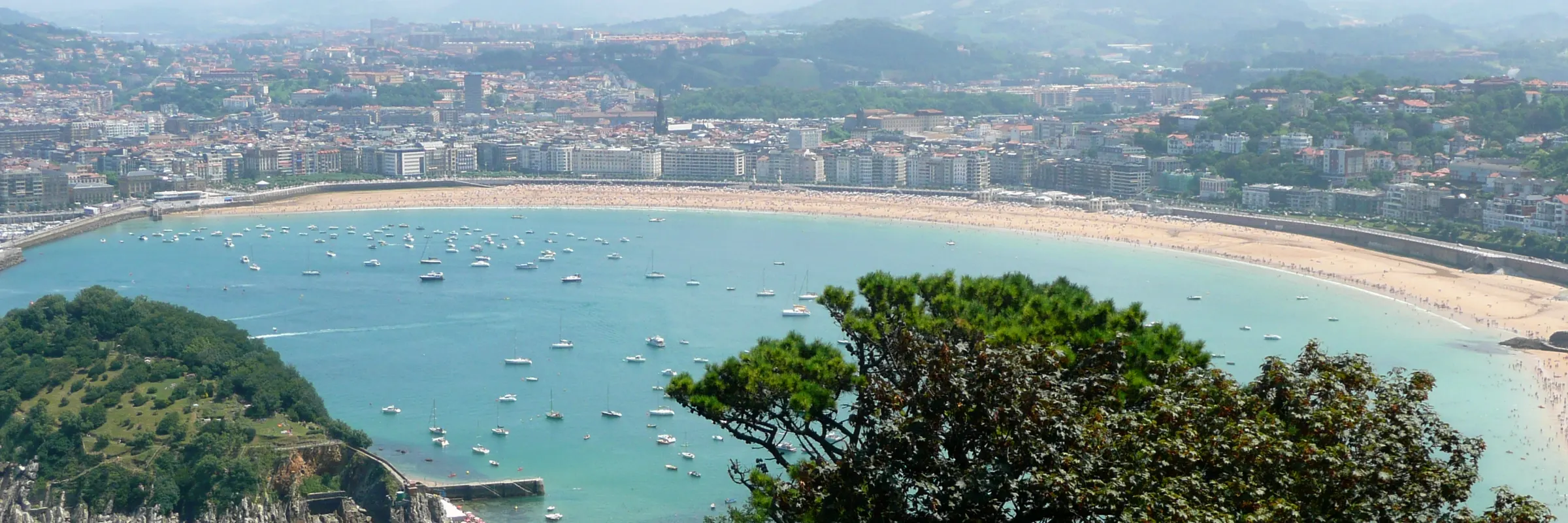
San Sebastián: The bay of La Concha and the island of Santa Clara from Monte Igueldo

Basque Country, Spain

San Sebastián: how many days you need and the best months to go

Photo: Chrisjackson · Public domain

San Sebastián, Donostia in Basque, is the most elegant small city in Spain: a crescent of sand between two green hills, a promenade of white railings and nineteenth-century villas built when the Spanish court summered here, and an old town packed into a few streets at the foot of a hill. Those streets hold the reason most people come. San Sebastián has one of the great food cultures of Europe, from the small bites piled on the counters of its bars to restaurants known all over the world. The planning problem is the season and the bars themselves. In summer the city fills and its hotels are among the dearest in Spain; and the pintxo bars, the heart of a visit, have their own rules, which make the difference between an evening of the best food in the country and an evening of the dish on the counter that everyone else ordered.

Short answers

What people ask before booking

How many days do you need in San Sebastián?

San Sebastián needs two days: one for the bay of La Concha, Monte Igueldo and the old town's pintxo bars, one for Monte Urgull, the surf beach of Gros and a long lunch. A third day is for the coast — Getaria, Zumaia, Hondarribia or the French side. Summer is the reliable season, and it sells out.

What is the best month to visit San Sebastián?

June to September — The beach season, and the city at its fullest.

Work out how many hours you will have in San Sebastián on your dates
When to go, and what each month costs you

San Sebastián has a mild Atlantic climate: warm summers that are rarely hot, cool winters that are rarely cold, and rain in every month, heaviest in autumn and winter. Summer is the reliable season for the beach; spring and autumn are a gamble on the weather and a reward on the prices.

  1. January: Worth it, but
  2. February: Worth it, but
  3. March: Worth it, but
  4. April: Worth it, but
  5. May: Worth it, but
  6. June: Go now
  7. July: Go now
  8. August: Go now
  9. September: Go now
  10. October: Worth it, but
  11. November: Worth it, but
  12. December: Worth it, but
  • June to September

    Go now

    The beach season, and the city at its fullest

    The warmest, driest months, with the beaches full and the evenings long. August is the busiest and dearest month, with a week of fireworks over the bay; September brings the regattas and the international film festival in the second half of the month. Book early for all of it.

  • May and October

    Worth it, but

    Mild, greener and cheaper

    Mild days with more rain, fewer crowds and lower prices. A good time for the bars and the coast, with a raincoat at hand; swimming is for the brave.

  • November to April

    Worth it, but

    Rain, big seas and the cider houses

    The wettest months, with Atlantic storms that throw waves over the promenade. On the twentieth of January the city's feast day is celebrated with twenty-four hours of drumming in the streets, and from January the cider houses open for the new season. The bars are at their most local.

What to pack for San Sebastián, month by month

How many days San Sebastián needs

Two days cover the city. One for the bay: the walk along La Concha to the sculptures on the rocks at its western end, the funicular up Monte Igueldo, and the old town in the evening. One for the other side: Monte Urgull above the port, the surf beach and the bars of Gros, the museum of Basque history, and a long lunch.

The third day is for the coast. The fishing villages and wine slopes west of the city, the cliffs of rippled rock at Zumaia, the walled town of Hondarribia on the French border, or France itself — Biarritz and Saint-Jean-de-Luz — are each under an hour away. Bilbao is an hour and a quarter by bus.

How the city is arranged, around two bays

San Sebastián sits between the sea and the hills. The bay of La Concha curves between Monte Igueldo in the west and Monte Urgull in the east, with an island in the middle of its mouth; east of Urgull the river Urumea meets the sea beside a second, wilder beach.

  • The old town (Parte Vieja) — the tight grid of streets at the foot of Monte Urgull, with the pintxo bars, the market and the two old churches.
  • The centre (Área Romántica) — the nineteenth-century grid of the bourgeois city, with the cathedral, the shops and the elegant buildings facing the bay.
  • La Concha and Ondarreta — the two beaches of the bay, with the promenade, the royal summer palace on its hill and the sculptures at the far end.
  • Gros — across the river: the surf beach of Zurriola, the glass cubes of the congress hall and a quieter neighbourhood of bars.
  • The hills — Igueldo, with its funicular and old amusement park, and Urgull, with the castle and the statue of Christ above the port.

Where to stay, and what each area costs you

San Sebastián is small enough that every central neighbourhood is walkable to everything else. The choice is between the bars of the old town at the door, the elegance of the bay, or the lower prices and surf of Gros.

Hotels are among the most expensive in Spain from June to September, and full for the film festival in September and the August week of fireworks. Outside summer the city is easier and cheaper, but the weather is a gamble.

AreaWho it suitsThe catch
The old townFood lovers: the pintxo bars, the market and the port are on the doorstep.Noisy until late in the bar streets, and rooms are small and dear.
The centre and La ConchaThe classic stay: elegant streets, the promenade and the beach, a few minutes from the old town.The most expensive hotels in the city, especially those facing the bay.
GrosThe surf beach, local bars and better value, ten minutes' walk from the old town over the river.Less beautiful than the bay, and the beach is rougher for swimming.
Antiguo and OndarretaQuiet streets at the calm western end of the bay, by the funicular and the sculptures.A long walk or a bus ride from the old town and its bars.

Compare these areas against your priorities

Getting there, and getting around

San Sebastián's own airport is small, with few routes; many visitors fly into Bilbao, an hour and a quarter by bus, or Biarritz across the French border. Trains from Madrid take several hours, and a local narrow-gauge train runs along the coast to the French border town of Hendaye.

In the city, you walk. The centre, the old town and the beaches are within half an hour of each other along the bay; city buses cover the hills and outer districts, and public bicycles run on flat lanes along the river and the front.

  • The funicular up Monte Igueldo has run since 1912, with the old amusement park at the top and the best view of the bay.
  • Buses run to the coast towns, including Getaria, Zarautz and Hondarribia; the coastal train serves Pasaia and the French border.
  • Leave the car outside the centre, where parking is scarce and expensive.
  • Signs are in Basque and Spanish: Donostia is San Sebastián, and many street names have two forms.

The bay, the hills and the coast

La Concha is one of the most beautiful city beaches in Europe, a curve of pale sand protected from the Atlantic swell by the island and the two hills, with a promenade that runs its whole length. Walk it at low tide, swim when the weather allows, and continue past Ondarreta to the end of the bay, where three great steel sculptures by Eduardo Chillida, the Comb of the Wind, grip the rocks in the waves.

  • Monte Urgull — the hill above the old town, with paths through woods to the castle and the statue of Christ, and views over both bays.
  • The museum of San Telmo — Basque history and society in a sixteenth-century convent with a modern extension, at the edge of the old town.
  • The Miramar Palace — the summer residence of the Spanish court, on its lawn between the two beaches of the bay.
  • Zurriola — the surf beach in Gros, with surf schools and a younger crowd.
  • Getaria and Zumaia — the fishing village of the local white wine and a fashion designer's museum, and the cliffs of folded rock layers along the coast beyond it.
  • Hondarribia and the French coast — a walled town with painted fishermen's houses on the border, and across the bay the resorts of Biarritz and Saint-Jean-de-Luz.

How the pintxo bars work

A pintxo is a bite of food on a slice of bread or a skewer, eaten standing at the bar with a small drink, and an evening out is a crawl: one or two pintxos and a drink in each bar, then on to the next. The counters are covered in cold ones; the best are often the hot ones cooked to order from the board on the wall, which many visitors never notice.

The rules are simple once known. Ask for the plate and point, or order the hot dishes from the board; keep track of what you take; pay at the end, telling the barman what you had. Go early, from about eight, or at lunchtime, when the bars are less crowded.

  • Each bar is known for one or two things: order those, not a sample of the counter.
  • The local white wine is poured from a height into a tumbler to give it a little fizz; local cider and small beers are the other drinks.
  • The city's famous restaurants book months ahead; the old town's bars need no booking.
  • Tipping is optional: rounding up or small change is enough.

Where to eat in San Sebastián, and what to order

San Sebastián is one of the great places to eat in Europe, and most of it happens standing up. Start with the pintxo that was invented here, drink the local white wine poured from a height, and finish with the burnt cheesecake that a bar in the old town made famous worldwide. In winter, go to a cider house.

  • Gilda

    What to order

    The pintxo that was invented here

    An anchovy, a green olive and a pickled green chilli on a toothpick, sharp and salty. It was created in a bar in San Sebastián in the 1940s and named after the film heroine of the day, and it is still on every counter. The perfect first bite with a glass of wine.

    Check it on Wikidata
  • Txakoli

    What to order

    The local white wine, poured from a height

    A young, dry, slightly sparkling white wine from the coastal hills around Getaria, with a sharp acidity. The barman pours it from high above the glass to wake up the bubbles; it goes with everything on the counter.

    Check it on Wikidata
  • Tarta de queso de La Viña

    What to order

    The burnt cheesecake of the old town

    A crustless cheesecake baked at a high heat until the top is almost black and the inside soft and creamy. A bar in the old town created it in the 1990s, and it has since been copied all over the world; the original is still served there by the slice.

    Check it on Wikidata
  • Idiazabal

    What to order

    The sheep's cheese of the hills

    A hard cheese of raw sheep's milk from the Basque mountains, sometimes lightly smoked, with a nutty, buttery taste. It is on every pintxo counter and in every cheese shop; buy a wedge to take home.

    Check it on Wikidata
  • Sagardotegi

    Where to look

    A cider house in season

    The cider houses of the valleys south of the city open from January to spring for the new cider, drawn straight from the barrel into the glass to the cry of txotx. The meal is fixed: cod omelette, cod with peppers, a huge beef chop and cheese with walnuts, eaten standing between barrels. A night out more than a dinner.

    Check it on Wikidata

Things that change the trip

  1. Order the hot pintxos from the board, and the speciality of each bar rather than a tour of the counter.
  2. Go to the bars early in the evening or at lunchtime, before the crowds.
  3. Book a table at a famous restaurant months ahead, or skip it: the bars are the real thing.
  4. Pack a raincoat in every season.
  5. Walk the bay to the sculptures at the western end, at low tide if you can.
  6. In winter or early spring, go to a cider house in the valleys south of the city.

Plan San Sebastián with the Basque coast

A trip of more than three days, or one that joins San Sebastián, Bilbao and the French Basque coast with the buses and trains between them, is what Premium is for. The free version covers one destination of up to three days.

Destinations