


Skip to content
JoruJoru
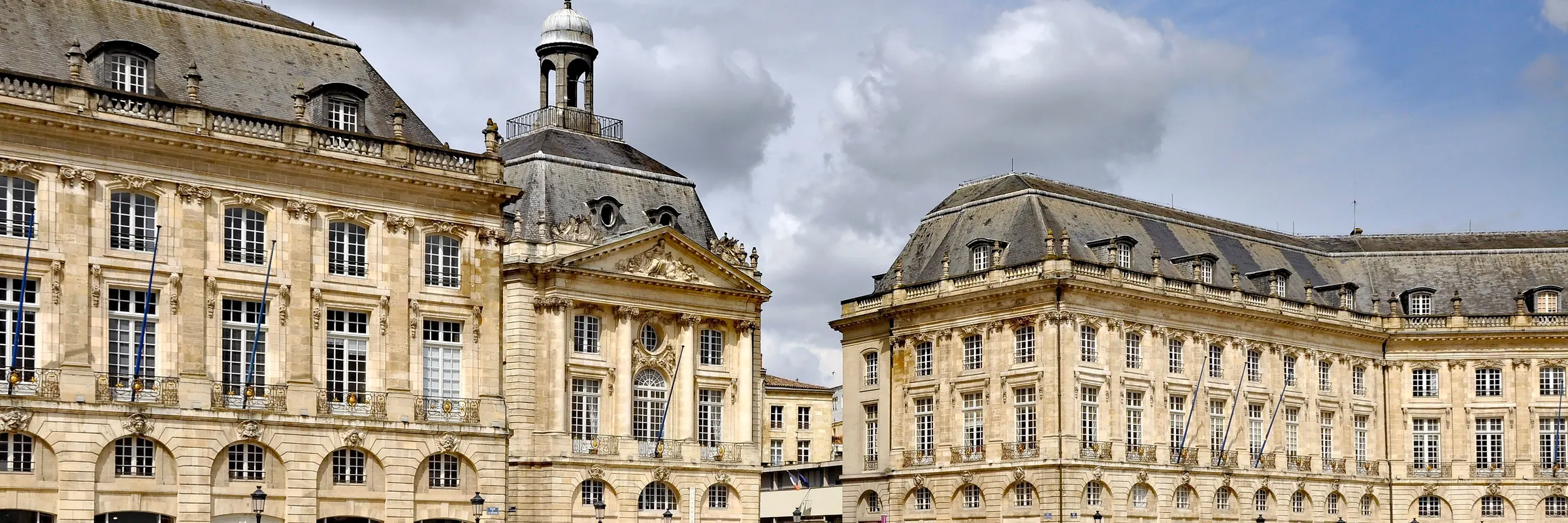
Bordeaux: The palaces of the Place de la Bourse

Nouvelle-Aquitaine, France

Bordeaux: how many days you need and the best months to go

Photo: P. Hughes · CC BY 4.0

Bordeaux grew rich on wine and trade, and in the eighteenth century it rebuilt itself in pale golden limestone: long quays of classical façades along a crescent bend of the river Garonne, grand squares, a great theatre, and whole streets that make it one of the great ensembles of that century's architecture in Europe. For years the stone was black with soot and the quays were warehouses; cleaned and opened up at the turn of this century, the city is now a World Heritage Site and one of the most pleasant in the country, with trams gliding past the façades, a shallow pool on the quays that reflects the stock exchange palace, and a lively food and wine scene. All around it lie the vineyards that made its name: the châteaux of the Médoc to the north, the hill village of Saint-Émilion to the east, the sweet wines of Sauternes to the south, and the Atlantic oysters and great dune of Arcachon to the west. The planning problem is the balance between the city and the wine. The great estates are spread out, many can be visited only by appointment, and the city itself deserves its own days. Decide which vineyards you want, book them, and leave time for Bordeaux.

Short answers

What people ask before booking

How many days do you need in Bordeaux?

Bordeaux needs two days: one for the heart of the city — the Place de la Bourse and its water mirror, the old quarter of Saint-Pierre, the cathedral and the Grand Théâtre — and one for the wine museum, the Chartrons and the markets. A third day is for the vineyards: Saint-Émilion by train, or the Médoc with a car or a tour.

What is the best month to visit Bordeaux?

May and June — Warm, green and lively. September and October — The grape harvest.

Work out how many hours you will have in Bordeaux on your dates
When to go, and what each month costs you

Bordeaux has a mild Atlantic climate: warm summers, mild, wet winters, and long springs and autumns. The best seasons are late spring and the autumn of the grape harvest, when the vineyards are at their most beautiful.

  1. January: Worth it, but
  2. February: Worth it, but
  3. March: Worth it, but
  4. April: Worth it, but
  5. May: Go now
  6. June: Go now
  7. July: Worth it, but
  8. August: Worth it, but
  9. September: Go now
  10. October: Go now
  11. November: Worth it, but
  12. December: Worth it, but
  • May and June

    Go now

    Warm, green and lively

    Warm days, green vineyards and terraces on the squares and the quays. The best time to walk the city and to visit the vineyards before the summer heat.

  • September and October

    Go now

    The grape harvest

    Warm days and the grape harvest in the vineyards, golden in October. The busiest time for the châteaux, some of which close to visitors during the harvest; book ahead.

  • July and August

    Worth it, but

    Hot, and the ocean nearby

    Hot days, sometimes very hot, with the Atlantic beaches an hour away. Some restaurants close for part of August; the city is quieter than the coast.

  • November to April

    Worth it, but

    Mild, wet and quiet

    Mild, often wet days and short evenings. The quietest season, good for the city's museums and restaurants. The water mirror is switched off, many châteaux receive visitors only by appointment, and some close for the winter.

What to pack for Bordeaux, month by month

How many days Bordeaux needs

One day for the city is enough to see its heart: the Place de la Bourse and its water mirror, the old quarter of Saint-Pierre, the cathedral and the Pey-Berland tower, the Grand Théâtre and the elegant streets of the golden triangle, with the quays at sunset. A second day adds the wine museum by the river, the Chartrons quarter and the markets.

The third day is for the vineyards: Saint-Émilion, a medieval village among its vines and a World Heritage Site, is under an hour by train; the châteaux of the Médoc need a car or a tour; and the great dune of Pilat and the oysters of the Arcachon bay are about an hour west.

How the city is arranged, along the river

Bordeaux follows the left bank of the Garonne in a crescent, which gave it the name of the «port of the moon». The historic centre lies along the quays, from the Chartrons in the north to the Saint-Michel quarter in the south; the main station, Saint-Jean, is at the southern end, and the right bank across the river is the newer, greener side.

  • The golden triangle — the elegant eighteenth-century streets between the Grand Théâtre, the Place Gambetta and the Place Tourny.
  • Saint-Pierre and the quays — the old quarter behind the Place de la Bourse, with lanes, squares and restaurants down to the river.
  • The Chartrons — the old wine merchants' quarter to the north, with antique shops, a market and cafés.
  • Saint-Michel and the station — the southern quarters, with a flea market around its great bell tower and a more mixed, cheaper feel.
  • The right bank — the newer side across the river, with gardens and the view of the façades of the quays.

Where to stay, and what each area costs you

The historic centre is compact and walkable, and the trams link it with the station and the rest. The golden triangle and Saint-Pierre are the most central, the Chartrons the most charming, and the station area the cheapest.

Prices rise in summer, during the big trade fairs and the wine trade's events, and at the weekend. The city charges a tourist tax per person and per night.

AreaWho it suitsThe catch
The golden triangleElegant streets, the Grand Théâtre and the best shops and restaurants on foot.The dearest rooms in the city.
Saint-PierreThe old lanes, the squares and the quays, with restaurants and bars everywhere.Noisy at night around the bars.
The ChartronsA village feel, antique shops, a Sunday market and cafés, by the wine museum.A tram ride from the station.
Around the stationTrains to Saint-Émilion, Arcachon and Paris, and the cheapest hotels.Some rough streets, and a tram ride from the centre.

Compare these areas against your priorities

Getting there, and getting around

Bordeaux is about two hours from Paris by high-speed train, with lines to Toulouse, the Basque coast and Spain. The airport is linked to the centre by a fast bus and a tram.

The centre is for walking, and the trams cover the rest of the city. For the vineyards, Saint-Émilion and Arcachon are reached by train; the châteaux of the Médoc and Sauternes need a car or a guided tour.

  • Book château visits ahead: many estates receive visitors only by appointment.
  • If you drive to taste wine, choose a driver or a tour; drink-driving laws in France are strict.
  • A city pass covers transport, many museums and a guided tour, and pays off with several visits.
  • Rent a bicycle: the city is flat and has lanes along the quays.

The quays, the wine museum and the vineyards

The Place de la Bourse is the image of Bordeaux: a square of classical palaces opening onto the river, and in front of it the water mirror, a thin sheet of water on black granite that reflects the façades and, at intervals, turns into a cloud of mist. Come at dusk, when the palaces are lit and the mirror doubles them; it is switched off in winter.

  • The Cité du Vin — a museum of wine in a curving building on the river, with a tasting at the top.
  • Saint-Émilion — a medieval village of golden stone among its vineyards, with an underground church carved into the rock.
  • The Grand Théâtre — the great eighteenth-century theatre, with a portico of twelve columns and statues.
  • The Pey-Berland tower — the bell tower beside the cathedral, with the view over the roofs.
  • The Médoc — the road of great wine châteaux north of the city, along the Gironde estuary.
  • The dune of Pilat and Arcachon — the highest sand dune in Europe and the oyster bay at its foot, about an hour west.

How eating works here

Bordeaux eats with its wine: steak grilled over vine cuttings with a sauce of red wine and shallots, oysters from the Arcachon bay with sausages, lamprey stewed in red wine, and the small caramelised cakes that are the city's pastry. The wine bars of the centre pour the region's wines by the glass.

French hours apply: lunch from noon to two, dinner from half past seven. The menu of the day at lunch is the best value, and many restaurants close on Sundays.

  • Oysters are eaten with small grilled sausages, a local custom.
  • Wine bars pour the great appellations by the glass, a cheaper way to taste them.
  • The Capucins market is the city's great food market, best on weekend mornings.
  • Service is included: rounding up or a few euros is enough.

Where to eat in Bordeaux, and what to order

Bordeaux's table is set around wine: steak with a red wine and shallot sauce, lamprey stewed in red wine, small caramelised cakes, and the region's wines by the glass. Shop at the Capucins market in the morning, and eat oysters at its counters.

  • Canelé

    What to order

    The small caramelised cakes

    Small fluted cakes with a dark, caramelised crust and a soft, custardy centre flavoured with rum and vanilla. They are the city's pastry, said to have been made by nuns with the egg yolks left over from clarifying wine with egg whites.

    Check it on Wikidata
  • Entrecôte à la bordelaise

    What to order

    Steak with the Bordeaux sauce

    A rib steak grilled over vine cuttings and served with a sauce of red wine, shallots and bone marrow. It is the classic plate of the city's brasseries, with a glass of the red.

    Check it on Wikidata
  • Lamproie à la bordelaise

    What to order

    Lamprey in red wine

    Lamprey, an eel-like river fish, stewed slowly with leeks in a dark sauce of red wine thickened with its own blood. A rare old dish of the Gironde, served in spring in traditional restaurants; for the curious.

    Check it on Wikidata
  • Vin de Bordeaux

    What to order

    The wines of Bordeaux

    Red wines blended mostly from Merlot and Cabernet grapes, dry whites, and the sweet whites of Sauternes, from thousands of estates around the city. The wine bars of the centre and the Cité du Vin are the easiest places to taste them before choosing a vineyard to visit.

    Check it on Wikidata
  • Marché des Capucins

    Market

    The Capucins market

    The city's covered food market near Saint-Michel, with stalls of cheese, meat, fish and vegetables, and counters for oysters and white wine. Come on a weekend morning, when it is at its liveliest.

    Check it on Wikidata

Things that change the trip

  1. Book the château visits ahead, and choose a driver or a tour for the tastings.
  2. Take the train to Saint-Émilion for a day among the vines.
  3. Go to the water mirror at dusk.
  4. Taste the great wines by the glass in a wine bar before visiting a château.
  5. Eat oysters with sausages at the Capucins market on a weekend morning.
  6. Give a day to the dune of Pilat and Arcachon in summer.

Plan Bordeaux with its vineyards

A trip of more than three days, or one that joins Bordeaux with Saint-Émilion, the Médoc, Arcachon, the Basque coast or the Dordogne and the trains and roads between them, is what Premium is for. The free version covers one destination of up to three days.

Destinations