


Skip to content
JoruJoru
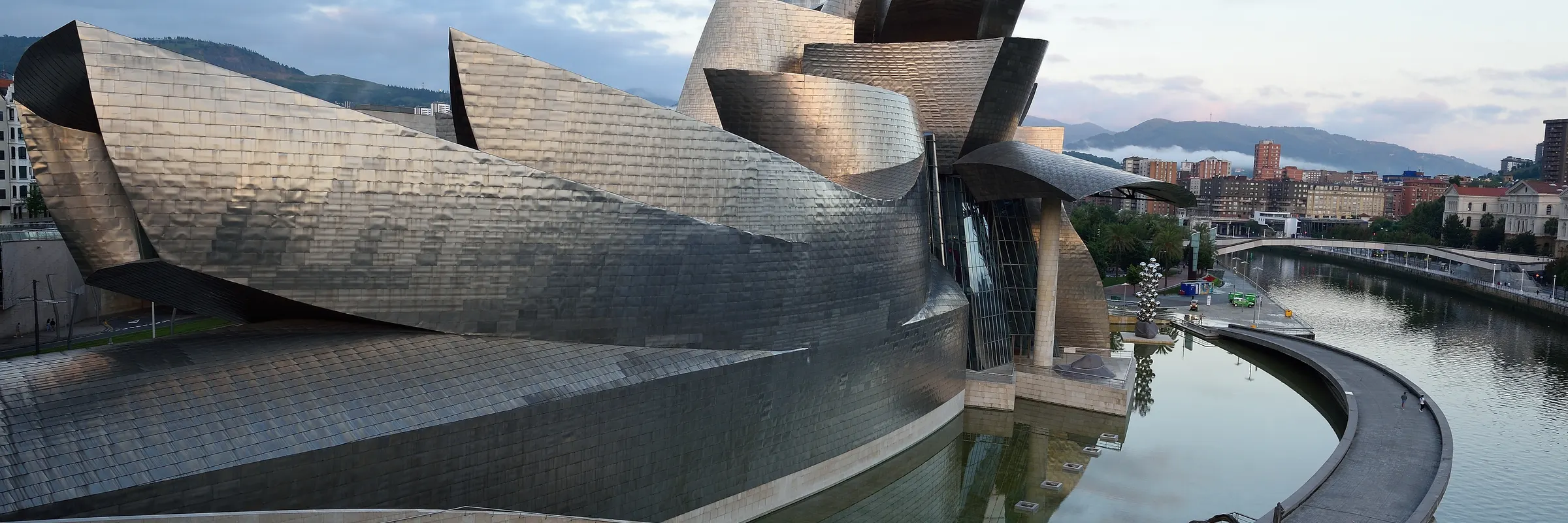
Bilbao: the Guggenheim Museum on the Nervión river

Basque Country, Spain

Bilbao: how many days you need and when it is worth most

Photo: Tim Adams from San Francisco · CC BY 2.0

Bilbao is small enough to walk and dense enough to fill three days without repeating yourself. It is also the city Joru uses in its own screenshots, which is not an accident: it is close to the ideal shape for a planned itinerary — compact, well connected, and with a clear split between the old town and the new one.

Short answers

What people ask before booking

How many days do you need in Bilbao?

Bilbao needs two days to be covered properly — the Casco Viejo and the riverside on one, Abandoibarra and the museums on the other — and a third if you want to add the coast.

What is the best month to visit Bilbao?

May and June — The best odds of the year. September — Warm sea, fewer people.

Work out how many hours you will have in Bilbao on your dates
When to go, and the rain problem

Bilbao is green for a reason. Rain here is not a season you can dodge by picking the right month — it is a possibility most of the year, and an itinerary that ignores it falls apart on the first wet afternoon.

  1. January: Worth it, but
  2. February: Worth it, but
  3. March: Worth it, but
  4. April: Worth it, but
  5. May: Go now
  6. June: Go now
  7. July: Worth it, but
  8. August: Worth it, but
  9. September: Go now
  10. October: Worth it, but
  11. November: Worth it, but
  12. December: Worth it, but
  • May and June

    Go now

    The best odds of the year

    Warm without being hot, long days, and the lowest rainfall of the calendar. Still not a guarantee — this is the Atlantic coast — but the best bet you get.

  • September

    Go now

    Warm sea, fewer people

    The water is at its warmest of the year and the summer crowds have gone. Aste Nagusia, the city's big festival, falls in the second half of August and fills the old town completely.

  • July and August

    Worth it, but

    Busy, but not the furnace the rest of Spain is

    The northern coast stays comfortable while the interior of Spain does not, which is exactly why it fills up with Spanish visitors. Book ahead and expect the old town to be busy.

  • October to April

    Worth it, but

    Wet, mild and cheap

    Rarely cold, frequently wet, and much quieter. Perfectly good for a trip built around museums, markets and food — which is a large part of what Bilbao is for anyway.

What to pack for Bilbao, month by month

How many days Bilbao actually needs

Two days covers the city properly: one for the Casco Viejo and the riverside, one for the Abandoibarra side and the museums. A third day is what turns a good trip into a memorable one, because it buys you the coast — Getxo, the transporter bridge, or further out towards the Basque shoreline — without cutting anything from the city itself.

Beyond three days, Bilbao works better as a base than as a destination. San Sebastián, Vitoria-Gasteiz and the Rioja Alavesa are all close enough for a day trip, which is exactly the shape Joru's multi-destination planning is built for.

How the city is laid out

The river does the organising. Almost everything you will want is on one bank or the other, and the walk between them is short enough that you should not plan around transport — you should plan around which side you are on.

  • Casco Viejo, the old town: tight streets, the market, and where the evening happens. Best on foot, and best not rushed.
  • Abando and Indautxu: the nineteenth-century grid, wide streets, most of the shopping and a lot of the food.
  • Abandoibarra: the redeveloped riverside, the Guggenheim, and the long walk along the water that connects it all.
  • The estuary out to the coast: reachable by metro, and the reason a third day is worth having.

Where to stay in a city you can cross on foot

Bilbao is small enough that the neighbourhood choice matters little for distance and a lot for atmosphere. From one useful end to the other is half an hour walking along the river, so here you choose by what you want below your window, not by connections.

The real divide is simple: the Casco Viejo is where the txikiteo happens and where the weekend noise is; the Ensanche, across the river, is where you sleep.

AreaWho it suitsThe catch
Abando and IndautxuThe best base: the new town, with metro, shops and ten minutes from everything.It is the most modern and least characterful part; the charm is across the water.
Casco ViejoAnyone here for pintxos who wants to step out onto the bar street.Noise until late at weekends, and narrow streets.
Abandoibarra and DeustoNext to the Guggenheim, modern, quiet, riverside walk at the door.Little street life: for dinner you cross to the centre or the old town.
GetxoAnyone here for the coast who would rather sleep by the sea.Half an hour on the metro from the centre, and that is two journeys every day.

Compare these areas against your priorities

Airport to centre, and the day trip the metro makes for you

Loiu airport is very close and has no train: you leave by bus, which reaches the centre in just over twenty minutes and stops at the coach station and several points in the new town. It is simple and there is no decision to make; a taxi costs considerably more to save very little time.

Within the city, the metro has two lines that follow the river and do something almost no metro does: they drop you at the beach. The line towards Plentzia runs through Getxo and ends by the sea, so an afternoon on the coast needs neither a car nor an organised tour.

  • The Barik card covers metro, tram, city bus and the Artxanda funicular. It works out considerably cheaper than single tickets.
  • The Artxanda funicular climbs to the viewpoint in three minutes, and that is where the city's layout finally makes sense. It is public transport, costs very little and almost nobody mentions it.
  • The Vizcaya Bridge at Portugalete is a World Heritage Site and still runs as transport, ferrying cars and people across in a gondola. The metro takes you there.
  • The tram follows the river and links the Casco Viejo to the Guggenheim without hills. In the rain it is the comfortable way to cross the centre.

Day trips from Bilbao

Bilbao is northern Spain's best base because it has sea, mountains and two major cities within an hour. What decides things here is whether you have a car: the Biscay coast is spectacular and public transport reaches parts of it, not all of it.

  • San Juan de Gaztelugatxe — the hermitage on an islet with the stone staircase. Booking is compulsory and free, it sells out in summer, and you should count the walk down and back up. Buses go, but the timetable is thin.
  • San Sebastián — an hour on a frequent direct coach. La Concha, the old town and one of Europe's great eating cities. The trip most people make, and rightly.
  • Gernika — half an hour by train. The peace museum and the oak; a short, weighty visit that pairs well with the Urdaibai coast.
  • Getxo and Portugalete — barely a day trip since it is city metro, but it gives you a full afternoon of seafront promenade, mansions and the transporter bridge.
  • Rioja Alavesa — wineries a good hour south. Needs a car or an organised tour, and visits are booked ahead.

Pintxos: what you need to know not to get it wrong

The mistake people make in Bilbao and across the Basque Country is treating pintxos as tapas. They are not free and they do not come with the drink: you pay for each one, at the listed price. What you see on the bar is only half the offer; the other half is on a blackboard, cooked to order, and it is usually the best thing there.

The local custom is the txikiteo: one pintxo and a small glass of wine in each bar, then on to the next. Sitting down in the first place and ordering six things is the exact opposite of how it works, and it is also how you eat worse and pay more.

  • In many bars you help yourself and pay at the end, on trust. You say what you had and that is that; nobody is counting.
  • Order from the blackboard. What is on the bar has been sitting a while; the hot ones are made to order and show what the kitchen can do.
  • Txakoli is poured from a height to aerate it, and drunk young and cold. It is the local wine and goes with nearly everything.
  • Txikiteo hours are before lunch, around one, and before dinner, around eight. Outside those windows many bars have a half-empty counter.
  • A sidrería is not a restaurant: there is a fixed menu, you pour from the barrel, and it is a group event. Worth doing, in season, with a booking.

Where to eat in Bilbao, and what to order

Bilbao does not really do restaurants at lunchtime the way the rest of Spain does — it does bars with food on the counter, and the format is the whole point. You order one thing, eat it standing, and move to the next bar. Three or four bars is a meal. Sitting down for two hours in one place is the tourist version of a night out here.

  • Pintxo

    What to order

    Understanding what you are actually ordering

    A pintxo is a small plate, usually on a slice of bread with a stick through it, and it is not a free tapa — you pay per piece here. The good ones are made to order from a short list on the wall, not the cold ones already sitting on the bar. Ask for what is hot.

    Check it on Wikidata
  • Plaza Nueva

    Where to look

    The one place to start, if you start anywhere

    A neoclassical arcaded square in the old town, lined on all four sides with pintxo bars. Doing a lap and eating one thing in three of them is the standard evening. Sunday mornings there is a market under the arcades. It is busiest and best from about eight in the evening.

    Check it on Wikidata
  • Mercado de la Ribera

    Market

    A market big enough to be a landmark

    One of the largest covered markets in Europe, on the river beside the old town. The ground floor is bars and prepared food, the upper floors are fish and produce. Good for lunch and, unusually, good on a rainy afternoon — which in Bilbao is a category of afternoon you should plan for.

    Check it on Wikidata
  • Txakoli

    What to order

    The drink that goes with all of it

    A young, slightly fizzy local white, poured from a height into a wide glass to open it up. It is low in alcohol on purpose, because the point is to have one at each bar. Ordering wine by grape variety marks you as a visitor; ordering this marks you as someone who has been before.

    Check it on Wikidata

What a trip to Bilbao costs, and how to pay there

Things that change the trip

  1. Keep one indoor day and one outdoor day loose, and assign them when you see the forecast. In this city that single habit is worth more than any other piece of planning.
  2. Pintxos are ordered and paid per item at the bar, not brought to a table. Two or three bars in an evening is the normal pattern, not one long dinner.
  3. The Guggenheim closes one day a week outside high season. Worth checking before it anchors your day.
  4. The metro out to Getxo and the coast is fast and cheap, and turns a spare afternoon into a genuinely different place.
  5. The old town is walkable from almost anywhere central; the tram along the river is scenic but rarely faster than walking.

Plan Bilbao on your phone

A two- or three-day Bilbao trip is inside the free version: one destination, up to three days, no account. Longer trips and day trips out to the coast are Premium.

Destinations