Skip to content
JoruJoru
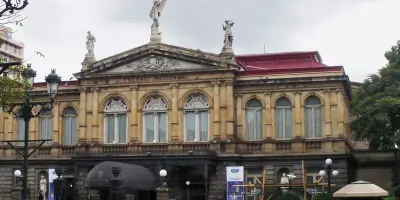
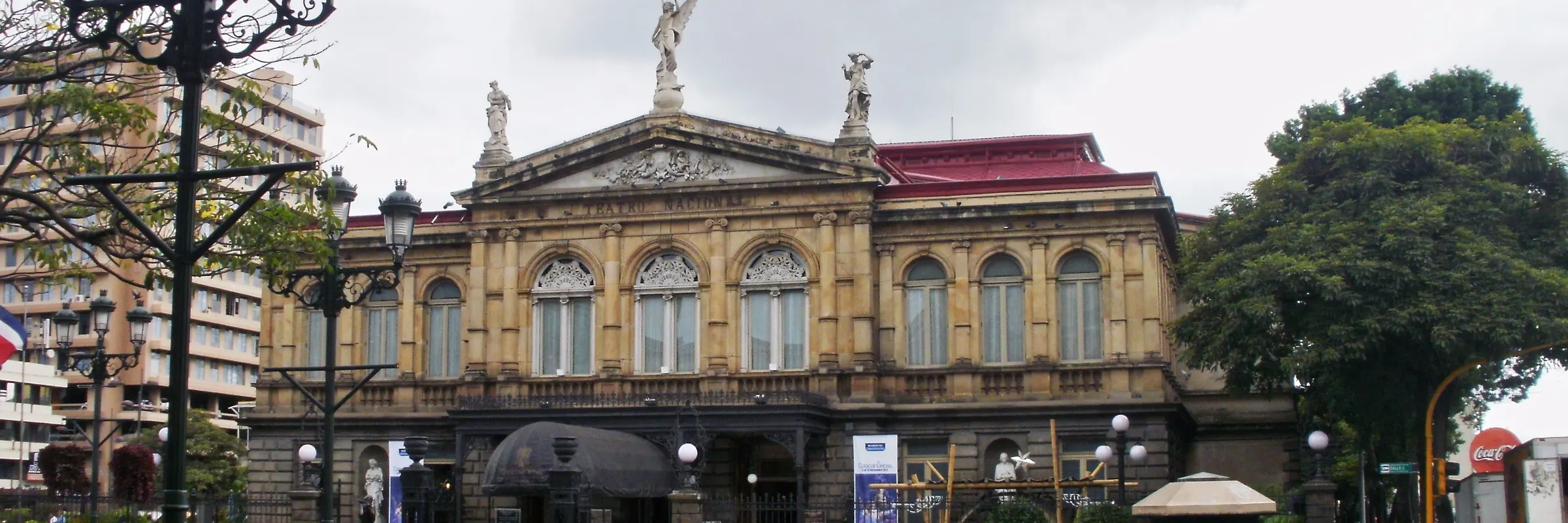
San José: The National Theatre, on the Plaza de la Cultura
Photo: hh oldman · CC BY 3.0
Costa Rica

San José: how many days you need and the best months to go

San José is where your flight lands and where your bus leaves from, and almost every guide tells you to get out of it as fast as possible. That advice is half right. It is not a beautiful city — an earthquake-prone valley and a coffee boom built it in corrugated iron and concrete rather than stone — but it holds the country's museums, its best food scene and its only real urban life, and it is the hub from which everything else is two to four hours away. One full day is honest. Two if you like cities.

Short answers

What people ask before booking

How many days do you need in San José?

San José needs one full day for the gold museum, the central market and the National Theatre, and two if you want the volcanoes and coffee farms around it. It is the hub, not the destination: everything else in Costa Rica is two to four hours away.

What is the best month to visit San José?

December, January, February and March — Dry season: reliable weather, and everyone knows it. April — The end of the dry season, with the crowds thinning.

Which months are worth avoiding in San José?

September and October — The wettest months on the Pacific side.

How many days San José needs

One full day genuinely covers it: the Pre-Columbian Gold Museum and the Jade Museum in the morning, the Mercado Central and the centre at midday, the National Theatre and Barrio Amón in the afternoon. That is the city, and it is a good day.

Two days is worth it only if you want the day trips, and those are excellent: the Poás and Irazú volcanoes are both an easy drive with a crater you can look into, the Orosi valley and the ruins at Ujarrás make a loop, and the coffee farms on the slopes above the city do proper tours. Beyond two days you should be at a coast or in a cloud forest. The mistake is not spending too little time here; it is arriving at ten at night and booking a shuttle out at six in the morning, which turns a day you could have used into an airport hotel.

Why the city looks the way it does

San José was a village until the late 1700s and only became the capital in 1823, after independence. What built it was coffee: Costa Rica was the first Central American country to grow it commercially, the export boom paid for the city, and the National Theatre — the one genuinely magnificent building here — was funded by a tax the coffee growers put on themselves after a European soprano refused to tour the country for lack of a venue.

What it lacks is a colonial core, and the reason is geology. The valley is seismically active and the city has been shaken repeatedly, so heavy stone and adobe were abandoned early in favour of timber, corrugated iron and later concrete. The result is a capital with almost no old skyline, a handful of superb interiors, and its charm concentrated in a few neighbourhoods rather than spread across a centre.

  • Pre-Columbian Gold Museum — under the Plaza de la Cultura, and the best museum in the country. Give it two hours.
  • National Theatre — the 1897 opera house the coffee growers paid for. Go inside; the outside undersells it.
  • Mercado Central — a covered block of stalls and sodas since 1880. Lunch here, not in a restaurant.
  • Barrio Amón and Barrio Escalante — the coffee-baron houses and, next door, where the city actually eats and drinks now.
  • National Museum — in a former barracks, with the bullet holes left in the walls from 1948 and the story of why Costa Rica has no army.

The army that does not exist

In 1948 Costa Rica fought a six-week civil war, and the side that won did something almost unique: the following year it abolished the army in the constitution and redirected the military budget to education and health. The abolition was symbolically performed by knocking a hole in the wall of the Bellavista barracks, which is now the National Museum. The bullet holes are still in the outside wall.

This is not trivia; it is the single fact that explains the country you are travelling in. Costa Rica has had no standing army since 1949, has one of the highest literacy rates and life expectancies in the Americas, and protects a quarter of its land area — which is why the national parks exist at the scale they do. An hour in the National Museum is the cheapest way to understand why the rest of the trip looks like it does.

The altitude, and what it does to the weather

San José sits at about eleven hundred metres in the Central Valley, and that altitude is the reason the capital of a tropical country is comfortable. Days are warm and nights are cool all year, and the annual temperature range is tiny — the difference between months is smaller than the difference between morning and afternoon.

What changes is rain, not heat. The dry season runs roughly December to April and the green season May to November, and the green season is not a washout: it typically means clear mornings and a heavy downpour in the afternoon, which you can plan around. September and October are the exception — those are the wettest months on the Pacific side and the ones that can rain all day. There is also a short drier spell around July, called the veranillo, the little summer, which is real but not reliable.

Getting to the rest of the country

San José is the hub and the distances are short on the map and long on the road. Manuel Antonio is about three hours, La Fortuna and Arenal about three, Monteverde three to four, the Caribbean coast at Puerto Viejo four to five. Nothing is far; everything is slow, because the roads are mountainous and often single-lane.

Three ways to move. Public buses are cheap, frequent and leave from a scatter of terminals around the centre rather than one station. Tourist shuttles are the default for most visitors — door to door, several times a day on the main routes, and worth the difference. Renting a car buys real freedom but a four-wheel drive is genuinely needed for some destinations and not for others; check the specific road, not the country. Domestic flights cut a five-hour drive to forty minutes and are worth it for the far south or the Osa peninsula.

Practical things worth knowing

Addresses here do not use street numbers. Directions are given from landmarks in metres — two hundred metres east and fifty south of the old fig tree — and the landmark is sometimes a building that no longer exists. Taxi drivers know the system; map apps mostly work; have your hotel's directions written down the way a local would say them.

Two more. Official red taxis have a meter, called a maría, and you should ask for it to be used; ride-hailing apps operate widely and are what most visitors default to. And the centre is safe by day and thins out sharply after dark — Barrio Escalante and Barrio Amón are where you want to be in the evening, not the blocks around the Coca-Cola bus terminal.

What to eat in San José, and where

Costa Rican home cooking is mild, rice-and-bean based and served in family places called sodas — the food is not spicy, and asking for hot sauce is normal. The coffee is the thing this country is genuinely great at, and until recently it exported all the good stuff.

  • Gallo pinto

    What to order

    Breakfast, and what a Costa Rican eats every morning

    Rice and black beans fried together with onion, coriander and a local sauce until the rice takes the colour of the beans, served with eggs, plantain and sour cream. Wikidata files it as a Nicaraguan dish and the two countries argue about it seriously — the versions differ, and the argument is part of the fun. Order it for breakfast, which is when it is meant to be eaten.

    Check it on Wikidata
  • Chifrijo

    What to order

    The one dish that was invented in this city

    A glass or bowl layered with beans, rice, crisp fried pork and pico de gallo, with tortilla chips to scoop it, invented in a San José bar in the 1990s. It is the rare Costa Rican dish with a known inventor and a known decade, and it does not exist outside the country. Bar food, meant to be shared with a beer.

    Check it on Wikidata
  • Olla de carne

    What to order

    What Sunday lunch is

    A beef and vegetable stew with cassava, plantain, sweet potato, corn and chayote, simmered until the broth carries everything. It is the Sunday dish and the one a soda cooks when it wants to feed you properly. Served as a soup first and the solids after, which is normal and not a mistake.

    Check it on Wikidata
  • Café de Costa Rica

    What to order

    The thing Costa Rica is genuinely world-class at

    High-altitude arabica from the slopes around the valley, and the law here is unusual: Costa Rica banned the planting of robusta for decades in order to protect quality, so what grows is arabica by rule. For a long time the best beans were all exported and locals drank the leftovers; that has changed, and the cafés in Barrio Escalante are excellent. Buy beans in the city, not at the airport.

    Check it on Wikidata
  • Mercado Central de San José

    Market

    Where to have lunch, once

    A covered block of stalls, butchers, flower sellers and small counters that has been running since 1880 in the middle of the centre. The sodas inside are where to eat a casado — the everyday plate of rice, beans, salad, plantain and a protein — for a fraction of a restaurant price. Busy at noon, which is the point.

    Check it on Wikidata

When to go, and what each month costs you

Temperature barely moves here; rain is the only variable that matters, and the split is dry season roughly December to April against a green season from May to November. The green season is mostly clear mornings and afternoon storms — except for two months, which are not.

  • December, January, February and March

    Go now

    Dry season: reliable weather, and everyone knows it

    Clear days, little rain, and every road and trail in the country open and passable. This is high season across Costa Rica, so prices are at their peak, the parks have queues and Christmas and Easter week book out months ahead. The weather is worth it; the crowds are the price.

  • April

    Go now

    The end of the dry season, with the crowds thinning

    Still dry through most of the month, with the high-season traffic gone after Easter and prices starting to fall. The best value in the dry half of the year. The landscape is at its driest and brownest on the Pacific side, which matters more for the coast than for the valley.

  • November

    Worth it, but

    The rains end, and the country turns green

    The wet season is winding down, the landscape is at its greenest and the crowds have not arrived yet. The first half can still be very wet and the second is often excellent, which makes it a gamble that usually pays. Low prices, few people, and rivers running full.

  • May and June

    Worth it, but

    Green season starts: clear mornings, afternoon storms

    The rain returns as a pattern rather than a wall — bright mornings, a heavy downpour after lunch, clear evenings. Everything is green, prices drop sharply and the parks empty out. Plan activities before noon and this is one of the better-value windows in the year.

  • July and August

    Worth it, but

    The veranillo, and the northern-hemisphere holidays

    A short drier spell called the little summer usually falls in this stretch, though it is a tendency and not a guarantee. Northern school holidays push prices back up despite it being the green season, so it is neither the cheapest nor the driest. Good for wildlife; turtle nesting is under way on both coasts.

  • September and October

    Think twice

    The wettest months on the Pacific side

    The peak of the rains, and the one stretch where it can genuinely rain all day rather than all afternoon. Some Pacific lodges and tour operators close entirely. The exception is the Caribbean coast, which has its own opposite pattern and is at its driest and best right now — worth knowing if the dates are fixed.

Things that change the trip

  • Give the city one full day rather than none. Arriving at night and leaving at six in the morning wastes a day you have already paid for.
  • Do the National Museum for the 1948 bullet holes and the abolition of the army. It explains the rest of the country.
  • Plan green-season activities for the morning. From May to August the rain is an afternoon event, not an all-day one.
  • Eat lunch in the Mercado Central and dinner in Barrio Escalante. That covers both halves of what this city does well.
  • Addresses are given in metres from landmarks, not street numbers. Have your hotel write its directions the local way.
  • If your dates fall in September or October, go to the Caribbean coast. Its season is the mirror image of the Pacific's.

Plan San José and Costa Rica

A trip that uses San José as the hub for Arenal, Monteverde, Manuel Antonio or the Osa peninsula — with the driving times, the shuttle bookings and the two rainfall patterns worked out around it — is exactly what Premium is for. The free version covers one destination for up to three days.

Destinations