Skip to content
JoruJoru
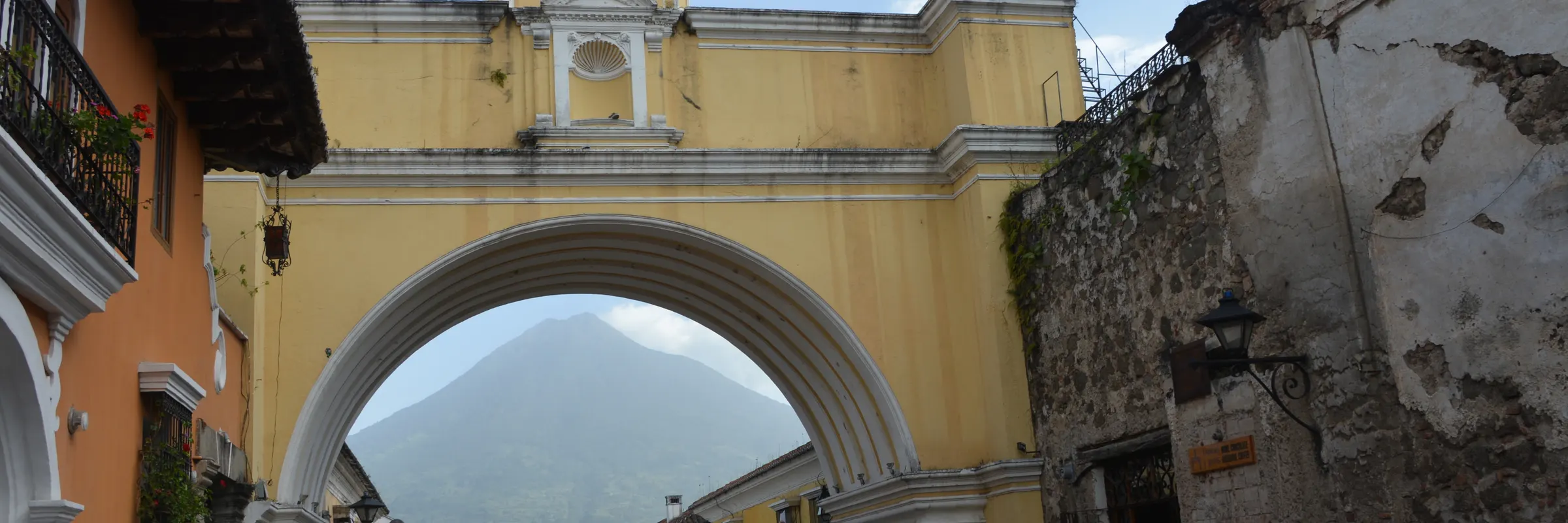
Antigua Guatemala: The Santa Catalina arch, with the Agua volcano behind it
Photo: David Amsler · CC BY 2.0
Sacatepéquez, Guatemala

Antigua Guatemala: how many days you need and the best months to go

Antigua was the capital of Spanish Central America for two hundred years, and then an earthquake in 1773 convinced the Crown to move the capital to what is now Guatemala City. The people who stayed never rebuilt the big churches — which is why the town is a working grid of low houses with enormous roofless ruins scattered through it, all of it under three volcanoes. It is small, walkable and very beautiful. Two days is right; three if you climb something.

Short answers

What people ask before booking

How many days do you need in Antigua Guatemala?

Antigua needs two days for the town and three if you climb a volcano. Come in the dry season, November to April, when the volcanoes are out of cloud — and check where Easter falls, because Holy Week fills the town months ahead.

What is the best month to visit Antigua Guatemala?

November, December and January — Dry, clear, and the volcanoes visible. February and March — Warm, dry and still clear.

Which months are worth avoiding in Antigua Guatemala?

June and September — The wettest months, with the volcanoes in cloud.

How many days Antigua needs

Two days covers the town properly: the central square, the cathedral ruins, Santa Catalina's arch and two or three of the ruined convents on one day, and the market, a coffee farm and a viewpoint on the other. The grid is about ten blocks by ten and everything is walkable.

A third day is for the volcano, and that is the reason most people extend. Pacaya is a half-day walk on an active cone; Acatenango is an overnight climb with a camp on the ridge, from which you watch neighbouring Fuego erupt through the night. Beyond three days, Antigua is the base for Lake Atitlán two and a half hours west and Chichicastenango's market, and it is a comfortable one — many people end up staying far longer than planned.

Why half the city is ruins

Antigua was founded in 1543 after the previous capital was destroyed, and for two centuries it was the seat of Spanish government for everything from Chiapas to Costa Rica, with a university, a printing press and dozens of religious foundations. The Santa Marta earthquakes of 1773 wrecked it, and the Crown ordered the capital moved rather than rebuilt.

Much of the population stayed anyway. What they did not do was rebuild the great churches and convents, which is why you walk a normal, inhabited town and keep coming across roofless naves and cloisters full of grass. Some are ticketed sites, some are hotels, some are just there. The 1773 date explains the other thing visitors notice: the buildings are low and thick-walled, because everything after that was built in the knowledge that the ground moves.

  • Santa Catalina arch — the yellow arch over the street, built so cloistered nuns could cross without being seen. Volcano framed behind it.
  • La Merced — the yellow-and-white baroque church that survived, with the ruined convent and a huge fountain behind it.
  • Cathedral ruins — the roofless nave and crypts behind the still-used front, on the main square.
  • Cerro de la Cruz — a viewpoint above the town looking down the grid at the Agua volcano. Twenty minutes up.
  • Coffee farms — this valley is a named growing region, and several estates on the slopes run proper tours.

Holy Week, and why it needs its own paragraph

Antigua's Semana Santa is one of the largest Holy Week observances in the world, and if your dates are anywhere near it, it is the single fact that governs your trip. Processions carry heavy wooden platforms through the streets for hours, and the route is laid with alfombras — carpets made of dyed sawdust, flowers and pine needles, built overnight by families and neighbourhoods, and destroyed by the procession that walks over them.

The date moves. Easter falls between late March and late April depending on the year, and the observances run through the whole week before it, with events in the weeks of Lent leading up. Check the year you are travelling rather than assuming a month.

What it means practically: accommodation is booked out many months ahead at several times the normal price, the town is full to the point of gridlock, and the roads in are slow. It is genuinely extraordinary and worth planning a trip around. It is also the worst possible week to arrive by accident.

The volcanoes, and the honest version

Three volcanoes surround the valley: Agua, the symmetrical one you see from the square, and the twin Acatenango and Fuego to the west. Fuego is one of the most consistently active volcanoes in the Americas and erupts on most days, which is why the overnight climb of neighbouring Acatenango has become the region's signature trek.

It should be treated as a real mountain. Acatenango tops out near four thousand metres, the climb gains well over a kilometre of altitude, and people underestimate both the cold at the camp and the effect of the altitude. Go with an established operator, take proper layers, and give yourself a night in Antigua at fifteen hundred metres first. Pacaya is the easier alternative — a half-day, far lower, still an active cone. And activity levels change: an eruption can close a route at short notice, so a fixed plan needs a fallback.

Practical things worth knowing

The streets are cobbled and uneven throughout, which is charming and hard on ankles, wheels and heels. Bring shoes accordingly; this is the most common small complaint from visitors here.

Antigua sits at about fifteen hundred metres, which makes it far more comfortable than the Guatemalan lowlands and cool at night all year — take a layer whatever the month. It is roughly an hour from Guatemala City's airport by shuttle, and most people transfer straight here on arrival rather than staying in the capital, which is a reasonable choice. Shuttles between Antigua, Lake Atitlán, Chichicastenango and the border are frequent and are how most visitors move around the country.

What to eat in Antigua, and where

Guatemalan cooking is Maya and Spanish layered together and it is not spicy by default: chillies are ground into sauces rather than added as heat. The coffee grown on the slopes around this town is among the best in the Americas, and until recently very little of it stayed here.

  • Pepián

    What to order

    The national dish, and the one to order first

    A thick stew of chicken or beef in a sauce of toasted seeds, chillies and tomato, ground to a dark paste and served with rice. Toasting the ingredients before grinding is the whole technique, and it produces something closer to a mole than to a soup. It is considered the national dish and appears in Maya and Spanish records alike.

    Check it on Wikidata
  • Chuchito

    What to order

    The street snack, in the afternoon

    A small tamal of corn dough with a little meat and sauce inside, wrapped in a corn husk and steamed, sold from baskets in the late afternoon. The size and the wrapper are what distinguish it from the larger banana-leaf tamales eaten at Christmas. Two or three make a snack; they are not a meal.

    Check it on Wikidata
  • Rellenitos de plátano

    What to order

    The dessert that is fried plantain

    Very ripe plantain mashed, wrapped around a filling of sweetened black beans and sometimes chocolate, then fried. Sweet and savoury at once, which surprises people the first time, and it is the standard Guatemalan dessert rather than a curiosity. Eaten warm, with cream.

    Check it on Wikidata
  • Café de Guatemala

    What to order

    What the valley actually grows

    High-altitude arabica from the slopes around the town, which is a named origin in its own right — volcanic soil, altitude and shade give it the profile that specialty roasters buy. For decades the good beans were all exported and locals drank the rejects; that has changed and the cafés here are excellent. Take a farm tour; several estates run them properly.

    Check it on Wikidata
  • Fiambre

    What to order

    The dish eaten once a year

    A cold platter of upwards of fifty ingredients — cured meats, sausages, pickled vegetables, cheeses, fish — assembled over days and eaten on the first of November, in cemeteries, with the family dead. The date is fixed and does not move, and every family has its own recipe. You will not find it any other week of the year.

    Check it on Wikidata

When to go, and what each month costs you

The altitude keeps the temperature almost constant, so rain is the variable: a dry season from November to April and a green one from May to October. The other variable is Holy Week, which moves between late March and late April and changes everything.

  • November, December and January

    Go now

    Dry, clear, and the volcanoes visible

    The dry season at its best: clear skies, cool nights, and the volcanoes out rather than hidden in cloud, which is not guaranteed the rest of the year. This is when the Acatenango climb is most reliable. Christmas and New Year push prices up for two weeks; the rest is excellent and not especially crowded.

  • February and March

    Go now

    Warm, dry and still clear

    Warmer than the turn of the year and still firmly dry, with good visibility and comfortable walking. Watch the calendar: Holy Week can fall in late March, and the weeks before it already fill up. Outside that, this is the most comfortable stretch of the year here.

  • April

    Worth it, but

    Hot, dry, and usually Holy Week

    The hottest and driest month, with hazy skies from agricultural burning and the volcanoes often lost in it. Holy Week most often falls here, and when it does the town is full months in advance at several times the price. Extraordinary if that is why you came; difficult if it is not.

  • May and October

    Worth it, but

    The edges of the rains

    May brings the first afternoon storms after months of dust, and the valley turns green within weeks. October is the reverse, with the rain easing and the landscape at its most vivid. Both mean clear mornings and a downpour after lunch, which is easy to plan around. Low prices, few people.

  • July and August

    Worth it, but

    The canícula, and northern holidays

    A drier spell within the wet season, called the canícula, usually falls somewhere here — it is real but not guaranteed. Northern-hemisphere holidays raise prices despite it being green season, and the Spanish schools that Antigua is known for are at their fullest. Workable, and not the best value.

  • June and September

    Think twice

    The wettest months, with the volcanoes in cloud

    The heaviest rain of the year, with afternoons washed out and, more to the point, the volcanoes hidden in cloud for days at a time — which removes the view that defines this town. Trails turn to mud and the Acatenango climb becomes a gamble. Cheap and green, and the least reliable window.

Things that change the trip

  • Check where Easter falls in your year. Holy Week here is one of the biggest in the world and books out months ahead at several times the price.
  • Climb Acatenango overnight if you can. It is a real four-thousand-metre mountain, so use an operator and pack proper layers.
  • Wear shoes for cobbles. Every street in town is uneven stone, and it is the thing visitors complain about most.
  • Come in the dry season for the volcanoes. From June to September they spend days hidden in cloud.
  • Transfer straight from the airport, about an hour by shuttle. Most visitors skip Guatemala City entirely and that is a reasonable choice.
  • Take a coffee farm tour. The valley is a named growing origin and the estates on the slopes run proper visits.

Plan Antigua and Guatemala

A trip that combines Antigua with Lake Atitlán, Chichicastenango or Tikal — with the shuttle times, the volcano climb and Holy Week's moving dates worked out around it — is exactly what Premium is for. The free version covers one destination for up to three days.

Destinations