
Skip to content
JoruJoru
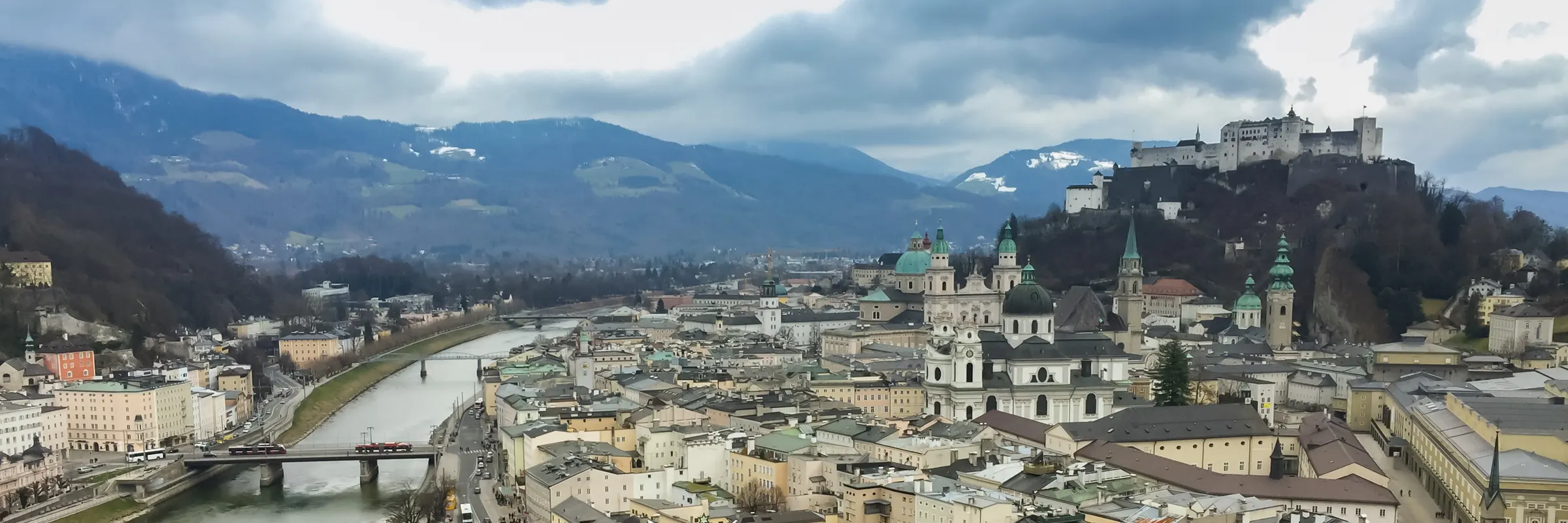
Salzburg: The old town and the fortress from the Mönchsberg

Salzburg, Austria

Salzburg: how many days you need and the best months to go

Photo: Dronepicr · CC BY 3.0

Salzburg was ruled for centuries by prince-archbishops who grew rich on salt and built themselves a little Rome north of the Alps: a cathedral and palaces, squares and fountains, churches with green copper domes, all crowded between the river Salzach and the cliffs of the Mönchsberg, with the great fortress of Hohensalzburg on top. Mozart was born here in 1756, the city has built a cult around him ever since, and every summer its festival brings the world's great orchestras, singers and directors to its halls. Around the city are mountains, lakes and the salt mines that paid for it all, and a film about a singing family has made its gardens and meadows famous far beyond their size. The planning problem is the calendar and the weather. In summer the festival and the day-trippers fill the small old town and its hotels, and Salzburg is one of the rainiest cities in Austria, when the clouds catch on the Alps behind it. Book early for summer, or come in spring and autumn, and always carry an umbrella.

Short answers

What people ask before booking

How many days do you need in Salzburg?

Salzburg needs two days: one for the old town, the cathedral, St Peter's abbey, the fortress and Mozart's birthplace, and one for the right bank, the Mirabell gardens and the views from the city's hills. A third day is for Hellbrunn, the lakes and Hallstatt, or the salt mines. Book early for the summer festival.

What is the best month to visit Salzburg?

May and June — Green, mild and before the festival. September and October — Golden autumn, and fewer people.

Work out how many hours you will have in Salzburg on your dates
When to go, and what each month costs you

Salzburg has a central European climate with an Alpine twist: warm summers with frequent rain and thunderstorms, cold winters with some snow, and pleasant springs and autumns. It is one of the rainiest cities in Austria, and summer is both the wettest season and the busiest.

  1. January: Worth it, but
  2. February: Worth it, but
  3. March: Worth it, but
  4. April: Worth it, but
  5. May: Go now
  6. June: Go now
  7. July: Worth it, but
  8. August: Worth it, but
  9. September: Go now
  10. October: Go now
  11. November: Worth it, but
  12. December: Worth it, but
  • May and June

    Go now

    Green, mild and before the festival

    Mild to warm days, the gardens in flower and the trick fountains running, before the summer crowds, with frequent showers that grow more frequent in June. The best time for the city and the lakes, umbrella in hand. Whitsun, whose date moves with Easter, brings a smaller festival of its own.

  • September and October

    Go now

    Golden autumn, and fewer people

    Mild days, golden trees on the hills and clear views of the Alps, with the festival crowds gone. A good season for the lakes and the walks, before the cold.

  • July and August

    Worth it, but

    The festival, the crowds and the rain

    Warm days with frequent showers and thunderstorms, and the city at its fullest. The festival, from mid-July to the end of August, fills the halls and the hotels; book months ahead, and bring an umbrella.

  • November to April

    Worth it, but

    Cold, Christmas and Mozart

    Cold, often grey days with some snow, and short evenings. Advent brings the Christmas markets to the cathedral square, January the Mozart Week of concerts, and Easter, whose date moves every year, its own festival; some sights outside the city close in winter.

What to pack for Salzburg, month by month

How many days Salzburg needs

Two days cover the city. One for the old town on the left bank: the cathedral, the squares around it, the abbey of St Peter with its cemetery, the fortress by funicular, and Mozart's birthplace in the busy shopping street. One for the right bank and the views: the Mirabell gardens, the house where the Mozart family later lived, the walk along the Mönchsberg or the Kapuzinerberg, and a beer hall in the evening.

A third day is for the surroundings: the trick fountains of the archbishop's summer palace at Hellbrunn, the lakes of the Salzkammergut and the village of Hallstatt, the salt mines, or Berchtesgaden across the German border.

How the city is arranged, along the river

The Salzach divides Salzburg in two. On the left bank, the old town lies squeezed between the river and the Mönchsberg, the cliff with the fortress on top; on the right bank, the newer old town runs from the river to the Kapuzinerberg, with the Mirabell gardens and the railway station further north.

  • The old town (left bank) — the cathedral, the Residenz, the squares, St Peter's abbey and the Getreidegasse, the shopping street of Mozart's birthplace.
  • The fortress and the Mönchsberg — the castle on the hill above the old town, and the wooded cliff top with the modern art museum and its views.
  • The right bank — the Mirabell palace and gardens, the Linzergasse and the Steingasse, and the Mozart family's later home.
  • The Kapuzinerberg — the wooded hill on the right bank, with a monastery and the view over the river to the fortress.
  • Hellbrunn and the south — the archbishop's summer palace with its trick fountains, a few kilometres south of the centre.

Where to stay, and what each area costs you

Salzburg is small: every central area is a walk from the old town. The old town itself has the atmosphere and the prices; the right bank is almost as central and a little cheaper; the area around the station is practical for day trips.

Prices peak during the festival from mid-July to the end of August, at Easter, in the Advent weeks of the Christmas markets, and during Mozart Week in January. The city charges a tourist tax per person and per night.

AreaWho it suitsThe catch
The old town (left bank)The squares, churches, cafés and the fortress on the doorstep.The dearest rooms, crowded by day, and no cars at the door.
The right bankThe Mirabell gardens, quieter old lanes and many restaurants, across a footbridge from the old town.Busy streets near the bridges, and rooms fill in summer.
Around the stationTrains and buses for day trips, and cheaper modern hotels, fifteen minutes' walk from the river.Plain streets without the old town's charm.
Mülln and NonntalQuiet, local quarters at either end of the Mönchsberg, one with the city's great beer hall.A little further out, and fewer places to eat.

Compare these areas against your priorities

Getting there, and getting around

Salzburg's small airport is about twenty minutes from the centre by bus, and the main station is on the line between Vienna and Munich, about two and a half hours from Vienna and an hour and a half from Munich, with trains into the Alps and to Italy.

The old town is for walking, and largely closed to cars. Buses, including trolleybuses, cover the rest of the city and run to Hellbrunn and the airport; buses and trains go out to the lakes and the mountains.

  • The city card covers the museums, the fortress funicular, Hellbrunn, a river boat and the buses for one to three days, and pays off with several visits.
  • Hallstatt is about two hours away by train and boat, or by bus; go early, as the village fills with day visitors.
  • Leave the car outside the centre, in the car parks inside the Mönchsberg or at the park-and-ride sites.
  • For the festival, book months ahead: tickets for the great productions sell out early, and hotels with them.

Mozart, the fortress and the Baroque city

Hohensalzburg is one of the largest medieval castles in Europe, begun in the eleventh century and enlarged by the archbishops until it covered the whole hilltop. A funicular climbs to it from the old town; from the walls, the view takes in the domes of the city, the river and the Alps. Below it, the Baroque old town was rebuilt by the prince-archbishops in the image of Rome, around the great cathedral and its squares.

  • Mozart's birthplace — the apartment in the Getreidegasse where he was born, now a museum of his childhood.
  • St Peter's abbey — one of the oldest monasteries in the German-speaking world, with a cemetery of wrought-iron graves and catacombs carved into the cliff.
  • The cathedral — a vast early-Baroque church where Mozart was baptised and played the organ.
  • The Mirabell gardens — formal gardens with fountains and statues, framing a view of the fortress, made famous by the film.
  • Hellbrunn — the archbishop's summer palace, whose gardens are full of trick fountains that still soak visitors in the warm months.
  • The Salzkammergut — the lakes and mountains east of the city, with Hallstatt on its lake and the salt mines in the hills.

How eating works here

Salzburg eats Austrian: schnitzel, roast pork with dumplings, cheese noodles from the mountains, and a great tradition of cakes and sweet dishes, eaten in coffee houses that are as much part of city life as the beer halls. The city's own dessert is a soufflé in three peaks, said to represent the hills around it.

Lunch from noon and dinner from six or seven, earlier than in the south of Europe. The beer halls and beer gardens are the cheapest and liveliest places to eat, especially in summer.

  • Coffee houses serve coffee with a glass of water and cake all day; sit as long as you like.
  • The chocolate balls of marzipan and nougat sold everywhere were invented here; the original is made by a single old confectioner.
  • In the beer gardens you can often bring your own food, and buy only the beer.
  • Tipping: round up or add about a tenth, telling the waiter the total when you pay.

Where to eat in Salzburg, and what to order

Salzburg is a city of sweets and beer: a soufflé in three peaks, chocolate balls named after Mozart, a shredded pancake with plum compote, and two of the oldest places to eat and drink in the German-speaking world, a monastery restaurant and a monks' brewery.

  • Salzburger Nockerl

    What to order

    The soufflé of Salzburg

    A light, sweet soufflé of egg whites and sugar, baked in three golden peaks said to represent the hills around the city, served warm, often with berries. It is the city's own dessert, made to order and meant for sharing.

    Check it on Wikidata
  • Mozartkugel

    What to order

    The chocolate ball named after Mozart

    A ball of pistachio marzipan and nougat coated in dark chocolate, invented by a Salzburg confectioner in 1890. Countless factories make them today, but the original is still made by hand by the same family's shop in the old town.

    Check it on Wikidata
  • Kaiserschmarrn

    What to order

    The shredded pancake

    A thick, fluffy pancake torn into pieces in the pan, caramelised with sugar and dusted with icing sugar, served with plum compote or apple sauce. It is an Austrian classic of the coffee houses and mountain huts, sweet enough to be a meal.

    Check it on Wikidata
  • St. Peter Stiftskulinarium

    Institution

    The monastery restaurant

    The restaurant of St Peter's abbey, in vaulted rooms at the foot of the cliff, which claims a history going back more than a thousand years. It is the classic setting for a Salzburg dinner, sometimes with a concert of Mozart's music.

    Check it on Wikidata
  • Augustiner Bräu Mülln

    Institution

    The monks' brewery and beer hall

    A beer hall in an old monastery at the northern end of the Mönchsberg, where beer is poured from wooden barrels into stone mugs and food is bought from stalls in the corridor. Its garden under chestnut trees is the city's great summer meeting place.

    Check it on Wikidata

Things that change the trip

  1. Book early for summer: the festival fills the hotels from mid-July to the end of August.
  2. Carry an umbrella in every season.
  3. Take the funicular to the fortress early, before the tour groups.
  4. Buy the city card if you will visit several sights in a day or two.
  5. Eat in a beer garden in summer, and in a coffee house when it rains.
  6. Go to Hallstatt early in the morning, or stay the night there.

Plan Salzburg with Austria and Bavaria

A trip of more than three days, or one that joins Salzburg with Vienna, Hallstatt, Munich or Innsbruck and the trains between them, is what Premium is for. The free version covers one destination of up to three days.

Destinations