Skip to content
JoruJoru
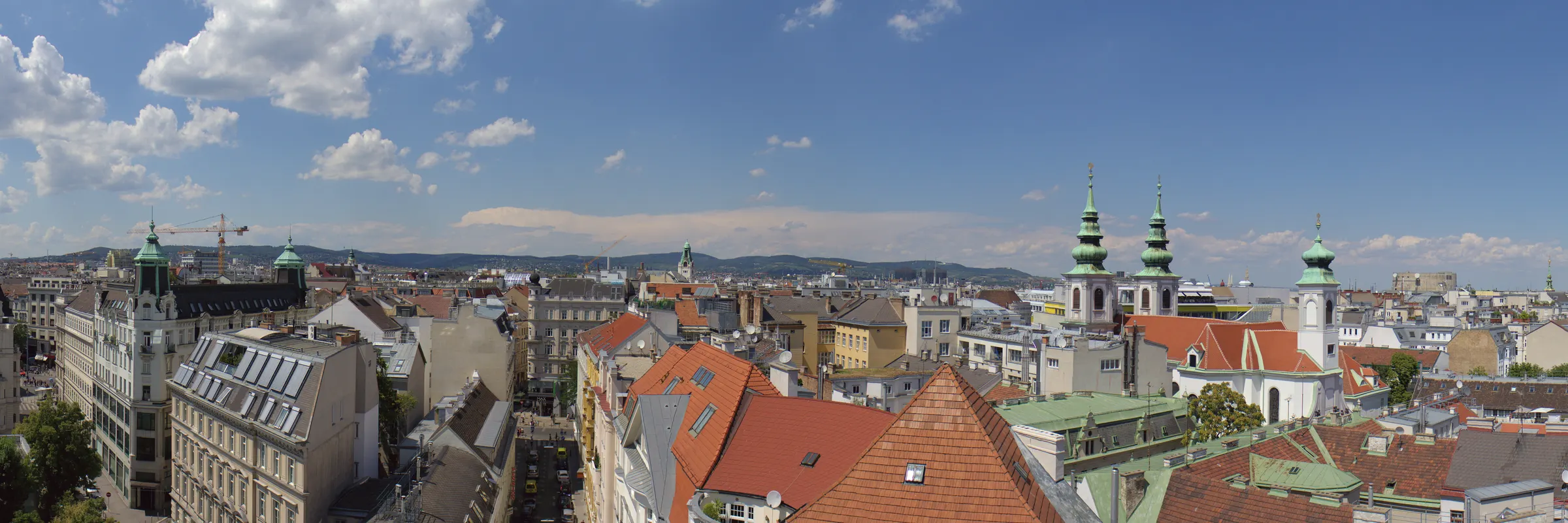
Vienna: the rooftops from the flak tower in Mariahilf
Photo: Tribb · CC BY 3.0
Vienna, Austria

Vienna: how many days you need and the best months to go

Vienna ran a multinational empire for six centuries and then stopped, which is why a city of under two million has the museums, boulevards and institutions of one several times the size. The grand ring of public buildings is a single project from the 1860s, built where the walls had stood. Three days covers the imperial city and one museum properly. A fourth is what turns it from a checklist into a place, because most of what makes Vienna pleasant is sitting still in it.

Short answers

What people ask before booking

How many days do you need in Vienna?

Vienna needs three days for the inner city, a palace and one museum done properly, and a fourth for a coffee house with no plan and the wine taverns on the hills inside the city.

What is the best month to visit Vienna?

May and June — Long days, gardens open, and the season still running. September and October — The season restarts, and so does the wine.

Which months are worth avoiding in Vienna?

November — The grey month, before the markets open. January, February and March — Cold, dark, and the ball season if you want it.

How many days Vienna needs

Three days is the honest minimum: one for the inner city and the Ring, one for a palace, and one for a museum you actually finish rather than sample. That covers the imperial version of Vienna, which is the one people come for.

The fourth day is the one that changes the trip. It goes to a coffee house without a plan, to the wine taverns on the hills at the edge of the city, or to a district that has nothing to see in it — and those are the parts people talk about afterwards. Beyond four days you are living here rather than visiting.

How the districts work, and why the number is on the envelope

Vienna is divided into twenty-three numbered districts that spiral outward from the centre, and the numbering is genuinely useful rather than administrative trivia. The first district is the old walled city; the second to ninth form a ring around it; everything from the tenth out is outer Vienna. Almost everything a visitor wants is in the single digits.

The trick worth knowing on arrival: a Vienna postcode is four digits, and the middle two are the district number. A 1010 address is in the first district, 1070 is in the seventh. Once you see it you can read any address in the city.

  • The first district (Innere Stadt) — the cathedral, the palace, the opera, the Ring around all of it. Small enough to cross on foot in twenty minutes.
  • The seventh (Neubau) — the museum quarter, small shops, the best eating and the least imperial part of the centre. Where most people wish they had stayed.
  • The second (Leopoldstadt) — across the canal: the Prater park, the big wheel, and the historic Jewish quarter. Green, close and much cheaper.
  • The fourth and fifth (Wieden, Margareten) — the market, the flea market on Saturdays, and residential streets that stay open in the evening.
  • The nineteenth (Döbling) — the vineyards and the wine taverns on the slopes above the city. Twenty minutes by tram, and still inside Vienna.

Where to stay, and what each area costs you

The transport network here is good enough that no central district is a mistake, so the real question is what you want outside the door in the evening. The first district is spectacular and shuts early; the seventh is ordinary and does not.

The other thing worth knowing is that Vienna's grand hotels are on the Ring and its ordinary ones are three tram stops away for a fraction of the price, in streets that are just as safe and considerably livelier.

AreaWho it suitsThe catch
First districtFirst visit. Cathedral, opera, palaces and museums all on foot.The most expensive part of the city, and quiet and corporate after the shops close.
Seventh (Neubau)Restaurants, bars, small shops and the museum quarter at the end of the street.No landmarks of its own; you walk or take a tram to everything famous.
Second (Leopoldstadt)Cheaper rooms, the park, the canal and ten minutes to the centre.Mixed in character street by street; the good parts are near the canal.
Fourth and fifthThe market, weekend flea market, and a residential Vienna that stays open late.Spread out, so you commit to one corner of it and walk from there.
Near a Westbahnhof or HauptbahnhofLarger modern rooms, good value, and the airport and intercity trains.Station districts: functional, noisy at the edges and with no reason to linger.

The coffee house, and how to use one without embarrassing yourself

The Viennese coffee house is not a café with better cake. It is a room you rent for the price of a coffee, and the convention is that nobody moves you on — newspapers on wooden holders, marble tables, waiters in black, and an expectation that you might be there for three hours with one cup and a book. Austria lists the practice on its national inventory of intangible cultural heritage, which is a formal way of saying the sitting is the point.

The one thing that marks a visitor is ordering *a coffee*. There is no such drink here: you order it by name, and the names are specific. A glass of tap water arrives alongside without being asked for, and refusing it is odd.

  • Melange — espresso with steamed milk and foam, closest to what most of Europe means by a coffee.
  • Kleiner or großer Brauner — a single or double espresso with a little cream. The everyday order.
  • Verlängerter — an espresso pulled long. What to ask for if you want something closer to filter coffee.
  • Einspänner — a double espresso in a glass under a lid of whipped cream, named after the one-horse cab whose driver could hold it in one hand.

The music, and the summer problem

Vienna sells itself on music and mostly delivers, with one large caveat that catches people every year. The State Opera and the great concert halls run a season from September to June, and go dark for July and August. If you come in high summer, what is on offer is costumed Mozart concerts aimed squarely at tourists — enjoyable enough, and not what you came for.

In season, the opera sells standing places on the day for a fraction of a seat, which is the single best value in European culture and involves a queue that is itself an institution. Rehearsals, church music on Sunday mornings and the boys' choir are all real and much easier to get into than the ticketed showpieces.

  • Check the season before booking a summer trip around music. July and August are the two months when the serious houses are closed.
  • Standing tickets go on sale shortly before the curtain, at the side entrance, and the queue starts long before that.
  • Sunday mass at the Hofburg chapel is sung by the boys' choir in season, and is a service rather than a concert.
  • The big cemetery is a real destination. Beethoven, Brahms, Schubert and both Strausses are buried within a few metres of each other.

Wine inside the city, and what a Heuriger is

Vienna is the only major capital with commercial vineyards of any size inside its own boundaries — several hundred hectares of them, on the slopes at the northern and western edges, reachable by tram. The taverns that sell that wine are called Heurigen, and the institution is a law: in 1784 the emperor gave growers the right to sell their own new wine on their own premises, and the arrangement never went away.

The traditional signal is a pine branch hung over the door, which means the grower is open and pouring. Food is a cold buffet you point at, tables are shared, and the whole thing is closer to a garden than a restaurant. The touristy versions have accordion players; the real ones are ten minutes further up the hill.

Practical things that catch visitors

The tap water is worth changing a habit for. Vienna's drinking water arrives by gravity from alpine springs through two aqueducts built in 1873 and 1910, and it is served free and unasked in cafés. Buying bottled water here is a small, expensive mistake.

The other thing is the manner. Vienna is formal in a way that reads as brusque if you expect warmth: greetings matter, waiters are professionals rather than friends, and the correct response to service is a firm thank you rather than enthusiasm.

  • Say the total when you pay, rather than leaving coins. Round up by roughly five to ten per cent and state the figure.
  • Validate nothing and carry a ticket anyway. There are no barriers and no routine checks, and the fine when there is one is immediate.
  • Sunday is closed. Shops and supermarkets shut by law; museums, cafés and restaurants do not.
  • Cash is still common in cafés, Heurigen and smaller restaurants, even where the room looks modern.

What to eat in Vienna, and where

Viennese cooking is the food of an empire that reached into Hungary, Bohemia and northern Italy, and most of the classics arrived from somewhere else and stayed. It is heavy, it is precise about detail, and the argument about who does each dish properly is a permanent local sport.

  • Wiener Schnitzel

    What to order

    The dish everyone orders, and the rule about it

    A thin cutlet, breaded and fried so the coating puffs away from the meat, served with lemon and potato salad. If it is called Wiener Schnitzel it must be veal — by law, on Austrian menus. The pork version is common, cheaper and perfectly good, and it has to be labelled as pork. Both are the size of the plate.

    Check it on Wikidata
  • Tafelspitz

    What to order

    The dish the city actually claims

    Beef simmered in broth with root vegetables, served with the broth first, then the meat with apple horseradish and chive sauce. It was the emperor Franz Joseph's standing order, and it is the dish an old Viennese restaurant is judged on. Ordering it marks you as someone who did the reading.

    Check it on Wikidata
  • Käsekrainer

    What to order

    The late-night stand, and what to ask for

    A sausage with cheese through it, split and grilled until the cheese runs. The sausage stand is a Viennese institution that operates when everything else is shut, and the ordering has its own etiquette: it comes with bread, mustard and a pickled pepper, and you eat it standing at the counter.

    Check it on Wikidata
  • Sachertorte

    What to order

    The cake with a lawsuit behind it

    A dense chocolate cake with a layer of apricot jam under the icing, invented in 1832 by a sixteen-year-old apprentice standing in for a sick chef. Two Viennese institutions fought a seven-year court case in the 1950s over who could call theirs the original, and both still sell it. It is drier than you expect, which is why it comes with unsweetened cream.

    Check it on Wikidata
  • Wiener Kaffeehaus

    Institution

    The room, not the drink

    The coffee house is the local institution rather than any single café, and the rule is the same everywhere: one order buys the table for as long as you want it. Newspapers, marble, no music and no hurry. Order by name, take the glass of water, and stay longer than feels polite.

    Check it on Wikidata
  • Heuriger

    Institution

    The wine tavern on the edge of the city

    A grower's own tavern, selling the grower's own wine, in the vineyards inside the city boundary. The right to do this was granted by imperial decree in 1784 and never withdrawn. A pine branch over the door means open; the food is a cold buffet; the tables are shared. Take a tram out and stay for the evening.

    Check it on Wikidata

When to go, and what each month costs you

Vienna sits far enough east to be properly continental: colder winters and hotter summers than the western half of Europe, with two short and very good shoulders. The calendar matters more than the weather here, because the cultural season and the ball season both have hard edges.

  • May and June

    Go now

    Long days, gardens open, and the season still running

    The best combination the city offers: warm without the August heat, light until late, palace gardens and Heurigen in use, and the opera and concert halls still in season until the end of June. Prices are high and it is worth it.

  • September and October

    Go now

    The season restarts, and so does the wine

    Warm days, cool evenings, the cultural season opening again after the summer break, and the new wine arriving in the taverns on the hills. The single best window if you want both the music and the wine, and slightly cheaper than early summer.

  • April

    Worth it, but

    Unreliable weather, everything open, lower prices

    Swings between shirtsleeves and sleet without warning, and the gardens are only just waking up. Everything indoors runs normally and rooms cost noticeably less. Easter moves between late March and late April and fills the city when it lands.

  • July and August

    Worth it, but

    Hot, busy, and the opera is dark

    The warmest and most crowded weeks, with outdoor cinema, festivals and the Danube island in full use. The catch is that the State Opera and the main concert halls are closed for the summer, and what replaces them is aimed at visitors. Fine if you came for the city; a disappointment if you came for the music.

  • December

    Worth it, but

    Christmas markets, and very short days

    Markets across the city from late November, the concert season at its peak, and daylight that gives up by four in the afternoon. Cold and crowded, and genuinely atmospheric. Around Christmas itself much of the city closes for two days, transport included.

  • November

    Think twice

    The grey month, before the markets open

    Damp, dark and without either the autumn colour of October or the December markets, which mostly start in the last week. The museums and concert halls are at their emptiest and their cheapest, and that is the whole of the case for coming.

  • January, February and March

    Think twice

    Cold, dark, and the ball season if you want it

    The coldest stretch, with short days and a real chance of grey weeks. There is one reason to come anyway: the ball season runs from mid-November to Shrove Tuesday, which moves between early February and early March, and several hundred balls happen in that window. Otherwise this is an indoor trip.

Things that change the trip

  • Check whether the opera season is running before you plan a musical trip. July and August are dark, and what fills them is a different product.
  • Read the postcode. The middle two digits are the district number, and it makes every address legible.
  • Order coffee by name. Asking for *a coffee* gets you a puzzled look and probably a Verlängerter.
  • Drink the tap water. It arrives by gravity from alpine springs and cafés serve it free with every order.
  • Take the tram out to the wine taverns for one evening. Vienna is the only major capital with vineyards inside it, and the branch over the door means open.
  • Say the total when you pay rather than leaving coins on the table. Leaving money behind reads as odd here.

Plan Vienna and what surrounds it

A trip longer than four days, or one that adds Salzburg, Budapest or Prague with the trains between them, is exactly what Premium is for. The free version covers one destination of up to three days.

Destinations