Skip to content
JoruJoru
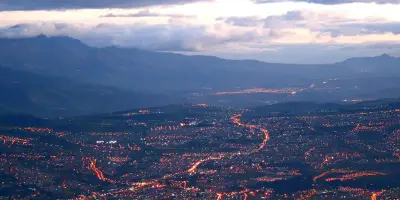
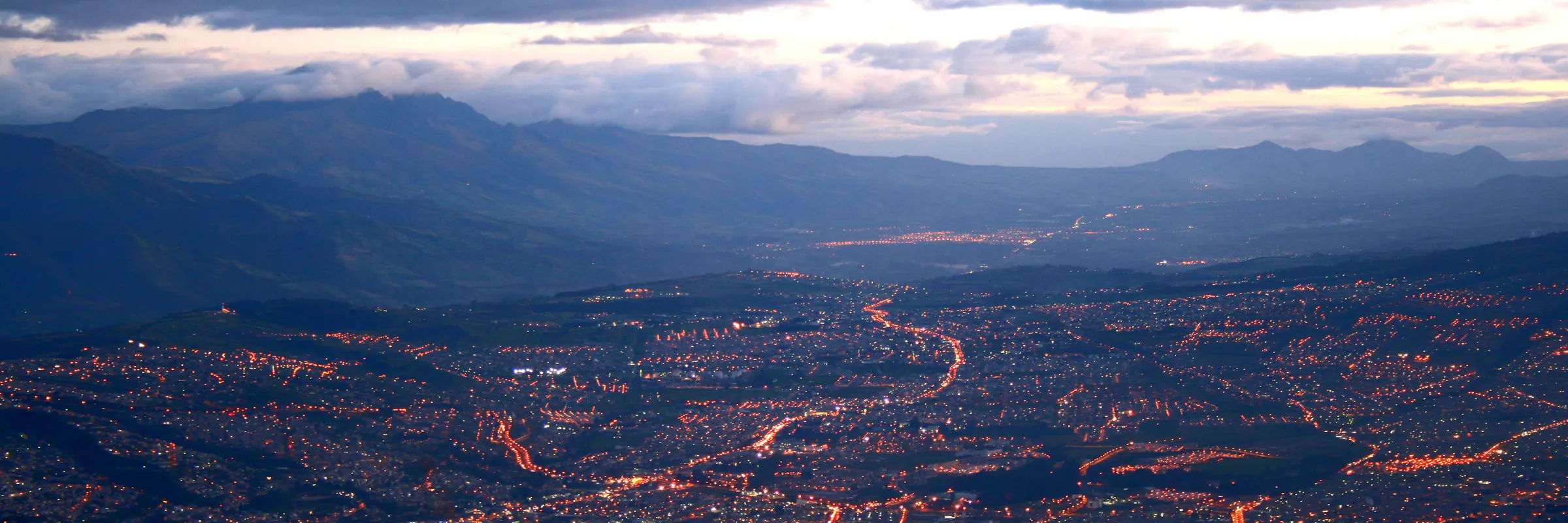
Quito: the city from the cable car station
Photo: Rinaldo Wurglitsch from Vienna, Austria · CC BY 2.0
Pichincha, Ecuador

Quito: how many days you need and the best months to go

Quito sits at about 2,850 metres, in a strip of land so narrow that the city grew fifty kilometres north to south and barely five across. Its old town was among the first places anywhere to be inscribed as World Heritage, in 1978, and it is unusually intact: not a restored quarter but a working centre with churches, markets and traffic in it. Two days covers it. A third buys the equator, a cloud forest or a volcano, all within a morning's drive.

Short answers

What people ask before booking

How many days do you need in Quito?

Quito needs two days — one for the colonial old town on foot, one for the cable car and the modern neighbourhoods — and a third for the equator, a cloud forest or a volcano.

What is the best month to visit Quito?

June, July and August — The dry season, and the clearest views. December and January — A short dry window, and the city's own festival.

Which months are worth avoiding in Quito?

March and April — The wettest months of the year. October and November — The second wet season, and the greyest stretch.

How many days Quito needs

Two days is the honest figure for the city itself: one for the old town, which is dense enough to fill a full day on foot, and one for the cable car, a viewpoint and the modern neighbourhoods where people actually eat and drink. The first of those days will be slower than you plan, because of the altitude.

The third day is a day trip, and Quito's are unusually good: the equator north of the city, a cloud forest west of it, a volcano south of it or a market town two hours away. Any of them is a full day, and choosing more than one means staying longer.

Altitude, and what it does on the first day

At roughly 2,850 metres there is about a quarter less oxygen in each breath than at sea level. Most people do not get altitude sickness in Quito; almost everyone gets slower, and the difference shows on stairs, on hills and after the first alcoholic drink. The old town is built on slopes, so this is not theoretical.

The fix is boring and it works: arrive, do very little for the rest of that day, drink more water than feels necessary, eat lightly and postpone the ambitious walking to day two. If you are continuing to Cusco or the Bolivian altiplano, Quito is a useful place to acclimatise first — it is lower than both.

  • Give the arrival day nothing. A short walk, an early dinner, and no hills. It buys you the whole rest of the trip.
  • Alcohol hits harder up here, and so does a heavy meal. Both are worth deferring by a day.
  • The UV is severe at this altitude, even under cloud and even when the air is cool. Sunburn here surprises people from higher latitudes.
  • If a headache does not lift with water and rest, it is worth mentioning at a pharmacy — they deal with this every day of the week.

How the city is laid out

The shape explains everything. Quito occupies a long, narrow shelf on the eastern flank of the Pichincha volcano, so it runs north to south for about fifty kilometres and is only a few kilometres wide, with the main bus corridors running the length of it. There is no ring road because there is no ring.

The consequence is that 'north' and 'south' are the only directions that matter, the colonial centre sits in the middle-south, and the modern city — offices, restaurants, the airport road — is all north of it.

  • The old town (Centro Histórico) — the colonial core, the plazas, the churches and the markets. The reason to come, and largely walkable.
  • La Mariscal — the long-standing visitor district north of the centre, with hostels, agencies and bars. Convenient, and no longer where the good nights are.
  • La Floresta — the neighbourhood that took over: independent restaurants, a cinema, cafés and residents. The best base if you want to eat well.
  • Guápulo — down the ravine east of La Floresta, steep, green and quiet, with the best sunset views back at the city.
  • El Panecillo — the hill with the winged Virgin at the old town's southern end. Take a taxi up and back; walking it is not advised.

Where to stay, and what each area costs you

The trade-off is between waking up inside the World Heritage site and being where the city eats. The old town empties in the evening and can feel deserted after dark; the northern neighbourhoods have the restaurants but not the view. Both are twenty minutes apart, so neither choice is wrong.

One practical note that applies everywhere here: the airport moved out to a valley about forty kilometres east, and the drive takes the better part of an hour. Build that into arrival and departure days rather than discovering it.

AreaWho it suitsThe catch
Old townFirst visit. The churches, the plazas and the markets from the doorstep, at dawn.Quiet and largely shut in the evening; the good restaurants are elsewhere.
La FlorestaEating and drinking well, cafés, and a neighbourhood with actual residents.Fifteen to twenty minutes from the old town, so sightseeing means a ride.
La MariscalHostels, tour agencies, cheap beds and everything arranged in one block.Past its best, and the part of the city where visitors most often have trouble.
GuápuloViews, quiet, greenery and the best sunsets in the city.Steeply downhill from everything; getting back up is always a taxi.
Northern QuitoBusiness hotels, larger rooms, malls and the shortest run to the airport road.No atmosphere at all; you are staying in a city rather than visiting one.

The old town, and what to see in it

The centre was inscribed as World Heritage in 1978, in the very first group of sites ever listed, and the citation rests on how little it has been altered. It is a working colonial city rather than a preserved one — the churches are in use, the plazas are full of people who live here, and the streets are steep enough to earn the view.

Two churches carry the visit. La Compañía de Jesús is the baroque one, its interior worked over in gold leaf across more than a century and a half of construction. San Francisco, begun within a few years of the Spanish founding, is the largest colonial religious complex in the Americas. The Basílica del Voto Nacional is the odd one: neo-Gothic, unfinished by design, and with gargoyles carved as Galápagos tortoises, iguanas and condors instead of European monsters.

  • Go early. The old town is at its best before the coaches and the midday sun, and the light is better for the plazas.
  • Climb the basílica towers if you have a head for it. The last stretch is open ladders and wooden planks, and the view is the best in the city.
  • El Panecillo is a taxi ride, both ways. The walk up is through streets where visitors are regularly robbed; the ride costs very little.
  • The cable car climbs Pichincha to around four thousand metres. Go on a clear morning, and remember you have just added a thousand metres to your altitude.

The equator, and why the monument is in the wrong place

Ecuador is named after the line, and the country was measured by a French scientific expedition that arrived in 1735 to settle whether the Earth bulged at the equator or at the poles. The monument built to mark the line was placed using their calculations — and satellite positioning later showed the true equator lies a couple of hundred metres away. The monument stayed where it was.

A private museum next door advertises itself as sitting on the real line and runs demonstrations of water swirling in opposite directions either side of it. That effect does not work at this scale — the physics involved is far too weak to move a basin of water — and it is worth knowing before you pay to watch it. The site is still a good half-day: the view, the ride out through the northern valleys, and standing on a line that genuinely runs through here.

Practical things that catch visitors

Ecuador uses the US dollar — the country adopted it in 2000 after its own currency collapsed — which removes the exchange question entirely and creates a different one: small change is genuinely scarce, and a large note is often refused by taxis, markets and small restaurants. Break notes whenever a supermarket gives you the chance.

The other thing is daily rhythm. Quito is close enough to the equator that sunrise and sunset barely move all year: it gets light and dark at roughly the same hour every day, twelve months a year. Plan around a day that always ends early rather than one that stretches in summer.

  • Carry small notes and coins. Paying with a large bill is the most common friction of the trip.
  • Use a ride-hailing app or a hotel taxi at night, particularly in and around La Mariscal and the old town.
  • It gets dark at about the same time every day of the year. There is no long evening here, in any season.
  • Tap water is not recommended for drinking. Bottled or filtered is the norm, including in restaurants.

What to eat in Quito, and where

Highland Ecuadorian food is built on potatoes, maize, pork and soup, and it is heartier than the coast's. The best of it is market food — served at a counter, at lunchtime, in a hall full of people doing the same. The dishes below are the highland canon, plus the one coastal import the whole country eats.

  • Locro

    What to order

    The soup that defines the highlands

    A thick potato soup finished with cheese, served with slices of avocado on top and a chilli sauce alongside. Potatoes were domesticated in these Andes thousands of years before anyone brought cheese, and the combination is now the first thing a Quito kitchen will offer you. It is a starter that eats like a meal.

    Check it on Wikidata
  • Hornado

    What to order

    The market dish worth planning lunch around

    Whole roast pork, carved to order and served with hominy maize, a potato patty and pickled onion. This is a market counter dish rather than a restaurant one, cooked overnight and sold until it runs out — which is usually early in the afternoon. Go at lunch, not dinner.

    Check it on Wikidata
  • Empanada

    What to order

    The fried pastry that is specific to here

    A large, thin, fried empanada filled with cheese, puffed up like a balloon and dusted with sugar on top. The name means wind empanada, for the air inside, and the sugar-on-cheese combination is the part visitors question and then order again. Eaten standing, at any hour.

    Check it on Wikidata
  • Ceviche

    What to order

    The ceviche that is not the Peruvian one

    Ecuadorian ceviche is served in its liquid rather than drained, and the shrimp version comes in a tomato and citrus broth with raw onion, with popcorn and toasted maize on the side to add yourself. It is closer to a cold soup than to the Peruvian dish, and the two countries will not agree about it. Coastal in origin, eaten everywhere here.

    Check it on Wikidata
  • Canelazo

    What to order

    What you drink when the sun goes down at altitude

    Hot sugarcane spirit with cinnamon, panela and fruit, served in a small glass and drunk outdoors. It exists because evenings at 2,850 metres are cold every night of the year, regardless of season, and it is the standard answer to that. Non-alcoholic versions are normal and just as common.

    Check it on Wikidata
  • Centro histórico de Quito

    Where to look

    Where to eat all of the above

    The colonial centre, and specifically its market halls and the counters around them. The old town is where the traditional cooking survives at lunchtime, while the northern neighbourhoods hold the modern restaurants and the evening. Eat your traditional meals in the middle of the day, here, where they are actually made.

    Check it on Wikidata

When to go, and what each month costs you

The temperature here does not have seasons — it is the same mild, cool-at-night climate all year, because the city sits almost on the equator at altitude. What changes is rain, and it changes a lot. The other saying holds too: a single day here can produce sun, wind, hail and a downpour, in that order.

  • June, July and August

    Go now

    The dry season, and the clearest views

    The main dry stretch, with the most sun, the least rain and the best chance of seeing the volcanoes that surround the city. It is also the windiest period, which is what keeps the sky clear. The busiest months, and worth it.

  • December and January

    Go now

    A short dry window, and the city's own festival

    A reliable break in the rains, warm by local standards and with clear mornings. The city's founding festival fills the first week of December with parades, open-air music and street food, and the whole town is out. Book ahead for those days.

  • September

    Worth it, but

    The dry season ending, and cheaper for it

    Still largely dry, with the rains returning towards the end of the month and fewer visitors than in July. A good compromise if you want the clear mornings without the peak-season crowd.

  • February and May

    Worth it, but

    The edges of the wet season, and workable

    Rain most afternoons, clear mornings, and everything open. Carnival falls in February or early March and moves each year — it is a water-fight festival in Ecuador, taken seriously, and the country travels during it. May is the quieter of the two.

  • March and April

    Think twice

    The wettest months of the year

    The heart of the rainy season: heavy afternoon downpours most days, and the volcanoes hidden for weeks at a time. Holy Week moves between late March and late April, and Quito's Good Friday procession — thousands walking the old town in purple robes — is one of the largest in the Americas and worth planning around.

  • October and November

    Think twice

    The second wet season, and the greyest stretch

    The other rainy period, less intense than March but more persistently overcast, with the mountains rarely visible. Prices are low and the old town works perfectly well in rain. What you lose are the views, which are half the reason to come.

Things that change the trip

  • Do nothing on your arrival day. At 2,850 metres the first day is a write-off whether you plan it or not.
  • Carry small notes. Ecuador uses the US dollar and change for a large bill is genuinely hard to find.
  • Take a taxi up El Panecillo, both directions. The walk is the one route locals will tell you not to do.
  • Eat the traditional dishes at lunchtime in the old town markets. By dinner the market kitchens have sold out and closed.
  • The equator monument is a few hundred metres off the real line, and the museum next door's water demonstration does not work as advertised.
  • Sunscreen every day, cloud or not. The UV at this altitude near the equator is stronger than the temperature suggests.

Plan Quito and what surrounds it

A trip that adds the Galápagos, the cloud forest, Cotopaxi or a route south through the Andes, with the transport and altitude between them, is exactly what Premium is for. The free version covers one destination of up to three days.

Destinations