



Skip to content
JoruJoru
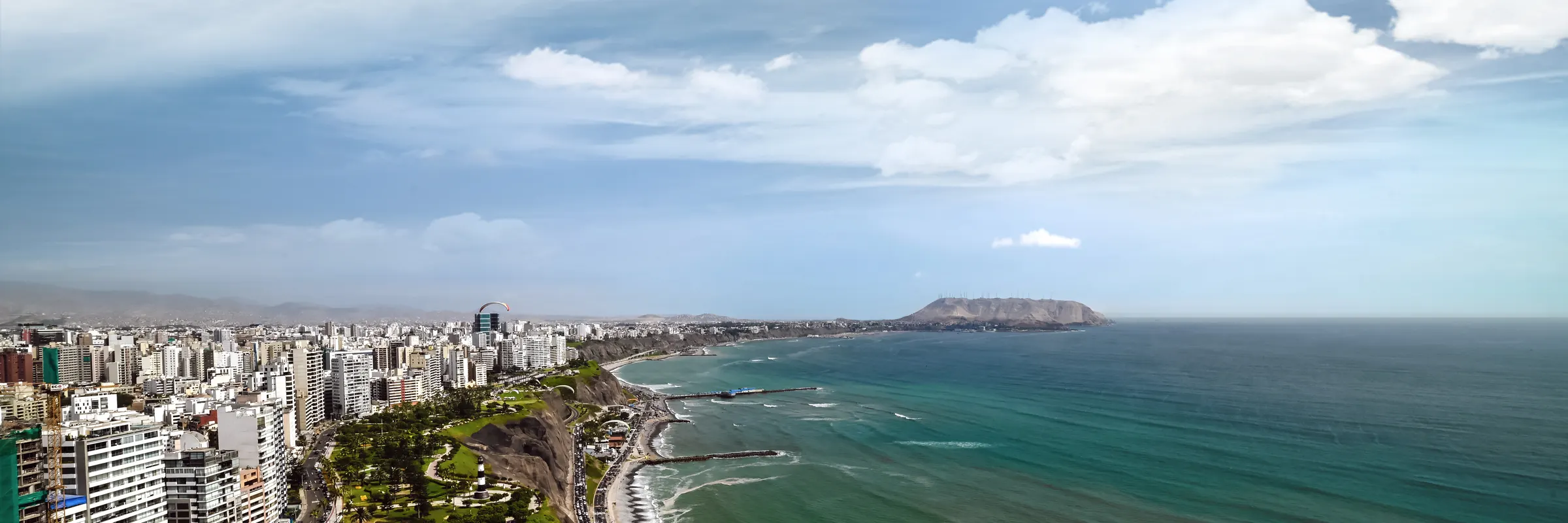
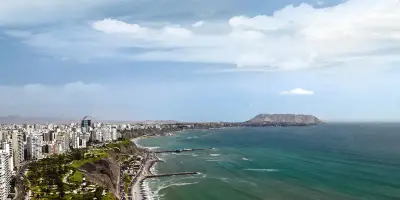
Lima: the Miraflores clifftop above the Pacific
Photo: Alec Gamoff · CC BY 2.0
Peru

Lima: how many days you need and the best months to go

Lima is the second-largest desert city on earth and it almost never rains, which makes the weather here genuinely strange: for half the year a low grey ceiling sits over the city, day after day, and nothing falls out of it. Most itineraries treat Lima as the night before Cusco. The food is the reason not to.

Short answers

What people ask before booking

How many days do you need in Lima?

Lima needs three days for the centre, the coast and the food, and a fourth to stop being a stopover. Most itineraries give it one night before Cusco, which is the single biggest thing they get wrong about Peru.

What is the best month to visit Lima?

December to March — The summer, the sun, and the only clear skies of the year. April and November — The shoulders, and the quietest good weather.

Which months are worth avoiding in Lima?

June to September — The garúa: grey for months, and still no rain.
How many days Lima needs

Three days is enough to see the historic centre, the two coastal neighbourhoods and eat properly. A fourth day is what turns it from a stopover into a visit, and it is the one most people skip on their way to Machu Picchu.

What limits a day here is traffic. Lima's congestion is severe and unpredictable, and a distance that looks like fifteen minutes can take fifty at the wrong hour. Grouping by district, and moving between them outside the rush, is the difference between three good days and three frustrating ones.

How the city is arranged

Lima runs along a desert coast on top of cliffs, with the historic centre inland and the money by the sea. The districts are administratively separate cities in practice, and they feel it.

  • Centro Histórico — the colonial core, the cathedral, the catacombs and the grand plazas. A UNESCO site and where the city started. Best in daylight, and much quieter at night than the coastal districts.
  • Miraflores — the clifftop district above the Pacific, and where most visitors stay. Parks, restaurants, the coastal path, and a paraglider or two overhead.
  • Barranco — the small bohemian district next door. Murals, bars, art, and the most walkable evening in the city.
  • San Isidro — the financial district, quiet and green, with an olive grove in the middle of it.
  • Callao — the port and the airport, north-west of everything. The Monumental district there has become a street-art quarter, though it is a different kind of neighbourhood from the ones above.

Where to stay, and why almost everyone picks the same district

Nearly all visitors stay in Miraflores, and for once the herd is right: it is safe, walkable, on the sea, and has most of the restaurants you came for. Barranco is the better choice if you want atmosphere over convenience, and it is fifteen minutes away along the coast.

Staying in the historic centre is cheaper and it is a genuine trade. The centre is fine by day and empties at night, and every trip to a restaurant becomes a taxi. It works if the colonial architecture is the point of your visit; it does not if the food is.

AreaWho it suitsThe catch
MirafloresFirst visit. Safe, walkable, on the cliffs, and surrounded by the restaurants.The most expensive district and the least Peruvian-feeling; it could be a coastal city anywhere.
BarrancoBars, murals, small galleries, and the best evenings in the city.Smaller, so fewer hotels, and a taxi away from the centre.
San IsidroQuiet, green, safe, and good value in the gap between business travellers.Residential to the point of dull. Nothing is happening on the street at night.
Centro HistóricoThe colonial architecture on your doorstep, and the lowest prices.Empties after dark, and you will take a taxi for every meal worth eating.

From the airport, and moving around the city

The airport is in Callao, not in Lima proper, and the drive to Miraflores crosses the whole city. A new terminal opened in 2025 and replaced the old one, so an older guidebook describing the layout will not match what you see. Budget an hour to the coastal districts, and more at rush hour.

For getting around, use a ride-hailing app rather than hailing a taxi in the street. Street taxis in Lima are unmetered and the price is negotiated, which is a poor position to be in without the language and the local sense of what a trip should cost.

  • The Metropolitano is a fast bus line on its own carriageway running north-south through the city. It is genuinely useful for the centre-to-Barranco axis and needs a rechargeable card.
  • The metro is a single line and it does not go where visitors go. Do not plan around it.
  • Traffic is the real constraint on every plan. Two districts that look close can be an hour apart at six in the evening.
  • Carry small notes. Taxis, markets and small restaurants will struggle with large ones, and the change problem is real.

Day trips, and the honest note about Machu Picchu

Lima is not a base for day trips in the way most cities on this site are — the famous things in Peru are hundreds of kilometres away and need a flight. Machu Picchu is not a day trip from Lima under any reasonable definition, whatever a tour operator tells you. What follows is what genuinely works in a day.

  • Pachacámac — a large pre-Inca and Inca sanctuary about an hour south, in the desert above the sea. The most substantial archaeology within reach of the city.
  • The Islas Palomino — a boat trip from Callao out to islands with a sea lion colony you can swim with. Half a day, and genuinely a different experience from anything in the city.
  • Caral — one of the oldest urban settlements in the Americas, around three hours north. A long day and a serious one, and far emptier than anything near Cusco.
  • Barranco on foot — not a day trip but worth listing, because most people give it two hours and it deserves an afternoon and an evening.
  • Cusco and Machu Picchu — an hour and a half by air, and you should give it three days minimum for the altitude alone. Cusco sits at 3,400 metres and arriving from sea level is a real adjustment.

How eating works here

Lima has a serious claim to being the best food city in the Americas, and the reason is unusual: Peruvian cooking is a genuine fusion of indigenous, Spanish, Japanese, Chinese and West African cooking, developed over four centuries rather than invented for a menu. The Japanese-Peruvian and Chinese-Peruvian traditions have their own names, nikkei and chifa, and are as old as the communities that made them.

The single most useful rule here is about timing. Ceviche is a lunch dish. The fish comes in that morning, the cevicherías serve it through the middle of the day, and the good ones close in the afternoon. A cevichería open at nine in the evening is serving you something that has been sitting.

  • Lunch is the main meal and the menú del día is extraordinary value — a set lunch of soup, main and drink for very little, in ordinary restaurants everywhere.
  • The fine-dining scene is genuinely world class and needs booking months ahead. The everyday food is nearly as good and needs no booking at all.
  • Ají is chilli, and it comes on the side. The sauces on the table vary from mild to serious; try before you pour.
  • Do not drink the tap water. This includes ice at places that do not look busy, though established restaurants use purified ice as a matter of course.

Where to eat in Lima, dish by dish

This is the best eating on this site's South American list, and almost none of it requires a reservation or much money. The one rule that matters more than any address: ceviche at lunch, never at dinner. Everything else here is a question of which of five traditions you feel like at any given meal.

  • Ceviche

    What to order

    The national dish, and the only rule that matters

    Raw fish cured in lime juice with chilli, onion and salt, served with sweet potato and large-kernel corn. Eat it at lunch. The fish arrives in the morning and the good cevicherías close in the afternoon because they have sold it — a place serving ceviche late at night is not a place to trust with raw fish.

    Check it on Wikidata
  • Lomo saltado

    What to order

    The dish that explains Peruvian food in one plate

    Beef stir-fried in a wok with onion, tomato and soy sauce, served with chips and rice. It is Chinese technique with Peruvian ingredients and a Spanish starch, which is the whole history of this cuisine on one plate. Available everywhere and reliably good at the most ordinary of restaurants.

    Check it on Wikidata
  • Anticucho

    What to order

    The street food to eat in the evening

    Beef heart marinated in chilli and vinegar, grilled on skewers over charcoal and served with potato and corn. It sounds more challenging than it tastes — it is tender, smoky and mild. The carts come out in the evening, which makes it the counterpart to ceviche at lunch.

    Check it on Wikidata
  • Causa

    What to order

    The cold dish that is on every menu

    Layered yellow potato mashed with lime and chilli, filled with chicken, tuna or avocado and served cold. The yellow potato is the point — Peru has thousands of potato varieties and this dish exists to show one of them off. A good starter to share and a common lunch on its own.

    Check it on Wikidata
  • Chifa

    Where to look

    Chinese-Peruvian food, which is its own cuisine

    Chifa is Chinese cooking as it developed in Peru from the nineteenth century, and it is not the same as Chinese food anywhere else. Every neighbourhood has one and they are cheap, generous and reliable. Lima's Chinatown, in the historic centre, is the oldest in the Americas after San Francisco's.

    Check it on Wikidata
  • Pisco sour

    What to order

    The drink to order, and the argument attached to it

    Pisco, lime, syrup, egg white and bitters. Peru and Chile both claim pisco and the dispute is old and unresolved, so this is a topic to raise carefully. Ordered before lunch or before dinner rather than after; the egg white is standard and asking for it without is unusual.

    Check it on Wikidata

When to go, and what each month costs you

Lima's weather is unlike anywhere else on this site: it is a desert that almost never rains, sitting under a cloud layer for half the year. The choice is not wet or dry — it is sunny or grey. The southern hemisphere seasons are inverted from Europe, which catches people out on top of everything else.

  • December to March

    Go now

    The summer, the sun, and the only clear skies of the year

    The cloud layer lifts, the coast is warm, the cliffs and the beaches work, and the city looks like the coastal capital it is. This is when to come and it is also when Peruvians take their holidays, so the coast fills up.

  • April and November

    Go now

    The shoulders, and the quietest good weather

    Either side of the summer, with much of the light and far fewer people. April in particular is a very good compromise: the grey has not settled in and the summer crowds have gone home.

  • May and October

    Worth it, but

    The transition, and it can go either way

    The cloud is arriving or leaving and a week can be bright or flat grey depending on luck. Prices are low and the food does not care what the sky is doing, which is a serious argument if you are here to eat.

  • June to September

    Think twice

    The garúa: grey for months, and still no rain

    A permanent low cloud sits over the city through the southern winter, with a fine mist that dampens without ever becoming rain. It is not cold and it is genuinely relentless — weeks can pass without direct sun. The rest of Peru is in its dry season and is at its best, which is exactly why this is when most people pass through Lima on their way somewhere else.

Things that change the trip

  • Eat ceviche at lunch and never at dinner. This is the single most useful thing to know about eating in Peru.
  • Use a ride-hailing app rather than a street taxi. Street taxis are unmetered and the fare is negotiated before you get in.
  • Plan around the traffic, not the distance. Two districts that look adjacent can be an hour apart at the wrong hour.
  • Give Lima a real day or two rather than a night before the Cusco flight. It is the best eating in this part of the world and most people miss it entirely.
  • If Cusco is next, remember it is at 3,400 metres. Flying up from sea level needs a slow first day, and that day should be in the plan.
  • Do not drink the tap water, and carry small notes for taxis and markets.

Give Lima more than the night before the flight

A trip of more than three days, or one that adds Cusco and the altitude days it needs, is what Premium is for. The free version covers one destination of up to three days.

Destinations