Skip to content
JoruJoru
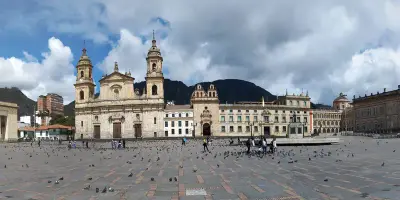
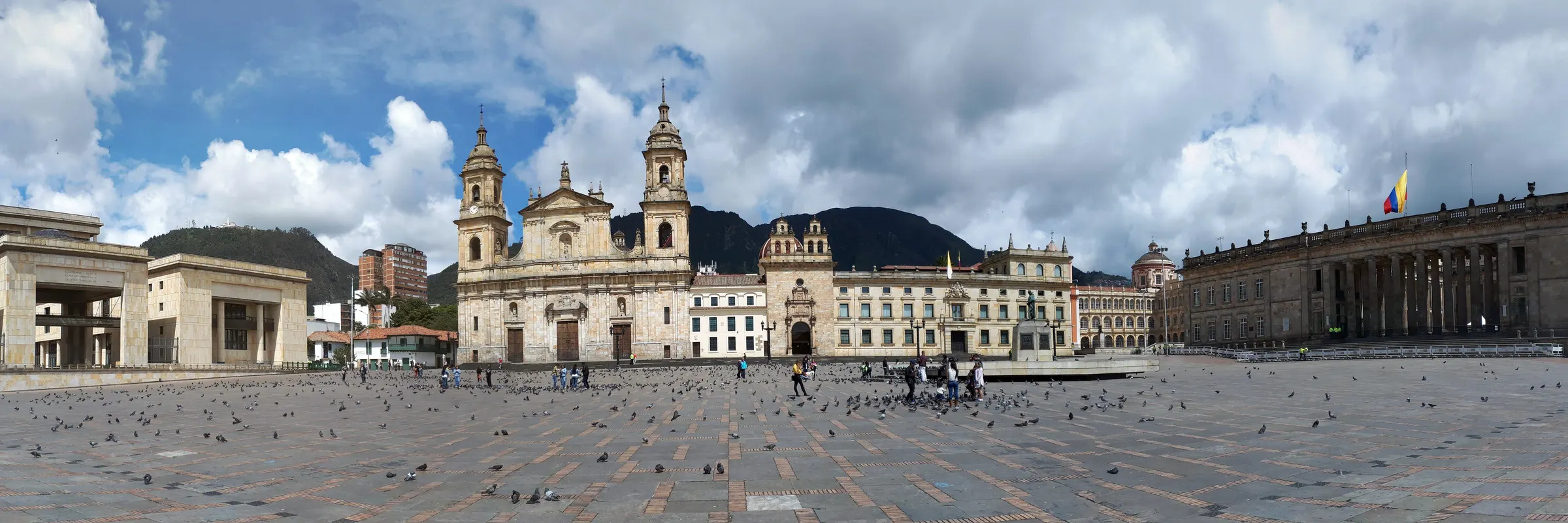
Bogotá: Bolivar Square in the old centre
Photo: Baiji · CC0
Capital District, Colombia

Bogotá: how many days you need and the best months to go

Bogotá sits at around 2,600 metres against a wall of green mountains, and the two things that follow from that are the whole trip. The first is the air: you will be slower on day one, and the coffee will hit differently. The second is the temperature, which is cool and grey year round and catches out almost everyone who packed for Colombia rather than for Bogotá.

Short answers

What people ask before booking

How many days do you need in Bogotá?

Bogotá needs two days for the old quarter, the Gold Museum and the mountain above them. A third adds the salt cathedral, or a Sunday for the Ciclovía, which is worth planning around.

What is the best month to visit Bogotá?

December, January and February — The driest and sunniest stretch of the year. July and August — The second dry season, windy and bright.

Which months are worth avoiding in Bogotá?

April and May — The first rainy season, and the heaviest of the two. October and November — The second rainy season, and the greyest weeks.

How many days Bogotá needs

Two days covers the city properly: the old quarter and the Gold Museum, the mountain above it, and one of the northern neighbourhoods for the eating. It is a compact set of things and they are close together, which is unusual for a South American capital of this size.

A third day is for the salt cathedral at Zipaquirá, a day in the mountains, or the Sunday habit that is genuinely worth arranging a trip around. Most people treat Bogotá as a stopover on the way to the coast or the coffee region, and two nights is honestly the right amount — but they are two nights worth having rather than skipping.

How the city is arranged, and the grid that decodes it

The mountains are always east, which means you can never really be lost. The city is a long north-south strip pressed against them, and the street grid says exactly where you are once you know the rule: *calles* run east-west and their numbers climb as you go north; *carreras* run north-south and their numbers climb as you go west, away from the hills.

The other thing the grid tells you is which Bogotá you are in. The south is poorer and older, the north is wealthier and newer, and the difference across twenty numbered streets is larger than in most cities.

  • La Candelaria — the colonial old town below the mountain, with the main square, the universities, the Botero collection and the Gold Museum. Where the history is, and where you should be during the day.
  • Chapinero — the long middle of the city, with the best independent cafés, bars and bookshops, and the centre of Bogotá's gay nightlife.
  • Zona G and Zona T — the northern eating and drinking districts. Comfortable, expensive by local standards, and where most visitors sleep.
  • Usaquén — a colonial village swallowed by the city, with a Sunday flea market and a plaza that still works like a village square.
  • Monserrate — the mountain above the old town, reached by funicular or cable car, with the view that explains the city's shape in one glance.

Where to stay, and being straight about safety

Bogotá's reputation is worse than its reality and better than complacency deserves. The practical version: petty theft is the real risk and it is opportunistic, the phrase locals use is *no dar papaya* — do not hand someone the opportunity — and the rules are the ordinary ones. Do not walk with a phone out, use apps rather than street taxis at night, and ask your accommodation which specific blocks to avoid.

That shapes where to sleep. La Candelaria is where the sights are and is a mixed proposition after dark; the northern neighbourhoods are safe-feeling and comfortable and are a twenty-minute ride from everything historic.

AreaWho it suitsThe catch
La CandelariaWalking to the museums, the square and the funicular, and the best-value beds.Empties and changes character after dark; take a taxi back rather than walking.
Chapinero AltoCafés, bars and a genuine neighbourhood, halfway between old and new.Hilly, and further from the historic centre than the map suggests at rush hour.
Zona GRestaurants on the doorstep, quiet streets and comfortable hotels.Expensive by Bogotá standards, and you commute to everything historic.
UsaquénA village feel, the Sunday market and good food without the Zona G prices.Far north; the old town is a long ride away.
Near the airportA very early departure.There is nothing there, and traffic into town is unpredictable anyway.

The altitude, and what it actually does to day one

Two thousand six hundred metres is high enough to notice and not high enough to be dangerous for most people. What it does is subtle and consistent: stairs are harder, you dehydrate faster, alcohol is stronger, and you sleep badly the first night. None of that stops a trip; all of it explains why the first day feels heavier than the map suggested.

The fix is boring and effective: arrive, do something flat, drink more water than feels necessary, and save the mountain for day two. Going straight up Monserrate — which adds another five hundred metres — within hours of landing is the standard mistake.

  • Save Monserrate for your second day, and take the funicular or cable car rather than walking the path if you have just arrived.
  • Alcohol hits noticeably harder at this altitude. The local aguardiente is not the drink for your first evening.
  • Coca tea is offered everywhere and is legal and normal here, though it can show on a drug test and does not travel home legally.
  • Drink more water than you think you need. The air is dry as well as thin, and most of what people call altitude sickness here is dehydration.

Getting around, and the Sunday that changes the city

There is no metro yet — one is under construction — and the backbone is the TransMilenio, a bus rapid transit system running in dedicated lanes with station platforms. It is fast, cheap and comprehensible once you have a card, and it is genuinely crowded at peak hours in a way that catches people out.

The thing worth planning around is Ciclovía. Every Sunday and on public holidays, more than a hundred kilometres of main roads close to cars from the morning until early afternoon and fill with people cycling, running and walking. It has run since the 1970s, it is free, and it has been copied by cities all over the world. If your trip includes a Sunday, this is what to do with it.

  • Buy a Tullave card for the TransMilenio. Paying per journey without one is not possible on most of the network.
  • Use ride-hailing apps rather than hailing taxis on the street, particularly at night. This is standard local advice, not visitor caution.
  • Rent a bike for Ciclovía — there are stalls along the route — and start early, because it ends in the early afternoon.
  • Traffic is severe and unpredictable. Give any airport run far more time than the distance suggests.

How eating works here

Bogotá eats a lot of soup, and that makes sense at this altitude in this climate. The set lunch — soup, a main with rice, and a juice — is the everyday meal and the best value in the city, served at midday everywhere from market stalls to office-district restaurants.

The other thing worth knowing is the fruit. Colombia grows things that do not travel and that most visitors have never seen, and the juice list in any café is longer than the food menu. Ordering one you cannot identify, in water or in milk, is the standard move and it is how most people find their favourite.

  • The set lunch at midday is the cheapest good meal, and it is what most people around you are eating.
  • Hot chocolate is served with cheese in it, which you drop in and eat with a spoon as it melts. It sounds wrong and is not.
  • Tipping is usually a voluntary service charge added to the bill and announced out loud. You can decline it.
  • Bogotá's coffee scene is recent and very good. Colombia exported its best beans for decades; the cafés that keep them are a new phenomenon.

Where to eat in Bogotá, and what to order

The food here is highland food — soups, potatoes, maize and things that keep you warm — and it is nothing like the coastal Colombian cooking that gets exported. Eat the set lunch, order a soup you cannot pronounce, and drink a juice you have never heard of. What follows is specific to this city and this altitude.

  • Ajiaco

    What to order

    The city's own dish, and the one thing to eat here

    A thick chicken and potato soup made with three different potatoes and a local herb that gives it its flavour, served with cream, capers, avocado and corn on the side. The herb is what makes it and it does not grow everywhere, which is why the version outside the highlands is never the same. Add everything you are given.

    Check it on Wikidata
  • Changua

    What to order

    Breakfast, and the strangest good thing on this list

    A milk broth with spring onion, a poached egg dropped into it and stale bread torn in. It is a highland breakfast, it is served early, and it is designed for a cold morning at altitude. It sounds unpromising and it is exactly right at seven in the morning here.

    Check it on Wikidata
  • Tamal

    What to order

    Sunday breakfast, wrapped in a leaf

    Maize dough with meat, rice, chickpeas and vegetables, wrapped in a banana leaf and steamed for hours. It is a weekend thing — Sunday morning above all — and the regional versions differ enough that Colombians argue about them. Eat it with hot chocolate, which is the local pairing.

    Check it on Wikidata
  • Aguapanela

    What to order

    The drink that is in every home in the highlands

    Unrefined cane sugar dissolved in hot water, drunk plain, with lime, or with cheese in it. It is the everyday drink of rural Colombia and the thing you are given when you are cold, tired or ill. It costs almost nothing and it is on every menu, usually near the bottom.

    Check it on Wikidata
  • La Candelaria

    Where to look

    Where to eat while you are seeing the old town

    The colonial quarter below the mountain, with the museums, the university crowd and the cheapest set lunches in the city. The blocks around the universities are where to eat here, not the restaurants on the main square, which charge for the view. Go at midday, when everything is open and full.

    Check it on Wikidata

When to go, and what each month costs you

At this altitude and this close to the equator, the temperature barely changes across the year — it is cool every day and cold every night, in every month. What changes is the rain, which comes in two wet seasons and two drier ones. The single most useful thing to know is that you need a jacket in July as much as in December.

  • December, January and February

    Go now

    The driest and sunniest stretch of the year

    The clearest skies, the most reliable afternoons and the best visibility from the mountain. December is festive and busy with domestic travel; January and February are quieter and just as dry. The best window if you want to see the city rather than shelter from it.

  • July and August

    Go now

    The second dry season, windy and bright

    The other dry window, noticeably windier than the first, with clear mornings and strong afternoon sun. This is also when the city's big cultural festivals cluster — their dates move from year to year, so check rather than assume. Good value outside those weeks.

  • March, June and September

    Worth it, but

    The edges, cheaper and less predictable

    Transitional months that hand you clear mornings and wet afternoons in no fixed pattern. Perfectly workable if you plan the mountain and the walking before lunch. Easter moves between March and April and empties the city as residents leave, which is an unusual advantage.

  • April and May

    Think twice

    The first rainy season, and the heaviest of the two

    Sustained afternoon rain most days, low cloud that hides the mountains, and the funicular views gone. The museums and the eating are unaffected and the prices are the lowest of the year. If Monserrate and the Ciclovía are why you are coming, this is the wrong window.

  • October and November

    Think twice

    The second rainy season, and the greyest weeks

    The wettest stretch of the year, with October usually the worst month. Persistent drizzle rather than dramatic storms, and short grey days. Everything indoors works perfectly; everything that depends on a view does not.

Things that change the trip

  • Pack a warm jacket and a waterproof, in every month. This is the mistake almost every visitor makes, and Bogotá is cold and wet all year.
  • Give yourself a flat first day and save Monserrate for the second. Two thousand six hundred metres is enough to notice.
  • Learn the grid: calles run east-west, carreras north-south, mountains always east. After ten minutes you will not need a map.
  • If your trip includes a Sunday, do the Ciclovía. A hundred kilometres of closed roads, free, and the best thing the city does.
  • Eat the set lunch at midday, and order a fruit juice you cannot identify. Both cost almost nothing.
  • Use ride-hailing apps at night rather than flagging a taxi. It is what people here do and it is not paranoia.

Plan Bogotá around the altitude

A trip of more than three days, or one that adds Medellín, the coffee region or Cartagena and the flights between them, is what Premium is for. The free version covers one destination of up to three days.

Destinations