
Skip to content
JoruJoru
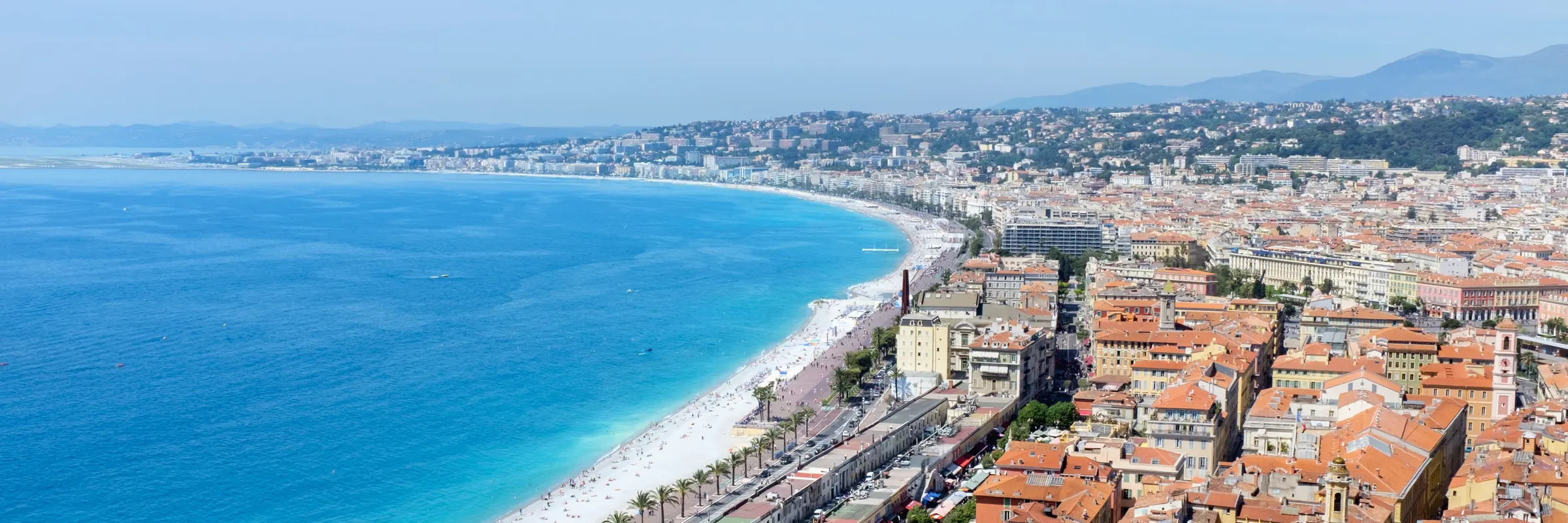
Nice: The Bay of Angels and the roofs of Nice from Castle Hill

French Riviera, France

Nice: how many days you need and the best months to go

Photo: Kristoffer Trolle from Copenhagen, Denmark · CC BY 2.0

Nice is the city of the French Riviera, a real city rather than a resort, on a wide bay of blue water backed by the first mountains of the Alps. It belonged to the House of Savoy for nearly five centuries and became French only in 1860, and its old town still looks to Italy: narrow lanes of ochre and red houses, Baroque churches, and a market of flowers and vegetables on the old town's main square. In the nineteenth century English and Russian aristocrats came for the winters and built the long seafront promenade, the villas on the hills and the grand hotels; painters followed, and Matisse and Chagall both have museums here. The beaches are of pebbles, the light is famous and the food is its own, half Provençal and half Ligurian. The planning problem is that Nice is the base for a whole coast. Monaco, the hill villages and the old towns of Antibes and Villefranche are all within an hour by train or bus, and the coast's big events of May and June and the peak of July and August fill every hotel and road. Stay in Nice, travel by rail, and avoid the peak weeks if you can.

Short answers

What people ask before booking

How many days do you need in Nice?

Nice needs three to four days: two for the city — the old town and its market, Castle Hill, the Promenade des Anglais and the museums of Matisse and Chagall on the hill of Cimiez — and one or two for the coast by train, to Monaco and Èze, Villefranche, Antibes or Cannes. Avoid the weeks of the Cannes film festival and the Monaco Grand Prix unless you are going for them.

What is the best month to visit Nice?

May and June — Warm, bright and before the peak. September and October — A warm sea and fewer people.
Work out how many hours you will have in Nice on your dates

When to go, and what each month costs you

Nice has a sunny Mediterranean climate sheltered by the mountains: hot, dry summers, mild winters with bright days, and most of the rain in autumn. The months either side of the summer are the best, warm and less crowded.

  1. January: Worth it, but
  2. February: Worth it, but
  3. March: Worth it, but
  4. April: Worth it, but
  5. May: Go now
  6. June: Go now
  7. July: Worth it, but
  8. August: Worth it, but
  9. September: Go now
  10. October: Go now
  11. November: Worth it, but
  12. December: Worth it, but
  • May and June

    Go now

    Warm, bright and before the peak

    Warm days, long evenings and the sea warming. The film festival in Cannes in May and the Monaco Grand Prix in early June fill the hotels of the whole coast for their weeks; the rest of the season is calmer.

  • September and October

    Go now

    A warm sea and fewer people

    The sea still warm after the summer, the heat easing and the crowds gone. October can bring the first heavy autumn storms, usually brief.

  • July and August

    Worth it, but

    Hot, packed and dear

    Hot, sunny days, warm nights and the beaches full. The busiest and dearest months, with jammed roads and full trains; book everything ahead and travel along the coast early.

  • November to April

    Worth it, but

    Mild winter sun, and the Carnival

    Mild, often sunny days and cool nights, with rain in November. The Carnival, with its parades and battles of flowers, fills the city for two to three weeks between February and early March; its dates move every year, and the lemon festival of Menton comes at the same time. Too cool for most people to swim.

What to pack for Nice, month by month

How many days Nice needs

Two days cover the city. One for the old town and the sea: the flower market, the lanes and churches of the old town, the climb to Castle Hill for the view of the bay, and the promenade at sunset. One for the hill of Cimiez and its museums of Matisse and Chagall, the Russian cathedral, and an afternoon on the beach.

Days three and four are for the coast: Monaco and the hill village of Èze, Villefranche and the Cap Ferrat peninsula, the old town of Antibes and the Picasso museum, or the perched village of Saint-Paul-de-Vence. Cannes is under an hour west.

How the city is arranged, around the Bay of Angels

Nice curves around the Bay of Angels, with the Promenade des Anglais running for miles along the shore from the airport in the west to the old town in the east. Castle Hill separates the old town from the old port; the newer city spreads inland, and the hills of Cimiez and Mont Boron rise behind.

  • The old town — lanes, churches and markets at the eastern end of the bay, below Castle Hill.
  • The Promenade and the centre — the seafront, the grand hotels, the gardens of the Promenade du Paillon and the shopping streets.
  • The port — the old harbour east of Castle Hill, with restaurants and ferries to Corsica.
  • Cimiez — the hill of villas, Roman ruins and the museums of Matisse and Chagall.
  • The Musiciens quarter and the station — the nineteenth-century streets between the centre and the railway station.

Where to stay, and what each area costs you

The centre is compact: the old town, the Promenade and the station are all within a half-hour walk, and the tram links them. Stay near the sea for the beach and the views, near the station for the trains along the coast.

Prices peak in July and August, during the coast's great events — the film festival in Cannes in May and the Monaco Grand Prix in early June, whose dates move every year — and at the Nice Carnival, between February and early March. The city charges a tourist tax per person and per night.

AreaWho it suitsThe catch
The old townThe markets, restaurants and lanes on the doorstep, a few steps from the sea.Narrow lanes, small rooms and noise from the bars at night.
The Promenade and the centreSea views, the beach across the road and the main shopping streets.The dearest rooms are those facing the sea, and traffic on the Promenade.
Around the stationTrains along the coast for day trips, and cheaper hotels.Plain streets, and some rough corners at night.
The portA quieter, local quarter of restaurants by the harbour, near the old town.A walk round Castle Hill to the centre and the beaches.

Compare these areas against your priorities

Getting there, and getting around

Nice's airport is the busiest in France outside Paris, on the shore at the western end of the bay, linked to the centre by tram. Fast trains reach Marseille in about two and a half hours and Paris in under six; the coastal railway is the way to travel along the Riviera.

The centre is for walking, with trams across the city. Regional trains run along the coast, several times an hour in season, to Villefranche, Monaco and Menton in one direction, Antibes and Cannes in the other; buses climb to the hill villages.

  • Use the trains and buses for day trips: the coastal roads jam in summer, and parking is scarce.
  • The beaches are of pebbles: bring water shoes, or rent a lounger at a private beach.
  • Èze and Saint-Paul-de-Vence are reached by bus; go early, before the coaches.
  • Monaco is a short train ride away, a separate country, but with no border checks.

The old town, the museums and the coast

The view from Castle Hill is the way to start: a park on the hill where Nice's castle once stood, with the whole Bay of Angels on one side and the port on the other. Below it, the old town's market on the Cours Saleya sells flowers, fruit and vegetables every morning except Monday, when it becomes an antiques market.

  • The Matisse Museum — the painter's work in a red villa on the hill of Cimiez, where he lived and is buried.
  • The Chagall Museum — the great biblical paintings he made for a museum built for them.
  • The Promenade des Anglais — miles of seafront for walking, cycling and watching the sunset.
  • The Russian cathedral — an Orthodox cathedral with onion domes, built for the Russian winter colony.
  • Èze — a medieval village on a rock above the sea, with an exotic garden at the top.
  • Villefranche-sur-Mer — a pastel fishing port on a deep bay, a few minutes east by train.

How eating works here

Nice has its own cuisine, closer to Liguria than to Paris: a chickpea pancake baked in a wood oven, an onion and anchovy tart, the original salad of tuna, eggs and raw vegetables, a sandwich of that salad in a round bun, and stuffed vegetables. Much of it is street food, sold in the old town at lunchtime.

French hours apply: lunch from noon, dinner from half past seven. The local wine of the hills of Bellet is rare and worth ordering.

  • The chickpea pancake is sold hot from the oven in the old town, cut in pieces, with black pepper.
  • The real salad has no cooked vegetables: no potatoes, no green beans.
  • Restaurants on the Cours Saleya cater to tourists; the side lanes are better value.
  • Service is included: rounding up or a few euros is enough.

Where to eat in Nice, and what to order

Nice cooks with olive oil, chickpeas, anchovies and vegetables: a crisp chickpea pancake from the wood oven, the original salad with tuna, a tart of caramelised onions and anchovies, and a round bun soaked in olive oil. Eat in the old town, at lunch, standing up if you like.

  • Socca

    What to order

    The chickpea pancake

    A thin, crisp pancake of chickpea flour, water and olive oil, baked in a wood oven on wide copper trays and cut into pieces. It is the street food of the old town, eaten hot with black pepper and a glass of rosé.

    Check it on Wikidata
  • Salade niçoise

    What to order

    The original salad

    Tomatoes, raw peppers and spring onions, black olives, hard-boiled eggs, tuna or anchovies, and olive oil. The true version of Nice has no potatoes or cooked beans, and the locals are strict about it.

    Check it on Wikidata
  • Pissaladière

    What to order

    The onion and anchovy tart

    A thick bread dough covered with onions cooked slowly until sweet, with anchovies and black olives on top. It is sold by the slice in the bakeries of the old town, and eaten cold or warm.

    Check it on Wikidata
  • Pan bagnat

    What to order

    The salad in a bun

    A round bread bun soaked in olive oil and filled with the ingredients of the salad: tuna, egg, tomato, peppers and olives. It is the picnic of Nice, made to be eaten on the beach.

    Check it on Wikidata

Things that change the trip

  1. Use the coastal trains for Monaco, Villefranche, Antibes and Cannes.
  2. Climb Castle Hill early in the morning or at sunset.
  3. Avoid the weeks of the Cannes festival and the Monaco Grand Prix unless you are going for them.
  4. Eat the chickpea pancake hot in the old town.
  5. Bring water shoes for the pebble beaches.
  6. Go to Èze and Saint-Paul-de-Vence early, before the coaches.

Plan Nice with the Riviera

A trip of more than three days, or one that joins Nice with Monaco, Cannes, Antibes, Provence or the Italian Riviera and the trains between them, is what Premium is for. The free version covers one destination of up to three days.

Destinations