

Skip to content
JoruJoru
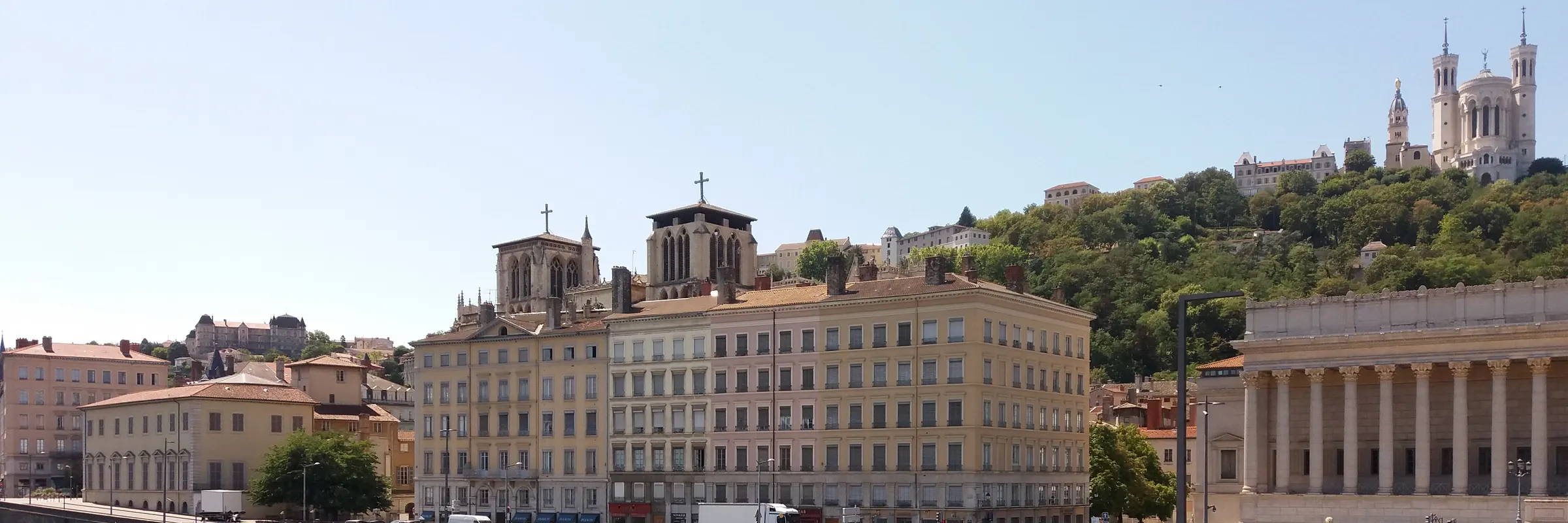
Lyon: Saint-Jean cathedral, the law courts and the basilica of Fourvière on its hill

Auvergne-Rhône-Alpes, France

Lyon: how many days you need and the best months to go

Photo: Romainbehar · CC0

Lyon is France's third city and, by its own reckoning and that of many chefs, its capital of food. It sits where the Rhône and the Saône meet, and its history climbs the hills above them: the Romans founded their capital of Gaul on the hill of Fourvière, where their theatres still stand below a nineteenth-century basilica; the Renaissance merchants and bankers built the old town at its foot, a World Heritage Site of tall houses connected by covered passages, the traboules; and the silk workers of the nineteenth century filled the hill of the Croix-Rousse with tall workshops and their own passages. Between the rivers, the Presqu'île has the grand squares and shops, and across the Rhône lies the modern city. The planning problem is the table. Lyon's traditional taverns, the bouchons, and its great restaurants are the reason many people come, and the good ones are small and full; the cheap imitations wait for the unwary in the old town. Book ahead, eat at lunch, and leave room in the schedule for long meals.

Short answers

What people ask before booking

How many days do you need in Lyon?

Lyon needs two days: one for the old town, its traboules and the hill of Fourvière with the basilica and the Roman theatres, one for the Presqu'île, the fine arts museum and the silk workers' hill of the Croix-Rousse. A third day adds the covered market, the museum at the confluence or the Beaujolais vineyards. Book the bouchons ahead.

What is the best month to visit Lyon?

April to June — Spring, terraces and the river banks. September and October — The harvest, and the new season's food.

Work out how many hours you will have in Lyon on your dates

When to go, and what each month costs you

Lyon has a mix of continental and Mediterranean climates: hot summers, cold, grey winters, and pleasant springs and autumns. Spring and autumn are the best seasons; early December brings the city's great festival of lights.

  1. January: Worth it, but
  2. February: Worth it, but
  3. March: Worth it, but
  4. April: Go now
  5. May: Go now
  6. June: Go now
  7. July: Worth it, but
  8. August: Worth it, but
  9. September: Go now
  10. October: Go now
  11. November: Worth it, but
  12. December: Worth it, but
  • April to June

    Go now

    Spring, terraces and the river banks

    Mild to warm days, terraces on the squares and evenings on the river banks. The best time for walking the hills and the traboules.

  • September and October

    Go now

    The harvest, and the new season's food

    Warm days that cool through October, the grape harvest in the Beaujolais and the restaurants back from the summer. The best season for the table.

  • July and August

    Worth it, but

    Hot, and half on holiday

    Hot days, sometimes very hot, and concerts in the Roman theatres. Many restaurants close for part of August, when the city goes on holiday; check before you go.

  • November to March

    Worth it, but

    Grey, and the festival of lights

    Cold, often grey days. The Festival of Lights, around the eighth of December, lights up the whole city with installations for four nights, packed and unforgettable; book months ahead. The rest of winter is quiet and good for the table.

What to pack for Lyon, month by month

How many days Lyon needs

Two days cover the city. One for the old town and the hill: the lanes and traboules of Vieux Lyon, the cathedral of Saint-Jean, the funicular up to Fourvière, the basilica and the Roman theatres, and lunch in a bouchon. One for the Presqu'île and the Croix-Rousse: the great squares, the fine arts museum, the silk workers' hill and its passages, and dinner.

A third day is for the rest: the covered market and a long lunch, the modern museum at the confluence of the rivers, the park of the Tête d'Or, or a day in the vineyards of the Beaujolais to the north.

How the city is arranged, between two rivers

Lyon is built around two rivers, the Saône to the west and the Rhône to the east, which meet at the southern tip of the Presqu'île, the long peninsula between them. The old town and the hill of Fourvière are on the west bank of the Saône; the Croix-Rousse rises at the northern end of the Presqu'île; and the modern city, with the main station of Part-Dieu, spreads east of the Rhône.

  • Vieux Lyon — the Renaissance old town on the Saône, with its traboules, the cathedral and the funiculars up the hill.
  • Fourvière — the hill above the old town, with the basilica, the Roman theatres and the view over the city.
  • The Presqu'île — the peninsula between the rivers, with the great squares, the opera, the shops and many restaurants.
  • The Croix-Rousse — the hill of the silk workers, with tall workshops, passages, a market and a village atmosphere.
  • The left bank and Part-Dieu — the modern city across the Rhône, with the main station, the covered market and the park of the Tête d'Or.

Where to stay, and what each area costs you

The Presqu'île is the most central base, between the old town and the station, with the metro and everything on foot. Vieux Lyon has the atmosphere, the Croix-Rousse the local life, and Part-Dieu the trains.

Prices peak during the Festival of Lights in early December, the big trade fairs and congresses, and in spring and autumn. The city charges a tourist tax per person and per night.

AreaWho it suitsThe catch
The Presqu'îleThe squares, shops and restaurants, between the old town and the station.Busy, and noisy streets near the bars.
Vieux LyonThe Renaissance lanes, the traboules and the funicular to Fourvière.Crowded by day, small rooms, and the most touristy restaurants.
The Croix-RousseA village feel, local markets, bars and views, a short metro ride from the centre.Steep streets and stairs, and fewer hotels.
Part-Dieu and the left bankTrains, the covered market and business hotels at lower prices.A modern district with little charm, across the river from the old town.

Compare these areas against your priorities

Getting there, and getting around

Lyon is two hours from Paris by high-speed train, and well connected to Marseille, Geneva, the Alps and Italy. Its airport is linked to Part-Dieu by a fast tram in about half an hour.

The centre is walkable, with a metro, trams, buses and two funiculars up the hill of Fourvière, all on the same tickets. Bicycles are available for hire across the city.

  • Take the funicular up to Fourvière and walk down through the gardens to the old town.
  • The traboules are private passages open to visitors in the old town and the Croix-Rousse; walk through quietly.
  • A city card covers transport and many museums, and pays off with several visits.
  • The Beaujolais vineyards and the Alps are within reach for a day by train or car.

The old town, the traboules and the hills

The traboules are Lyon's secret: covered passages that run through the buildings and courtyards of the old town and the Croix-Rousse, from one street to the next, used for centuries by merchants and silk workers to move their goods out of the rain. Several dozen are open to visitors behind ordinary-looking doors; a map from the tourist office shows them.

  • The basilica of Fourvière — the white nineteenth-century basilica on the hill, its interior covered in mosaics, with the view over the city.
  • The Roman theatres — two theatres on the slope of Fourvière, still used for concerts in summer.
  • The fine arts museum — one of the great museums of France, in an old abbey on the Place des Terreaux.
  • The museum at the confluence — a building of glass and steel where the two rivers meet, about science and humanity.
  • The Croix-Rousse — the silk workers' hill, with its great staircase-streets and the view from the top.
  • The park of the Tête d'Or — one of the largest city parks in France, with a lake, a zoo and greenhouses.

How eating works here

Lyon's table has two sides. The bouchons are its traditional taverns: checked tablecloths, local wine in thick-bottomed bottles, and hearty dishes — pike dumplings in a crayfish sauce, sausages, tripe, a herbed cheese spread, a pink praline tart. Its great restaurants carry on the tradition of Paul Bocuse, the chef who made the city famous.

French hours apply, and Lyon keeps them: lunch from noon to two, dinner from half past seven. Many restaurants close on Sundays and Mondays; book, and look for the label of the authentic bouchons.

  • The covered market named after Paul Bocuse sells the region's best produce, with stalls to eat oysters and charcuterie at the counter.
  • The menu of the day at lunch is the best value in the good restaurants.
  • Local wine comes from the Beaujolais and the Côtes du Rhône, often served by the pot.
  • Service is included: rounding up or a few euros is enough.

Where to eat in Lyon, and what to order

Lyon eats generously: pike dumplings in a creamy sauce, a herbed cheese spread named after the silk workers, a pink praline tart, and the produce of a covered market that supplies the city's chefs. Eat in a real bouchon, and book.

  • Bouchon lyonnais

    Institution

    A real bouchon

    A small traditional tavern with checked tablecloths, crowded tables and a short menu of Lyon's dishes, with the wine served by the pot. Look for the label of the authentic bouchons: many of the imitations in the old town serve the same dishes badly.

    Check it on Wikidata
  • Quenelle de brochet

    What to order

    Pike dumplings

    Light dumplings of pike mixed with flour, eggs and butter, baked in a creamy crayfish sauce until they puff up. It is the classic dish of the city, on every bouchon menu.

    Check it on Wikidata
  • Cervelle de canut

    What to order

    The silk workers' cheese spread

    Fresh cheese beaten with herbs, shallots, garlic, oil and vinegar, served as a starter or before dessert. Its name means «silk worker's brain», a joke at the expense of the weavers of the Croix-Rousse.

    Check it on Wikidata
  • Tarte aux pralines

    What to order

    The pink praline tart

    A tart filled with bright pink sugared almonds melted with cream, sweet and crunchy. It is the dessert of Lyon's bakeries and bouchons, and the pink almonds turn up in brioches too.

    Check it on Wikidata
  • Halles de Lyon-Paul Bocuse

    Market

    The covered market

    The covered food market of the left bank, named after the city's great chef, with stalls of cheese, charcuterie, fish and pastries. Eat oysters and white wine at a counter on a weekend morning, as the locals do.

    Check it on Wikidata

Things that change the trip

  1. Book the bouchons and restaurants ahead, especially for dinner.
  2. Look for the label of the authentic bouchons, and avoid the touts of the old town.
  3. Take the funicular up to Fourvière and walk down.
  4. Walk through the traboules with a map from the tourist office.
  5. Check that restaurants are open on Sundays, Mondays and in August.
  6. Go to the covered market on a weekend morning for oysters at the counter.

Plan Lyon with the Rhône valley

A trip of more than three days, or one that joins Lyon with the Beaujolais, Burgundy, Annecy, the Alps or Provence and the trains between them, is what Premium is for. The free version covers one destination of up to three days.

Destinations