
Skip to content
JoruJoru
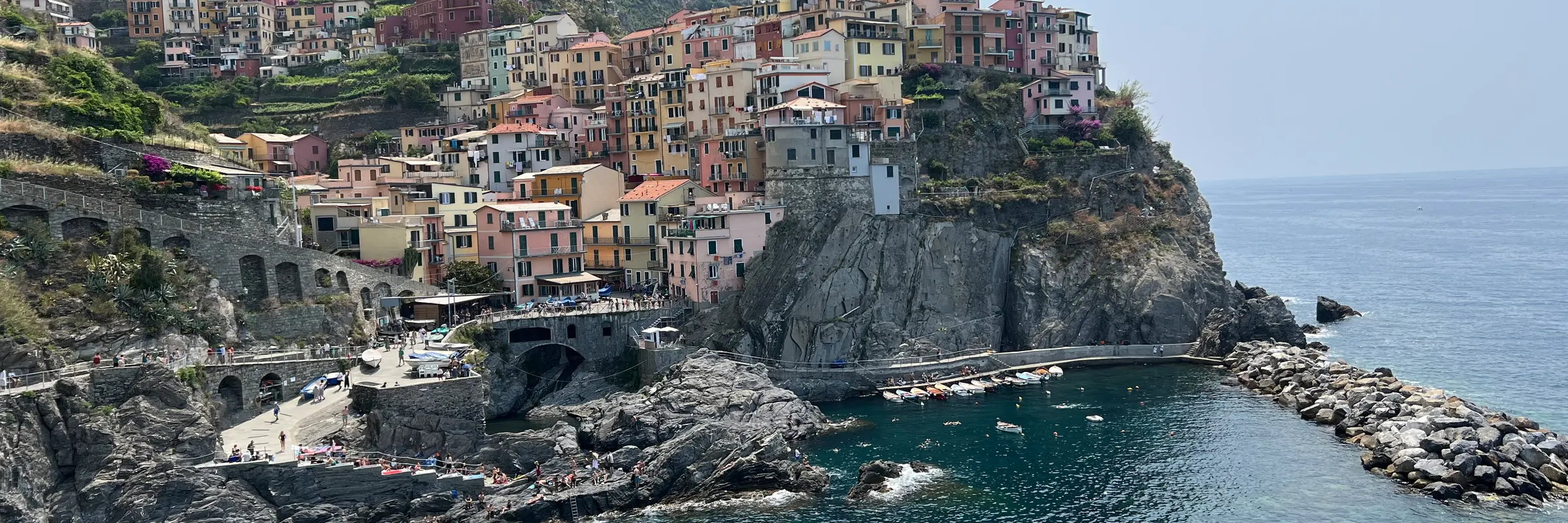
Cinque Terre: Manarola on its rock above the little harbour

Liguria, Italy

Cinque Terre: how many days you need and the best months to go

Photo: Lukas Beck · CC BY 4.0

The Cinque Terre, the Five Lands, are five villages strung along a short stretch of steep coast between Genoa and La Spezia: Monterosso, Vernazza, Corniglia, Manarola and Riomaggiore. For centuries they were reached mainly by sea, and their people carved the mountainsides into thousands of kilometres of dry-stone terraces for vines and lemons. The houses, painted in reds, ochres and pinks, are stacked above tiny harbours, and a railway, mostly in tunnels, now links them in a few minutes each. Footpaths still run between them along the cliffs and up through the vineyards, and the whole coast is a national park and a World Heritage Site. The planning problem is size. The villages are tiny, with a few streets each, and on summer days trains, boats and cruise excursions bring far more people than they can hold; some of the coastal paths are closed after landslides, and the open ones need a park card. Sleep in a village or nearby, walk early, and see them in the evening, when the day-trippers have gone.

Short answers

What people ask before booking

How many days do you need in the Cinque Terre?

The Cinque Terre need two days: one for Monterosso, Vernazza and Corniglia with the coastal path between them, and one for Manarola and Riomaggiore and the sunset over Manarola. A third day is for the high paths through the vineyards or a boat to Portovenere. Check which paths are open the day before.

What is the best month to visit the Cinque Terre?

April to June — Spring, and the best walking. September and October — The grape harvest and a warm sea.

Work out how many hours you will have in the Cinque Terre on your dates
When to go, and what each month costs you

The Cinque Terre have a mild Mediterranean climate: warm springs and autumns, hot summers, and mild, wet winters. Autumn storms can close the paths and stop the boats, and the summer brings more visitors than the villages can hold.

  1. January: Worth it, but
  2. February: Worth it, but
  3. March: Worth it, but
  4. April: Go now
  5. May: Go now
  6. June: Go now
  7. July: Worth it, but
  8. August: Worth it, but
  9. September: Go now
  10. October: Go now
  11. November: Worth it, but
  12. December: Worth it, but
  • April to June

    Go now

    Spring, and the best walking

    Mild to warm days, the terraces green and the boats running. The best season for the paths, before the heat; weekends and Easter, whose date moves every year, are already crowded.

  • September and October

    Go now

    The grape harvest and a warm sea

    Warm days, the sea still warm after the summer and the grapes harvested on the terraces in September. Autumn storms can close the paths for a day, more often in October.

  • July and August

    Worth it, but

    Hot and overcrowded

    Hot days, a warm sea and the villages at their fullest, with queues for the trains. Walk at dawn, swim in the afternoon, and stay for the evening, when the day-trippers leave.

  • November to March

    Worth it, but

    Quiet, wet and half closed

    Mild, often wet days, few visitors, and many guesthouses and restaurants closed. The villages are local again, but storms can close the paths, and the boats stop.

What to pack for the Cinque Terre, month by month

How many days the Cinque Terre needs

Two days let you see all five villages and walk between some of them. One for the north: Monterosso, its beach and old town, and the path to Vernazza, with Corniglia on its cliff in the afternoon. One for the south: Manarola and Riomaggiore, the clifftop path between them, and the sunset over Manarola's harbour.

A third day is for the high paths or the gulf. The trails through the vineyards and sanctuaries above the villages are quieter than the coast; Portovenere, a fortified village at the end of the gulf of La Spezia, is a boat ride away; and Levanto, to the north, has a long beach.

How the five villages are arranged

The five villages lie in a row along the coast, Monterosso at the north-western end and Riomaggiore at the south-eastern, a few minutes apart by train. Levanto lies just beyond Monterosso, and La Spezia, the city with the main station, beyond Riomaggiore.

  • Monterosso — the largest and flattest, with the only long sandy beach, an old town and a newer seafront.
  • Vernazza — the most photographed, around a tiny harbour with a castle tower and a church on the water.
  • Corniglia — the only one without a harbour, high on a headland, reached from the station by a long stairway or a shuttle bus.
  • Manarola — houses tumbling down a rock to the sea, with vineyards above and the classic view at sunset.
  • Riomaggiore — the southernmost, its houses stacked along a steep ravine down to a small harbour.

Where to stay, and what each area costs you

Sleeping in a village is the way to have it to yourself in the evening, but rooms are few, small, dear and often up steep steps. Levanto and La Spezia, at either end of the railway, are cheaper and have more choice, a few minutes by train from the first village.

Prices peak from June to September and at weekends from spring; from November to March many guesthouses and restaurants close. The villages charge a tourist tax per person and per night.

AreaWho it suitsThe catch
MonterossoBeach holidays and families: the most hotels, the flattest streets and a sandy beach.Less dramatic than the others, and busy with day-trippers.
Vernazza, Manarola or RiomaggioreThe village at night, the harbour at dawn and the views from your window.Few, small and dear rooms, steep steps, and crowds all day.
CornigliaThe quietest village, high above the sea, with views along the coast.A long stairway from the station, and no harbour or beach.
LevantoA real small town with a long beach, cheaper hotels and the train to the villages.Outside the park, and a train ride from the villages every day.
La SpeziaThe cheapest and widest choice, with the main station, restaurants and boats to the villages.A port city without the charm of the villages, and a train ride away.

Compare these areas against your priorities

Getting there, and getting around

The Cinque Terre are reached by train: from La Spezia, on the line from Pisa, Florence and Rome, or from Levanto and Genoa to the north. A local train runs between the villages, often every quarter of an hour in season, in a few minutes each; the nearest airports are Pisa and Genoa.

In the villages, you walk. Cars cannot enter them, parking above them is scarce and expensive, and the roads are narrow and winding. From spring to autumn, boats link the villages with harbours, Levanto, La Spezia and Portovenere, sea permitting.

  • The park card covers the coastal paths and the village buses, and a version with the trains covers the local train too; it is required to walk the main coastal path.
  • The cliff path between Riomaggiore and Manarola, the Via dell'Amore, reopened after years of repairs and is walked in booked time slots, with a supplement.
  • Some sections of the coastal path are closed after landslides, and others run one way on busy days; check the park's notices the day before.
  • Wear proper walking shoes and carry water: the paths are steep, rocky and exposed, and rescues of walkers in sandals are common.

The villages, the paths and the terraces

The coastal path is how the Cinque Terre were meant to be seen: a narrow trail along the cliffs and through olive groves and vineyards, with each village appearing below you round a headland. The stretch from Monterosso to Vernazza, about two hours, is the most beautiful and the steepest; Vernazza to Corniglia is shorter. Start early in the morning, before the heat and the crowds.

  • Vernazza's harbour — the classic view, best from the path above the village towards Monterosso.
  • Manarola at sunset — the view of the village from the path around the headland, when the houses turn gold.
  • The sanctuaries — hillside churches above each village, reached by old mule tracks through the vines.
  • Monterosso's beach — the longest in the Cinque Terre, with umbrellas and a free stretch.
  • Portovenere — a fortified village with a church on a rock at the mouth of the gulf, part of the same World Heritage Site.
  • The terraces — the dry-stone walls that hold the vineyards on the cliffs, built by hand over centuries.

How eating works here

This is Liguria, the home of pesto: basil pounded with pine nuts, garlic, cheese and olive oil, served on twisted pasta; focaccia from the bakery in the morning; anchovies from Monterosso fried, marinated or salted; and a chickpea-flour pancake baked in wide copper pans. Seafood is the rest, often sold fried in paper cones to eat on the harbour.

Italian hours apply: lunch from half past twelve, dinner from half past seven. Book dinner in the villages in summer; restaurants are few and small.

  • Fried seafood in a paper cone is the snack of the harbours.
  • The local white wine comes from the terraces, and the sweet amber wine made from dried grapes is the rarity.
  • Lemons from Monterosso turn up in cakes and a local liqueur.
  • A cover charge is often added per person; tipping beyond it is optional.

Where to eat in the Cinque Terre, and what to order

The Cinque Terre eat the food of Liguria at its best: pesto on twisted pasta, focaccia from the bakery, a chickpea pancake from the oven, and the wines of the cliff terraces, one of them a rare sweet wine of dried grapes.

  • Pesto

    What to order

    Pesto, in its home

    A sauce of fresh basil pounded with pine nuts, garlic, hard cheese and olive oil, bright green and fragrant. Liguria invented it, and here it is made with the region's small-leaved basil; order it on trofie, the short twisted pasta of the coast.

    Check it on Wikidata
  • Trofie

    What to order

    The twisted pasta of Liguria

    Short, thin spirals of pasta rolled by hand, traditionally served with pesto, sometimes with potatoes and green beans cooked in with it. It is the pasta of every trattoria on the coast.

    Check it on Wikidata
  • Focaccia

    What to order

    Focaccia in the morning

    A flat bread soaked in olive oil and salt, crisp at the bottom and soft inside, dimpled by the baker's fingers. The Ligurians eat it for breakfast, sometimes dipped in milky coffee, and all day as a snack from the bakeries.

    Check it on Wikidata
  • Farinata

    What to order

    The chickpea pancake

    A thin pancake of chickpea flour, water, olive oil and salt, baked in a very hot oven in wide copper pans and cut into wedges. It is eaten hot, with black pepper, from the bakeries and pizzerias.

    Check it on Wikidata
  • Cinque Terre DOC

    What to order

    The wines of the terraces

    A dry white wine from the vineyards on the cliffs, and its rare sweet sibling made from grapes dried after the harvest, amber and honeyed. The terraces are so steep that the grapes are carried down by hand or on tiny monorails; the sweet wine is drunk in small glasses with biscuits.

    Check it on Wikidata

Things that change the trip

  1. Sleep in a village or nearby, and see the villages early and late.
  2. Buy the park card for the paths, and the version with trains if you will use them.
  3. Check which paths are open the day before, on the park's notices.
  4. Book the Via dell'Amore slot ahead in season.
  5. Walk in proper shoes with water, starting early.
  6. Leave the car in La Spezia or Levanto and use the train.

Plan the Cinque Terre with the Italian Riviera

A trip of more than three days, or one that joins the Cinque Terre with Portovenere, Portofino, Genoa, Pisa or Florence and the trains between them, is what Premium is for. The free version covers one destination of up to three days.

Destinations