Skip to content
JoruJoru
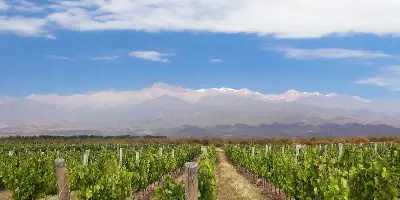
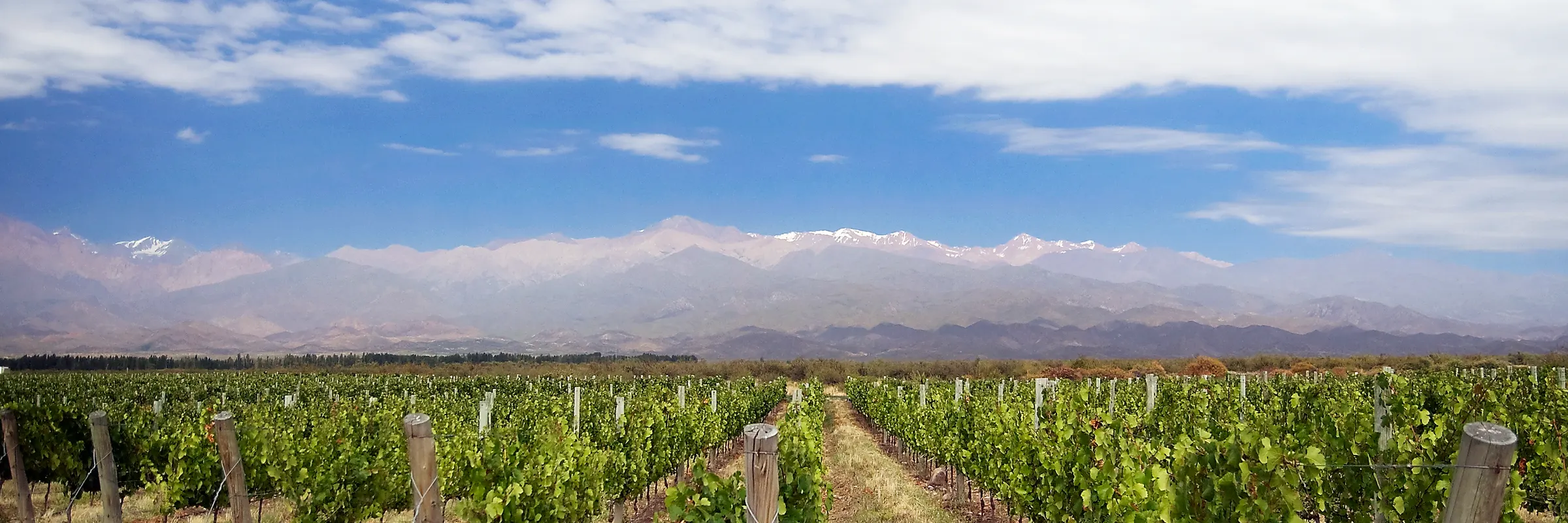
Mendoza: a vineyard in the Uco Valley with the Andes behind
Photo: David · CC BY 2.0
Mendoza, Argentina

Mendoza: how many days you need and the best months to go

Mendoza is a desert. It receives around two hundred millimetres of rain a year, and every tree in the city and every vine outside it is fed by irrigation channels that run along the streets — a system the Huarpe people built before the Spanish arrived and the Spanish extended. That water, plus altitude, plus a French grape that failed in France, produced a wine region that makes about seventy per cent of Argentina's wine. Three days is the working figure, and at least one of them belongs outside the city.

Short answers

What people ask before booking

How many days do you need in Mendoza?

Mendoza needs three days — an afternoon in the city and two in the wine valleys, which are an hour apart in different directions — and a fourth for the road past Aconcagua.

What is the best month to visit Mendoza?

March and April — Harvest, and the best month of the year. October and November — Spring, green vines and the Andes still white.

Which months are worth avoiding in Mendoza?

June, July and August — Winter: cold, bare vines and a closed pass.

How many days Mendoza needs

Three days is the honest minimum and the shape is fixed: one day in the city, which is small and pleasant and takes an afternoon rather than a day; and two in the wine valleys, which are separate regions an hour apart in different directions.

The fourth day is the mountains. The road west towards Chile climbs past Aconcagua, the highest peak outside Asia at nearly seven thousand metres, and it is a long day out with the highest single-day scenery in Argentina. Beyond four days you are here to drink properly, which is a perfectly reasonable plan.

The irrigation, and why the city looks like this

The first thing a visitor notices is the ditches. Every street in central Mendoza has an open channel — an acequia — running along both sides, and the plane trees that shade the city are planted over them. They are not drainage; they are the water supply for the trees, filled from the rivers that come off the Andes.

The system predates the Spanish, who found the Huarpe people already irrigating this valley and extended what existed. It is why a city in a desert with essentially no rainfall has a canopy of mature trees over almost every street, and why the same principle scaled up produced the vineyards. It is also why you should watch your feet: the channels are deep, unguarded and full of people twisting ankles.

Which wine valley to pick

This is the real planning decision, and the three regions are genuinely different rather than variations on a theme. They sit at different altitudes, which is the variable that matters most in Mendoza, because height controls the temperature swing between day and night and that swing is what the wine is built on.

Do not try to do two regions in a day. The driving between them is real, the tastings are generous, and the schedule that looks fine on paper turns into a rush.

  • Luján de Cuyo — the closest, forty minutes south, at around a thousand metres. The oldest fine-wine district in Argentina and the classical home of malbec. The easiest first day and the one with the historic wineries.
  • Valle de Uco — an hour and a half south-west, and considerably higher, up to fifteen hundred metres. The newer, more dramatic region: modern architecture, mountain backdrops and the wines everyone is currently writing about.
  • Maipú — twenty minutes east, lower and flatter, with the oldest bodegas and the olive oil producers. The one you can do by bicycle, which is why it is full of bicycles.
  • Do not drive yourself. A hired driver for the day costs less than you think and removes the one obvious problem with a wine tour.
  • Book the wineries. Almost none take walk-ins any more, and the good ones fill weeks ahead in high season.

Malbec, and why it is here and not in France

Malbec is a French grape from Cahors, in the south-west, where it made dark, tannic wines and was one of the six permitted varieties in Bordeaux. It never quite worked there: it is prone to frost, rot and poor fruit set in a damp climate, and after the 1956 frost that devastated French vineyards it was largely replanted with something else.

Cuttings had already reached Argentina in the 1850s, brought by a French agronomist hired to modernise the country's viticulture. In Mendoza it found what it needed: high altitude, intense sun, cool nights, dry air and irrigation controlled by the grower rather than the sky. The result is a different wine from the French one — riper, softer, darker — and it is now what the country is known for.

Practical things that catch visitors

Eating hours here are Argentine, which means later than almost anywhere. Restaurants open for dinner around nine and fill at ten, and arriving at eight means an empty room and a kitchen that is not ready. Lunch is the long meal in wine country and dinner is the late one in the city.

The other thing is the money, which changes faster than any guide can track. Argentina has had persistent high inflation and multiple exchange rates for years; what is true is that carrying some cash and paying with a foreign card can produce very different results, and that the situation is genuinely worth checking in the week you travel rather than relying on anything written earlier.

  • Book dinner for nine or later, and lunch long. The rhythm here is not adjustable.
  • Check the current currency situation the week you go. It changes faster than published advice, and the difference is not small.
  • Watch the acequias when you walk. They are deep, open and directly beside the pavement.
  • The sun at this altitude in a desert is severe. Vineyards have no shade, and tastings happen outdoors.

The mountains, and the road to Chile

West of the city the land rises into the highest section of the Andes. Aconcagua, at just under seven thousand metres, is the highest mountain outside Asia, and the road towards the Chilean border passes its access valley — you can see the peak from a viewpoint without any climbing at all.

The same road passes a natural bridge stained orange by thermal springs, an abandoned ski resort, and the pass itself. It is a full day from the city and it is the single most spectacular thing within reach. In winter the pass closes to traffic without much warning when it snows, which is worth knowing if you were planning to cross into Chile.

What to eat in Mendoza, and where

Argentine food is beef, wine and a long table, and Mendoza adds altitude and olive oil to that. The best eating here is at the wineries rather than in the city — lunch with a tasting, outdoors, under vines, taking three hours — and that is not a tourist invention but how it is done.

  • Asado

    What to order

    The meal that is a method, not a dish

    Meat cooked slowly over wood embers on an open grill, brought to the table in an order that starts with offal and sausages and ends with the good cuts. The heat is indirect and the timing is measured in hours, which is the whole difference from a barbecue. It is a social event with a person in charge of it, and rushing it misses the point.

    Check it on Wikidata
  • Malbec

    What to order

    The grape that made this region

    A French variety from Cahors that struggled in a damp climate and became something else at fifteen hundred metres in a desert. Argentina now grows the large majority of the world's malbec, and the high-altitude versions are darker, riper and softer than the French original. Drink it here at the temperature they serve it, which is cooler than you expect.

    Check it on Wikidata
  • Locro

    What to order

    The winter dish with a national holiday attached

    A thick stew of maize, beans, squash and several kinds of meat, cooked for hours. It is pre-Columbian in origin and it is what Argentina eats on its national holidays, particularly the twenty-fifth of May. It appears on menus in the cold months and disappears in summer, which is a fair test of whether a restaurant is cooking seasonally.

    Check it on Wikidata
  • Dulce de leche

    What to order

    The caramel that is in everything

    Milk and sugar cooked down slowly until it caramelises into a thick spread. It is in the pastries, the ice cream, the pancakes and between two biscuits, and Argentina and Uruguay have argued about who invented it for a century. Try it in an alfajor first, then in ice cream, then stop.

    Check it on Wikidata
  • Luján de Cuyo

    Where to look

    The classic wine district, and the closest

    The oldest fine-wine area in the country, forty minutes south of the city at around a thousand metres. This is where malbec was first taken seriously in Argentina, and the wineries here are the historic names with the old buildings. The easiest day out and the right one to do first.

    Check it on Wikidata
  • Valle de Uco

    Where to look

    The high valley, and the one people talk about now

    An hour and a half south-west and up to five hundred metres higher, with the Andes directly behind the vines. Altitude means a bigger swing between day and night temperatures, which keeps the acidity in the fruit — that is the technical reason this region has become the one critics write about. Modern wineries, dramatic settings, longer drive.

    Check it on Wikidata

When to go, and what each month costs you

Southern hemisphere, so summer runs December to February. Mendoza is a high desert: hot dry days, cold nights and almost no rain in any month, with the whole year organised around the vine. The harvest is the event, and winter is when the vineyards are bare sticks.

  • March and April

    Go now

    Harvest, and the best month of the year

    The grapes come in through March, the vines turn colour in April, and the weather is warm days and cold nights with clear skies. The harvest festival at the start of March is the largest in the country and fills the city completely. This is the window, and it is worth booking well ahead for.

  • October and November

    Go now

    Spring, green vines and the Andes still white

    Warm, dry and clear, with the vineyards in leaf and snow still on the peaks behind them, which is the photograph. Fewer visitors than harvest and lower prices. The mountain road is open and comfortable.

  • December, January and February

    Worth it, but

    Hot, busy and the Argentine holiday season

    Genuinely hot in the middle of the day — this is a desert — and the peak of domestic tourism, when Argentines take their summer. Everything is open and everything is full. Tastings move to the morning and the evening, which works.

  • May and September

    Worth it, but

    The shoulders, cheap and quiet

    Cold nights, mild days and very few people. The vines are bare in May and budding in September, so the landscape is less photogenic. Wineries are open and unhurried, which is an argument in itself, and prices are at their lowest outside winter.

  • June, July and August

    Think twice

    Winter: cold, bare vines and a closed pass

    Cold days, freezing nights and vineyards that are rows of sticks. The wineries stay open and the wine does not care, but there is nothing to look at. The mountain pass to Chile closes for snow without much warning, which removes the best day trip. The one argument is the ski resorts, which are a different trip.

Things that change the trip

  • Hire a driver for the wine days. It costs less than you expect and solves the obvious problem with tasting.
  • Book the wineries ahead. Almost none accept walk-ins now, and the good ones fill weeks in advance in harvest season.
  • Do one valley per day, not two. They are an hour or more apart and the tastings are generous.
  • Watch the irrigation channels on the pavement. They are deep, open and the most common way visitors hurt themselves here.
  • Book dinner for nine or later. Arriving at eight gets you an empty room and an unready kitchen.
  • Check the currency situation in the week you travel. It changes faster than any guide, and the difference between methods is large.

Plan Mendoza and the Andes behind it

A trip beyond four days, or one that adds Santiago over the pass, Buenos Aires or a route south through Patagonia with the distances between them, is exactly what Premium is for. The free version covers one destination of up to three days.

Destinations