


Skip to content
JoruJoru
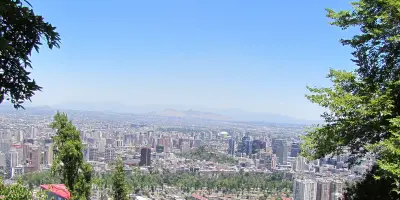
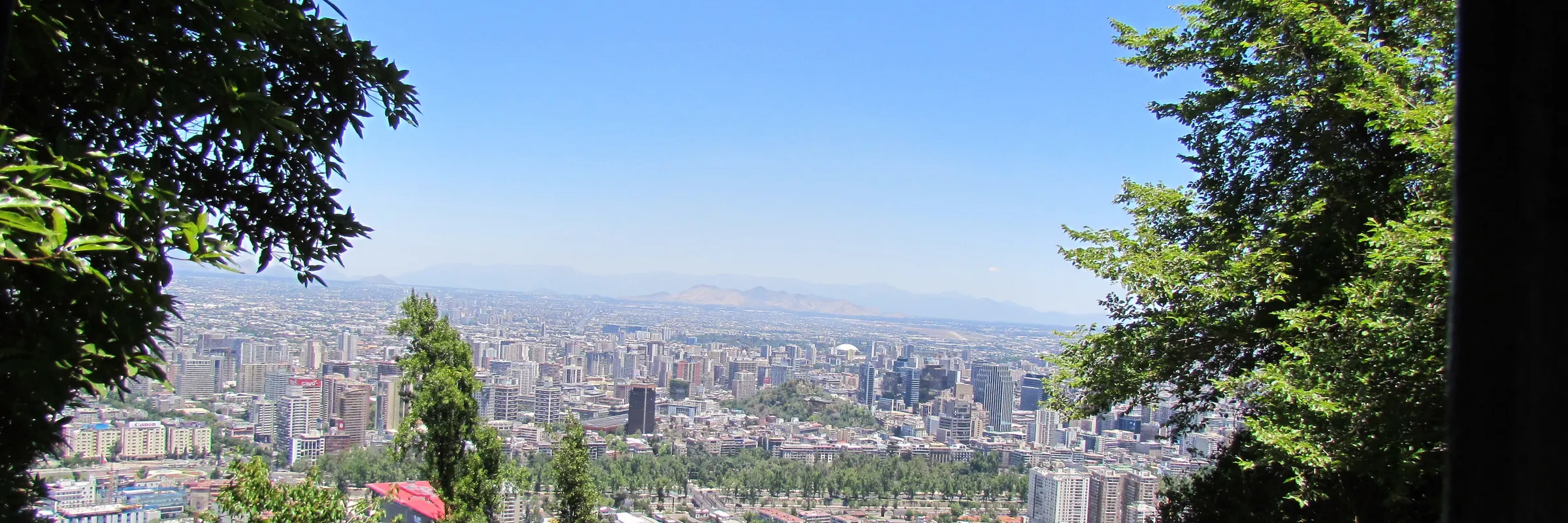
Santiago: the city from Cerro San Cristóbal with the Andes behind
Photo: David Berkowitz from New York, NY, USA · CC BY 2.0
Chile

Santiago: how many days you need and the best months to go

Santiago sits in a bowl between two mountain ranges, and that single fact explains the view, the air and the food. On a clear day the Andes fill the end of every east-facing street; on a still winter day the same bowl holds the smog in place. Two days covers the city itself — what earns the extra nights is that the mountains and the vineyards are both under an hour away.

Short answers

What people ask before booking

How many days do you need in Santiago?

Santiago needs two days for the city and three or four to use it as a base, which is the point of coming. Vineyards, the Pacific and ski slopes are all within ninety minutes of the centre.

What is the best month to visit Santiago?

March and April — The best window of the year, and the grape harvest. October and November — Spring, with the Andes still under snow.

Which months are worth avoiding in Santiago?

May and September — The transitions, and the worst of the smog.

How many days Santiago needs

Two days covers the historic centre, the two good neighbourhoods and a hill with a view. Three or four is where it becomes a proper trip, because the day trips here are unusually good: wine country, the Pacific, and in winter, ski slopes.

Santiago is a base more than a destination, and that is not a criticism. Few capitals have vineyards, mountains and a coastline all within ninety minutes, and the city itself is comfortable, safe in the areas you will use, and easy to move around.

How the city is arranged

Santiago runs east–west along the valley, and the rule is simple: the further east you go, the higher, richer and closer to the mountains you get. The metro follows that axis, which makes orientation unusually easy.

  • Centro — the historic core: the Plaza de Armas, the cathedral, the presidential palace and the markets. Busy on weekdays and much quieter at weekends.
  • Lastarria and Bellas Artes — small, walkable and full of cafés, bookshops and museums. The most pleasant part of the centre to stay in.
  • Bellavista — across the river at the foot of the hill, with Pablo Neruda's house and the city's nightlife.
  • Providencia and Ñuñoa — leafy, residential, good restaurants, and where a lot of Santiaguinos actually live.
  • Las Condes and Vitacura — the eastern, wealthier end, with the tall buildings and the closest access to the mountains.

Where to stay, and the axis that decides it

Everything in Santiago runs along one metro line, so staying near it matters more than the specific neighbourhood. Lastarria and Providencia are the two best answers for a short visit — central, walkable, safe, and full of places to eat within a few streets.

The centre is cheaper and works fine by day. It empties in the evening and at weekends, which is a common surprise: the Plaza de Armas at eight on a Sunday is not the same city as at noon on a Tuesday. Use the usual caution with phones and bags in crowded areas, as in any large city.

AreaWho it suitsThe catch
Lastarria and Bellas ArtesFirst visit. Walkable, central, museums and cafés on the doorstep.Small, so hotels are limited and prices reflect the demand.
ProvidenciaGood value, quiet at night, excellent metro links and good restaurants.Residential rather than atmospheric; you will use the metro daily.
BellavistaNightlife, Neruda's house, and the funicular up the hill.Genuinely loud at weekends, and rougher at the edges than the streets nearby.
Las CondesBusiness hotels, modern and comfortable, and the closest to the mountains.A long way from the historic centre and short on street life.
CentroThe lowest prices and the historic sights on foot.Empties in the evening and at weekends, and dinner means going elsewhere.

From the airport, and moving around

The airport is west of the city and there is no train. The options are an official taxi, a booked transfer, a ride-hailing app, or the airport buses, which are frequent and much cheaper. Ignore anyone who approaches you inside the terminal offering a ride; use the official desks or the app.

In the city, the metro is genuinely excellent — clean, fast and extensive, and the simplest way to cross the valley. A rechargeable card covers metro and buses, and buying one on day one saves the daily hassle of fares.

  • Get a rechargeable transport card at any metro station. It covers buses too, and the two are integrated.
  • The metro gets very full at rush hour, and some stations are one-way at those times. It is not dangerous, just dense.
  • Ride-hailing apps are widely used and cheap by European standards. They are the normal way to get around at night.
  • Chile is a long way from anywhere. Flights in are long, and the time difference from Europe is significant, so plan a slow first day.

Day trips, and why they justify the stay

This is the strongest reason to give Santiago four days. Within ninety minutes you can be in vineyards, on a Pacific beach or on a ski slope — and in winter, technically all three in one week.

  • Valparaíso and Viña del Mar — ninety minutes west. A port city of painted houses and funiculars on steep hills, next to a beach resort. Valparaíso is the one worth the day; Viña is where the sand is.
  • The Maipo and Casablanca valleys — under an hour. Wine country, and close enough that a half-day works. Casablanca does whites, Maipo does reds, and whoever drives is not drinking.
  • The ski resorts — an hour east into the Andes, and the season runs through the southern winter. Farellones and Valle Nevado are day-trip close, which almost no other capital can say.
  • Cajón del Maipo — a mountain valley south-east of the city with hot springs and a reservoir. The best day out that does not involve wine or snow.
  • Cerro San Cristóbal — not a day trip but the thing to do first. A funicular up a hill in the middle of the city, and on a clear day the whole Andes range lines up behind it.

How eating works here

Chilean food is less internationally famous than Peruvian and it has its own logic: a very long coastline, a lot of seafood, and German and Italian influences from nineteenth-century immigration. It is heartier and less spicy than most South American cooking.

The daily rhythm has one feature worth knowing: once, the late-afternoon meal, taken around six with bread, tea, cheese and avocado. It sits between lunch and a late dinner and it is a real institution rather than a snack.

  • Lunch is the main meal, and the set menu at midday is the best value of the day in ordinary restaurants.
  • Seafood is the strength: the cold Humboldt current makes Chilean shellfish exceptional, and the central markets are where to eat it.
  • Ají is mild here compared with Peru or Mexico. Pebre, the standard table sauce, is fresh rather than fiery.
  • Tap water is safe to drink in Santiago, which is not true everywhere in the region and is worth knowing.

Where to eat in Santiago, dish by dish

Chilean cooking is generous, unfussy and built on a very long coastline. The two central markets are the single best introduction — one for fish, one for produce — and the street food is a short list worth working through. None of it is expensive.

  • Mercado Central de Santiago

    Market

    The seafood market, and how to use it

    A cast-iron market hall from 1872, and the place to eat Chilean seafood. The restaurants in the middle of the hall are the touristy ones; the small counters around the edges are cheaper and just as good. Come at lunch — this is a lunch building, and it winds down in the afternoon.

    Check it on Wikidata
  • La Vega Central

    Market

    The market where the city actually shops

    The huge produce market across the river, supplying most of Santiago's fruit and vegetables. It is chaotic, cheap and not remotely a tourist attraction, which is the reason to go. The cocinerías upstairs serve enormous set lunches to market workers for very little.

    Check it on Wikidata
  • Completo

    What to order

    The street food that is unmistakably Chilean

    A hot dog buried under mashed avocado, chopped tomato and a great deal of mayonnaise. It is eaten with both hands and it is not a tidy food. Sold everywhere, and the Italiano version is named for the colours of the Italian flag rather than for anything Italian about it.

    Check it on Wikidata
  • Empanada

    What to order

    The pastry that comes in two very different forms

    Baked with beef, onion, egg and an olive — the classic pino — or fried and filled with cheese. The baked one is a meal and the fried one is a snack, and confusing them is how people end up ordering four. Bakeries do the baked version best.

    Check it on Wikidata
  • Pastel de choclo

    What to order

    The summer dish, and the one to order in January

    A corn pie with a beef and onion filling underneath, baked until the top caramelises. It is a summer dish because it depends on fresh corn, so ordering it in July gets you a version made with something frozen. Heavy, sweet-savoury and completely Chilean.

    Check it on Wikidata
  • Chorrillana

    What to order

    The thing to order when there are four of you and beer

    A mountain of chips topped with sliced beef, fried onion and eggs, served in one pan for the table. It comes from Valparaíso and it is designed for sharing after drinking. Nobody orders it alone, and one is enough for three people.

    Check it on Wikidata

When to go, and what each month costs you

Santiago has a Mediterranean climate with the southern hemisphere's seasons, which catches Europeans out twice: the summer is December to February, and the winter brings an air-quality problem that the valley's geography makes worse. The shoulder seasons are the good ones here.

  • March and April

    Go now

    The best window of the year, and the grape harvest

    Warm days, cool nights, clear air and the vendimia — the wine harvest — in the valleys around the city. The summer crowds have gone and the winter smog has not arrived. If you can choose, choose this.

  • October and November

    Go now

    Spring, with the Andes still under snow

    Mild, green and clear, with the mountains still white behind the city. The best months for photography and for the Cajón del Maipo, and comfortable for walking the centre all day.

  • December to February

    Worth it, but

    The summer: hot, dry, and the city half empty

    Genuinely hot and very dry, with clear skies and no rain at all. Santiaguinos leave for the coast in February and parts of the city shut down with them. Good for the beach and the vineyards, less good for walking the centre at two in the afternoon.

  • June to August

    Worth it, but

    The ski season, and the reason to accept the cold

    Cold, damp and grey — and the only time the Andes an hour away are skiable. This is the trade: the worst air of the year in exchange for slopes within a day trip of a capital city. If you are not skiing, this is a hard sell.

  • May and September

    Think twice

    The transitions, and the worst of the smog

    The valley traps pollution when the air is still and cold, and these edge months combine that with weather that is neither good for the city nor good for the mountains. Air-quality alerts are most common in this stretch, and they are worth checking if you have a respiratory condition.

Things that change the trip

  • Go up Cerro San Cristóbal on your first clear morning. The Andes are the point of this city and the weather does not always cooperate later.
  • Get a rechargeable transport card on arrival. The metro is excellent and it covers the buses too.
  • The seasons are inverted from Europe. December is high summer and July is winter, which changes everything about what to pack.
  • Check air quality in winter if you are sensitive to it. The valley traps pollution on still cold days, and alerts are common in the coldest months.
  • Give Valparaíso a full day rather than half. It is ninety minutes each way and the hills take time to walk.
  • Whoever drives in wine country is not drinking. Public transport to the vineyards is poor, so plan the day around that before booking anything.

Use Santiago for the mountains and the valleys

A trip of more than three days, or one that adds Valparaíso and the wine valleys and the driving between them, is what Premium is for. The free version covers one destination of up to three days.

Destinations