

Skip to content
JoruJoru
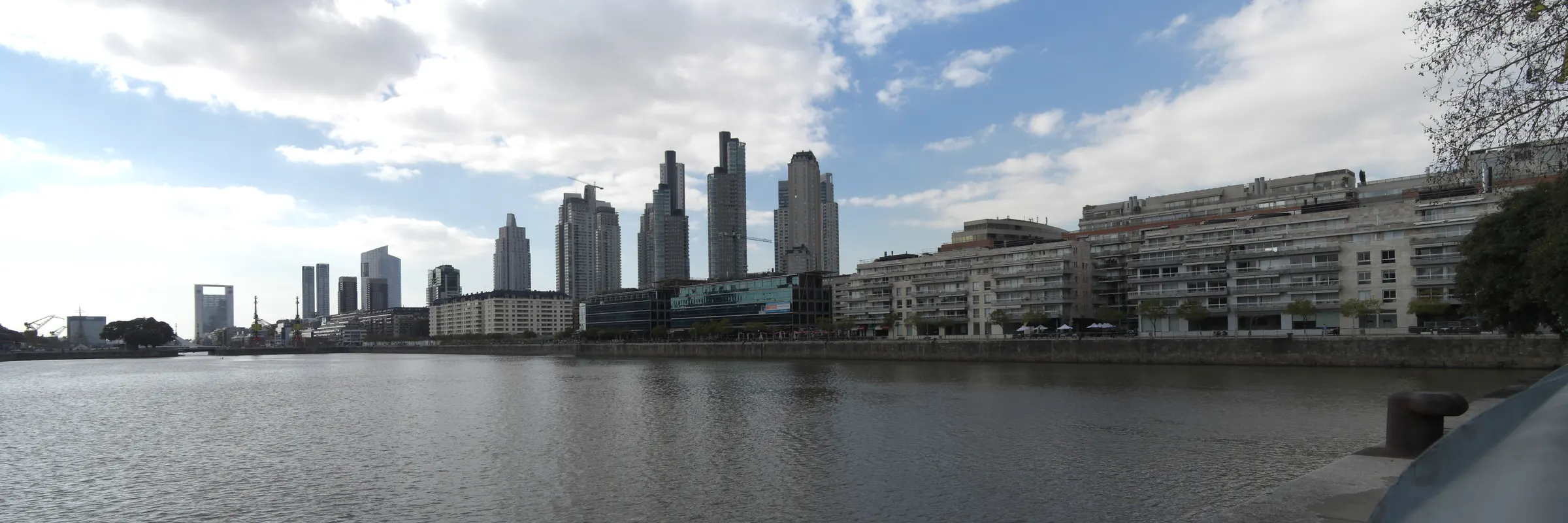
Buenos Aires: the Puerto Madero skyline from the water

Argentina

Buenos Aires: how many days you need and the best month to go

Photo: Moemoemoe · CC0

Buenos Aires is large, flat and organised into barrios with strong individual characters, and the most common planning mistake has nothing to do with geography: it is scheduling a European day into a city where dinner starts at ten and the evening goes on from there.

Short answers

What people ask before booking

How many days do you need in Buenos Aires?

Buenos Aires needs four to five days: the barrios are distinct enough that one per day works well, and the city is best absorbed slowly rather than checked off.

What is the best month to visit Buenos Aires?

March to May — Autumn, and the best walking weather. September to November — Spring, and the jacarandas.

Which months are worth avoiding in Buenos Aires?

December to February — Hot, humid, and half the city is away.

Work out how many hours you will have in Buenos Aires on your dates
When to go, and remember the hemisphere

The seasons are inverted relative to Europe and North America, which catches people out: January here is high summer, and July is winter.

  1. January: Think twice
  2. February: Think twice
  3. March: Go now
  4. April: Go now
  5. May: Go now
  6. June: Worth it, but
  7. July: Worth it, but
  8. August: Worth it, but
  9. September: Go now
  10. October: Go now
  11. November: Go now
  12. December: Think twice
  • March to May

    Go now

    Autumn, and the best walking weather

    Warm days, cool evenings, and the parks turning. The most comfortable stretch of the year for a city that you cover largely on foot.

  • September to November

    Go now

    Spring, and the jacarandas

    Mild and green, with the jacaranda trees flowering across the city in late spring — a genuinely striking few weeks that most visitors do not know to plan for.

  • June to August

    Worth it, but

    Winter: grey, damp, and cheap

    Rarely freezing but persistently cold and overcast. Prices drop, the theatres and tango halls are in full season, and a trip built indoors works well.

  • December to February

    Think twice

    Hot, humid, and half the city is away

    High summer with real humidity, and January is when Argentines take their holidays — many restaurants and smaller places close, and the city is noticeably emptier.

What to pack for Buenos Aires, month by month

How many days Buenos Aires needs

Four days is a good fit: the barrios are distinct enough that one per day works well, and the city is best absorbed slowly rather than checked off.

A fifth day opens the river delta at Tigre or a crossing to Uruguay, both easy and both a genuine change of scene.

How the city is arranged

A grid, mostly flat, with barrios that feel like separate towns. Walking within one is easy; crossing between two takes longer than the map suggests.

  • Centro and Monserrat — the historic and government core, busiest on weekdays.
  • San Telmo — the oldest barrio, cobbled, and at its best on a Sunday when the market fills the street.
  • Recoleta and Palermo — the parks, the museums and most of the food. Palermo alone can absorb two days.
  • La Boca — colourful and heavily visited; worth a short daytime visit and not an evening one.

Where to stay, and which barrio suits what you want

Buenos Aires is a city of strongly defined neighbourhoods and the choice changes the trip a fair amount, even though the subte and buses reach everywhere. Palermo is what most people pick and it is usually right: it is huge, green, with the city's greatest concentration of restaurants and bars, and it subdivides into areas with their own character.

Recoleta is smarter and quieter, San Telmo has the old atmosphere and the tango, and Puerto Madero is modern and fairly soulless. La Boca is essential to see by day and is not a place to sleep.

AreaWho it suitsThe catch
Palermo (Soho and Hollywood)The best base: restaurants, bars, parks and a young atmosphere.It is large: twenty minutes to the centre, and it can be noisy at night.
RecoletaQuiet, French-influenced architecture, museums and the cemetery next door.More formal and with less street life at night than Palermo.
San TelmoOld-world atmosphere, cobbles, antique shops and the Sunday market.Some streets are run down and warrant more care at night.
Centro and MicrocentroLow prices and all the administrative heritage at hand.It empties completely at weekends and at night.
Puerto MaderoNew hotels, a waterside promenade and a feeling of safety.Expensive, artificial and with no neighbourhood life.

Compare these areas against your priorities

Airport to centre, and the matter of the exchange rate

There are two airports: Ezeiza is the international one, some forty kilometres out, with buses and transfers taking a good hour or more depending on traffic. Aeroparque is inside the city, by the river, and handles domestic and regional flights: from there you reach the centre in fifteen or twenty minutes.

What you really need to understand before arriving is the money. Argentina spent years living with several exchange rates at once, which meant paying one way rather than another noticeably changed the real cost of a trip. It is the situation that has shifted most in recent times, so it is the one thing in this guide to check with fresh information right before travelling.

  • The SUBE is the transport card and you need it for the subte and buses: buses do not take cash. You buy it at kiosks and stations.
  • Buses are the real network: they reach everywhere, run at night and cost very little. The subte covers less city than it appears.
  • Distances deceive on the map. Buenos Aires is very spread out and what looks close can be a half-hour walk.
  • Check how best to pay before travelling. Foreign card, cash in hard currency and transfers have not always been worth the same here, and it is what changes most from one year to the next.

Day trips from Buenos Aires

The pampa is flat and the distances long, so Buenos Aires does not have a European city's range of day trips. What it does have are three very different outings, and one of them crosses to another country by boat.

  • Tigre and the delta — an hour by train, a maze of channels and stilt houses navigated by shared launch. It is the porteño weekend escape and the best on this list.
  • Colonia del Sacramento (Uruguay) — a good hour by fast ferry across the River Plate. Colonial old town, cobbles and very quiet. You need a passport.
  • San Antonio de Areco — the gaucho town par excellence, about two hours out. Silverwork, tradition and estancias around it; the countryside trip.
  • Estancias in the province — a day in the country with asado and horses. They are booked and usually include transfer.
  • La Plata — the planned city with a neo-Gothic cathedral and a natural history museum, an hour away.

Eating and going out in Buenos Aires, and the timings that throw you

Buenos Aires eats very late, even by southern European standards: restaurants fill from half nine, and at eight they are empty. Clubs genuinely open in the small hours. Adjusting to this on day one saves you eating alone in a half-set-up dining room.

Beef is why many people come and the parrilla is an institution, but the city has far more: an enormous Italian tradition — pasta, deep-pan pizza — the best ice cream outside Italy, and a highly developed speciality coffee scene.

  • At the parrilla you specify how you want the meat, and by default it comes more done than a European expects. "Jugoso" is the term for rare.
  • Bife de chorizo, entraña and ojo de bife are the cuts to know. A half portion is usually enough for one person.
  • The five or six o'clock merienda is a real meal here: coffee with medialunas, and many notable cafés live off it.
  • You do not order mate in a bar: it is a private custom, shared, with its own protocol. Seeing it in a park is normal; asking for it in a restaurant is not.
  • Many good places take no reservations and the ten o'clock queue is part of the plan.

Where to eat in Buenos Aires, dish by dish

Buenos Aires eats late — dinner at ten is normal and at eight you will have the room to yourself — and it eats in two registers: the grill, and the café. The café here is a civic institution with legal protection: the city keeps a register of bares notables, historic cafés that cannot be gutted. Those, plus a parrilla, are the whole city in two meals.

  • Café Tortoni

    Institution

    The historic café, and what to do in it

    Open since 1858 and the most famous of the protected historic cafés, with the marble, the columns and the queue outside. The queue is for the room, not the coffee, and it is honest about that. Order coffee and churros with chocolate, sit for an hour, and treat it as a visit rather than a meal.

    Check it on Wikidata
  • Confitería Ideal

    Institution

    The same institution, without the queue

    A protected historic café from 1912 with an enormous belle-époque room, tango on some evenings, and a fraction of the tourists of its more famous rival. If you want the experience of an old Buenos Aires café and not the photograph of one, this is the better of the two.

    Check it on Wikidata
  • Mercado de San Telmo

    Market

    A market that is a market and a food hall at once

    A wrought-iron market building in San Telmo from 1897, still selling produce down one aisle and running food counters down the other. Sundays it is engulfed by the San Telmo street fair, which is worth seeing and impossible to eat in calmly. Any other day it is a good lunch.

    Check it on Wikidata
  • Bodegón

    Where to look

    The ordinary restaurant, which is the point of the city

    A bodegón is the unpretentious neighbourhood restaurant: paper tablecloths, enormous portions, milanesa, pasta and grilled meat, and a wine list of about four things. This is where the city actually eats and where the value is. Portions are genuinely large — one main between two is normal and nobody minds.

    Check it on Wikidata

Things that change the trip

  1. Move your dinner two hours later than you would at home. Restaurants fill from around ten; arriving at eight means an empty room and a worse meal.
  2. Argentina's currency and payment situation changes frequently. Check the current practical advice close to your trip rather than relying on an old blog post.
  3. San Telmo's Sunday market is the single best-timed thing in the city. Build the weekend around it.
  4. Distances in Palermo are larger than they look; it is several sub-neighbourhoods rather than one.
  5. A day trip across the river to Colonia in Uruguay is straightforward and a complete change of pace.

Plan Buenos Aires on local hours

A four-day trip needs Premium; the free version covers one destination for up to three days, with real places from open data either way.

Destinations