




Skip to content
JoruJoru
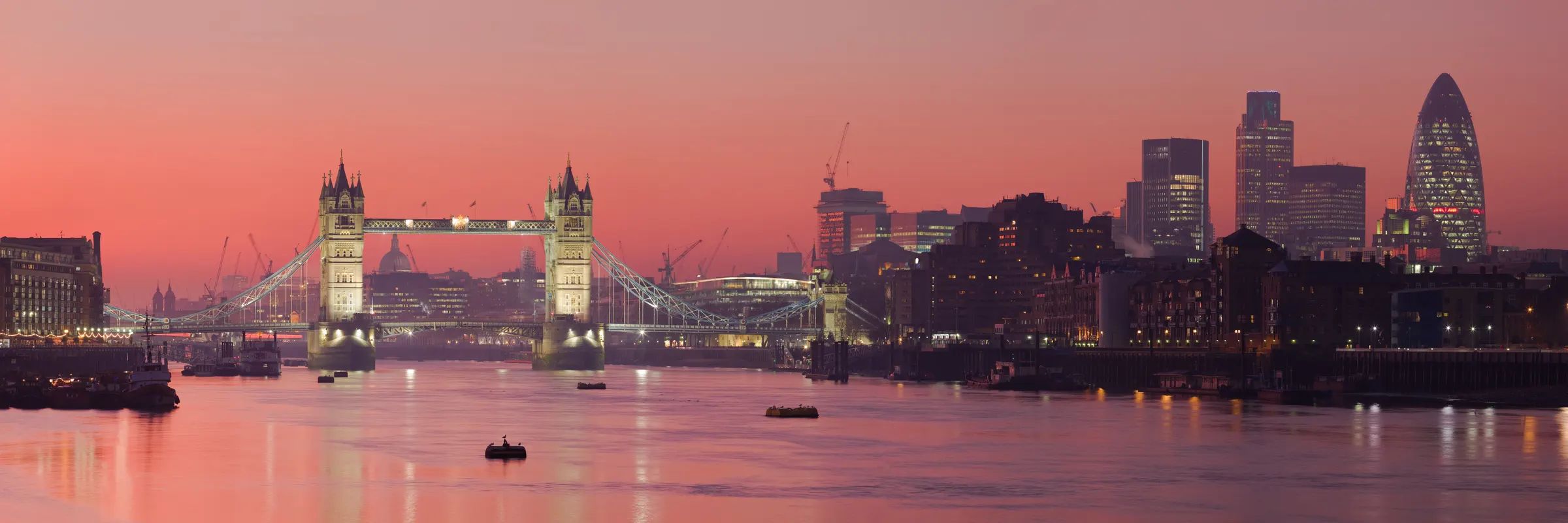
London: the Thames at sunset with the City skyline
Photo: Diliff · CC BY 3.0
England, United Kingdom

London: how many days you need and the best months to go

London is the city where people most consistently underestimate travel time, and the tube map is why: it is a diagram, not a map, and two stations that look adjacent can be twenty minutes apart. The other thing nobody plans around is that the big museums are free, which quietly makes a wet afternoon here better than a wet afternoon almost anywhere.

Short answers

What people ask before booking

How many days do you need in London?

London needs four days for the obvious and six before it stops feeling like a checklist. The city is big enough that one area a day, walked, beats three areas a day on the tube.

What is the best month to visit London?

May and June — The longest days of the year, and the parks at their best. September — Summer weather without the summer crowds.

Which months are worth avoiding in London?

January and February — Grey, dark and expensive for what you get.

How many days London needs

Four days covers the obvious London and will feel like a checklist. Six is where you can give a museum a proper morning instead of a sprint, and still have an afternoon for a neighbourhood that is not on anyone's list.

The constraint is not opening hours, because a lot is open late one night a week. It is that the city is enormous and the good things are not clustered: the pattern that works is one area per day, on foot, with the tube used to get in and out rather than to hop between two stops.

How the city is arranged

London has no single centre — it grew by swallowing villages, and the villages are still legible. Thinking of it as a dozen towns that happen to touch, rather than a core with suburbs, is what makes a day work here.

  • The West End — theatres, Soho, Covent Garden. Dense and walkable, and where most first trips spend an evening.
  • The City — the financial square mile, Roman walls and St Paul's. Busy on weekdays and genuinely empty at weekends, which is the opposite of most cities.
  • South Bank — the river walk from Westminster to Tower Bridge, with the Tate, the National Theatre and Borough Market strung along it. The best walk in the city.
  • The East End — Shoreditch, Spitalfields, Brick Lane. Markets, curry houses and the part of London that has changed most in twenty years.
  • Kensington and Chelsea — the three big free museums in a row, and the grand residential streets behind them.

Where to stay, and the zone that quietly costs you an hour

London hotels are priced by zone, and the temptation is to book cheap in zone 3 and commute. That maths only works if you check the actual line, because a zone 2 stop on a fast line is closer in minutes than a zone 2 stop on a slow one, and the difference over five days is hours.

The other thing to check is whether your station has step-free access. Most of the deep tube network does not — a lot of stations are stairs only, sometimes a hundred of them, and with a large case that is a real daily cost that no price comparison shows you.

AreaWho it suitsThe catch
Bloomsbury and King's CrossFirst visit. Central, walkable to the West End, and on top of the Eurostar and six tube lines.Bloomsbury is quiet after dark; King's Cross is a station district and feels like one.
South Bank and SouthwarkWalking to the river, the Tate and Borough Market, and crossing to the centre on foot.Thin on ordinary shops and cafés once you leave the river path.
Shoreditch and SpitalfieldsNightlife, markets and better value than the centre.Genuinely loud at weekends, and a slower trip to the western museums.
South KensingtonThe three big museums on your doorstep, and quiet, handsome streets.Expensive, and a long way from the East End if that is what you came for.
Paddington and BayswaterBest value in zone 1, and the Elizabeth line straight to Heathrow.The hotel stock is variable and the immediate streets are unremarkable.

From the airport to the centre: five airports, and only two are close

London has five airports and the difference between them is a chunk of your first and last day. Only Heathrow and London City are actually near the city. Gatwick is roughly thirty miles south, Luton and Stansted are further still, and a budget fare that lands at either can cost you two hours and the price of a train each way.

From Heathrow, the Elizabeth line changed this route when it opened: it runs to Paddington, Bond Street, Tottenham Court Road and Liverpool Street, so for most of central London it removes a change that the older options needed. The Piccadilly line is slower and cheaper and goes to a different part of town.

  • Contactless or a travel card, never cash. London buses have not taken cash for years, and tapping a bank card is the normal way to pay on tube and bus alike.
  • There is a daily cap, so once you have travelled enough in a day the rest is free. This is why buying a paper travelcard is usually the wrong move.
  • Tap in and out on the tube and rail; buses are tap-in only. Forgetting to tap out on the tube charges you the maximum fare for that journey.
  • From Gatwick, the express train is the fast option and the ordinary Thameslink and Southern services cost less for a few minutes more. From Stansted and Luton, budget an hour and a half door to door.

Day trips, and the ones that are worth the train

England is small and the trains out of London are fast, which makes the day trip unusually easy here. The thing that decides whether one works is which London terminus it leaves from: they are scattered around zone 1, and a trip that starts with forty minutes of tube to reach the station is a different proposition.

  • Oxford and Cambridge — under an hour and a half each, both walkable once you arrive, and both better on a weekday when the colleges are working. Pick one; doing both in a week is a lot of train.
  • Bath — Georgian streets and the Roman baths, a bit under two hours west. The most complete day trip on this list and the one that most justifies the travel.
  • Windsor — the castle, well under an hour. Half a day rather than a full one, and easy to combine with an afternoon back in the city.
  • Brighton — the sea, an hour south, and a good contrast to the city. The beach is pebbles, not sand, which surprises people every year.
  • Canterbury — the cathedral and a walled town, about an hour on the high-speed line. Quiet compared to the others and it shows.

How eating and drinking works here

The pub is the institution and it has rules that are not obvious. You order at the bar and pay then; nobody comes to your table, and waiting to be served where you sat is the single most common visitor mistake. You do not tip at the bar — if you want to, the phrase is to offer the bartender a drink.

The other structural thing is that the national museums are free: the British Museum, the National Gallery, Tate Modern and Britain, the V&A, the Natural History and Science museums. Special exhibitions are ticketed, the permanent collections are not. This changes how you plan a day, because dropping into one for forty minutes costs nothing.

  • Kitchens close earlier than you expect. Many pubs stop serving food well before they stop serving drinks, and a nine o'clock dinner needs a restaurant rather than a pub.
  • Lunch deals and pre-theatre menus are where the value is in the centre — the same kitchens at a fraction of the evening price.
  • Sunday is different: the roast is on, the markets are on, and a lot of ordinary shops shut early. Sunday trading hours are restricted by law for large shops.
  • Tap water is free and safe and asking for it in a restaurant is completely normal.

Where to eat in London, and what to order

London's food is its immigration history and almost nothing else, which is why the best things to eat here are Bangladeshi, Jewish, West Indian and Indian rather than English. The tourist-facing pub near a monument is the one category to avoid entirely. Two streets back, or one market over, and both the price and the cooking change.

  • Borough Market

    Market

    The market lunch, and how to use it without queueing all day

    A food market on the same site since at least the twelfth century, under the railway arches by London Bridge. It is very busy and it is worth it. Go on a weekday morning rather than Saturday lunchtime, when the queues at the famous stalls stop being fun. The produce traders at the back are the older half of the market.

    Check it on Wikidata
  • Maltby Street Market

    Market

    The same idea, a ten-minute walk away and a tenth as crowded

    A short run of arches and a yard behind Bermondsey Street, with a handful of traders doing one thing each. It only runs at weekends and it stops in the early afternoon. If Borough has defeated you, this is where to go instead — it is the same kind of food without the coach parties.

    Check it on Wikidata
  • Beigel Bake

    Institution

    Something hot at four in the morning, in the East End

    A Brick Lane institution that has been open around the clock for decades, selling salt beef and smoked salmon bagels from a counter with a permanent queue. It is cash-friendly, fast and open when nothing else is. The salt beef with mustard and pickle is the order; ask for it with both.

    Check it on Wikidata
  • Chicken tikka masala

    What to order

    The dish that is genuinely London's own

    A creamy tomato curry that was invented in Britain rather than in South Asia, and which a former foreign secretary once called a national dish. Whatever you think of that, it is the most ordered curry in the country. Eat it in the East End or Southall rather than on Brick Lane's tout-heavy stretch, where the restaurants compete on discount rather than cooking.

    Check it on Wikidata
  • Sunday roast

    What to order

    The Sunday meal, and the one day it exists

    Roast meat, potatoes cooked in the fat, vegetables and a Yorkshire pudding, served in pubs on Sundays and rarely any other day. Good ones sell out by mid-afternoon and many take bookings, which is unusual for a pub. It is the most reliably English thing you can eat and it is worth arranging a Sunday around.

    Check it on Wikidata
  • Full English breakfast

    What to order

    The breakfast, and where it is actually good

    Eggs, bacon, sausage, beans, tomato, toast — and in a good version, black pudding and a properly fried bread. The place to eat it is a working café, not a hotel buffet. These are ordinary, unglamorous rooms that open early for people going to work, and they do this one thing better than anywhere with a tablecloth.

    Check it on Wikidata

When to go, and what each month costs you

London's weather is genuinely mild and genuinely grey, and the thing that varies most through the year is not temperature but daylight. In December it is dark by mid-afternoon; in June it is light until late evening. That single fact changes how much you can fit into a day more than rain ever does.

  • May and June

    Go now

    The longest days of the year, and the parks at their best

    Light until late, the parks and squares fully open, and the city outdoors in a way it is not for the rest of the year. Prices have not reached their summer peak and the museums are manageable on a weekday morning.

  • September

    Go now

    Summer weather without the summer crowds

    The visitors thin out, the schools have gone back, and the weather usually holds. Theatre and gallery seasons restart, so there is more on than in August. The best single month if you have to pick one.

  • July and August

    Worth it, but

    Warm and long, and the busiest the city gets

    The weather is at its best and so are the crowds and the prices. The tube has very little air conditioning on the deep lines and a hot week underground is genuinely unpleasant. Worth it if you want the parks and the long evenings; expensive if you do not.

  • December

    Worth it, but

    The city at its most decorated, and its darkest

    Lights, markets and pantomime, and a real sense of occasion. The cost is daylight: it is dark by the middle of the afternoon, which halves what you can see outdoors. Much of the city shuts down for a couple of days around Christmas, including nearly all public transport on Christmas Day itself.

  • January and February

    Think twice

    Grey, dark and expensive for what you get

    The coldest, wettest and darkest stretch, without December's compensations. Hotel prices are at their lowest and there is a reason. If you are coming for museums and theatre it works fine; if you wanted to walk the city, it does not.

Things that change the trip

  • Plan one area per day and walk it. The tube is excellent for crossing the city and a waste of time for a single stop — a lot of adjacent stations are a five-minute walk apart.
  • The national museums are free, so treat them as places you drop into for an hour rather than as a half-day commitment. Special exhibitions still need tickets.
  • Tap a contactless card and let the daily cap do the work. Buses do not take cash at all, and paper tickets almost always cost more.
  • Check step-free access for your station before booking a hotel if you have a large case, a pushchair or bad knees. Much of the network is stairs only.
  • Sunday and Monday are the two days to check. Some museums close on Mondays, and large shops have legally restricted Sunday hours.
  • Book West End theatre directly with the venue. The booths on the street charge fees, and matinees are usually much cheaper than evenings.

Plan London one area at a time

A trip of more than three days, or one that adds Oxford or Bath and the trains between them, is what Premium is for. The free version covers one destination of up to three days.

Destinations