Skip to content
JoruJoru
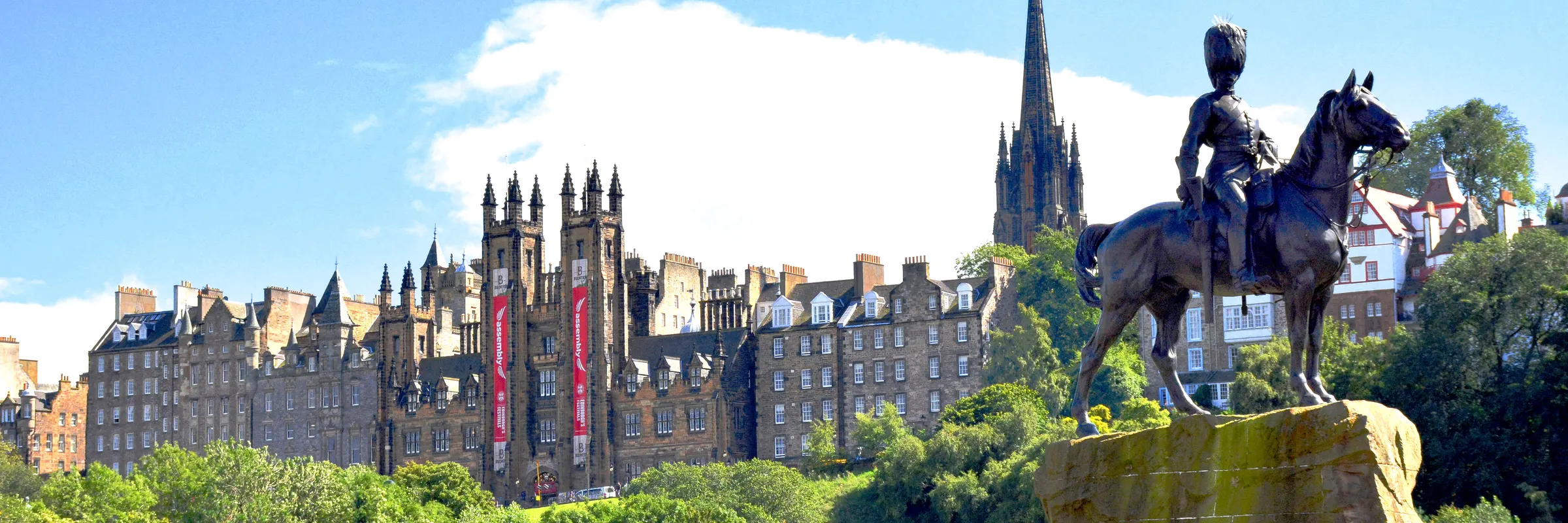
Edinburgh: The Old Town skyline from Princes Street Gardens
Photo: Mike McBey · CC BY 2.0
Scotland, United Kingdom

Edinburgh: how many days you need and the best months to go

Edinburgh is small — you can cross the centre on foot in half an hour — and it is two entirely different cities pressed together. The Old Town is a medieval ridge running downhill from the castle; the New Town is a Georgian grid laid out in the 1760s, and the valley between them holds a railway and a park. Three days covers both properly. What decides your trip is not how long you stay but which month: in August the population roughly doubles, and in January it gets dark at half past three.

Short answers

What people ask before booking

How many days do you need in Edinburgh?

Edinburgh needs two days for the Old Town and the New Town and three to add Arthur's Seat and Leith. The month matters more than the length: August is the Fringe, when the city doubles and beds sell out months ahead.

What is the best month to visit Edinburgh?

May and June — Long light, everything open, and the crowd has not arrived. September — The festival is over and the city is itself again.

Which months are worth avoiding in Edinburgh?

January, February, March and November — Dark, cold and wind off the North Sea.

How many days Edinburgh needs

Two days covers the essentials: the castle and the Royal Mile on one, the New Town, the National Gallery and Dean Village on the other. It is a genuinely small centre and you will not feel rushed.

Three days is the right number, and the third buys the thing people skip: getting out of the centre. Arthur's Seat is an extinct volcano inside the city with a proper hill walk to the top, Leith is the old port with the best eating in Edinburgh, and Portobello is a beach twenty minutes away by bus. A fourth day makes sense in August, when queues eat hours, or if you want a day trip out — Stirling, Glasgow and the Fife coast are all under an hour and a half.

Two cities, and why it matters

The Old Town grew along a single ridge of rock left by a glacier, with the castle on the crag and the land dropping away on both sides. Because it could not spread sideways, it built upwards: Edinburgh had eleven-storey tenements in the 1600s, some of the tallest buildings in Europe at the time, with narrow closes and stairs running down between them. That is why it feels the way it does — vertical, dark and tight.

The New Town is the opposite, and deliberately so. It was laid out from 1767 on empty ground north of the loch that was drained to build it, in a rational grid of wide streets and squares, and it is one of the most complete Georgian city plans anywhere. Both together are a single UNESCO World Heritage site, and the reason is precisely the contrast. Walking from one to the other in ten minutes is the thing to do here; most visitors stay in the Old Town and never notice they missed half the city.

  • Edinburgh Castle — on the crag, with the Scottish crown jewels and the Stone of Destiny. Book ahead; it is the busiest paid site in Scotland.
  • The Royal Mile — the ridge from castle to palace, and the closes running off it. The closes are the interesting part.
  • Arthur's Seat — a volcano in the city, about an hour up. The best view of Edinburgh, and free.
  • The New Town — Charlotte Square, the Georgian House, and Dean Village down on the Water of Leith.
  • The National Museum of Scotland — free, enormous, and the best rainy-afternoon plan in the city.

August, and what the Fringe actually does

Edinburgh in August is not the same city. The Fringe is the largest arts festival in the world — thousands of shows across hundreds of venues, running alongside the International Festival, the Book Festival, the Art Festival and the Military Tattoo, all in the same three-and-a-bit weeks. It has no selection panel: anyone who can find a venue can perform, which is why the programme is enormous and wildly uneven.

The practical consequences are severe and worth stating plainly. Accommodation is booked out months ahead and prices multiply, restaurants need reservations, the Royal Mile becomes almost impassable, and ordinary sightseeing takes twice as long. If you are coming for the festival, that is a fair trade and there is nothing else like it. If you are not, August is the worst month of the year to be here and September is the same city with a third of the people.

The dates move a little each year but the whole thing sits in August, mostly the first three-plus weeks, with the Tattoo overlapping. Check the year you are travelling rather than assuming; the one fixed rule is that if you want a bed in August you book it in spring.

The light, and the weather nobody warns you about

Edinburgh is at 56 degrees north — further north than Moscow — and the day length swings violently. In late June it is light past ten at night and never fully dark; in late December the sun sets around half past three. That single fact reshapes a winter trip: you get maybe seven usable daylight hours, and any plan involving a hill walk has to happen before lunch.

The weather is less rainy than its reputation — Edinburgh gets less rain than Glasgow or Manchester — but it is windy and it changes fast, and the wind coming off the North Sea makes it feel colder than the number says. Layers and something waterproof, in every month including July. The upside is that the light in spring and autumn, low and raking across the stone, is genuinely why photographers come.

Hogmanay, and the other end of the year

New Year in Scotland is Hogmanay, and Edinburgh does it at a scale that surprises people who assume it is just a party. There is a torchlight procession, a street party along Princes Street with a ticketed capacity, and a Loony Dook in the freezing Forth on the first of January. Historically it mattered more than Christmas here, because the Reformation suppressed Christmas in Scotland for centuries and the midwinter celebration moved to the new year.

It is the second peak of the Edinburgh year and it prices like one. The street party is ticketed and sells out, so it is not something you decide on the day, and the surrounding week is the most expensive stretch of winter. The compensation is that December Edinburgh — Christmas market in Princes Street Gardens, lights, cold dry air — is the one time the dark works in the city's favour.

Getting there, and the practical bits

The airport is twenty-five minutes from the centre by tram, which runs to Princes Street and on to Leith. From London, the train takes about four and a half hours and lands you in Waverley in the middle of the city, which for most people beats flying once you count the airport time at both ends.

Two things worth knowing. Scotland issues its own banknotes — Bank of Scotland, Royal Bank of Scotland and Clydesdale — which are legal currency and identical in value to Bank of England notes, but shops in England sometimes hesitate over them; spend them before you leave. And the centre is genuinely steep with a lot of stairs and cobbles, so pack shoes accordingly: the closes off the Royal Mile are staircases, not streets.

What to eat in Edinburgh, and where

Scottish food has been rehabilitated in the last twenty years and Edinburgh is where you see it: excellent seafood off the west coast, beef and lamb, and a national dish that is much better than its reputation. Leith is where to eat.

  • Haggis

    What to order

    The national dish, and it is worth ordering

    A savoury pudding of sheep offal, oatmeal, onion and spice, traditionally cooked in a stomach lining, served with mashed potato and swede. It tastes peppery and nutty rather than offal-ish, and almost everyone who tries it is surprised. It has been banned from import into the United States since 1971 for containing lung. Vegetarian versions are common and genuinely good.

    Check it on Wikidata
  • Cullen skink

    What to order

    What to order when it is cold outside

    A thick soup of smoked haddock, potato, onion and milk, from the fishing village of Cullen on the Moray coast. The smoked fish is the whole point — a good one tastes of smoke and cream and almost nothing else. It appears on menus all over the city and is the single most reliable cheap lunch in winter.

    Check it on Wikidata
  • Shortbread

    What to order

    The thing to take home

    A dense, crumbly biscuit of butter, sugar and flour with nothing else in it, baked pale rather than brown. The name is a legal category in the UK: to be called this it must be at least a fifth butter, which is why the supermarket version tastes different from the bakery one. Buy it from a baker, not the airport.

    Check it on Wikidata
  • Scotch whisky

    What to order

    How to order whisky without guessing

    Malt or grain whisky made in Scotland, matured at least three years, and what counts is regulated by law rather than tradition. The regions are a real distinction: Islay is peaty and medicinal, Speyside is sweet and fruity, Highland sits between. Ask the bar for a region rather than a brand and you will get much better advice.

    Check it on Wikidata
  • Leith

    Where to look

    Where to eat, once you leave the Royal Mile

    The old port, two miles north and on the tram line, with the docks converted and a cluster of the best restaurants in Scotland along the Shore. The Royal Mile feeds tourists; Leith feeds Edinburgh. Come for dinner and walk back along the Water of Leith if the light holds.

    Check it on Wikidata

When to go, and what each month costs you

Two things drive the calendar here and neither is temperature: daylight, which swings from seven hours to seventeen, and August, which is a different city entirely. Get those two right and the rest follows.

  • May and June

    Go now

    Long light, everything open, and the crowd has not arrived

    The best combination of the year: light until ten at night, the driest stretch of the calendar, gardens out, and none of the August pressure on beds or restaurants. Arthur's Seat and the coast are at their best now. It can still be cold and windy — this is Scotland — but the days are long enough to absorb a bad afternoon.

  • September

    Go now

    The festival is over and the city is itself again

    The single most underrated month here. The Fringe has packed up, prices fall back, and the same city is walkable again, with warm-ish days, low golden light on the stone and the students not yet fully back. Days are shortening but still generous. If you want Edinburgh rather than the festival, come now.

  • August

    Worth it, but

    The Fringe: the most to see, and the worst value of the year

    Thousands of shows, the International Festival, the Tattoo and the Book Festival at once, and an atmosphere that genuinely exists nowhere else. It is also double the population, quadruple the room rates and a Royal Mile you cannot walk down. Come for the festival or avoid the month; there is no middle position. Book beds in spring.

  • July

    Worth it, but

    Warm, long days, and the calm before August

    The warmest month, with light until late and the city still normal, but school holidays have started across Britain and prices are rising towards August. Wetter than May and June. A perfectly good time to come, and slightly worse value than either side of it.

  • December

    Worth it, but

    Christmas market and Hogmanay, in seven hours of daylight

    The market in Princes Street Gardens, lights on the Georgian streets and Hogmanay at the end, which is the second peak of the Edinburgh year. Sunset is around half past three and the street party is ticketed and sells out. Cold, dark and genuinely festive, and priced accordingly in the last week.

  • April and October

    Worth it, but

    Shoulder months, cheap and unreliable

    Fewer people, lower prices and reasonable daylight, with weather that can give you a bright still day or four days of horizontal rain. October has the best light of the year when it behaves. Bring layers and have an indoor plan; the National Museum exists for exactly this.

  • January, February, March and November

    Think twice

    Dark, cold and wind off the North Sea

    Seven or eight hours of daylight, damp cold, and a wind that makes the Old Town genuinely unpleasant to walk in. The city is cheap and empty and the museums and pubs are excellent, but any plan involving being outdoors is a gamble. Only worth it if the price is the point.

Things that change the trip

  • Decide about August before anything else. The Fringe is either the reason you are coming or the reason to pick another month; book beds in spring either way.
  • Climb Arthur's Seat. It is an hour up, free, inside the city, and the best view of Edinburgh there is.
  • Eat in Leith, not on the Royal Mile. The tram goes there in fifteen minutes and the difference is not subtle.
  • In winter, plan around a half-past-three sunset. Anything outdoors happens in the morning.
  • Spend Scottish banknotes before you leave. They are legal currency and identical in value, but English shops sometimes hesitate.
  • Pack for wind and stairs. The closes off the Royal Mile are staircases, and the weather changes inside an hour in every month.

Plan Edinburgh and Scotland

A trip beyond four days, or one that pairs Edinburgh with Glasgow, the Highlands or Skye — with the festival dates, the driving distances and the daylight worked out around it — is exactly what Premium is for. The free version covers one destination for up to three days.

Destinations