

Skip to content
JoruJoru
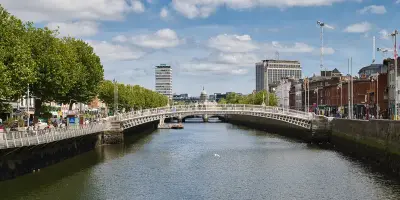
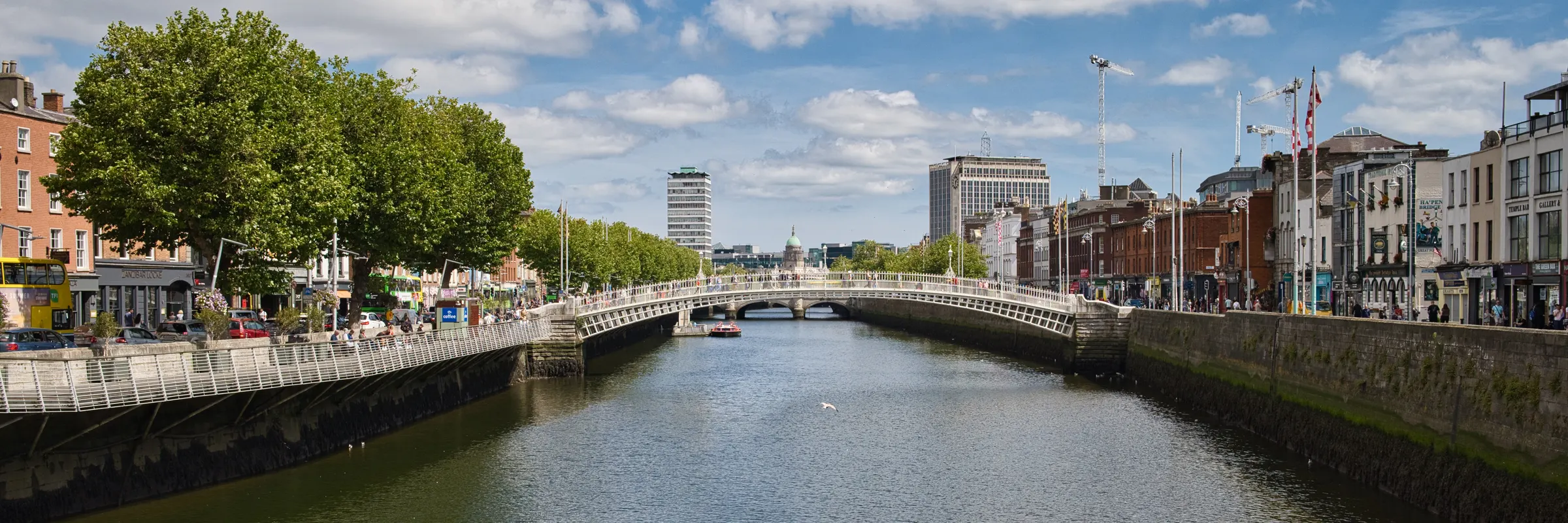
Dublin: the Ha'penny Bridge over the Liffey
Photo: Chris Rycroft · CC BY 2.0
Leinster, Ireland

Dublin: how many days you need and the best months to go

Dublin is a small capital that people plan as if it were a big one. The centre is walkable end to end, the national museums cost nothing, and the mistake almost everyone makes is the same: booking three nights and spending all of them inside the few blocks around Temple Bar, which is the most expensive and least Irish part of the city. The trip gets better the moment you cross a bridge or take the coastal train.

Short answers

What people ask before booking

How many days do you need in Dublin?

Dublin needs two days for the centre — the free national museums, Trinity, the cathedrals and a pub evening — and a third for the coast or the Wicklow mountains. Beyond three it repeats itself.

What is the best month to visit Dublin?

May and June — The longest days of the year, and the city outdoors. September — Summer light without the summer crowds.

Which months are worth avoiding in Dublin?

November to February — Dark by mid-afternoon, and wet.

How many days Dublin needs

Two days is enough for the centre: the museums, the cathedrals, Trinity, a couple of neighbourhoods and an evening in a pub that is not on a stag route. Dublin is genuinely compact, and a day here covers more ground than a day in a larger capital.

The third day is the one that changes the trip, and it is spent outside the city — the coast on the DART, or the Wicklow mountains an hour south. Beyond three days you are repeating yourself unless you are using Dublin as a base for the rest of Ireland, which is a different trip and needs a car.

How the city is arranged

The Liffey splits the city north and south, and Dubliners will tell you the two halves have different characters. For a visitor the useful version is simpler: almost everything you came for is within twenty-five minutes on foot of the river, and the areas differ by what they are good for rather than by distance.

  • Temple Bar — the cobbled quarter on the south quays. Worth walking through once in daylight, and it is where the priciest pints in the country are poured.
  • Grafton Street and the Georgian squares — the shopping street, St Stephen's Green, and the doors and squares of Merrion and Fitzwilliam behind it. The handsome half of the city.
  • Trinity and the museum block — the college, the Book of Kells and the national museums, all within a few minutes of each other. This is the densest good stretch in Dublin.
  • The north inner city — O'Connell Street, the Hugh Lane gallery, Moore Street's traders and Henry Street. Rougher-edged, cheaper, and where the city is most itself on an ordinary morning.
  • Smithfield and Stoneybatter — old markets, distilleries and the pubs where trad sessions happen for locals rather than for coaches. Ten minutes west of the centre and a different city.

Where to stay, and why the postcode matters more than the price

Dublin is expensive to sleep in and the supply is tight, which pushes people towards two bad options: a room on the Temple Bar block, which is loud until very late, or a bargain out beyond the canals, which sounds central on a map and is not.

The test is whether you can walk home. The centre is small enough that a hotel fifteen minutes out on foot removes any need for transport at night, and Dublin's night buses are not something you want to be learning at two in the morning.

AreaWho it suitsThe catch
Around Trinity and Grafton StreetA first visit. Walkable to almost everything, and the museums are on your doorstep.The priciest beds in the city, and quiet only once the shops shut.
Merrion and FitzwilliamGeorgian streets, the National Gallery, and calm evenings a five-minute walk from the noise.Restaurants thin out at night; it is an office district after dark.
Smithfield and StoneybatterBetter value, real pubs, and the Luas red line straight into the centre.Fifteen to twenty minutes on foot from the museums, and the streets between are dull.
Portobello and the canalCafés, the Grand Canal walk and a residential feel, still walkable to Grafton Street.Few hotels — this is mostly short-let and guesthouse territory.
BallsbridgeQuiet, leafy, larger rooms, and a straight run into town on the bus.You will use transport every day, and the area itself gives you nothing at night.

From the airport, and the card that solves transport

Dublin is one of the few European capitals whose airport has no rail link. Everything from the terminals runs on the road: several competing coach services into the centre and out to the suburbs, plus the ordinary city bus, which is slower and cheaper. Journey time is short when traffic behaves and not short at all when it does not, so a very early flight deserves a margin that a map will not suggest.

In the city itself, the answer to almost every transport question is a Leap card. It works on buses, on both Luas tram lines and on the DART, it caps what you can spend in a day and a week, and it removes the awkwardness of paying a bus fare in coins.

  • The two Luas lines are trams, not a metro. The red and green lines cross in the centre but the interchange is a walk along the street, not a platform.
  • The DART is the coastal train and it is the best value in the city — north to Howth, south to Dún Laoghaire and Bray, with the sea beside the track most of the way.
  • Walking beats everything inside the canals. The centre is about half an hour across, and most tram journeys a visitor considers are shorter on foot.
  • Taxis are metered and plentiful, and ride apps here dispatch the same licensed taxis rather than private drivers.

Day trips, and which one is worth a whole day

Dublin's day trips are unusually good because two very different things are close: a rugged coast reachable on a commuter train, and the Wicklow mountains, which start about an hour south of the city. The coast needs no planning at all; the interior does.

  • Howth — a fishing harbour at the end of the DART line with a signposted cliff loop above it. The single best half-day in Dublin and it costs a train fare.
  • Glendalough — a monastic site between two lakes in the Wicklow mountains, with walks from twenty minutes to most of a day. Buses run there; a car makes the rest of Wicklow possible.
  • Brú na Bóinne — the Newgrange and Knowth passage tombs, older than the pyramids and a UNESCO site. You cannot drive to the monuments: access is by shuttle from the visitor centre only, and tours are limited in number.
  • Dún Laoghaire and the coast south — piers, sea swimmers and the walk on to Sandycove, all on the DART. Lower effort than Howth and nearly as good.
  • Kilkenny — a medieval town with a castle and a walkable core, under two hours by train. The best inland day trip that does not need a car.

How eating and drinking works here

The pub is the institution, and the rules are not the ones visitors expect. You order at the bar and pay when served; nobody comes to your table, and standing at the counter is normal rather than rude. There is no tipping at the bar. If someone buys you a drink you are in a round, and getting out of a round early is the impolite move, not staying for it.

The other structural fact is that the national cultural institutions are free: the National Museum's three Dublin sites, the National Gallery and the Hugh Lane charge nothing for their permanent collections. The paid attractions — the distilleries, the Book of Kells, Kilmainham Gaol — are the ones that need booking, and the gaol in particular releases tickets online and sells out well in advance.

  • A trad session is not a concert. Musicians sit in a corner playing to each other, people talk over the fast tunes and go quiet for the slow ones, and there is no stage and usually no ticket.
  • Kitchens stop serving earlier than the bar does. A late dinner needs a restaurant; a pub at ten o'clock will pour you a pint and nothing else.
  • Carvery lunch is the value meal — a hot plate of roast meat and vegetables served at midday in ordinary pubs, and a fraction of an evening main.
  • Tap water is free and safe, and asking for it is completely normal even in a pub.

Where to eat in Dublin, and what to order

Dublin's cooking is better than its reputation and worse than its prices, and the gap between the two is almost entirely geographical. Two streets back from the tourist quarter, the same dish costs less and is made with more care. What follows is what is genuinely local rather than what is merely Irish-themed.

  • Irish stew

    What to order

    The one dish to eat in a pub, and how to spot a good one

    Lamb or mutton slow-cooked with potato, onion and carrot — the national dish, and a pub staple all year. A good one is thick and plain; a bad one is a thin gravy with cubes of meat in it. Order it where the room is full of people eating rather than only drinking, and take the brown bread that comes with it.

    Check it on Wikidata
  • Coddle

    What to order

    The dish that is Dublin's own, not Ireland's

    Sausage, rashers, onion and potato simmered together — a working-class Dublin supper that barely exists outside the city. It is pale and it is meant to be, which puts people off before they taste it. Ask for it in an old pub rather than a new restaurant; it appears more often in the colder half of the year.

    Check it on Wikidata
  • Full Irish breakfast

    What to order

    The breakfast, and the thing on the plate you should not skip

    Eggs, rashers, sausage, tomato, beans and toast, with the two puddings that make it Irish rather than English. The white pudding is the local one and it is the best thing on the plate. Eat it in an ordinary café that opens early for people going to work, not in a hotel buffet.

    Check it on Wikidata
  • Soda bread

    What to order

    The bread you will be given everywhere

    A dense brown loaf raised with bicarbonate of soda and buttermilk instead of yeast, so it takes an hour rather than a day. It arrives with soup, with stew and with smoked salmon. It is a national habit rather than a restaurant dish — the version in a country café is usually better than the version in a city restaurant.

    Check it on Wikidata
  • Moore Street

    Market

    Lunch on the north side, from traders rather than a menu

    A street of open-air stalls that has been trading for well over a century, now ringed by African, Asian and eastern European shops and kitchens. This is the cheapest good lunch in central Dublin and the least polished. Go at midday on a weekday, when everything is open and the street is working.

    Check it on Wikidata
  • Temple Bar

    Where to look

    The place to walk through, not to eat in

    The cobbled block on the south quays is worth seeing in daylight for the buildings and the galleries. As a place to eat and drink it is the worst value in Ireland, priced for people who will be here once. Walk it, photograph it, then go two streets south or west and pay normal prices.

    Check it on Wikidata

When to go, and what each month costs you

Dublin's weather is mild, grey and unreliable in every month, so the thing to plan around is not temperature but daylight. In June it is light until late in the evening; in December it is dark by mid-afternoon. That single difference changes how much of a day you actually get more than rain ever does.

  • May and June

    Go now

    The longest days of the year, and the city outdoors

    Light late into the evening, the parks and canal banks in use, and the coast walks at their best. Bloomsday falls on 16 June every year — one of the few Irish celebrations with a fixed date — and fills the city with readings and costumes. Prices have not yet reached their summer peak.

  • September

    Go now

    Summer light without the summer crowds

    The visitors thin, the evenings are still long enough to be useful, and the weather often holds better than in August. Theatre and music seasons restart. If you can only pick one month, this is it.

  • July and August

    Worth it, but

    The warmest weather and the fullest hotels

    The best chance of a dry week and the worst prices of the year, with the centre at its busiest. Accommodation is genuinely scarce rather than merely expensive, so booking late here costs more than it does elsewhere.

  • March, April and October

    Worth it, but

    Cheaper and greyer, with two weeks that are not

    Quiet, damp shoulder months with good value — except around St Patrick's Day, which is always 17 March and turns the city into a several-day festival with prices to match, and late October, when the Halloween and Bram Stoker events do a smaller version of the same thing.

  • November to February

    Think twice

    Dark by mid-afternoon, and wet

    The cheapest beds of the year and the least daylight to use them in. It works if you came for museums, galleries and pubs, which is a legitimate Dublin trip. It does not work if you wanted the coast or the mountains, because you will run out of light before you run out of walk.

Things that change the trip

  • Get a Leap card at the airport. It works on bus, tram and DART, caps your daily and weekly spend, and saves you hunting for coins on a bus.
  • The national museums and the National Gallery are free, so treat them as forty-minute drop-ins rather than half-day commitments.
  • Book Kilmainham Gaol as soon as you have dates. Tickets are released online and go quickly; turning up on the day rarely works.
  • Drink one pint in Temple Bar if you want the photograph, then move. Two streets away the same round costs noticeably less.
  • Take the DART at least once. Howth or Bray turns a city break into a trip that includes a coast, for the price of a local fare.
  • Carry a light waterproof rather than an umbrella. Dublin rain is usually fine and horizontal, and the wind off the bay eats umbrellas.

Plan Dublin with the coast in it

A trip of more than three days, or one that adds Wicklow, Belfast or the west and the trains between them, is what Premium is for. The free version covers one destination of up to three days.

Destinations