
Skip to content
JoruJoru
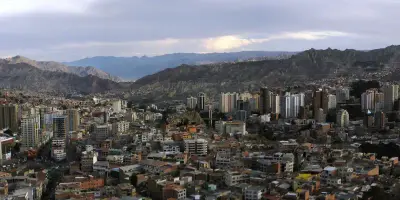
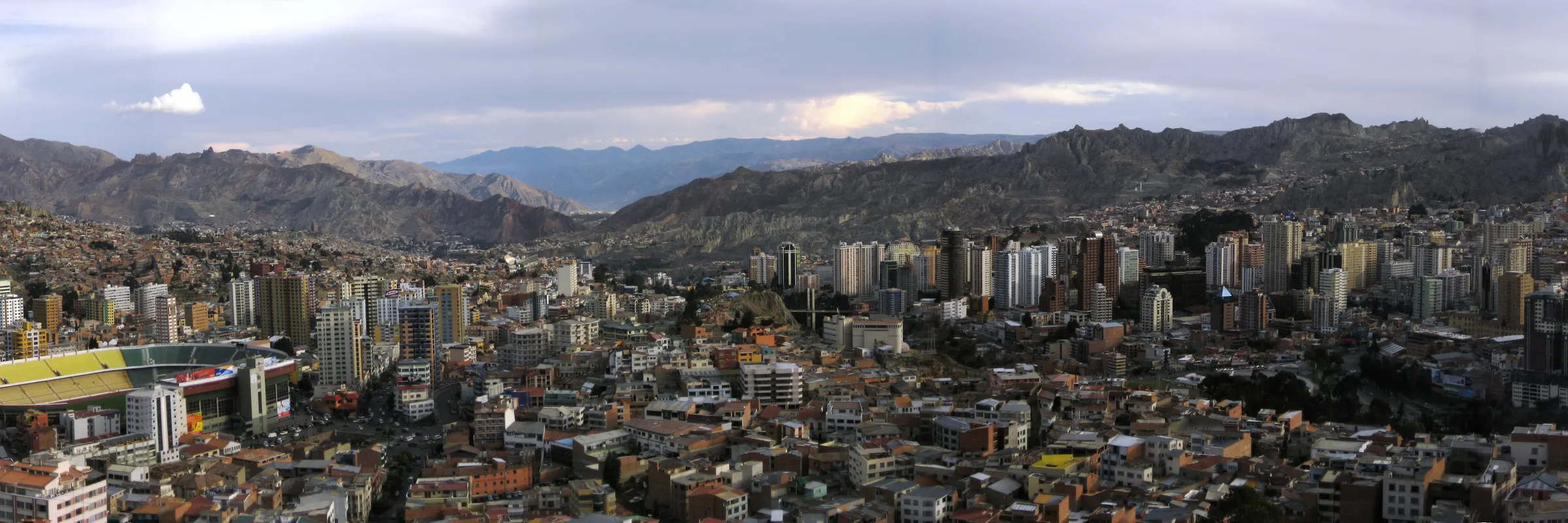
La Paz: the city climbing the walls of its bowl
Photo: René Denis, Ottawa, Canada · CC BY 3.0
La Paz, Bolivia

La Paz: how many days you need and when to go

La Paz sits in a bowl gouged out of the altiplano, and the bowl is the whole story: the city runs from around 3,200 metres at the bottom to over 4,000 at the rim, which means the neighbourhoods are stacked vertically and the air changes as you move between them. Above the rim sits El Alto, a separate city of its own. Two days covers the centre and the markets. A third is what the cable cars and the altiplano deserve.

Short answers

What people ask before booking

How many days do you need in La Paz?

La Paz needs two days — the first lost to altitude whatever you plan, the second for the centre, the markets and the cable cars — and a third for Tiwanaku, Titicaca or the Yungas road.

What is the best month to visit La Paz?

May, June and July — The dry season, clear skies, and cold nights. April and August — The shoulders of the dry season, and quieter.

Which months are worth avoiding in La Paz?

November and December — The wet season starting, and the views going. January and February — The wettest months, and blocked roads.

How many days La Paz needs

Two days is the working figure, and the first of them is compromised whatever you plan. The airport sits above four thousand metres and the city below it starts at three thousand two hundred, so day one is for arriving, going slowly and doing nothing that involves stairs.

The second day covers the centre, the markets and a ride up the cable cars to El Alto. The third is where it becomes worth the flight: the altiplano, the pre-Inca ruins west of the city, the descent to the Yungas, or simply riding the cable network end to end. Beyond three days you are using La Paz as a base, which is a reasonable thing to do.

Altitude, and the first day

This is the highest city on this site and the altitude is not a detail. At La Paz's elevation each breath carries roughly a third less oxygen than at sea level, and you arrive at the top of the city rather than the bottom, at over four thousand metres, without any chance to acclimatise on the way. Almost everyone feels it: headache, breathlessness on stairs, poor sleep the first night.

The local remedy is coca — as a tea, or the leaf chewed — and it is legal, normal and offered everywhere in Bolivia. It helps with the symptoms. What helps more is spending the first day at the bottom of the bowl rather than the top, drinking a great deal of water, eating lightly and not drinking alcohol.

  • Plan nothing for arrival day. Not a reduced plan; nothing. It is the single best decision you can make here.
  • Coca tea is offered in every hotel and it is not a drug experience. It is legal in Bolivia and illegal to carry out of it, including the leaves.
  • If you are heading to Uyuni or Titicaca, spend two nights here first. Both are higher than they look.
  • Symptoms that get worse rather than better are the ones to take to a pharmacy, and every pharmacy here deals with this daily.

The upside-down city

La Paz inverts the rule that holds in most of the world. Here the wealthy live at the bottom of the canyon and the poor live at the top, because the air at the bottom is thicker, warmer and easier to breathe. The southern valleys sit several hundred metres below the centre and are noticeably milder; the rim is cold, windy and thin.

That gradient explains the whole layout. The colonial centre and the government buildings are in the middle. Above them the streets climb into dense Aymara neighbourhoods and the markets. Above those, on the flat rim, is El Alto — a city in its own right since 1985, and now one of the largest in Bolivia.

  • The centre — the plaza, the government palace, the museums and the colonial street. Compact and walkable, if you can manage the gradient.
  • The market district — the streets above the centre, where the witches' market, the produce and the dry goods run into each other over several blocks.
  • Sopocachi — the residential neighbourhood just below and west of the centre: restaurants, bars and where visitors mostly stay.
  • Zona Sur — the valleys several hundred metres lower, warmer and wealthier. A different climate and a different city, half an hour away.
  • El Alto — the rim, four thousand metres, the huge Thursday and Sunday market, and the brightly coloured neo-Andean buildings that have made its architecture famous.

The cable cars, which are the best thing here

La Paz has the largest urban cable car network in the world, and it exists because the geography makes a metro impossible. It is public transport, used by tens of thousands of commuters a day, priced like a bus and colour-coded by line — and it is also, incidentally, the finest sightseeing in the city.

The practical value is enormous: the ride from the centre to El Alto takes minutes and replaces a long grind up switchbacks. The other value is the view. You cross the whole bowl at roof height, looking into courtyards and over the brick sprawl, with the snow of the Cordillera behind. Ride at least one line end to end for no reason at all.

El Alto, and the market on the rim

El Alto is not a suburb. It separated from La Paz in 1985 and has grown into one of Bolivia's largest cities, overwhelmingly Aymara, sitting flat on the altiplano at four thousand metres with the canyon dropping away at its edge. Its Thursday and Sunday market is one of the largest open-air markets in the Americas, and it sells everything, from car parts to livestock to entire kitchens.

It is also where a distinctly Bolivian architecture happened. Over the last two decades local builders have covered El Alto in tall, brightly coloured buildings with Andean patterns on the facades and ballrooms in the middle floors — a style invented here, funded by Aymara commercial wealth, and unlike anything else on the continent.

  • Go on a Thursday or a Sunday if the market is the point, and go in the morning.
  • The cable car is the way up. It is faster, cheaper and considerably more comfortable than the road.
  • It is colder and windier than the city below, by several degrees. Take the layer you did not think you needed.
  • Cholita wrestling happens weekly and is a genuine local spectacle rather than a staged one, though it is now firmly on the visitor circuit.

Practical things that catch visitors

Bolivia is a cash country. Cards work in the better restaurants and hotels and almost nowhere else, ATMs are common in the centre and rare outside it, and small notes matter because change for a large one is often genuinely unavailable in a market.

The other thing to plan around is the road. Blockades are a normal and long-standing political instrument in Bolivia, and a dispute anywhere in the country can close a highway or the airport road with little notice. It is rarely dangerous for visitors and it is frequently inconvenient. Leave slack around any flight or bus you must catch.

  • Carry small notes. Breaking a large one in a market is a real problem rather than an inconvenience.
  • Leave a buffer around departures. Road blockades are common, announced late and resolved on their own schedule.
  • The zebras directing traffic are a city programme, not a stunt: young people in costume teaching pedestrians and drivers to use crossings, running since 2001.
  • Coca leaves cannot legally leave Bolivia, tea bags included. It is legal here and it is not legal at your next border.

What is worth a day outside the city

Three things sit within reach and they are completely different from each other. Tiwanaku, an hour and a half west, is the ceremonial centre of a state that predates the Inca by centuries and is the most important archaeological site in Bolivia. Lake Titicaca and the town of Copacabana are three to four hours away, on the border with Peru.

The third is the descent into the Yungas, the road that drops from around four thousand six hundred metres to the subtropics in a single morning. It was genuinely the most dangerous road in the world until a replacement opened in 2006; the old route now carries mountain bikes instead of buses. The scenery changes completely on the way down, which is the actual reason to do it.

What to eat in La Paz, and where

Andean food is built on potatoes, maize and altitude, and Bolivia has more varieties of potato than anywhere on earth. The cooking here is heavier than in the valleys because it has to be, and the eating hours are early: lunch is the main meal and by mid-afternoon the market kitchens have sold out.

  • Salteña

    What to order

    Mid-morning, and the technique for eating it

    A baked pastry with a sweet-and-spicy stew inside, sealed with a braided edge and eaten standing between about nine and eleven in the morning. The filling is liquid, which is the whole problem: you bite a corner, keep it upright and drink before you chew. Everyone judges yours. Nobody in Bolivia eats one after midday.

    Check it on Wikidata
  • Anticucho

    What to order

    The street food after dark

    Beef heart, marinated, skewered and grilled over charcoal, served with a boiled potato and a peanut sauce. It comes out onto the streets in the evening and it is one of the best cheap things in the Andes, sold from carts that appear at the same corners every night. The heart is lean and mild and does not taste of what you are expecting.

    Check it on Wikidata
  • Plato paceño

    What to order

    The plate named after the city

    Boiled maize, broad beans, a fried cheese and a potato, served together with a chilli sauce. It is vegetarian by accident of history rather than design, and it is the most local thing on any La Paz menu. Simple, heavy and exactly the food that altitude makes sense of.

    Check it on Wikidata
  • Chuño

    What to order

    The oldest food-preservation technology in the Americas

    Potatoes freeze-dried by leaving them out on the altiplano for successive nights of frost and days of sun, then treading out the water. The technique is pre-Inca and it is why a crop that rots in weeks can be stored for years, which is how these highlands supported an empire. It has a texture nothing prepares you for.

    Check it on Wikidata
  • Singani

    What to order

    The national spirit, and where it has to come from

    A clear grape brandy distilled at altitude in the valleys south of here, with a protected designation of origin that ties it to specific high-altitude vineyards. It is the base of the country's national cocktail and it drinks lighter than its strength suggests, which at this elevation is a trap worth naming.

    Check it on Wikidata
  • Mercado de las Brujas

    Market

    The market that is not really about food

    The street of stalls above the centre selling offerings for Pachamama: herbs, amulets, soapstone figures and dried llama foetuses, which are buried under the foundations of new buildings as an offering. It is a working market for a living practice, not a curiosity, and photographing the stalls without asking is not welcome.

    Check it on Wikidata

When to go, and what each month costs you

At this altitude the seasons are dry and wet rather than warm and cold, and the daily swing is larger than the annual one: strong sun at midday and near-freezing after dark, in every month of the year. What changes is the rain, and the rain decides whether the mountains are visible and whether the roads are open.

  • May, June and July

    Go now

    The dry season, clear skies, and cold nights

    The heart of the dry season: clear days, the Cordillera visible, roads open and every excursion running. Nights are genuinely cold and the rooms are often unheated, which is the trade. This is also the window for the salt flat's dry hexagons, if that is the version you want.

  • April and August

    Go now

    The shoulders of the dry season, and quieter

    April still has some green from the rains and August has the winds. Both are reliably dry, both are cheaper than midwinter, and both have fewer visitors. August is windy enough to notice on the altiplano.

  • September and October

    Worth it, but

    Warming up, and the first storms

    Days lengthen and warm, and afternoon storms begin to appear towards the end of the period. Everything still runs. A good compromise if you want fewer people and can accept an occasional lost afternoon.

  • March

    Worth it, but

    The rains ending, and everything green

    Rain is easing, the altiplano is at its greenest, and prices are low. Roads can still be difficult and the mountains are often behind cloud. Carnival falls in February or early March and moves each year; in Bolivia it is a serious, days-long affair and the country travels for it.

  • November and December

    Think twice

    The wet season starting, and the views going

    Storms most afternoons, cloud on the peaks and unreliable roads outside the city. The city itself functions normally and prices fall. What you lose is the mountains, which are half of what you came to see.

  • January and February

    Think twice

    The wettest months, and blocked roads

    The peak of the rains: heavy afternoon storms, landslides on the mountain roads and excursions cancelled at short notice. The one argument for coming is the salt flat, which floods in these months and becomes the mirror that everyone photographs. Everything else is worse.

Things that change the trip

  • Do nothing on arrival day. You land above four thousand metres with no chance to acclimatise on the way in.
  • Ride at least one cable car line end to end. It is public transport priced like a bus and it is the best view in the city.
  • Eat the pastry before midday. Bolivians do not eat them in the afternoon and the good places have sold out by eleven.
  • Carry small notes and expect cash. Cards work in a narrow slice of the city and nowhere else.
  • Leave slack around flights and buses. Road blockades are a normal political tool here and they close highways at short notice.
  • Coca is legal in Bolivia and illegal to carry across the border, tea bags included. Finish it or leave it.

Plan La Paz and the altiplano

A trip that adds Uyuni, Lake Titicaca, Sucre or Potosí, with the altitudes, the buses and the flights between them, is exactly what Premium is for. The free version covers one destination of up to three days.

Destinations