Skip to content
JoruJoru
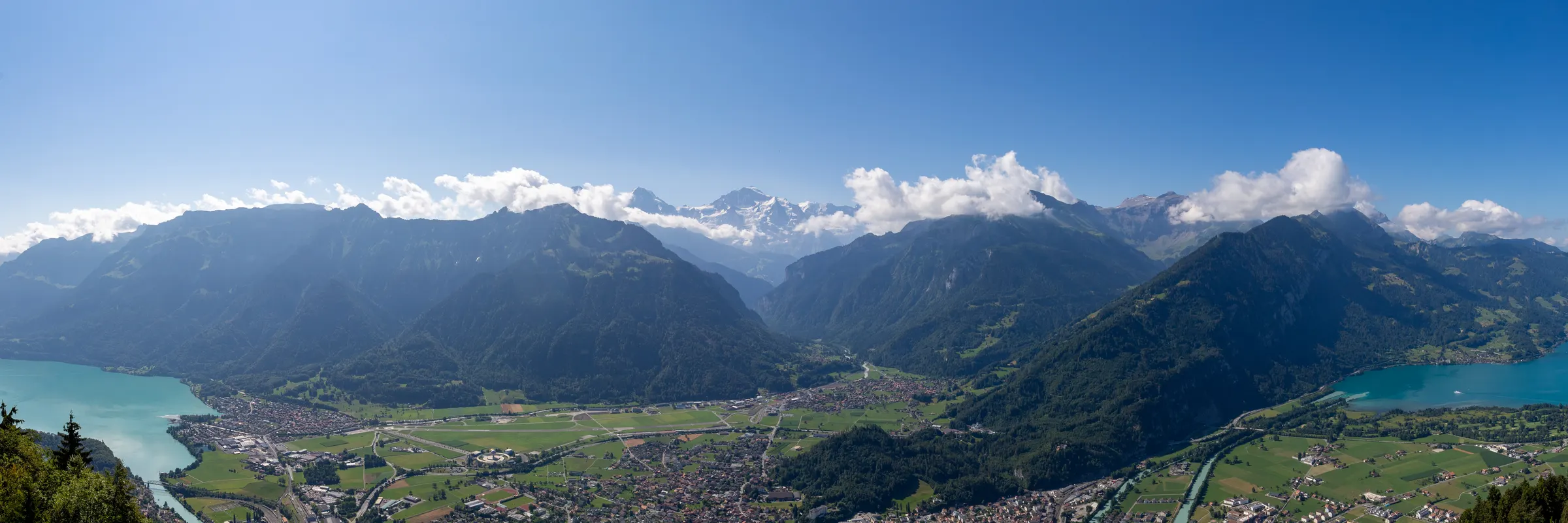
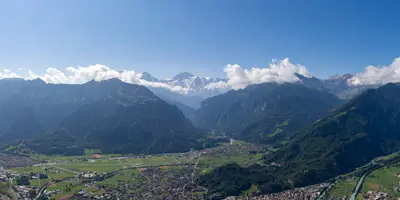
Interlaken: Interlaken between its two lakes, from the Harder Kulm

Canton of Bern, Switzerland

Interlaken: how many days you need and the best months to go

Photo: Pierre-Selim Huard · CC BY 4.0

Interlaken lies on a flat strip of land between two lakes, Thun and Brienz, and its name means just that: between the lakes. The town itself is a modest resort of grand hotels, a long green meadow where paragliders land, and two railway stations; its point is what lies behind it. South of the town the valleys climb into the heart of the Bernese Oberland, to the north faces of the Eiger, the Mönch and the Jungfrau, the sheer-walled valley of Lauterbrunnen with its dozens of waterfalls, and the car-free villages of Wengen and Mürren perched on its cliffs. A railway tunnels through the Eiger to the Jungfraujoch, the highest railway station in Europe, and cable cars climb to the Schilthorn and to First above Grindelwald. The planning problem is cost and cloud. The mountain excursions are among the most expensive in the world, and the summits can disappear in fog on any day; the trick is to watch the forecast, buy the right pass, and keep the high trip for the clearest day.

Short answers

What people ask before booking

How many days do you need in Interlaken?

Interlaken needs three days: one for the Lauterbrunnen valley, its waterfalls and the Schilthorn, one for the Jungfraujoch on the clearest day of your stay, and one for Grindelwald and First or the walk under the Eiger. A fourth day is for the lakes, or for the weather to clear. Compare the passes before buying tickets.

What is the best month to visit Interlaken?

June to September — The hiking season.

Work out how many hours you will have in Interlaken on your dates
When to go, and what each month costs you

The Bernese Oberland has a mountain climate: warm summers in the valleys with showers and thunderstorms, cold, snowy winters, and changeable springs and autumns. The high paths are free of snow only from June to October, and the summits can be in cloud on any day of the year.

  1. January: Worth it, but
  2. February: Worth it, but
  3. March: Worth it, but
  4. April: Worth it, but
  5. May: Worth it, but
  6. June: Go now
  7. July: Go now
  8. August: Go now
  9. September: Go now
  10. October: Worth it, but
  11. November: Worth it, but
  12. December: Worth it, but
  • June to September

    Go now

    The hiking season

    Warm days, the high paths open, the waterfalls full of snowmelt in early summer and the alpine meadows in flower. Mornings are usually clearer than afternoons, so go up early.

  • December to March

    Worth it, but

    Snow and the ski season

    Snowy villages, ski slopes at Grindelwald, Wengen and Mürren, and the Jungfraujoch above the clouds on clear days. Christmas and February are the peak, with the highest prices; the valley floor of Lauterbrunnen sees little sun.

  • April and May

    Worth it, but

    Spring in the valleys, winter above

    Green valleys and full waterfalls, but snow still on the high paths, and some lifts closed between the ski season and the summer. A quieter time, with lower prices, if you stay in the valleys.

  • October and November

    Worth it, but

    Golden autumn, then closures

    Clear, crisp days and golden larches in October, then grey weather and the lifts closed for maintenance in November. The quietest season, with many mountain hotels shut until winter.

What to pack for Interlaken, month by month

How many days Interlaken needs

Three days give the region its due. One for the Lauterbrunnen valley: its waterfalls, the glacier falls inside the mountain at Trümmelbach, and the cable car up to Mürren and the Schilthorn. One for the Jungfraujoch, the high trip, on the clearest day of your stay. One for Grindelwald and First, or the classic walk from Männlichen to Kleine Scheidegg under the Eiger.

A fourth day is for the lakes or a rest: a boat on Lake Brienz to the Giessbach falls, the castles of Lake Thun, the Harder Kulm above the town at sunset, or a day for the weather to clear. In bad weather, the lake towns and the open-air museum of Swiss rural houses at Ballenberg are the alternatives.

How the region is arranged

Interlaken sits on the flat land between the two lakes, with Lake Thun to the west and Lake Brienz to the east, and two stations, West and East. South of the town, the valley splits in two: Lauterbrunnen to the right, Grindelwald to the left, both leading to the foot of the Eiger, Mönch and Jungfrau, with the rack railways meeting at Kleine Scheidegg below the Jungfraujoch.

  • Interlaken — the town between the lakes, with hotels, the main stations, shops and the meadow where the paragliders land.
  • The Lauterbrunnen valley — a deep glacial valley with sheer walls and waterfalls, with the villages of Wengen and Mürren on the cliffs above.
  • Grindelwald — the larger mountain village in the other valley, under the north face of the Eiger, with cable cars to First and the Eiger Express.
  • The Jungfraujoch — the saddle between the Mönch and the Jungfrau, with the highest railway station in Europe and the great Aletsch glacier below.
  • The lakes — Lake Thun and Lake Brienz, with boats, castles, villages and waterfalls along their shores.

Where to stay, and what each area costs you

Interlaken is the practical base, with the trains to every valley and the most hotels; the mountain villages are the memorable one, with the peaks outside the window and quiet evenings. Many visitors split the stay.

Prices are high all year and peak in summer and in the winter ski season around Christmas and February. Overnight guests receive a guest card with free local buses and discounts.

AreaWho it suitsThe catch
InterlakenFirst visits and short stays: trains to every valley, the lakes, restaurants and the most choice of hotels.A town without the mountain views of the villages, and busy with tour groups.
LauterbrunnenThe valley of waterfalls, at the foot of the cliffs, with trains up to Wengen and cable cars to Mürren.Crowded with day visitors, and in a deep valley that sees little sun in winter.
Wengen and MürrenCar-free villages on the cliffs, with the peaks in front and silent evenings.Reached only by train or cable car, with few shops and dear rooms.
GrindelwaldA lively mountain village under the Eiger, with walks, cable cars and the Eiger Express to the Jungfraujoch.Busy and spread out, and forty minutes from Interlaken by train.

Compare these areas against your priorities

Getting there, and getting around

Interlaken is about an hour from Bern by train, two hours from Zurich and its airport, and two hours from Lucerne over the Brünig pass. Its two stations, West and East, are a short walk apart; trains into the mountains leave from the East station.

In the mountains, everything runs on rails and cables: the trains to Lauterbrunnen and Grindelwald, the rack railways to Wengen and Kleine Scheidegg, the cable cars to Mürren, the Schilthorn and First, and the boats on both lakes. A car is useless above the valley floors.

  • Compare the regional passes and the Swiss travel pass before buying single tickets: the excursions are very expensive at full fare, and the passes cover or discount most of them.
  • Book the Jungfraujoch for the clearest day, and check the summit webcam on the morning you go.
  • At the top, at nearly three and a half thousand metres, walk slowly and drink water: the altitude can cause headaches.
  • Wengen and Mürren are car-free; leave the car at Lauterbrunnen, where parking is paid.

The peaks, the valley and the lakes

The Jungfraujoch is the classic high trip: a rack railway from Kleine Scheidegg tunnels through the Eiger and the Mönch to a station on a glacier saddle, with an ice palace, a plateau of snow and the Aletsch glacier, the longest in the Alps, flowing south. The trip from Interlaken takes around two hours each way, or less with the Eiger Express cable car from Grindelwald; give it a whole day and the clearest sky.

  • Lauterbrunnen — a valley of sheer cliffs and waterfalls, the Staubbach falling nearly three hundred metres beside the village.
  • Trümmelbach Falls — glacier water thundering through corkscrew gorges inside the mountain, reached by a lift in the rock; open in the warm months.
  • The Schilthorn — the summit with a revolving restaurant above Mürren, reached by a chain of cable cars from the valley floor.
  • First and Grindelwald — a cable car to an alpine meadow with a cliff walk and the path to the Bachalpsee lake.
  • The Männlichen–Kleine Scheidegg walk — an easy, famous path under the north faces of the Eiger, Mönch and Jungfrau.
  • Lake Brienz and the Giessbach falls — a turquoise lake, a waterfall in tiers above an old grand hotel, reached by boat and funicular.

How eating works here

The Bernese Oberland eats mountain food: cheese from the summer pastures, potato cakes, melted cheese in a pot, and meringues with thick cream, said to have been born in a village of the region. The mountain restaurants and huts serve the classics with the view.

Lunch from noon and dinner from seven, earlier in the mountain villages. The supermarkets of Interlaken are the cheapest way to eat, and a picnic on a mountain bench is the best meal of the day.

  • Service is included in prices: rounding up or a few francs is enough.
  • The currency is the Swiss franc; cards are accepted almost everywhere, even in many mountain huts.
  • Alpine cheese is sold at the dairies and huts, from the summer pastures.
  • Book dinner in the car-free villages, where restaurants are few.

Where to eat in Interlaken, and what to order

The Oberland's table is built on cheese and cream: meringues with thick cream, the hard cheese of the summer pastures, potato cakes and melted cheese in a pot. Eat in a mountain restaurant with the view, and picnic the rest of the time.

  • Meringue

    What to order

    Meringues with thick cream

    Large, crisp meringues served with thick double cream, sometimes with berries. The village of Meiringen, east of Lake Brienz, claims to have given them their name, and every café of the region serves them.

    Check it on Wikidata
  • Berner Alpkäse

    What to order

    The cheese of the summer pastures

    A hard, spicy cheese made in the summer from the milk of cows grazing on the high pastures, with a protected name, aged for months and the oldest for well over a year. The oldest is shaved into thin curls, and the dairies and mountain huts sell it by the piece.

    Check it on Wikidata
  • Rösti

    What to order

    The potato cake

    Grated potatoes fried in butter into a crisp golden cake, served with an egg, bacon or melted cheese. It is the classic lunch of the mountain restaurants, after a morning's walk.

    Check it on Wikidata
  • Käsefondue

    What to order

    Cheese fondue in a mountain restaurant

    A pot of melted cheese with white wine, kept warm at the table, with cubes of bread to dip on long forks. It is a dish for sharing after a day outdoors, best in a mountain restaurant in the cold months.

    Check it on Wikidata

Things that change the trip

  1. Compare the passes before buying tickets: the mountain trips are very expensive at full fare.
  2. Keep the Jungfraujoch for the clearest day, and check the webcam that morning.
  3. Go up early: mornings are clearer and quieter.
  4. Sleep at least one night in Wengen or Mürren.
  5. Pack warm clothes and sunglasses for the summits, even in summer.
  6. Picnic from the supermarket: eating out is very expensive.

Plan Interlaken with the Swiss Alps

A trip of more than three days, or one that joins Interlaken with Lucerne, Zermatt, Bern or Zurich and the trains between them, is what Premium is for. The free version covers one destination of up to three days.

Destinations