
Skip to content
JoruJoru
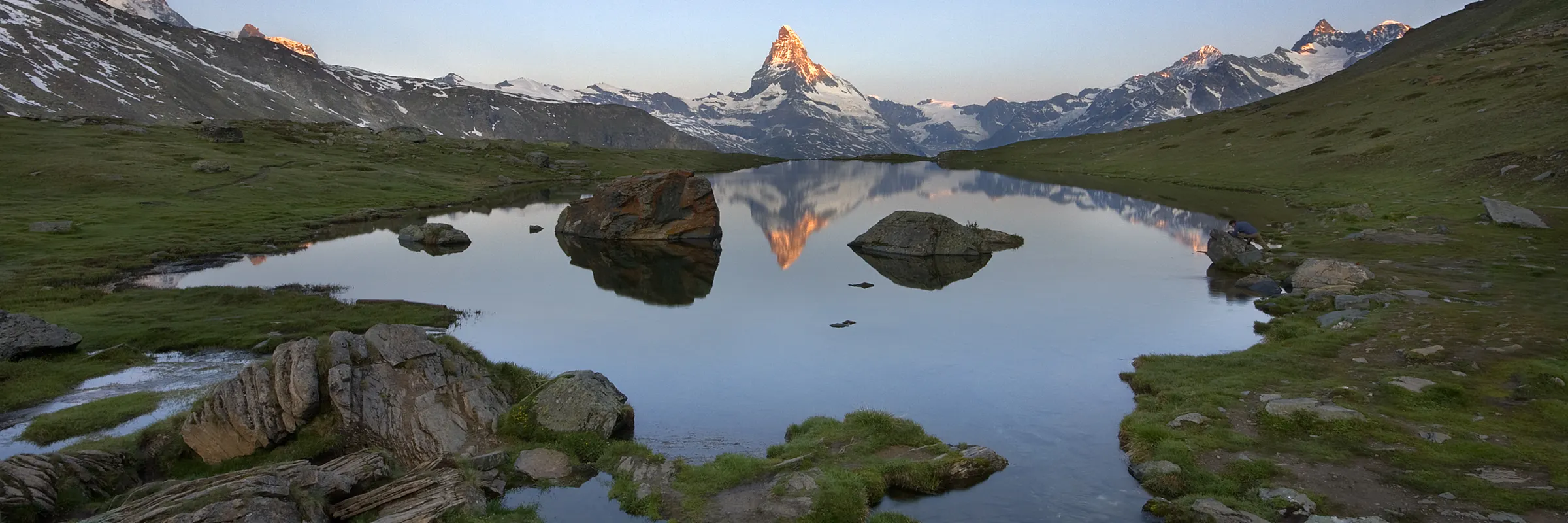
Zermatt: The Matterhorn at dawn, reflected in the Stellisee

Canton of Valais, Switzerland

Zermatt: how many days you need and the best months to go

Photo: Jeffrey Pang · CC BY 2.0

Zermatt sits at the head of a long valley in the Valais, at the foot of the Matterhorn, the most recognisable mountain in the world. The village is closed to ordinary cars: visitors arrive by train, and small electric taxis glide along a main street of hotels, shops and old larch-wood barns raised on stone discs to keep the mice out. Around it rise thirty-eight summits over four thousand metres, a rack railway climbs to the Gornergrat ridge above a river of glaciers, and a chain of cable cars reaches the highest station in Europe, where skiing continues all summer and a crossing leads over the border into Italy. In summer the valley is a paradise of walking paths and mountain lakes; in winter one of the great ski areas of the Alps. The planning problem is the mountain itself: the Matterhorn hides in cloud on many days, the excursions are among the most expensive in the world, and the village closes between seasons. Choose the season, stay at least two nights, and go up on the clearest morning.

Short answers

What people ask before booking

How many days do you need in Zermatt?

Zermatt needs two days, which gives you two chances at a clear Matterhorn: one for the Gornergrat by rack railway, one for the Matterhorn Glacier Paradise or the five-lakes walk. A third day lets the weather decide. In winter, three days are the minimum for the skiing.

What is the best month to visit Zermatt?

July to September — The walking season. January to March — The ski season.

Work out how many hours you will have in Zermatt on your dates
When to go, and what each month costs you

Zermatt has a dry, sunny mountain climate: warm summer days and cold nights, cold, snowy winters, and changeable seasons in between. There are two seasons, summer and winter, and between them the village half closes.

  1. January: Go now
  2. February: Go now
  3. March: Go now
  4. April: Worth it, but
  5. May: Worth it, but
  6. June: Worth it, but
  7. July: Go now
  8. August: Go now
  9. September: Go now
  10. October: Worth it, but
  11. November: Worth it, but
  12. December: Worth it, but
  • July to September

    Go now

    The walking season

    Warm days, the high paths free of snow, the mountain lakes and flowers, and summer skiing on the glacier. Mornings are clearest; afternoon clouds and storms are common in July and August.

  • January to March

    Go now

    The ski season

    Snow on the village, long ski days on slopes linked with Italy, and clear, cold days. February is the busiest and dearest month; the Gornergrat and the Glacier Paradise run all winter.

  • December

    Worth it, but

    Early snow and Christmas

    The ski season opens and the village fills for Christmas and New Year, with the highest prices of the winter. Before Christmas it is quieter, with early snow conditions.

  • April to June

    Worth it, but

    Spring snow, then the thaw

    Spring skiing into April, then the thaw: in May many hotels and lifts close, and the high paths stay under snow until June or later. A quiet time in the village, at lower prices.

  • October and November

    Worth it, but

    Golden larches, then the pause

    Golden larches and clear days in October, then many hotels and some lifts closed until the winter season. The quietest time of the year.

What to pack for Zermatt, month by month

How many days Zermatt needs

Two days give you two chances at the Matterhorn. One for the Gornergrat, by rack railway, with the view of the Matterhorn and the glaciers of Monte Rosa, and a walk down past the lake that reflects the mountain. One for the Matterhorn Glacier Paradise, the highest cable car station in Europe, or for the five-lakes walk above the village.

A third day lets the weather decide: a day of walking from the Sunnegga or Rothorn area, a visit to the old village and its museum, or the cable car crossing over the glacier to Cervinia in Italy. In winter, three days are the minimum for the skiing.

How the village is arranged, at the head of the valley

Zermatt fills the floor of the valley at the foot of the Matterhorn. The railway station is at the northern end, with the main street running south through the village to the old quarter and the cable car stations at the far end. The Gornergrat railway leaves from opposite the main station; the funicular to Sunnegga from a tunnel by the river.

  • The main street — hotels, shops, restaurants and the station, busy with electric taxis.
  • The old village — the quarter of dark larch-wood houses and barns on stone discs, around the church.
  • The Gornergrat — the ridge reached by rack railway, facing the Matterhorn and the glaciers of Monte Rosa.
  • Sunnegga and Rothorn — the sunny slopes to the east, with mountain lakes, walking paths and pistes.
  • The Glacier Paradise — the cable cars to the Klein Matterhorn, with the glacier, the summer skiing and the crossing to Italy.

Where to stay, and what each area costs you

Zermatt is small and walkable, so the choice is between the convenience of the station, the views of the hotels at the southern end, and the cheaper rooms on the slopes and in the valley below.

Prices are high all year and peak at Christmas, in February and in high summer; many hotels close in May and from October to late November, between the seasons. The village charges a tourist tax per person and per night.

AreaWho it suitsThe catch
Near the stationShort stays: the trains, the Gornergrat railway and the main street on the doorstep.Busy, and few rooms with a view of the Matterhorn.
The village centre and the old quarterRestaurants, shops and the old wooden houses, with the mountain in view from many rooms.Dear, and lively at night in the ski season.
The southern end, by the cable carsSkiers and early starts to the Glacier Paradise, with the Matterhorn above.A walk from the station, and quieter at night.
TäschCheaper hotels and parking in the village down the valley, with a shuttle train to Zermatt.Twelve minutes by train each way, and no mountain views.

Compare these areas against your priorities

Getting there, and getting around

Zermatt is reached by train, a mountain line up the valley from Visp, where trains arrive from Bern, Zurich, Geneva and Milan via Brig; the journey from Zurich or Geneva takes around three and a half hours. The Glacier Express, a famous panoramic train, links Zermatt with St Moritz in a full day.

Cars stop at Täsch, five kilometres down the valley, where a large car park and a shuttle train serve the village. In Zermatt you walk, or take an electric taxi or bus; the mountains are reached by rack railway, funicular and cable cars.

  • Leave the car at Täsch and take the shuttle; ordinary cars are not allowed in the village.
  • Check the Matterhorn webcams in the morning, and go up while the summit is clear: clouds often build by midday.
  • At the Glacier Paradise, nearly four thousand metres up, walk slowly; the altitude can cause headaches and breathlessness.
  • Compare the Swiss travel pass and the local passes: the pass covers the train to Zermatt and discounts the mountain lifts.

The Matterhorn, the glaciers and the paths

The Gornergrat is the classic view: a rack railway opened in 1898 climbs from the village to a ridge at over three thousand metres, facing the Matterhorn across the valley and the glaciers of Monte Rosa, the highest mountain in Switzerland, curving below. Go on the first trains of a clear morning, and walk down part of the way past the small lake where the Matterhorn is reflected.

  • The Matterhorn Glacier Paradise — the highest cable car station in Europe, with a cave carved in the glacier and a view over the Alps to France and Italy.
  • The five-lakes walk — a path from Sunnegga past mountain lakes, several of which reflect the Matterhorn on still mornings.
  • The old village — dark larch barns raised on stone discs against the mice, some more than three centuries old.
  • The Matterhorn Museum — the story of the village and of the first ascent of 1865, which ended in tragedy.
  • The crossing to Italy — cable cars over the glacier from the Glacier Paradise to Cervinia, on the Italian side of the mountain.
  • The Gorner gorge — a narrow gorge of green rock carved by the glacier river, with wooden walkways, just south of the village.

How eating works here

Zermatt eats the food of the Valais: melted cheese scraped from a half wheel onto potatoes, air-dried beef, rye bread, and the white wines of the Rhône valley. The mountain restaurants above the village, many with the Matterhorn in view, are part of the day out.

Lunch from noon and dinner from seven. Book dinner in the ski season and in high summer; the best mountain restaurants fill early.

  • Service is included in prices: rounding up or a few francs is enough.
  • The currency is the Swiss franc; cards are accepted almost everywhere.
  • A potato, cheese and leek pie of the Valais is the hearty lunch of the old restaurants.
  • Water from the fountains in the village is drinkable.

Where to eat in Zermatt, and what to order

Zermatt eats the Valais at its most generous: melted cheese scraped onto potatoes, paper-thin air-dried beef, a dense rye bread, and the white wines of the Rhône valley. Eat in a mountain restaurant with the Matterhorn in view.

  • Raclette du Valais

    What to order

    Melted cheese, scraped from the wheel

    Half a wheel of the Valais's cheese melted by the fire and scraped onto boiled potatoes, with pickled onions and gherkins. The cheese has a protected name, and the dish comes in rounds until you can eat no more.

    Check it on Wikidata
  • Walliser Trockenfleisch

    What to order

    The air-dried beef of the Valais

    Lean beef cured with salt and herbs and dried in the mountain air, sliced paper-thin. It is served on a wooden board with cheese and rye bread, the classic plate of the Valais.

    Check it on Wikidata
  • Walliser Roggenbrot

    What to order

    The dark rye bread

    A dense, round bread of rye flour with a cracked crust, which keeps for days. It has a protected name, and it comes with the air-dried meats and cheeses of every board.

    Check it on Wikidata
  • Petite Arvine

    What to order

    The white wines of the Valais

    Wines from the steep vineyards of the Rhône valley below Zermatt, the sunniest and driest corner of Switzerland. Order a glass of the local whites, such as the aromatic Petite Arvine, little known outside the country.

    Check it on Wikidata

Things that change the trip

  1. Stay at least two nights to give yourself two chances at a clear Matterhorn.
  2. Go up early, on the first trains and cable cars of a clear morning.
  3. Leave the car at Täsch, or come by train.
  4. Check the webcams before buying a mountain ticket.
  5. Pack warm clothes and sun protection for the high stations, even in summer.
  6. Avoid May and November, when much of the village closes.

Plan Zermatt with the Swiss Alps

A trip of more than three days, or one that joins Zermatt with the Glacier Express, Interlaken, Lucerne or Geneva and the trains between them, is what Premium is for. The free version covers one destination of up to three days.

Destinations