
Skip to content
JoruJoru
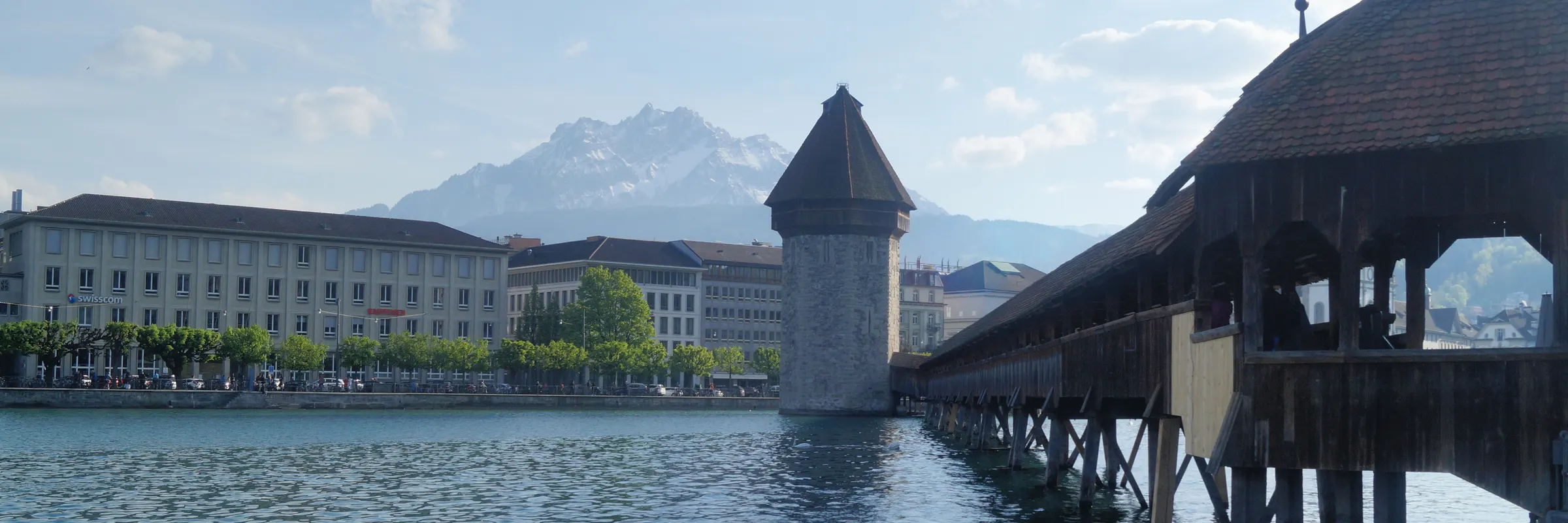
Lucerne: The Chapel Bridge and its water tower, with Pilatus behind

Canton of Lucerne, Switzerland

Lucerne: how many days you need and the best months to go

Photo: Jvanree · CC0

Lucerne is the Switzerland of postcards, and it earns it. The river Reuss leaves the Lake of Lucerne through the middle of the city, crossed by a wooden covered bridge of the fourteenth century with paintings under its roof; the old town on its bank is all painted façades and fountains, and a line of medieval towers stands on the hill behind. On the lake, paddle steamers still sail to villages at the foot of the mountains, and two of the classic Swiss peaks rise straight from its shores: Pilatus, reached by the steepest cogwheel railway in the world, and the Rigi, served by the oldest mountain railway in Europe. The planning problem is the mountains and the sky. Each peak is a half-day or a day, the views depend entirely on the weather, and the summits can be lost in cloud while the town is in sunshine. Plan the mountain day around the forecast, and keep a flexible day for the lake and the town.

Short answers

What people ask before booking

How many days do you need in Lucerne?

Lucerne needs two days: one for the old town, its covered bridges, the medieval wall and the Lion Monument, and one for a mountain, Pilatus or the Rigi, by boat and mountain railway, chosen on the morning's forecast. A third day adds the other mountain, a paddle steamer on the lake or the museum of transport.

What is the best month to visit Lucerne?

June to September — The mountain season.

Work out how many hours you will have in Lucerne on your dates
When to go, and what each month costs you

Lucerne has a central European climate moderated by the lake: warm, often showery summers, cold winters with snow on the mountains, and changeable springs and autumns. The mountain railways and the boats run their full timetables from spring to autumn, and the views decide the day.

  1. January: Worth it, but
  2. February: Worth it, but
  3. March: Worth it, but
  4. April: Worth it, but
  5. May: Worth it, but
  6. June: Go now
  7. July: Go now
  8. August: Go now
  9. September: Go now
  10. October: Worth it, but
  11. November: Worth it, but
  12. December: Worth it, but
  • June to September

    Go now

    The mountain season

    Warm days, long evenings, all the mountain railways and boats running, and swimming in the lake. Late summer brings the great classical music festival; summer afternoons can bring thunderstorms, so go up the mountains early.

  • May and October

    Worth it, but

    Quieter, with a changeable sky

    Mild days and fewer visitors, with the high cogwheel railway of Pilatus opening in May and closing after the season. Clear autumn days give the sharpest views of the Alps, but snow can come early to the summits.

  • November to April

    Worth it, but

    Cold, quiet and Carnival

    Cold, often grey days in the town, often sunny above the clouds on the mountains, and Christmas markets. Carnival, whose date moves with Lent, fills the old town with masks and brass bands for days and nights. Some mountain railways close or run reduced services.

What to pack for Lucerne, month by month

How many days Lucerne needs

Two days give you the town and one mountain. One for the old town: the Chapel Bridge and the second covered bridge downstream, the squares and painted façades, the medieval wall and its towers, and the Lion Monument. One for a mountain, Pilatus or the Rigi, by boat and mountain railway, chosen on the morning's forecast.

A third day adds the other mountain, or the lake: a long cruise on a paddle steamer, the Swiss Museum of Transport, or a further peak such as the Stanserhorn or the glacier of Titlis above Engelberg. Interlaken is about two hours away by train, and Bern about one.

How the city is arranged, where the river leaves the lake

Lucerne is small and walkable. The river Reuss leaves the lake through the centre, with the old town on its northern bank and the railway station, the concert hall and the boat piers on the southern side, by the lake. The medieval wall runs along the hill behind the old town; the lake promenades stretch east along both shores.

  • The old town — the squares, painted houses, churches and lanes on the north bank of the river.
  • The bridges — the Chapel Bridge with its water tower near the lake, and the Spreuer Bridge downstream, both covered and painted.
  • The station and the lakefront — the railway station, the boat piers and the concert hall under its great overhanging roof on the lake.
  • The Musegg Wall — the medieval wall with its towers on the hill above the old town.
  • The lake shores — promenades, parks and hotels along the lake to the east, towards the museum of transport.

Where to stay, and what each area costs you

Everything in central Lucerne is a short walk apart, so the choice is between the old town's atmosphere, the convenience of the station and the views of the lakefront hotels.

Hotels are dear all year and dearest in summer, during the classical music festival of late summer and at Carnival, whose date moves with Lent. Overnight guests receive a visitor card with free local transport in the city.

AreaWho it suitsThe catch
The old townThe bridges, squares and restaurants on the doorstep, in the city's historic heart.Busy with tour groups by day, and rooms are small.
Around the stationTrains, boats and buses to everywhere, and the concert hall by the lake.Busy and less charming, with traffic.
The lakefront promenadeGrand hotels and views over the lake to the mountains.The most expensive rooms in the city.
The lake villagesQuiet stays by the water at the foot of the Rigi or Pilatus, linked to the city by boat.Boats are less frequent in winter, and evenings are quiet.

Compare these areas against your priorities

Getting there, and getting around

Lucerne is about an hour by train from Zurich airport and under an hour from Zurich itself, with direct trains to Bern, to Interlaken over the Brünig pass, and south through the Gotthard to Ticino and Italy.

The town is for walking. Boats cross the lake to the foot of the mountains; buses and the visitor card cover the city; and a regional pass for central Switzerland covers the boats and many mountain railways in the summer half of the year.

  • Pilatus by the classic round trip: boat to Alpnachstad, cogwheel railway up, cable cars down to Kriens and a bus back. The cogwheel railway runs only from spring to autumn.
  • The Rigi, «the queen of the mountains», is reached by cogwheel railway from Vitznau or Arth-Goldau, all year round.
  • Check the summit webcams before buying a mountain ticket; the view is the point.
  • A Swiss travel pass covers the boats and the Rigi, and gives discounts on Pilatus.

The bridges, the lake and the mountains

The Chapel Bridge is the symbol of Lucerne: a wooden covered footbridge built in the fourteenth century, with triangular paintings under its roof telling the history of the city, and an octagonal stone water tower beside it. Much of it burned in 1993 and was rebuilt; the surviving paintings were restored. Cross it early in the morning, before the groups.

  • The Lion Monument — a dying lion carved into a cliff, in memory of the Swiss Guards killed in Paris during the French Revolution.
  • The Musegg Wall — the medieval ramparts on the hill, with towers you can climb in summer for the view over the roofs and the lake.
  • The Spreuer Bridge — the second covered bridge, with paintings of a dance of death.
  • Pilatus — the jagged peak south-west of the city, reached by the steepest cogwheel railway in the world.
  • The Rigi — the gentle peak between two arms of the lake, with views over the lake and the Alps, and sunrise from the top.
  • The Swiss Museum of Transport — trains, planes, ships and cable cars by the lake, one of the most visited museums in the country.

How eating works here

Lucerne eats the hearty food of central Switzerland: puff-pastry pies of veal in cream sauce, fish from the lake, macaroni with potatoes and cheese from the alpine huts, and sweet breads filled with dried pears. On the mountains, the summit restaurants serve the same food with the view.

Lunch from noon and dinner from seven. The dish of the day at lunch is the best value, and the lake shores are made for picnics from the supermarket.

  • Service is included in prices: rounding up or a few francs is enough.
  • The currency is the Swiss franc; cards are accepted almost everywhere.
  • Coffee with a shot of fruit brandy is the local after-dinner drink.
  • At Carnival, soups and pastries are sold in the streets day and night.

Where to eat in Lucerne, and what to order

Lucerne's table is central Swiss: a puff-pastry pie of veal in cream, whitefish from the lake, macaroni with potatoes and melted cheese, and a pear bread for the road. Eat lake fish by the water and the rest in the old town's guild houses.

  • Luzerner Chügelipastete

    What to order

    The veal pie of Lucerne

    A large puff-pastry shell filled with small veal meatballs, veal and mushrooms in a cream sauce, sometimes with raisins. It is the city's own dish, served in the traditional restaurants of the old town.

    Check it on Wikidata
  • Felchen

    What to order

    Whitefish from the lake

    Fillets of the delicate whitefish of the Swiss lakes, pan-fried in butter or poached, often with a lemon or white-wine sauce. The restaurants by the water serve it fresh from the lake; perch from the lake is the other local fish.

    Check it on Wikidata
  • Älplermagronen

    What to order

    Macaroni from the alpine huts

    Macaroni baked with potatoes, cream and cheese, topped with fried onions and served with apple purée. It is the food of the mountain huts, and the summit and village restaurants all serve it.

    Check it on Wikidata
  • Birnbrot

    What to order

    The pear bread

    A dense bread roll filled with dried pears, nuts and spices, wrapped in a thin crust of dough. It keeps for days and is the snack to carry up a mountain; bakeries sell it all year, and especially in winter.

    Check it on Wikidata

Things that change the trip

  1. Choose the mountain on the morning's forecast, and check the summit webcams.
  2. Cross the Chapel Bridge early, before the groups.
  3. Use the visitor card from your hotel for the city's buses.
  4. Take a paddle steamer on the lake, at least one way.
  5. Climb the towers of the Musegg Wall in summer for the view over the roofs.
  6. Go up Pilatus by the cogwheel railway between May and November, and by cable car the rest of the year.

Plan Lucerne with the Swiss mountains

A trip of more than three days, or one that joins Lucerne with Zurich, Interlaken, Zermatt or Bern and the trains between them, is what Premium is for. The free version covers one destination of up to three days.

Destinations