





Skip to content
JoruJoru
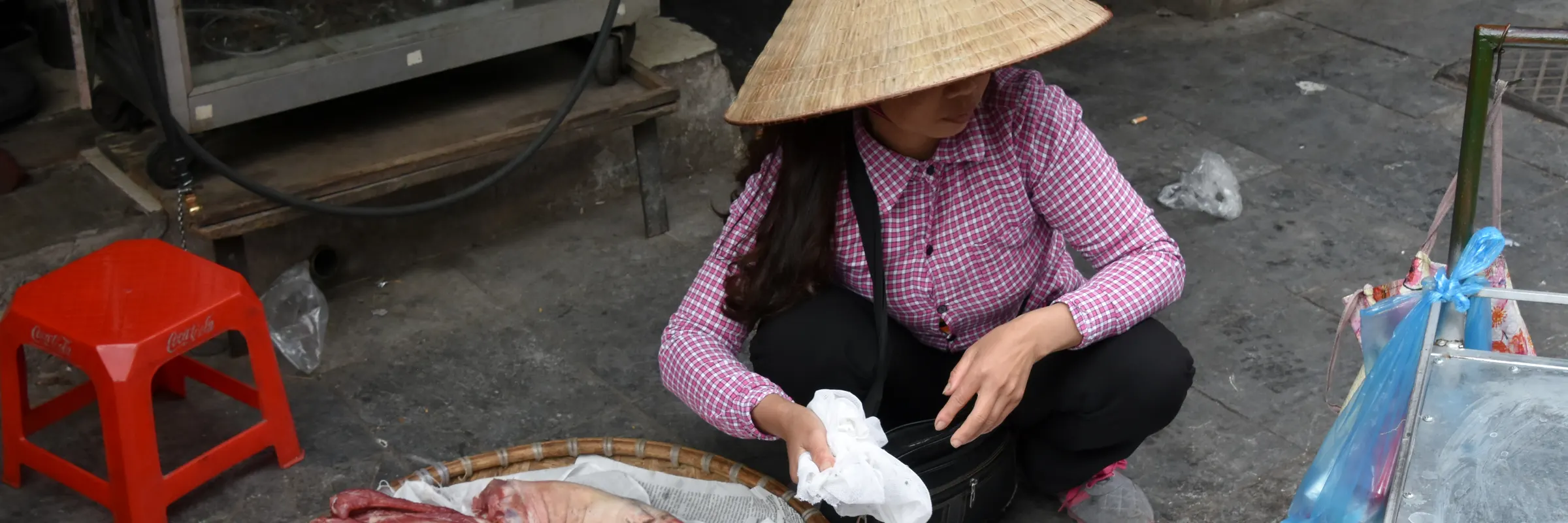
Hanoi: a street in the Old Quarter
Photo: Richard Mortel from Riyadh, Saudi Arabia · CC BY 2.0
Red River Delta, Vietnam

Hanoi: how many days you need and the best months to go

Two things about Hanoi catch people out. The first is the weather: northern Vietnam has four seasons and a damp, grey winter that people who packed for the tropics are not ready for. The second is that the food here runs on a timetable — specific dishes belong to specific hours, and the stall that made the best thing you ate all week will not be there in the afternoon.

Short answers

What people ask before booking

How many days do you need in Hanoi?

Hanoi needs two days for the Old Quarter, the lake and the temples, and a third for Ninh Binh or an overnight in Ha Long Bay. Most trips use it as the base for the north.

What is the best month to visit Hanoi?

October and November — Autumn, which Hanoi is genuinely famous for. March and April — Spring: warm, and the drizzle finally stops.

Which months are worth avoiding in Hanoi?

June, July and August — Hot, very humid and the typhoon season.

How many days Hanoi needs

Two days is enough for the city: the Old Quarter, the lake, the mausoleum and the temple of literature, and two evenings eating. Hanoi's centre is small and dense and most of what you came for is inside a walkable area around one lake.

A third day is for Ha Long Bay or Ninh Binh, and this is where the planning matters. Ha Long is a long day and is much better as an overnight; Ninh Binh — limestone karsts in rice fields, sometimes called the inland Ha Long — is closer, cheaper and can be done properly in a day. Most itineraries use Hanoi as the northern base for both.

How the city is arranged

Hanoi organises itself around a small lake, and the useful mental map is a set of rings out from it. The Old Quarter is a maze north of the lake and the streets there are named after what they used to sell — silk, tin, sugar, sails — which is a thousand years of guild history still legible in the street signs.

  • The Old Quarter — the dense tangle north of Hoan Kiem lake, with the trade-named streets, the street food and most of the cheap accommodation. Loud, cramped and the reason to come.
  • Hoan Kiem lake — the middle of the city, walked around by everyone at dawn. The surrounding streets close to traffic at weekends, which changes the whole area.
  • The French Quarter — south and east of the lake, with the opera house, the wide boulevards and the grander hotels. Calmer and more formal.
  • Ba Dinh — the government district west of the centre, with the mausoleum, the one-pillar pagoda and the Temple of Literature. A morning's worth.
  • Tay Ho (West Lake) — a much larger lake north-west, with the expatriate restaurants, the quieter streets and the sunset that residents go for.

Where to stay, and the noise trade-off

The Old Quarter is where most people stay and it is the right call for a short trip: everything is walkable and the food is at the door. It is also genuinely noisy — scooters start before six, and the bar streets run late at weekends.

The French Quarter is the quieter version of the same location, ten minutes further from the tangle. Tay Ho is a different trip: calmer, greener, and a taxi ride from everything historic.

AreaWho it suitsThe catch
Old QuarterA first visit. The street food, the lake and the markets all on foot.Loud from dawn, and rooms on the bar streets are loud until very late.
French QuarterThe same central position with wider streets, grander hotels and quiet nights.Less street life at the door; you walk ten minutes to the good eating.
Around the lake, west sideWaking up next to the morning exercise crowd, and the weekend car-free streets.The most expensive central beds, and it books out early.
Tay HoSpace, greenery, lake sunsets and the best international food in the city.A taxi ride from the Old Quarter, so you commute to the sights.
Near the stationAn early train south or to Sapa.Nothing there but the train, and the Old Quarter is a short ride anyway.

Crossing the road, and other things nobody explains

Hanoi runs on millions of scooters and the traffic does not stop for pedestrians in the way visitors expect. The technique is counterintuitive and it works: step off the kerb and walk slowly and steadily, without stopping and without running. The riders read your speed and go around you. Hesitating or sprinting is what causes problems, because it makes you unpredictable.

The other practical point is that Hanoi has no metro worth planning around yet — a couple of lines exist — so the city runs on taxis, ride-hailing apps and scooter taxis. The apps work well and remove the fare negotiation entirely.

  • Walk at a constant pace and do not stop mid-road. This is genuine local advice and it is how everyone crosses.
  • Use ride-hailing apps rather than flagging a taxi, which removes both the negotiation and the meter question.
  • The scooter taxi is faster than a car in the Old Quarter and is a normal way to travel, helmet included.
  • Pavements are for parking scooters and for eating, not for walking. You will be in the road much of the time and that is normal.

Day trips, and the Ha Long question

Almost everyone in Hanoi is also going to Ha Long Bay, and the honest advice is that the day trip is mostly a bus: four hours of driving for a few hours on the water. An overnight on a boat is a different experience and is what the place is actually for.

The alternative that visitors underrate is Ninh Binh, two hours south, where the same limestone karsts rise out of rice paddies and you see them from a rowing boat on a river. It works as a day trip in a way Ha Long does not.

  • Ha Long Bay — three to four hours each way. Do it as an overnight cruise or not at all; the day version spends more time on a coach than on a boat.
  • Ninh Binh and Trang An — two hours south, limestone peaks over rice fields, seen from a small rowing boat. The better day trip and a UNESCO site.
  • Bat Trang — a ceramics village on the edge of the city, half an hour out. A half-day and the cheapest excursion here.
  • Perfume Pagoda — a temple complex reached by boat and then a climb, two hours away. Very busy during the spring festival, which moves with the lunar calendar.
  • Sapa — the northern mountains and the rice terraces, an overnight train or a six-hour bus. Not a day trip, and worth two nights if you go.

How eating works here, and why the hour matters

Hanoi's street food runs on a schedule that nobody writes down. A stall exists to sell one dish, and it sells it at the hour that dish belongs to: pho in the morning, bun cha at lunch, snails in the late afternoon, and everything else in its own window. Turning up at three for the thing you read about is how people end up disappointed.

The other convention is the furniture. You eat on plastic stools at knee-height tables, on the pavement, and the good places are the crowded ones with no menu and one thing on the fire. This is not a downmarket option here; it is the main one.

  • Go at the right hour and follow the queue. A stall with a crowd at midday is the recommendation.
  • Pho is a breakfast dish in Hanoi and the version served at night is a different, lesser thing.
  • The northern style is less sweet and uses fewer herbs than the south. If you have eaten in Ho Chi Minh City, this is not the same food.
  • Fresh beer is sold by the glass on street corners in the late afternoon, brewed that morning and cheaper than water.

Where to eat in Hanoi, and what to order

Hanoi is one of the great street food cities and almost none of it happens in restaurants. Eat on a plastic stool, order the one thing the place makes, and go at the hour that dish belongs to. What follows is northern and specific — several of these are Hanoi inventions that the rest of Vietnam does differently or not at all.

  • Phở

    What to order

    Breakfast, and the dish the country is known for

    Flat rice noodles in a clear beef or chicken broth simmered for hours, with spring onion and little else. The northern version is plain on purpose — no pile of herbs, no sauce, no bean sprouts, which is how the south serves it. It is a breakfast dish here and the best bowls are gone by nine.

    Check it on Wikidata
  • Bún chả

    What to order

    Lunch, and the dish that is specifically Hanoi's

    Grilled pork patties and belly in a bowl of sweet-and-sour broth, with cold rice noodles and a basket of herbs you add yourself. It exists at lunchtime and essentially not otherwise. Look for the charcoal smoke on the pavement, which is the signal that a place is making it fresh rather than reheating.

    Check it on Wikidata
  • Cà phê trứng

    What to order

    The drink that was invented here, and why

    Egg yolk whipped with condensed milk into a thick sweet foam, poured over strong coffee. It was invented in Hanoi in the 1940s when milk was scarce, and it tastes closer to a dessert than a drink. Order it hot and drink it with a spoon at first.

    Check it on Wikidata
  • Chả cá Lã Vọng

    What to order

    The dish with a street named after it

    Turmeric-marinated fish, fried at the table with dill and spring onion, eaten with rice noodles and shrimp paste. A street in the Old Quarter is named after the restaurant that has served it since the nineteenth century, which is the strongest recommendation any dish here has. Order it once; the dill is the point.

    Check it on Wikidata
  • Bia hơi

    What to order

    The late afternoon, and the cheapest drink in Asia

    Unpasteurised draught beer brewed that morning and sold by the glass from kegs on street corners from about four o'clock. It has no shelf life, which is why it is drunk the same day and costs almost nothing. Sit on a plastic stool at a junction and watch the traffic; that is the whole activity.

    Check it on Wikidata
  • Bánh mì

    What to order

    The thing to eat walking, at any hour

    A crisp baguette — the one good thing the French left — filled with pâté, cold cuts, pickled carrot and coriander. The northern version is more restrained than the southern one, with less sauce and fewer fillings. Buy it from a cart rather than a shop.

    Check it on Wikidata

When to go, and what each month costs you

Northern Vietnam has four seasons and this is the thing visitors get wrong most often. Hanoi has a real winter — cold, grey and damp, with weeks of drizzle that never quite becomes rain — and a summer that is hot, humid and prone to typhoons coming in off the coast. The two short shoulder seasons are what the city is famous for.

  • October and November

    Go now

    Autumn, which Hanoi is genuinely famous for

    Dry, mild, clear and the single best window of the year. The humidity drops, the light is sharp and the city eats outdoors. Vietnamese literature is full of Hanoi autumns for a reason. Prices and crowds are both at their highest, and it is still the right time.

  • March and April

    Go now

    Spring: warm, and the drizzle finally stops

    The winter damp lifts and the heat has not arrived. Comfortable for walking and good for day trips to Ninh Binh, where the rice is green. Late April can already be hot and humid, so the earlier half of this window is the better one.

  • December, January and February

    Worth it, but

    Winter: cold, grey and nothing like the brochures

    Genuinely cold by tropical standards, with weeks of low cloud and a fine drizzle locals call *mưa phùn*. Bring a proper jacket. Tet, the lunar new year, falls in late January or February and moves each year: the city empties, most family businesses close for several days, and prices and transport both get difficult.

  • May and September

    Worth it, but

    The edges of the hot season

    Hot and increasingly humid in May; hot and wet but easing in September, with the odd late typhoon. Both are cheaper and emptier than the peak windows and both are perfectly workable if you plan mornings and take the afternoons slowly.

  • June, July and August

    Think twice

    Hot, very humid and the typhoon season

    The heaviest heat and humidity of the year, with sudden downpours and the highest chance of a typhoon disrupting travel to Ha Long or Sapa. The city functions and the food is unaffected; walking the Old Quarter in the middle of the day is not pleasant. Boat trips are the thing most likely to be cancelled.

Things that change the trip

  • Pack a warm layer for December to February. Northern Vietnam has a real winter and almost nobody expects it.
  • Eat each dish at its hour. Pho in the morning, bun cha at lunch. The stall you read about will not be there at three in the afternoon.
  • Cross the road slowly and without stopping. Walk at a constant pace and the scooters will go around you; hesitating is what causes accidents.
  • Do Ha Long Bay as an overnight or swap it for Ninh Binh. The day trip is four hours of coach for a short time on the water.
  • Check the dates of Tet before booking. It moves each year, the city shuts for several days, and transport is at its worst.
  • Use ride-hailing apps. They remove the fare negotiation and they work for scooters as well as cars.

Plan Hanoi by the hour

A trip of more than three days, or one that adds Ha Long, Sapa or Hue and the trains and buses between them, is what Premium is for. The free version covers one destination of up to three days.

Destinations