Skip to content
JoruJoru
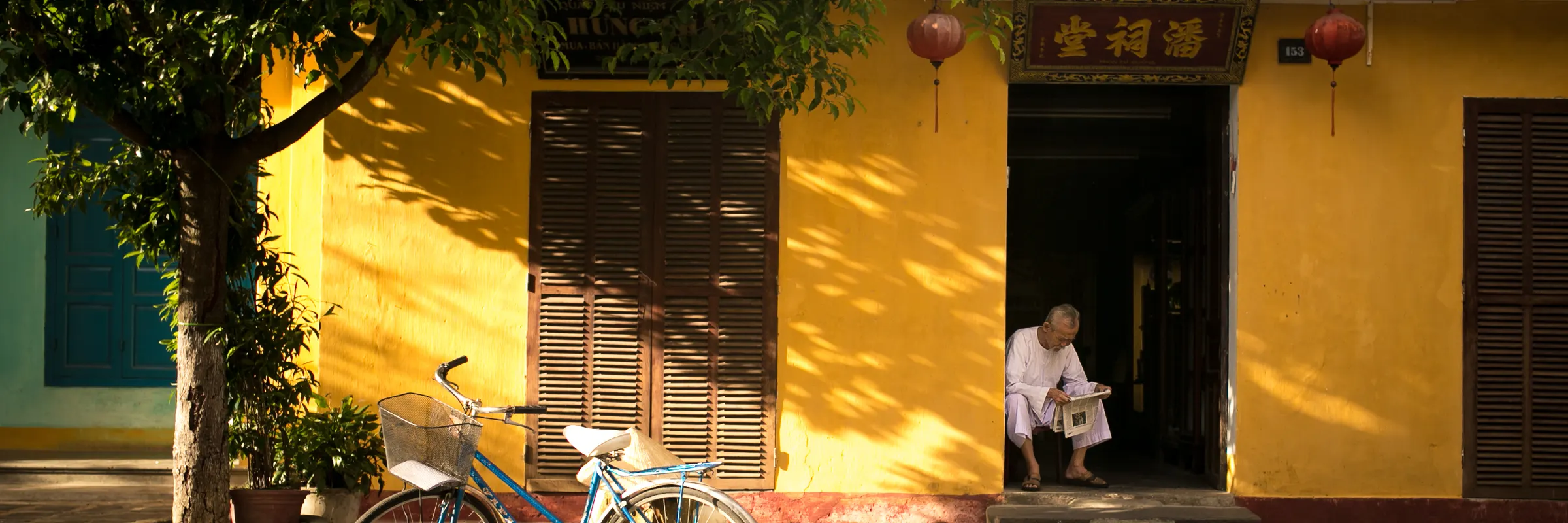
Hoi An: A yellow shopfront and a bicycle in the old town
Photo: Thong Vo, Titi Wanderer · CC0
Quảng Nam, Vietnam

Hoi An: how many days you need and the best months to go

Hoi An was one of Southeast Asia's great trading ports between the 15th and 19th centuries, with Japanese, Chinese, Dutch and Indian merchants living in it. Then the river silted up, the trade moved to Da Nang, and the town simply stopped — which is why the merchant houses are still standing when almost nothing comparable survives elsewhere in Vietnam. It is small, walkable and completely given over to visitors. Two days covers it honestly. Three if you want the beach or the countryside.

Short answers

What people ask before booking

How many days do you need in Hoi An?

Hoi An needs one day for the old town and two to add the beach and the Cham temples at My Son. February to April is the reliable window: October and November are flood season, when the old town goes under water in most years.

What is the best month to visit Hoi An?

February, March and April — Dry, warm and not yet punishing. May — Hot, dry and quieter than the spring.

Which months are worth avoiding in Hoi An?

October and November — Flood season: the old town goes under most years. September — The rains start, and the typhoons with them.

How many days Hoi An needs

One day covers the old town: the Japanese Covered Bridge, three or four merchant houses and assembly halls, the market, and an evening walk when the lanterns come on. It is a few hundred metres across and you will not feel short of time.

Two days is the right number, and the second one is for what is around the town rather than in it. An Bang beach is fifteen minutes by bicycle; the rice fields and the vegetable village of Tra Que are the same distance in the other direction; and the My Son sanctuary, a Cham temple complex from between the 4th and 14th centuries, is about an hour away and is the one genuine excursion. A third day makes sense if you are having clothes made, because that needs fittings.

Why the town is still standing

Between roughly the 15th and 19th centuries this was a major port on the maritime silk route, and the merchant communities that settled here built in their own styles — which is why there is a covered bridge attributed to the Japanese community, Chinese assembly halls by province of origin, and shophouses that mix all of it.

Then the Thu Bồn river silted up and ships could no longer reach the town. Trade moved north to Da Nang under the French, and Hoi An became a backwater for the better part of two centuries. Nothing was demolished because nothing was built: the town was too poor and too irrelevant to redevelop, and it came through the wars of the twentieth century largely untouched. It is a UNESCO World Heritage site precisely because economic failure preserved it, which is worth holding in mind while walking around it.

  • Japanese Covered Bridge — an 18th-century roofed bridge with a temple built into it, and the image on the banknote.
  • Merchant houses — Tan Ky and Phung Hung are the ones to enter: two-hundred-year-old timber, still lived in by the same families.
  • Assembly halls — built by Chinese communities by home province, and the most elaborate buildings in town.
  • My Son — Cham brick temples in a jungle valley an hour away, bombed in the war and partly restored. Go early, before the heat.
  • An Bang beach — fifteen minutes by bike. The reason two days here beat one.

The flooding, and why it is not a rumour

This is the most important planning fact about Hoi An and most guides mention it in passing. The old town sits on a river at almost sea level, and in most years it floods — sometimes to knee height in the streets by the water, occasionally far higher. The season is roughly October and November, following the northeast monsoon and the typhoons that reach central Vietnam.

It is not an emergency and the town is entirely used to it: businesses lift their stock, boats appear in the streets, and the water goes down. But shops close, the riverside restaurants shut, My Son can become unreachable and a two-day visit can lose both days. If your dates are fixed in that window, plan the trip so that Hoi An is not the part you cannot afford to lose. If they are not fixed, avoid it.

The ticket system, and how it actually works

The old town charges a single entry ticket that covers a set number of heritage sites — you buy one ticket and it contains a fixed number of coupons, each of which admits you to one house, hall, museum or the bridge. Walking the streets is free; entering the buildings is not, and the ticket is checked at the doors rather than at the edge of the town.

Two things follow from that. Choose your sites rather than wandering into the first ones you pass, because the coupons run out and the buildings are not of equal interest — the merchant houses and one or two assembly halls are worth more than the small museums. And keep the ticket: it is valid over several days, so a two-day visit does not need two tickets.

The tailoring, and the honest version of it

Hoi An has hundreds of tailors and the promise of a suit in twenty-four hours is what many people come for. The quality range is enormous and the timeline is the main variable: twenty-four hours is possible and it is not how you get something good. Two or three days with at least two fittings is the realistic minimum for anything you will actually wear at home.

What matters more than the shop is the process. Ask what the fabric is and where it comes from, agree the price before anything is cut, and insist on a second fitting rather than accepting the first. Bring a garment you already like as a reference — it communicates far better than a photograph. And be realistic: this is competent, fast, inexpensive tailoring, not Savile Row, and the shops that promise otherwise are the ones to distrust.

Getting there, and the practical bits

Hoi An has no airport and no train station. You arrive via Da Nang, forty-five minutes north, which has both — an international airport and a stop on the north-south railway. The road between them runs along the coast and a taxi or a booked car is the normal way to do it.

Two practical points. The old town is closed to cars and, at certain hours, to motorbikes, which is why it feels the way it does; a bicycle is the right vehicle for everything outside it and most accommodation lends them. And the beach and the town are two separate decisions: staying in the old town puts you in the middle of the evening crowd, staying at An Bang puts you fifteen minutes away from it with a beach outside the door.

What to eat in Hoi An, and where

This is one of the best-eating towns in Vietnam and the reason is unusually specific: several of its dishes exist here and essentially nowhere else, including one that traditionally depends on water from particular wells in the town.

  • Cao lầu

    What to order

    The dish that exists only here

    Thick chewy noodles with slices of pork, herbs and crisp croutons, in a very small amount of dark broth rather than a soup. Tradition holds that the noodles must be made with water from specific ancient wells in the town and ash from a particular island, which is why it does not travel. Nowhere else in Vietnam serves it properly; order it on the first day.

    Check it on Wikidata
  • Bánh mì

    What to order

    The best cheap lunch in the country

    A baguette — the lasting French contribution — split and filled with pâté, cold cuts, pickled carrot and daikon, coriander, chilli and a sauce that varies by stall. Central Vietnam does it particularly well and Hoi An has two or three famously good stands. It is a street dish; the version served in restaurants is worse and costs more.

    Check it on Wikidata
  • Bánh bao bánh vạc

    What to order

    The dumpling made by one family

    Translucent rice-flour dumplings filled with shrimp or pork, shaped to look like a flower and topped with fried shallot, known in English as white roses. They are made by a single extended family in the town who supply nearly every restaurant that serves them, which is why they taste the same everywhere. Order once, in the town.

    Check it on Wikidata
  • Mì Quảng

    What to order

    The dish of the province, not the town

    Wide yellow rice noodles with a small amount of intense broth, turmeric, peanuts, rice crackers and a pile of herbs, from Quảng Nam province rather than Hoi An itself. The distinction matters when ordering: it is the everyday lunch of the whole region and it is not a soup, despite arriving in a bowl. Mix everything together before eating.

    Check it on Wikidata
  • Casco antiguo de Hoi An

    Where to look

    The old town, and what the ticket covers

    A few hundred metres of timber shophouses, assembly halls and a covered bridge, preserved because the port silted up and the money left. A single ticket contains a fixed number of coupons, each admitting you to one building; the streets themselves are free. It is valid across several days, so keep it.

    Check it on Wikidata

When to go, and what each month costs you

Central Vietnam does not follow the same calendar as Hanoi or Saigon, which is the trap. The rains here arrive in autumn, not summer, and October and November are when the town floods. February to April is the reliable window.

  • February, March and April

    Go now

    Dry, warm and not yet punishing

    The best stretch of the year by a distance: dry days, warm rather than hot, low humidity and the sea calm enough to swim. Everything is open and nothing is flooded. Tết, the lunar new year, falls in late January or February and moves each year — the town is decorated and lively, but many businesses close for several days around it.

  • May

    Go now

    Hot, dry and quieter than the spring

    Still dry and now properly hot, with the beach at its best and fewer visitors than in the spring months. The old town is uncomfortable in the middle of the day, which is what the bicycle and the beach are for. Good value, and the last month before the real heat.

  • June, July and August

    Worth it, but

    Peak heat, peak domestic season, and the beach

    Hot and humid, with occasional short storms, and the busiest months for Vietnamese holidaymakers. The beach is the point now; the old town is a morning-and-evening activity. Prices rise and the coast is full. Perfectly workable if you plan around the middle of the day.

  • January

    Worth it, but

    Cool and grey, with the rains ending

    The tail of the wet season: cooler than most people expect, often overcast, with the sea too rough for swimming and rain still possible. The flooding risk has largely passed, which is the main thing. Quiet and cheap, and the old town is pleasant to walk in cool weather.

  • December

    Worth it, but

    The wet season easing, but not over

    Rain is receding and the worst flooding is normally behind, but it is still damp, grey and cool by Vietnamese standards. Late December brings a price bump over the holidays. A reasonable gamble, and much better odds than the two months before it.

  • October and November

    Think twice

    Flood season: the old town goes under most years

    The northeast monsoon and the typhoon season arrive together, and the old town floods in most years — streets by the river under water, shops shut, boats where the pavement was. It recedes, but a short visit can lose everything. This is the clearest avoid window on the Vietnamese coast.

  • September

    Think twice

    The rains start, and the typhoons with them

    Still hot and now increasingly wet, with the first typhoons reaching central Vietnam and heavy rain building through the month. Boat trips and My Son start becoming unreliable. Cheap, and the beginning of the two months you actually want to avoid.

Things that change the trip

  • Do not book October or November if you can help it. The old town floods in most years and a short trip can lose both days.
  • Buy one heritage ticket and choose your buildings. The coupons are limited and the merchant houses are worth more than the small museums.
  • Allow two or three days and two fittings for tailoring. A twenty-four-hour suit is possible and it is not how you get a good one.
  • Stay at An Bang beach if you want quiet, in the old town if you want the evening. They are fifteen bicycle minutes apart.
  • Arrive via Da Nang, forty-five minutes north — Hoi An has no airport and no station of its own.
  • Eat cao lầu on the first day. It is made here and nowhere else, and it is the reason this town is worth a food stop at all.

Plan Hoi An and central Vietnam

A trip that combines Hoi An with Da Nang, Hue and the Hai Van pass, or that runs the length of Vietnam — with the flood season, the train times and Tết's moving dates worked out around it — is exactly what Premium is for. The free version covers one destination for up to three days.

Destinations