


Skip to content
JoruJoru
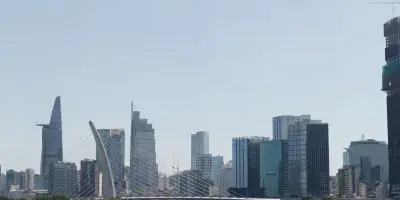
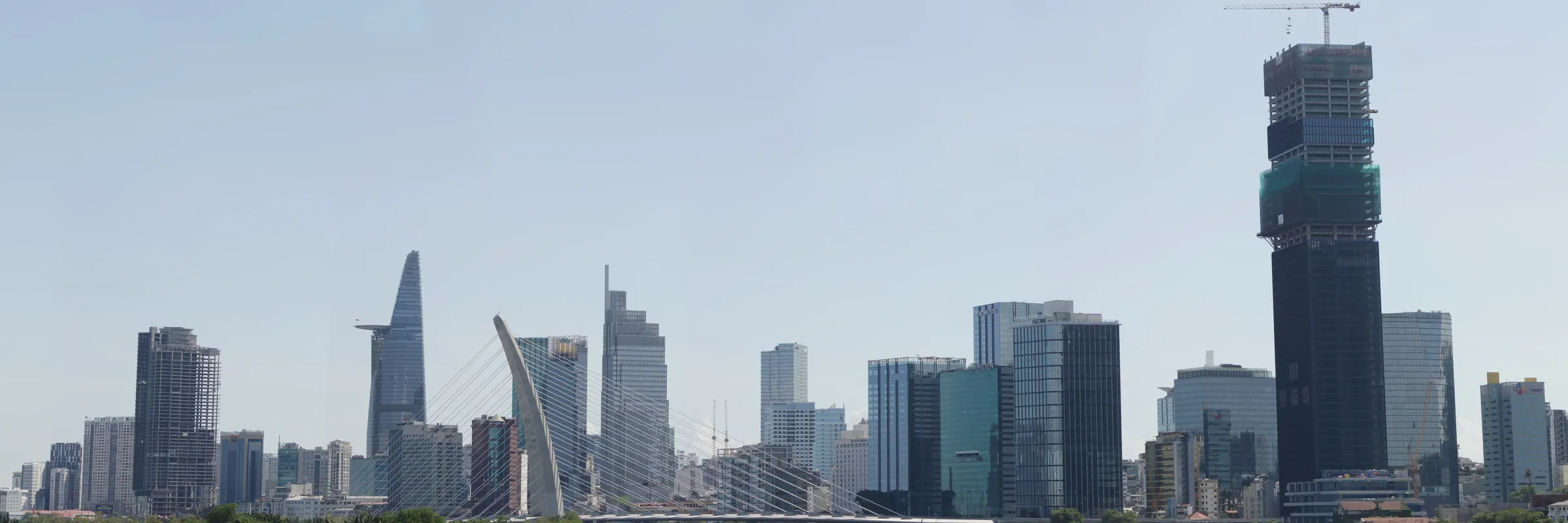
Ho Chi Minh City: the skyline over the Saigon river
Photo: Pimnl · CC0
Ho Chi Minh City, Vietnam

Ho Chi Minh City: how many days you need and when to go

The city was renamed in 1976 and the old name never left: the central district is Saigon in conversation, on shop signs and in the name of the river. What you get is a place organised for work rather than for visitors — a colonial core, a Chinatown older than the French, a museum about the war that is genuinely hard to walk through, and several million motorbikes moving through all of it. Two days covers the sights. The food is the reason to give it three.

Short answers

What people ask before booking

How many days do you need in Ho Chi Minh City?

Ho Chi Minh City needs two days for the centre — the war museum, the palace, the colonial cluster and one street of food — and a third for Chợ Lớn or the Củ Chi tunnels.

What is the best month to visit Ho Chi Minh City?

December, January and February — The dry months, and the only ones that feel mild. November — The rain has stopped and the crowds have not arrived.

Which months are worth avoiding in Ho Chi Minh City?

May and June — The rains begin, and the humidity with them. July, August and September — The wettest stretch of the year.

How many days Ho Chi Minh City needs

Two days covers the centre properly: the war museum and the Reunification Palace in one block of time, the colonial buildings and the market, and an evening eating along one street. That is the honest minimum and it works.

A third day is worth having, and it goes one of two ways. Either you spend it out of town — the Củ Chi tunnels or a run at the Mekong Delta — or you spend it in Chợ Lớn and the food streets, which is the version most people wish they had chosen. Beyond three days the city repeats itself unless you are working here.

How the districts work, and why they are numbered

The city is divided into numbered districts plus a few named ones, and the numbers are not arbitrary: District 1 is the colonial centre and almost everything a visitor comes for is inside it or one district away. Learn three numbers and the map stops being confusing.

The other thing worth knowing early is that the city is flat, hot and wide. Distances that look walkable are walkable, but at midday almost nobody walks them, and ride-hailing on the back of a motorbike is the normal local answer.

  • District 1 — the centre. The palace, the cathedral, the post office, the market, the river and most hotels. Everything is within a long walk of everything else.
  • District 3 — next door, quieter, with the tree-lined streets, the older cafés and a food scene aimed at residents rather than visitors.
  • District 5, Chợ Lớn — the Chinatown, and the largest in Vietnam. Temples, wholesale markets and a street grid that predates the French city.
  • Bình Thạnh and District 2 — where the newer towers and the expatriate cafés are, across the canal and the river. Useful for a different view of the city, skippable on a short trip.
  • Phạm Ngũ Lão — the backpacker quarter in District 1, loud until very late. Great for logistics, difficult for sleeping.

Where to stay, and what each area costs you

Almost everyone stays in District 1, and for a two-day trip that is the right answer — the walkable sights are there and so are the buses and vans for the day trips. The real decision is how close you want to be to the noise, because parts of District 1 do not go quiet at any hour.

The airport is unusually close to the centre, which is a small thing that changes an arrival: there is no long transfer at either end of the trip.

AreaWho it suitsThe catch
District 1, centreFirst visit. The palace, the museum, the market and the river all on foot.The most expensive part of the city and the most aggressively touristed.
Phạm Ngũ LãoCheap beds, tour operators, late food and easy transport to everywhere.Bar noise runs past bedtime; the street is a party rather than a neighbourhood.
District 3Quiet streets, older cafés and restaurants that residents actually use.Ten minutes from the sights, so every outing starts with a ride.
District 5, Chợ LớnTemples, markets and the most distinctive food in the city.Far from the colonial centre and the least English-speaking part of the trip.
Thảo Điền, District 2Riverside, green, quiet, and comfortable if you are staying a while.A different city entirely; a long ride from anything on a two-day itinerary.

Crossing the street, and other things nobody explains

The motorbikes are the first thing everyone notices and the first thing that stops the day. The technique is counter-intuitive and it works: step off the kerb and walk at a slow, constant speed without stopping. Traffic flows around you and predicts where you will be. Stopping, running or stepping back is what causes the problem, because it breaks the prediction.

The second thing is the money. Vietnamese notes carry a lot of zeros and several denominations are printed in similar colours, so the common mistake is not being cheated but paying with the wrong note. Count in units of ten thousand and check the number of digits.

  • Walk slowly and do not stop. Look at the traffic coming towards you, keep the pace even, and let it flow around you.
  • Use a ride-hailing app rather than hailing anything. The price is fixed before you get in and the meter argument disappears.
  • Keep your phone away from the road side of the pavement. Snatching from a passing motorbike is the one crime visitors reliably meet.
  • Check the zeros. Two notes that look alike can differ by a factor of ten, and that is the mistake, not a scam.

The war sites, and the order to see them in

The city holds the Vietnamese account of a war that most visitors learned about somewhere else, and it does not soften it. The War Remnants Museum is the one that matters, and it is genuinely distressing — the photojournalism floor and the section on chemical defoliants are not something to walk into casually at the end of a long day.

The Reunification Palace pairs with it: the seat of the South Vietnamese government, preserved as it was, with the war rooms in the basement and a tank at the gate. Together they take a morning and explain the city better than anything else in it.

  • Do the museum in the morning, when you are fresh, and leave something light after it.
  • The Củ Chi tunnels are a half-day at minimum with the ride out, and the tunnels are narrow in a way photographs do not convey.
  • The colonial buildings sit in one cluster — the post office, the cathedral, the opera house and the old city hall are minutes apart.
  • The cathedral has been in a long restoration, so check whether the interior is open before building a morning around it.

The Mekong Delta, and whether to bother

Every agency in the backpacker quarter sells a Mekong day trip, and the cheap ones follow an identical route: a bus, a boat, a coconut-candy workshop, a rowing boat through a canal, lunch, a bus back. It is a long day for a short amount of river, and the nearest delta town is a couple of hours out.

The alternative is to stay a night. Cần Thơ, deeper into the delta, has the floating markets that the day trips are pretending to show you, and they happen early in the morning — which is precisely when a day tour from Saigon has not arrived yet.

What to eat in Ho Chi Minh City, and where

This is a street-food city before it is a restaurant city, and the best things in it are sold from a cart, a doorway or a plastic stool on the pavement. The southern kitchen is sweeter and herbier than the north's, and the dishes below are the ones Saigon is actually known for — phở is a northern dish that everyone here also sells.

  • Bánh mì

    What to order

    The colonial leftover that became the national snack

    A short baguette — light and airy because of the rice flour in the dough — split and filled with pâté, cold cuts, pickled carrot and daikon, coriander and chilli. It is the clearest thing the French left behind and the Vietnamese improved, and the best versions come from a cart with one filling and a queue.

    Check it on Wikidata
  • Cơm tấm

    What to order

    The Saigon plate you will not find up north

    Broken rice — grains fractured during milling, once sold cheap because they were considered seconds — under a grilled pork chop, with pickles, a fried egg and a shallot-oil dressing. This is the southern breakfast, eaten early and quickly, and it is the single most Saigonese thing on any menu.

    Check it on Wikidata
  • Bún bò Huế

    What to order

    The soup that is not phở, and is often better

    A beef and lemongrass noodle soup from the old imperial capital, spicier and more assertive than phở, with round noodles instead of flat ones and a broth built on shrimp paste. Order it if you think you already know Vietnamese noodle soup; it will correct you.

    Check it on Wikidata
  • Cà phê sữa đá

    What to order

    Iced coffee with condensed milk, and why

    Vietnam is the world's largest producer of robusta, and robusta is strong and bitter — so it is brewed slowly through a metal filter over condensed milk and poured onto ice. The condensed milk is not a garnish but a workaround: fresh milk was scarce when the habit formed, and the drink kept the substitute. Egg coffee is a Hanoi thing, not here.

    Check it on Wikidata
  • Bến Thành Market

    Market

    The landmark market, and how to use it

    The covered market at the heart of District 1, built by the French and now the most photographed building in the city. Prices inside are set for visitors and bargaining is expected — treat it as a place to see rather than to shop, and eat at the food stalls at the back, which are better than the souvenir aisles suggest.

    Check it on Wikidata
  • Chợ Lớn

    Where to look

    Where to eat when the centre starts repeating

    The Chinese quarter west of the centre, older than the French city and still the wholesale heart of the region. The food here is Cantonese and Teochew as much as Vietnamese — noodles, roast meats, herbal soups — and the temples between the markets are the quietest places in the city.

    Check it on Wikidata

When to go, and what each month costs you

There is no cool season here, only a dry one and a wet one. The city sits close enough to the equator that the temperature barely moves all year; what changes is the rain and the humidity, and the rain, when it comes, arrives in the afternoon, falls very hard and stops.

  • December, January and February

    Go now

    The dry months, and the only ones that feel mild

    The driest and least humid stretch of the year, with clear days and evenings that are genuinely pleasant outdoors. This is peak season and the city knows it. Lunar New Year falls somewhere between late January and mid-February and moves every year — around it much of the city closes for several days, and that is covered below.

  • November

    Go now

    The rain has stopped and the crowds have not arrived

    The wet season is ending, the air has cleared, and the high-season prices have not started. Occasional late showers are still possible and they are brief. The best value window of the year for this city.

  • March and April

    Worth it, but

    Dry and getting seriously hot

    Still dry, still bookable, and noticeably hotter each week — April is the hardest month of the year for walking around at midday. Plan the outdoor half of the day early, the museums for the afternoon, and expect to be slower than you think.

  • October

    Worth it, but

    The wet season winding down, and cheap

    Rain is still likely but shorter and less daily than in the peak of the monsoon, and prices are at their lowest. Perfectly workable if the itinerary tolerates an interrupted afternoon.

  • May and June

    Think twice

    The rains begin, and the humidity with them

    The monsoon arrives and the heat does not leave, which is the worst combination the city offers. Afternoons are unreliable and the humidity makes the walking dense. It is cheap, and it is a genuinely uncomfortable way to see a city that is best on foot.

  • July, August and September

    Think twice

    The wettest stretch of the year

    The core of the wet season, with heavy daily downpours and street flooding in the low-lying districts after a hard rain. Prices are the lowest of the year and the food is unaffected. Everything outdoors becomes a negotiation with the sky.

Things that change the trip

  • Cross by walking slowly and never stopping. The traffic reads your speed and flows around it; hesitating is what breaks it.
  • Check the number of zeros when you pay. Similar-looking notes differ by a factor of ten, and that is the usual mistake.
  • Lunar New Year moves between late January and mid-February, and much of the city shuts for several days around it. Check the year before booking.
  • Do the War Remnants Museum in the morning. It is heavier than most people expect and it should not be the last thing in a day.
  • Use a ride-hailing app rather than flagging a taxi. The fare is agreed before you get in, and the motorbike option is faster in traffic.
  • Eat where the plastic stools are full. High turnover is the entire quality-control system in a street-food city.

Plan Ho Chi Minh City properly

A trip beyond three days, or one that adds the Mekong Delta, Hanoi or the coast with the transport between them, is exactly what Premium is for. The free version covers one destination of up to three days.

Destinations