

Skip to content
JoruJoru
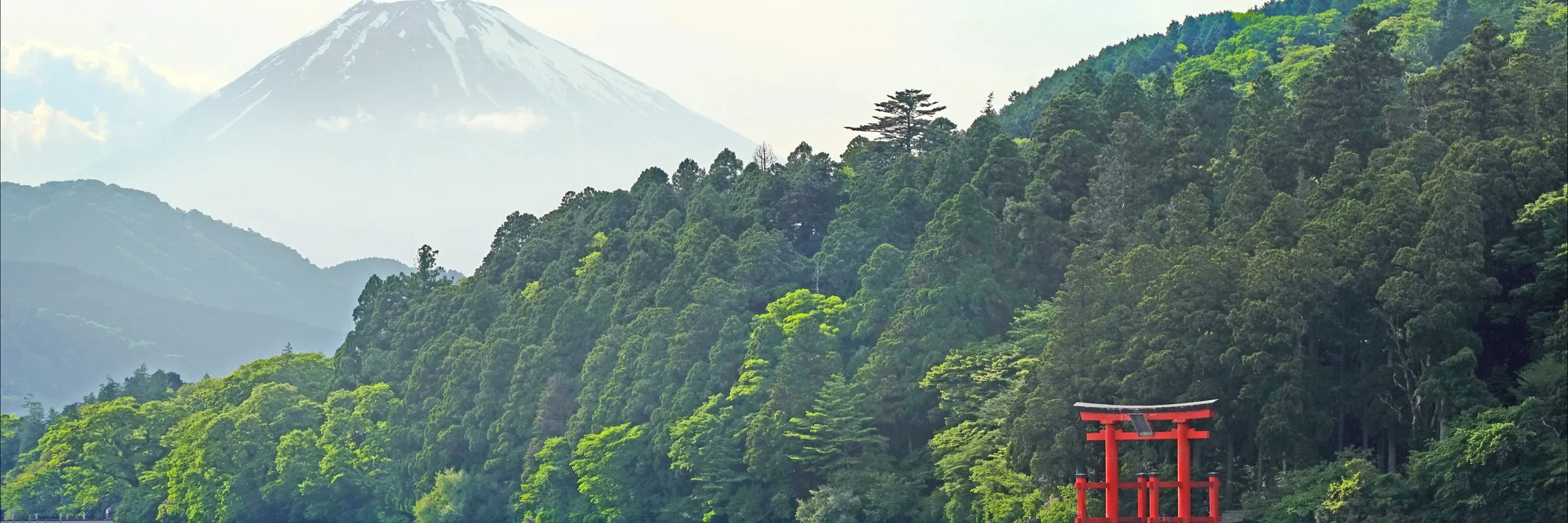
Hakone: Mount Fuji behind Lake Ashi, with the red gate of Hakone Shrine in the water

Kanagawa, Japan

Hakone: how many days you need and the best months to go

Photo: Jean-Pierre Dalbéra from Paris, France · CC BY 2.0

Hakone is where Tokyo goes to bathe. It is less a town than a district of hot-spring villages scattered through the old crater of a volcano, with steam still rising from one of its valleys and a lake in the middle that, on a clear day, holds Mount Fuji. What makes it a planning problem is the shape of the visit: a circuit of six kinds of transport that is beautiful, slow and crowded, and that most people try to do in a day trip from Tokyo. It works far better with a night in an inn in between, and with an eye on the weather, because the mountain that everyone comes to see hides behind cloud more often than not.

Short answers

What people ask before booking

How many days do you need in Hakone?

Hakone needs one night: the loop by mountain railway, cable car, ropeway and boat across Lake Ashi takes most of a day, and the night in an inn with a hot-spring bath is the point of coming. Add a second night for the museums and the old highway. Mount Fuji shows most often from late autumn to winter.

What is the best month to visit Hakone?

October and November — Silver grass, autumn colour and clearer views. April and May — Cherry blossom, then fresh green.

Work out how many hours you will have in Hakone on your dates
When to go, and what each month costs you

Hakone is in the mountains, and wetter and cooler than Tokyo, with mist in summer and frost in winter. Mount Fuji shows most often in the clear air of late autumn and winter, and hides most in the humid months. Weekends and Japanese holidays bring the crowds in every season.

  1. January: Worth it, but
  2. February: Worth it, but
  3. March: Worth it, but
  4. April: Go now
  5. May: Go now
  6. June: Worth it, but
  7. July: Worth it, but
  8. August: Worth it, but
  9. September: Worth it, but
  10. October: Go now
  11. November: Go now
  12. December: Worth it, but
  • October and November

    Go now

    Silver grass, autumn colour and clearer views

    The silver grass of Sengokuhara is at its finest in October, and in November the maples turn from the top of the district down. The air clears through the autumn, so Fuji appears on more and more mornings. Weekends are crowded and the mountain roads jam; come on a weekday if you can.

  • April and May

    Go now

    Cherry blossom, then fresh green

    Cherry trees bloom at different times at different heights, from early April at the bottom to later higher up, and the dates move every year. May is green and mild. The long holidays at the start of May fill every inn, so book well ahead for those days.

  • June and July

    Worth it, but

    Hydrangeas on the mountain railway, and rain

    The rainy season brings rain on many days, and Fuji is almost never visible. In exchange, hydrangeas flower along the mountain railway from June into July, and the trains are full of people coming to see them. The baths are at their best in the rain.

  • August and September

    Worth it, but

    Cooler than Tokyo, and typhoon season

    Warm days that are cooler than the city, which is why Tokyo comes here in August, and the Obon holiday in mid-month fills everything. September is the peak of the typhoon season, which can close the mountain railway, the ropeway and the boats. The silver grass of Sengokuhara comes into plume at the end of the month.

  • December to March

    Worth it, but

    Cold, clear and the best season for Fuji

    Cold, with frost and occasional snow higher up, which can close roads for a day. The clearest air of the year makes this the best season to see Fuji, and the baths are never better than on a cold night. The university relay race on the second and third of January closes the main road, and the ropeway often stops for planned maintenance in winter.

What to pack for Hakone, month by month

How many days Hakone needs

One night is the right length for most trips. Arrive in the morning, ride the loop up through the mountains and across the lake in the afternoon, sleep in an inn with a hot-spring bath, and use the next morning for a museum, the old road or the shrine on the lake before going back to Tokyo. The loop alone takes most of a day once the queues are counted.

A day trip from Tokyo is possible and is what most visitors do, but it means doing the loop at the busiest hours and leaving just as the day-trippers' crowds thin out. A second night turns Hakone into a rest: the museums, a walk on the old highway and the baths, without watching the clock.

How the district is arranged

Hakone is spread across a ring of mountains around a crater. The villages climb from the river valley in the east up to the lake in the south-west, and the transport follows them: a mountain railway up the valley, a cable car up the slope, a ropeway over the ridge and the volcanic valley, and boats across the lake.

  • Hakone-Yumoto — the gateway at the bottom, where the trains from Tokyo arrive: a busy hot-spring town with shops and day baths.
  • Miyanoshita and Gōra — the middle villages on the mountain railway: old hotels, the open-air museum and the start of the cable car.
  • Ōwakudani — the volcanic valley at the top of the ropeway, with sulphur vents, steam and eggs boiled black in the hot springs.
  • Lake Ashi — the crater lake, crossed by sightseeing boats between Tōgendai in the north and Moto-Hakone and Hakone-machi in the south.
  • Sengokuhara — the high plain in the north, with fields of silver grass in autumn and several museums.

Where to stay, and what each area costs you

Staying in Hakone means staying in a ryokan or a hotel with its own baths, and much of the price is the bath and the dinner. Choose the village by what you want outside the window: the lake and the mountain, or easy trains back to Tokyo.

Weekends and Japanese holidays fill the inns and raise their prices; a weeknight is calmer and cheaper. Many inns have private baths that can be reserved, which matters if anyone in the group has tattoos, since many shared baths refuse them.

AreaWho it suitsThe catch
Hakone-YumotoShort stays and late arrivals: the trains from Tokyo stop here, and there are shops, restaurants and day baths.The busiest and least scenic village, at the bottom of the valley and far from the lake.
Miyanoshita and GōraThe middle of the loop: historic hotels, the open-air museum and the cable car on the doorstep.Steep streets, and the mountain railway is packed at weekends.
Lake Ashi (Moto-Hakone and Hakone-machi)The lake, the shrine, the old highway and, on clear mornings, Mount Fuji from the window.The end of the loop: far from the trains, and the evening is quiet with little choice of restaurants.
SengokuharaQuiet inns and resort hotels on the high plain, with the museums nearby.Only buses serve it, and they are slow and crowded on busy days.

Compare these areas against your priorities

Getting there, and the loop

Two routes link Tokyo with Hakone. The private Odakyū line runs from Shinjuku to Hakone-Yumoto, with a limited express whose seats are reserved; or the bullet train reaches Odawara in about half an hour from Tokyo Station, and from there a local train or bus continues up. A multi-day pass from the Odakyū railway covers the trip from Shinjuku and almost every part of the loop, and usually pays for itself.

The loop is the trip. Mountain railway from Hakone-Yumoto to Gōra, climbing through switchbacks; cable car to the top of the slope; ropeway over the ridge to Ōwakudani and down to the lake; sightseeing boat across Lake Ashi; and bus back down to Hakone-Yumoto. It can be ridden in either direction.

  • Send your luggage ahead. A baggage service at Hakone-Yumoto station delivers bags to inns across the district, so you can ride the loop without them.
  • The ropeway stops when the volcano is restless, and for maintenance, with buses replacing it. Check its status the day before.
  • Ride the loop against the flow. Most people go up from Yumoto in the morning; starting at the lake, or starting early, avoids the worst of the queues.
  • Driving is not worth it on a weekend: the mountain roads jam, and the car parks at the sights fill.

The lake, the volcano and the mountain that may not appear

Mount Fuji is the image of Hakone, and it is visible far less often than the posters suggest. In summer it is usually hidden by haze and cloud; in late autumn and winter the air is clearer and the mountain shows most mornings. If it matters, look early in the day, and keep a second morning in reserve.

  • Hakone Shrine — a shrine in the cedar forest on the lake shore, with a red gate standing in the water that is the most photographed spot in the district. Go early: the queue for the photo at the gate grows through the day.
  • Ōwakudani — the valley of steam and sulphur, reached by ropeway. The eggs boiled black in the springs are said to add years to your life. Access closes when volcanic activity rises.
  • The open-air museum — sculpture in a mountain park, with a pavilion of Picasso's works. The best museum in the district for children and adults alike.
  • The old Tōkaidō highway — a stone-paved stretch of the old road between Edo and Kyoto, through cedars, with a centuries-old teahouse on the way and the reconstructed checkpoint by the lake at the end.
  • The art museums — several, in the woods and on the plain of Sengokuhara: Japanese and European painting, glass, and a museum whose windows frame Fuji across the lake.

Baths, inns and how eating works here

An inn in Hakone is dinner, bath and breakfast, and the dinner is many small courses served at a time agreed when you check in, often in your room or in a private dining room. Restaurants outside close early, especially at the lake, so the inn's dinner is usually the evening's plan.

The baths have their own rules, the same in every inn: wash and rinse at the taps before getting in, never take a towel into the water, and keep your hair out of it. Many baths refuse tattoos; private baths for hire are the answer, and many inns have them.

  • Day baths are an option without staying the night. Hakone-Yumoto has several large ones, a short walk or bus ride from the station.
  • Lunch on the loop needs planning. Restaurants near the busy stops have queues at midday; eat early, or carry something from Yumoto.
  • The specialities are simple: soba made with the local water, the black eggs at Ōwakudani, and fish and fish cakes from the coast at Odawara.
  • Tipping is not done, even at the most expensive inn.

Where to eat in Hakone, and what to order

Hakone is not a food destination in itself: most visitors eat the inn's dinner, and that is the right choice. What is worth seeking out is simple and local: buckwheat noodles, the black eggs of the volcano, the fish cakes of Odawara on the way in, and lunch in the dining room of a hotel that has fed visitors since the nineteenth century.

  • Ōwakudani

    Where to look

    The snack the volcano cooks

    Eggs boiled in the hot springs of Ōwakudani, whose iron and sulphur turn the shells black; the inside is an ordinary boiled egg. Tradition says each one adds seven years to your life, and they are sold in bags at the top of the ropeway. It is the one souvenir everyone eats on the spot.

    Check it on Wikidata
  • Soba

    What to order

    A light lunch on the loop

    Buckwheat noodles, served cold with a dipping sauce or hot in broth. The mountain water of Hakone is the local claim, and the soba shops of Hakone-Yumoto and along the loop are the quickest good meal of the day. Go before noon: at lunchtime the known shops have queues.

    Check it on Wikidata
  • Kamaboko

    What to order

    Odawara's fish cakes, on the way in

    Steamed cakes of white fish paste, shaped on a small wooden board and sold whole on it, white or with a pink rim. Odawara, at the foot of the mountains, is one of the places in Japan most famous for them, and its old shops are near the station where the trains for Hakone leave. Buy them as a snack for the loop or as a gift.

    Check it on Wikidata
  • Fujiya Hotel

    Institution

    Lunch in the dining room of a Meiji-era hotel

    A Western-style hotel opened in Miyanoshita in 1878 for foreign visitors, among the oldest resort hotels in Japan, with a carved wooden dining room. Its restaurant and café are open to people who are not staying, and its curry and its pies have been on the menu for generations. Book lunch at weekends; it is the most comfortable pause on the loop.

    Check it on Wikidata

Things that change the trip

  1. Stay one night. A day trip means the loop at its busiest and no time in the baths.
  2. Send your bags from Hakone-Yumoto to the inn and ride the loop without them.
  3. Look for Fuji in the morning, and keep a second morning in reserve if it matters to you.
  4. Check the ropeway the day before: it stops for volcanic activity, wind and maintenance.
  5. Come on a weekday. Weekends and holidays fill the trains, the boats and the inns.
  6. If anyone in your group has tattoos, book an inn with a private bath.

Plan Hakone around Tokyo

A trip of more than three days, or one that joins Tokyo, Hakone, Kamakura or Mount Fuji's lakes with the trains between them, is what Premium is for. The free version covers one destination of up to three days.

Destinations