

Skip to content
JoruJoru
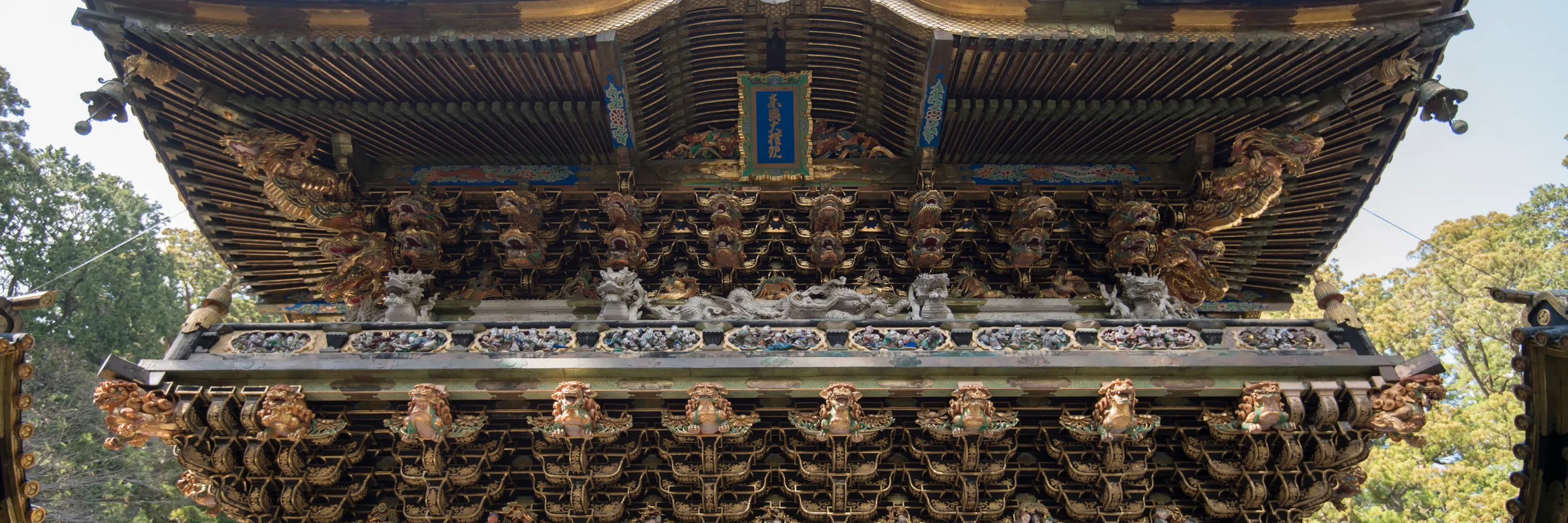
Nikko: The carved and gilded Yōmeimon gate of Tōshō-gū

Tochigi, Japan

Nikko: how many days you need and the best months to go

Photo: Maarten Heerlien from Voorschoten, The Netherlands · CC BY 2.0

Nikko is where the first of the shoguns who ruled Japan for two and a half centuries chose to be buried, and his grandson spared nothing to honour him. The mausoleum is a complex of gates and halls covered in carving, lacquer and gold, set in a forest of giant cedars. It is a short train ride from Tokyo and most visitors give it a day. The planning problem is that Nikko is two places at two heights: the shrines in the valley at the edge of the town, and above them, up a road of hairpin bends, a lake, a great waterfall and the high marshes of a national park. One day can see both only by starting early and accepting a rush; a night lets you see each properly.

Short answers

What people ask before booking

How many days do you need in Nikko?

Nikko needs one full day for the shrines and temples of the World Heritage area, and a second, or a night in between, for Lake Chūzenji, the Kegon Falls and the high marshes up the mountain road. Avoid autumn weekends, when that road jams for hours.

What is the best month to visit Nikko?

October and November — The colours, from the marshes down to the shrines. May — Fresh green and the spring festival.

Work out how many hours you will have in Nikko on your dates
When to go, and what each month costs you

Nikko sits at the foot of the mountains and its lake some seven hundred metres above, so it is cooler than Tokyo in every season, with snow up high in winter. The autumn colours make October the busiest month of the year, moving down from the high marshes to the shrines over several weeks.

  1. January: Worth it, but
  2. February: Worth it, but
  3. March: Worth it, but
  4. April: Worth it, but
  5. May: Go now
  6. June: Worth it, but
  7. July: Worth it, but
  8. August: Worth it, but
  9. September: Worth it, but
  10. October: Go now
  11. November: Go now
  12. December: Worth it, but
  • October and November

    Go now

    The colours, from the marshes down to the shrines

    The leaves turn first on the high marshes, then around the lake and the falls in the middle of October, and reach the shrines and the town by early November. The autumn festival of the mausoleum, on fixed dates in mid-October, brings out a procession of warriors in armour. Weekends are packed and the mountain road jams: go up at dawn.

  • May

    Go now

    Fresh green and the spring festival

    The cedars and maples are in new leaf, the lake is cool and the days are mostly fine before the rains. The spring festival of the mausoleum, on the seventeenth and eighteenth of May, includes horseback archery and a procession of a thousand warriors. The long holidays at the start of the month fill the town.

  • April

    Worth it, but

    Late spring, with snow still up high

    Spring reaches Nikko later than Tokyo, and the cherry trees in the town usually bloom in the middle or second half of April; the dates move every year. The lake and the high road are still cold, and some paths keep their snow.

  • June and July

    Worth it, but

    The rainy season, and mist in the forest

    Rain on most days from June, with mist among the cedars that suits the shrines, and the high marshes in flower. July has more rainy days than any other month, with afternoon thunderstorms in the mountains; crowds are lighter until the summer holidays begin.

  • August and September

    Worth it, but

    A summer retreat, then typhoons

    Warm and humid in the town, fresh by the lake, which is why it has been a summer retreat since the nineteenth century. The Obon holiday in mid-August fills everything, and typhoons in late summer can close the mountain road.

  • December to March

    Worth it, but

    Snow on the shrines, and real cold up high

    Cold, with frost every night and snow, especially by the lake and on the marshes; the falls partly freeze. The shrines in snow are beautiful and almost empty. Some buses and lake services run less often, and the high road needs winter tyres.

What to pack for Nikko, month by month

How many days Nikko needs

One full day covers the shrines and temples of the World Heritage area: the mausoleum of the first shogun, the shrine of the mountain gods beside it, the great Buddhist temple and the quieter mausoleum of the third shogun, with the sacred bridge at the entrance and the riverside path of stone statues nearby. It is a morning and an afternoon at a walking pace, with a lot of steps.

The second day belongs to the mountains above: the road of hairpins up to Lake Chūzenji, the waterfall that falls out of it, and the walk across the marshland of Senjōgahara to the hot springs at the end of the valley. Done in one day with the shrines, this is a race. With a night in between, it is the best part of the trip.

How Nikko is arranged, on two levels

The town runs up a single main street from the two railway stations to the river. At the top of the street, the red sacred bridge marks the edge of the shrine forest, and everything a visitor comes for begins on the other side. Behind the shrines the land climbs steeply to a volcanic plateau some seven hundred metres higher, with the lake, the falls and the marshes, reached by one road.

  • The stations and the main street — the two railway stations side by side at the bottom of town, and the long street up to the river, lined with shops, inns and restaurants.
  • The shrine area — across the bridge, in the cedar forest: the mausoleum, the shrine, the temple and the second mausoleum, all within walking distance of each other.
  • Kanmangafuchi — a gorge just upstream, with a riverside path lined by a row of old stone statues in red bibs.
  • Lake Chūzenji and the falls — up the hairpin road: the lake, the shrine on its shore, and the waterfall that drops from it into a gorge.
  • Senjōgahara and Yumoto — the high marshland beyond the lake, crossed by a boardwalk trail, and the small hot-spring village at the end of the road.

Where to stay, and what each area costs you

Most visitors come for the day, so staying the night is the way to see the shrines before the tour buses and the lake in the morning light. The choice is between staying low, near the shrines, and staying high, by the lake, which is colder and quieter.

Autumn weekends are the busiest of the year, and inns by the lake and in the town fill weeks ahead for the colours in October. The two great festivals in May and October also fill the town.

AreaWho it suitsThe catch
Around the stationsArriving late or leaving early: the trains and all the buses start here.The shrines are a bus ride or a half-hour walk uphill, and the area is plain and quiet at night.
The main street and the shrine sideInns and the historic hotel close to the bridge, a short walk to the shrines before the crowds.Few places to eat in the evening; most restaurants close early.
Lake ChūzenjiThe lake, the falls and the mountains at the door, and cool air in summer.Cold most of the year, a long bus ride from the station, and a slow road down on autumn weekends.
Kinugawa OnsenLarge hot-spring hotels along a river gorge, a short train ride from Nikko.A resort of big hotels, some of them closed and empty, away from the shrines and the lake.

Compare these areas against your priorities

Getting there, and up the mountain

Two railways run from Tokyo to Nikko in about two hours. The private Tōbu line runs limited expresses with reserved seats from Asakusa; the JR route goes by bullet train to Utsunomiya and then by a local line. Direct trains also run from Shinjuku. The two stations in Nikko are a short walk apart, at the foot of the main street.

Buses do the rest. They climb the main street to the shrines in a few minutes, and continue up the hairpin road to Lake Chūzenji and Yumoto. Tōbu sells passes for the train from Tokyo and the local buses, which make sense for a trip of a day or two.

  • The hairpin road up the mountain is two roads, one up and one down, with forty-eight bends between them. On autumn weekends it jams for hours: go up early in the morning.
  • Walk to the shrines if you have the legs: it is about half an hour up the main street from the stations.
  • A car helps for the lake and the marshes outside the peak season, and is a trap on autumn weekends.
  • Wear shoes for steps. The shrine area is a long succession of stone stairways, and the shogun's tomb is up some two hundred more.

The mausoleum, the falls and the high marshes

Tōshō-gū is the opposite of Japanese restraint. Built for the first Tokugawa shogun and rebuilt on a grand scale by his grandson in the seventeenth century, it is covered in carvings of animals, flowers and people, painted and gilded. Look for the three monkeys who see, hear and speak no evil on the sacred stable, the sleeping cat over the passage to the shogun's tomb, and the gate that people say you could stare at all day without tiring.

  • Tōshō-gū — the shogun's mausoleum, the most crowded sight in Nikko. Be at the gate at opening time, and leave the tomb at the top of the stairs for last.
  • Taiyū-in — the mausoleum of the third shogun, part of the great temple: almost as ornate, set more deeply in the forest, and far quieter.
  • The sacred bridge — a red-lacquered bridge over the river at the entrance to the shrine area, once reserved for messengers of the emperor and the shogun.
  • Kegon Falls — the waterfall where Lake Chūzenji spills into a gorge, with a lift down to a viewing platform at its foot. Spectacular in autumn and partly frozen in midwinter.
  • Senjōgahara — a boardwalk trail across a high marsh, between the waterfalls above the lake and the hot springs of Yumoto. Flowers in early summer, gold grass in autumn.
  • Kinugawa Onsen and the theme parks — the hot-spring town down the valley, with a reconstructed Edo-period village nearby. A separate day, not an add-on.

How eating works here

Nikko's food is temple food: the monks' vegetarian cooking left the town its speciality, the skin that forms on soy milk as it is heated, lifted off in sheets, rolled and served in dozens of forms. It appears in set meals in almost every restaurant on the main street. The other local habits are cold buckwheat noodles, trout from the lakes and, in summer, shaved ice made from ice cut from ponds in winter.

Nikko keeps early hours. Restaurants near the shrines serve lunch and close in the late afternoon, and in the evening the town is quiet. Eat dinner at your inn, or early on the main street.

  • Lunch near the shrines is a queue on busy days; eat early or on the main street on the way up.
  • The historic hotel's dining room serves lunch to people who are not staying, which is the easiest good meal near the bridge.
  • By the lake, choice is limited and closes early; the inns serve dinner.
  • Tipping is not done, at inns or restaurants.

Where to eat in Nikko, and what to order

Nikko's cooking grew around its temples, and its one great speciality is a temple food. Eat it once in a set meal, then look for the summer ice, the lake trout and the dining room of the oldest Western-style hotel in Japan, which has been feeding visitors at the foot of the shrines since the nineteenth century.

  • Yuba

    What to order

    The town's speciality, in a set meal

    The skin that forms on heated soy milk, lifted off in thin sheets and served fresh with soy sauce, rolled and simmered in broth, or fried. Nikko has made it for centuries for the vegetarian cooking of its monks, and it is the base of the set lunches on the main street. Mild and soft: order the set that serves it several ways.

    Check it on Wikidata
  • Nikkō Kanaya Hotel

    Institution

    Lunch in the oldest Western-style hotel in Japan

    A hotel opened in the 1870s for foreign visitors, near the sacred bridge, where diplomats, scientists and writers have stayed. Its dining room is open to people who are not staying, with the menu of a grand old Japanese hotel: curry, fried trout from the lakes, and the hotel's bakery. A good pause between the shrines and the train.

    Check it on Wikidata
  • Kakigōri

    What to order

    Shaved ice from natural ice, in summer

    Ice shaved into a soft mound and poured with syrup. In Nikko it is made from natural ice, frozen in ponds in winter, cut into blocks and kept in ice houses until summer, which is said to give a lighter, fluffier ice. Sold in shops and cafés in and around the town, mostly from spring to autumn; there are queues on hot days.

    Check it on Wikidata
  • Soba

    What to order

    Cold noodles after the steps

    Buckwheat noodles, served cold on a bamboo tray with a dipping sauce, often with tempura. The highlands around Nikko grow buckwheat, and soba is the everyday lunch of the town. Light and quick, it is the right meal between the shrines and the bus up to the lake.

    Check it on Wikidata

Things that change the trip

  1. Stay one night, and see the shrines in the morning and the lake in the afternoon, or the other way round.
  2. Be at the mausoleum when it opens: by mid-morning the tour groups fill the stairs.
  3. On autumn weekends, go up the mountain road at dawn or not at all; it jams for hours.
  4. Bring warm clothes for the lake, whatever the weather in Tokyo.
  5. Wear shoes for stone steps, and keep energy for the stairway to the shogun's tomb.
  6. Check the festival dates in May and October before booking: they bring the best spectacle and the fullest town.

Plan Nikko around Tokyo

A trip of more than three days, or one that joins Tokyo, Nikko, Hakone or Kamakura with the trains between them, is what Premium is for. The free version covers one destination of up to three days.

Destinations