
Skip to content
JoruJoru
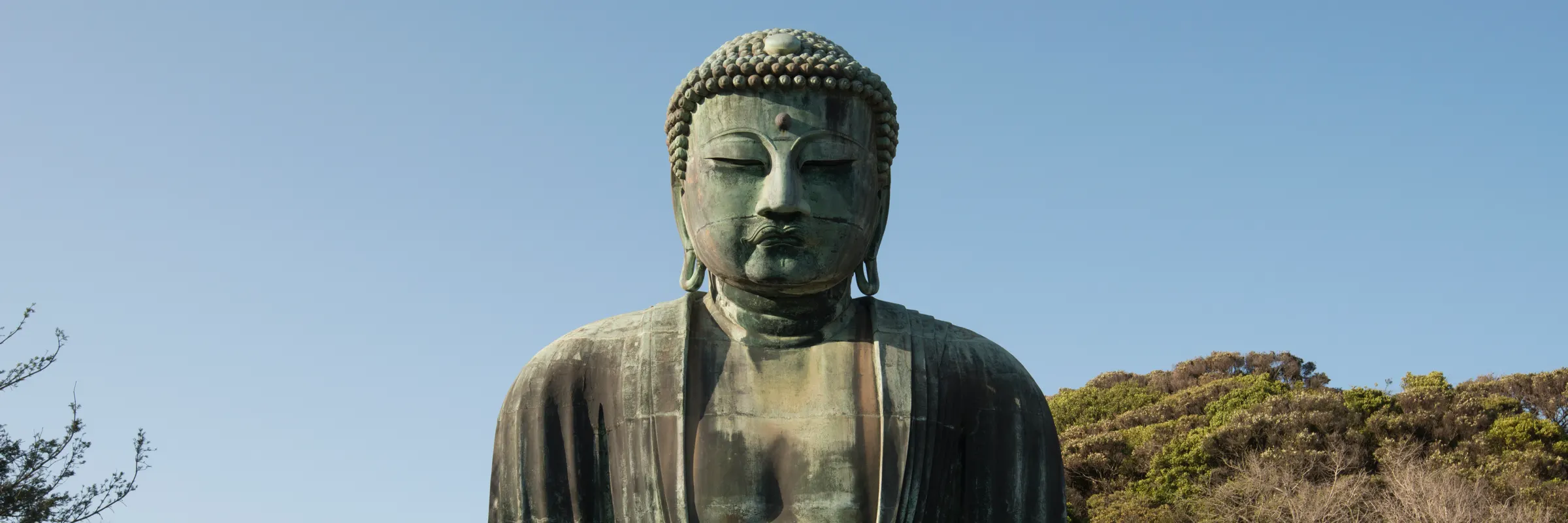
Kamakura: The Great Buddha of Kamakura, in the open air

Kanagawa, Japan

Kamakura: how many days you need and the best months to go

Photo: Maarten Heerlien from Voorschoten, The Netherlands · CC BY 2.0

For a century and a half, from the end of the twelfth century, Kamakura was where Japan was governed from: the first shoguns ruled here, and they and their warriors filled the valleys around the town with Zen monasteries and shrines. The capital moved on and the town shrank back to a seaside place of temples, which is what makes it so good to visit now. It is an hour from Tokyo by train, and that is its problem. On weekends and in the flower seasons the main street, the little seaside railway and the famous temples fill to the point of queuing, and a visit planned at the wrong hours becomes a day spent in lines.

Short answers

What people ask before booking

How many days do you need in Kamakura?

Kamakura needs one day for the Zen temples of Kita-Kamakura, the great shrine, the Great Buddha and the temple of Hase, linked by the seaside railway; a night lets you see them early, before the crowds from Tokyo, and add the island of Enoshima. Come on a weekday.

What is the best month to visit Kamakura?

October and November — Mild days and the late autumn colours. April and May — Cherry blossom, then fresh green.

Work out how many hours you will have in Kamakura on your dates
When to go, and what each month costs you

Kamakura has the mild, humid climate of the coast near Tokyo: hot, wet summers and cool, mostly dry and sunny winters. The flower seasons decide the crowds more than the weather: cherry blossom in early April, hydrangeas in June, and autumn colour unusually late, at the end of November.

  1. January: Worth it, but
  2. February: Worth it, but
  3. March: Worth it, but
  4. April: Go now
  5. May: Go now
  6. June: Worth it, but
  7. July: Worth it, but
  8. August: Worth it, but
  9. September: Worth it, but
  10. October: Go now
  11. November: Go now
  12. December: Worth it, but
  • October and November

    Go now

    Mild days and the late autumn colours

    October is warm and settled after the typhoons. The maples in the temple valleys turn late, usually from the end of November into early December, later than inland. Weekdays are the time to come; on autumn weekends the trains from Tokyo fill the town.

  • April and May

    Go now

    Cherry blossom, then fresh green

    The cherry trees along the shrine avenue usually bloom in late March or early April, and the dates move every year. May is bright and mild, with the azaleas in the temple gardens. The long holidays at the start of May bring some of the biggest crowds of the year.

  • June

    Worth it, but

    Hydrangeas, rain and queues

    The rainy season, and the hydrangeas in flower across the temple gardens. It is the most crowded month at the hydrangea temples, with queues and timed tickets at the best known; the seaside railway runs full all day.

  • July to September

    Worth it, but

    Hot, humid and the beach season

    Hot and humid, with the beaches open and their huts serving from July through August. Temples are less crowded than the sand. The great shrine's festival in mid-September includes horseback archery on the sixteenth, and late summer is typhoon season.

  • December to March

    Worth it, but

    Clear, cool and quiet, except at New Year

    Cool, mostly dry and sunny, with Mount Fuji often visible across the bay. The first days of January bring enormous crowds to the great shrine for the first prayers of the year; after that, winter is the quietest season. Plum blossom in the temple gardens begins in February.

What to pack for Kamakura, month by month

How many days Kamakura needs

One day covers the essentials: the Zen temples of Kita-Kamakura in the morning, the great shrine and the main street at midday, and the Great Buddha and the temple of Hase in the afternoon, with the seaside railway between them. It is a full day on foot, and it is the day almost every visitor does.

A night, or a second day, changes it. It lets you see the famous temples at opening time, before the trains from Tokyo arrive, walk the hiking trails across the hills between them, and spend an afternoon on the island of Enoshima along the coast. In the evening, when the day-trippers have gone, Kamakura becomes a quiet seaside town again.

How the town is arranged

Kamakura sits in a bowl of wooded hills open to the sea on the south. The old capital was protected by the hills, and the passes cut through them were its gates; today the hills are crossed by footpaths, and the temples are tucked into the valleys at their edge.

  • Kita-Kamakura — one station before Kamakura, in a narrow valley: the great Zen monasteries of Engaku-ji and Kenchō-ji, and the hydrangea temple.
  • Central Kamakura — around the main station: the long avenue to the great shrine of Tsurugaoka Hachimangū, and the narrow, crowded shopping street beside it.
  • Hase — three stops along the seaside railway: the Great Buddha and the temple of Hase-dera, with its view over the bay.
  • The beaches — Yuigahama and Zaimokuza, a short walk from the centre: swimming in summer, surfers the rest of the year.
  • Enoshima — a small island joined to the shore by a bridge, near the western end of the seaside railway: shrines, a garden, a lighthouse tower and caves.

Where to stay, and what each area costs you

Kamakura has fewer hotels than its fame suggests, because most visitors sleep in Tokyo or Yokohama. That is why a night here is worth it: the town empties in the evening, and the early morning belongs to those who stayed.

Rooms are scarce and dear on weekends, in the hydrangea season of June, in the summer beach season and over New Year, when the great shrine receives huge crowds for the first prayers of the year.

AreaWho it suitsThe catch
Around Kamakura StationThe most convenient base: trains to Tokyo, the seaside railway, buses, and the shrine and restaurants on foot.Few hotels and mostly small ones, and the streets by the station are the most crowded in town by day.
Hase and the seafrontThe Great Buddha and Hase-dera on foot, the beach at the end of the street, and quiet evenings.Little choice of restaurants at night, and the seaside railway is packed at weekends.
Enoshima and FujisawaSea views, the island, and more and cheaper hotels at the other end of the seaside railway.Kamakura's temples are half an hour away on a slow, crowded line.
Yokohama as a baseA big city with every kind of hotel, half an hour from Kamakura by direct train.You commute in with the crowds and leave before the town empties.

Compare these areas against your priorities

Getting there, and getting around

Direct trains run from Tokyo Station to Kamakura in about an hour, on the JR Yokosuka line, and from Shinjuku and Shibuya on another line that continues to the coast. A second railway, the private Odakyū line, reaches Enoshima from Shinjuku, so a day can go out one way and come back the other.

The seaside railway, the Enoden, is part of the visit: a small, single-track line that runs between houses and along the sea from Kamakura to Fujisawa, past Hase and Enoshima. On busy days the queue to board it at Kamakura Station can stretch outside, and at one level crossing made famous by an animated series, crowds of photographers fill the street.

  • Walk between the temples. Kita-Kamakura to the great shrine is about twenty minutes along the road, and footpaths over the hills link the temples with Hase and the Buddha.
  • Some hill paths have been closed after storms; check that the one you plan is open before setting out.
  • Contactless transit cards work on every line, including the seaside railway and the buses.
  • Avoid driving: roads are narrow, car parks scarce, and the coast road jams in summer.

The Buddha, the temples and the island

The Great Buddha of Kamakura has sat in the open air for more than five hundred years: the hall that once covered it was destroyed in the fifteenth century and never rebuilt. The bronze figure, cast in the thirteenth century, sits in meditation with the hills behind it, and on some days you can step inside the hollow statue.

  • Kōtoku-in and the Great Buddha — in Hase, a short walk from the seaside railway. Go early or late: at midday tour groups crowd the courtyard.
  • Hase-dera — a temple on the hillside above the bay, with a great wooden statue of the goddess of mercy, gardens, a cave of carved figures and a terrace over the sea. In the hydrangea season, entry to the hydrangea path needs a timed ticket.
  • Tsurugaoka Hachimangū — the great shrine of the shoguns, at the head of an avenue with a raised path lined with cherry trees.
  • Engaku-ji and Kenchō-ji — the great Zen monasteries of Kita-Kamakura, among the oldest in Japan, with halls, gates and gardens set deep in the valley.
  • The bamboo grove of Hōkoku-ji — a small temple east of the centre, with a grove of tall bamboo and tea served in a pavilion beside it.
  • Enoshima — the island along the seaside railway: walk up through the shrines to the garden and the lighthouse, and down to the caves on the far side. Mount Fuji is visible across the bay on clear days.

How eating works here

Kamakura eats from the sea and from the temples. The catch of the bay is the tiny white fish called shirasu, served on rice raw or boiled; the monasteries gave the town its vegetarian temple cooking and a vegetable soup that, by local tradition, takes its name from Kenchō-ji. The main street is a parade of snacks and sweets.

The town asks visitors not to eat while walking on its crowded streets: buy, step aside and finish by the shop. Lunch is the main meal for day visitors, and the known restaurants queue at noon on weekends; eat early, or away from the main street.

  • Raw shirasu is seasonal. The fishing stops from January to mid-March, and on days when the boats do not go out there is none; boiled shirasu is available all year.
  • Temple vegetarian cooking is served at a few temples and restaurants, often by reservation: a set meal of many small dishes of vegetables, tofu and sesame.
  • The beach huts that open on the sands in July and August serve food and drink, and are part of the summer.
  • Tipping is not done.

Where to eat in Kamakura, and what to order

Kamakura's food is that of a fishing coast and a town of monasteries. Eat the tiny fish of the bay on rice, the soup of the Zen temples, and a temple meal if you can book one, and take home the biscuit that every visitor buys.

  • Shirasu-don

    What to order

    The fish of the bay, on rice

    Rice topped with shirasu, the young of sardines and anchovies, either boiled and soft or, in season, raw and glistening, with ginger and soy sauce. Raw shirasu exists only when the fishing is open and the boats have gone out that morning, so menus mark it as available or not. Boiled shirasu is always there and very good.

    Check it on Wikidata
  • Kenchin-jiru

    What to order

    The soup of the Zen temples

    A clear soup of root vegetables, tofu and konjac, fried in sesame oil before simmering, with no meat or fish in the broth. Local tradition says it was first made at Kenchō-ji, and that its name comes from the temple's. It is served in set meals around town and at the temple itself, and it is the warmest thing to eat on a winter visit.

    Check it on Wikidata
  • Shōjin ryōri

    What to order

    A vegetarian temple meal

    The cooking of Buddhist monasteries: many small dishes of vegetables, tofu, sesame and seaweed, seasoned lightly and arranged by season. In Kamakura it is served by some temples and specialist restaurants, usually only with a reservation. It is a slow meal, and the right one after a morning in the Zen monasteries.

    Check it on Wikidata
  • Hato Sablé

    What to order

    The souvenir everyone carries home

    A butter biscuit in the shape of a dove, made by a Kamakura confectioner since the end of the nineteenth century. The dove comes from the great shrine, where it is a sacred messenger, and the yellow tin is the town's most recognisable gift. Buy it at the main shop on the avenue to the shrine.

    Check it on Wikidata

Things that change the trip

  1. Start early. The temples are at their best, and least crowded, before the trains from Tokyo arrive.
  2. Come on a weekday, and avoid the weekends of the hydrangea and autumn seasons if you can.
  3. Walk the hill paths between the temples, after checking which are open.
  4. Do not eat while walking on the main street: the town asks visitors to stop by the shop.
  5. Ride the seaside railway away from the busy hours, or walk the stretch to Hase along the beach.
  6. Stay one night and see the town after the day-trippers have left.

Plan Kamakura around Tokyo

A trip of more than three days, or one that joins Tokyo, Kamakura, Yokohama or Hakone with the trains between them, is what Premium is for. The free version covers one destination of up to three days.

Destinations