Skip to content
JoruJoru
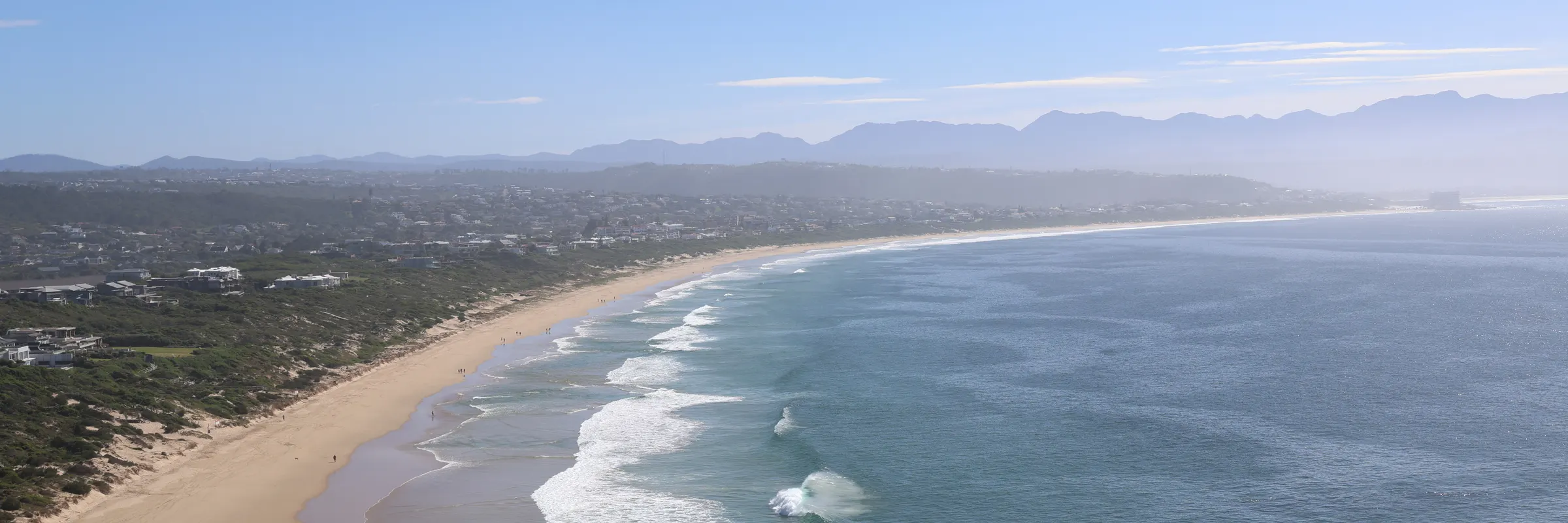
Garden Route: Plettenberg Bay, from the Robberg peninsula
Photo: flowcomm · CC BY 2.0
Western and Eastern Cape, South Africa

Garden Route: how many days you need and the best months to go

The Garden Route is a stretch of coast, not a town: roughly three hundred kilometres from Mossel Bay to Storms River, wedged between the Outeniqua and Tsitsikamma mountains and the Indian Ocean, with indigenous forest, lakes and lagoons along it. You could drive it in four hours. Doing that is the mistake almost everyone makes. Four days is the honest minimum, seven is the right number, and adding Addo Elephant Park at the eastern end turns it into the best self-drive in South Africa.

Short answers

What people ask before booking

How many days do you need in Garden Route?

The Garden Route needs four days minimum and seven to do it properly with Oudtshoorn and Addo. The drive takes four hours, which is why people underestimate it. Whales are here June to November, and December and January are the months to avoid.

What is the best month to visit Garden Route?

October and November — Spring: whales still here, and the crush has not started. March and April — Autumn: warm sea, empty beaches, low prices.

Which months are worth avoiding in Garden Route?

December and January — The best weather of the year, and the worst value.

How many days the Garden Route needs

Four days is the floor: a night each around Wilderness, Knysna and Plettenberg Bay, and a day at Tsitsikamma for the forest and the suspension bridge at Storms River Mouth. That covers the coast without rushing it.

Seven days is what it actually deserves, and the extra three go inland and east. Inland means the Cango Caves and the ostrich farms at Oudtshoorn, over the Outeniqua pass in the semi-desert Klein Karoo, which is a completely different landscape an hour from the sea. East means Addo Elephant National Park, which has all of the big five, is malaria-free — genuinely unusual and the reason families come here — and is about two hours past the end of the route proper.

The trap is the map. Cape Town to Port Elizabeth reads as a day's drive, and technically it is. But the Garden Route is not a road you pass along; it is a set of places that happen to be strung together by one, and a two-day version gives you a lot of tarmac and very little of what you came for.

What is actually along it

The route is usually counted from Mossel Bay in the west to Storms River in the east, and it changes character every hour. Wilderness is lakes and a long empty beach; Knysna is a lagoon behind two sandstone cliffs with a town on it; Plettenberg Bay is the beach resort; Tsitsikamma is forest and cliffs where the mountains meet the sea.

The name is not a marketing invention, though it is often assumed to be. It comes from the vegetation: this is the wettest and greenest stretch of the South African coast, holding some of the country's last indigenous temperate forest, and it looks nothing like the arid interior an hour north.

  • Knysna Heads — the two cliffs guarding the lagoon mouth, with a viewpoint on the eastern one. The lagoon is the town's whole reason for existing.
  • Tsitsikamma and Storms River Mouth — indigenous forest, a gorge and a suspension bridge over the river mouth. The best walking on the route.
  • Robberg Nature Reserve — a peninsula at Plettenberg Bay with a seal colony and a coastal circuit of a few hours. The best half-day here.
  • Oudtshoorn and the Cango Caves — over the mountains into the Klein Karoo, for the caves and the ostriches. A different world, an hour away.
  • Addo Elephant Park — big five, malaria-free, two hours east of the route's end and worth extending the trip for.

The whales, and when they are actually here

Southern right whales come up from Antarctic waters to calve and mate along this coast, and they are close enough to see from land. The season runs roughly from June to November, peaking in the middle of it — which is the South African winter, and precisely when most northern-hemisphere visitors assume they should stay away.

Plettenberg Bay is the main viewing point on the route, with boat trips and headland viewpoints; Hermanus, further west towards Cape Town, is the more famous land-based spot. You will also see humpbacks passing on migration and, at Plettenberg Bay, a resident population of bottlenose and humpback dolphins year-round. If the whales are the reason for the trip, that fixes your months, and it inverts the usual advice about when to come.

The rain that does not follow the Cape pattern

This is the piece of planning that catches people who have read about Cape Town. Cape Town has a Mediterranean climate with dry summers and wet winters. The Garden Route does not: it gets rain spread through the whole year, because it sits in the transition zone between the winter-rainfall west and the summer-rainfall east.

The practical effect is that there is no month you can count on being dry, and no month that is a washout either. Rain here tends to come in short heavy bursts rather than long grey days, and the greenness that gives the route its name is the direct result. Plan for a wet afternoon in any month, and do not import a Cape Town rain calendar onto this coast — it will be wrong in both directions.

Driving it, and the practical bits

The road is the N2, it is tarred and in good condition for the whole route, and a normal two-wheel-drive car is entirely sufficient. This is the easiest self-drive in South Africa and a common first African road trip. Driving is on the left. Distances between towns are short — often under an hour — which is why underestimating the trip is so easy.

Three things to know. Fill the tank in towns rather than trusting the next station, particularly on the inland detours. Petrol stations here are attended, not self-service, and tipping the attendant is normal. And most of the route lies in the Western Cape with the eastern end in the Eastern Cape, which matters mainly because provincial school-holiday dates differ and affect how full the coast is.

On which direction: west to east, Cape Town towards Port Elizabeth, is the standard, and it works better because the sun is behind you for most of the driving and because you finish at Addo rather than starting there. Both airports have flights to Johannesburg and Cape Town, so a one-way rental with a drop-off fee is usually the right structure.

What to eat on the Garden Route, and where

This is oyster and braai country, with an inland detour into ostrich: the seafood is the local part, the grill is the national part, and both are cheap by European standards. The wines are from Route 62 and the Klein Karoo, not Stellenbosch.

  • Braai

    What to order

    The thing that is not a barbecue

    Meat cooked over wood coals — never gas — as a social event rather than a cooking method, with the fire lit long before anyone eats. It is central enough to South African life that there is a national public holiday informally attached to it, and it is how most people here cook at the weekend. If you are invited to one, go.

    Check it on Wikidata
  • Biltong

    What to order

    What to buy for the drive

    Strips of beef or game cured with vinegar, salt and coriander seed and air-dried, and it is not jerky: jerky is cooked and sweet, this is cured and savoury, and the texture is closer to good cured ham. Every town on the route has a shop selling it by weight. Kudu and springbok are worth the small premium.

    Check it on Wikidata
  • Carne de avestruz

    What to order

    The inland detour, on a plate

    Lean red meat that looks and cooks like beef, from the farms around Oudtshoorn over the mountains. That town was the world capital of the ostrich-feather trade in the early 1900s and the feather boom built the sandstone mansions you drive past; the birds are now farmed for meat and leather. Order it rare; well done it goes dry.

    Check it on Wikidata
  • Melktert

    What to order

    The dessert in every farm stall

    A milk tart in a pastry case, set with flour or cornflour rather than eggs alone, dusted with cinnamon and eaten cold. It came with the Dutch in the seventeenth century and became an Afrikaner staple, and the farm stalls along the N2 are where the good ones are. Buy a slice, not a whole one, unless you are three people.

    Check it on Wikidata
  • Knysna

    Where to look

    Where to stop for the oysters

    The lagoon town in the middle of the route, guarded by two sandstone cliffs, and the oyster capital of South Africa — both wild and cultivated, eaten on the waterfront. Careful with the name: searching it returns a genus of beetles first and a genus of moths second, which is a first for this table. It is also the best base for the middle of the route.

    Check it on Wikidata

When to go, and what each month costs you

The southern hemisphere inverts the seasons, and here it inverts the advice too: the best weather is December and January, and those are the two months to avoid, because South African school holidays fill the entire coast. The whales, meanwhile, are here in winter.

  • October and November

    Go now

    Spring: whales still here, and the crush has not started

    The best window of the year. Warm days, the flowers out, the whale season still running and the December crowds still weeks away. Prices are moderate, everything is open, and the sea is warming up. If you can only pick one pair of months on this coast, pick these.

  • March and April

    Go now

    Autumn: warm sea, empty beaches, low prices

    The sea is at its warmest after the summer and the beaches are empty because the holidays are over. Stable, mild weather and the best value of the year, with Easter as the one exception — it moves between late March and April and fills the coast for a week wherever it lands.

  • August and September

    Worth it, but

    Peak whale season, and the end of winter

    The middle of the whale season, with the best land-based sightings of the year at Plettenberg Bay and Hermanus. Cool, sometimes wet, and the sea is too cold for swimming, but the route is quiet and cheap and the forest walks are at their best. Come for the whales, not the beach.

  • February

    Worth it, but

    Hot, and emptying out after the holidays

    The South African holidays are over and the coast exhales, with hot days and warm water. Prices fall sharply from January and availability returns. It can be genuinely hot inland at Oudtshoorn. A good compromise if you want summer without the crush.

  • May

    Worth it, but

    The quiet shoulder, with whales arriving

    Mild days, very few visitors, low prices, and the first whales beginning to appear towards the end of the month. The sea is cooling and the days are shortening, but walking and driving conditions are excellent. Underrated.

  • June and July

    Worth it, but

    Winter: whales, forest and rain

    Cool and often wet, with the whale season under way and the forest at its greenest. South African winter school holidays fall in this window and lift prices for a couple of weeks. Days are short. Excellent for whales and walking, poor for anything involving the beach.

  • December and January

    Think twice

    The best weather of the year, and the worst value

    Hot, dry, long days and warm sea — and the South African summer school holidays, when the entire country drives to this coast. Accommodation is booked out months ahead at double or triple the rate, Plettenberg Bay and Knysna are packed, and restaurants need reservations. The weather is not worth the price.

Things that change the trip

  • Give it four days minimum, seven if you can. The drive takes four hours; the route takes a week, and treating it as a transfer wastes it.
  • Come for whales between June and November, which is winter here. The best weather and the best whales are in different halves of the year.
  • Avoid December and January unless you booked months ago. South African school holidays fill this coast completely and prices multiply.
  • Do not import a Cape Town rain calendar. This coast gets rain all year in short bursts, not dry summers and wet winters.
  • Add Addo Elephant Park at the eastern end. Big five, malaria-free, two hours past Storms River, and the best reason to extend.
  • Drive west to east and take a one-way rental. The sun is behind you and you finish at the park rather than starting there.

Plan the Garden Route and South Africa

A trip that runs the whole route with Cape Town at one end and Addo at the other — with the driving days, the whale season and the school-holiday dates worked out around it — is exactly what Premium is for. The free version covers one destination for up to three days.

Destinations