




Skip to content
JoruJoru
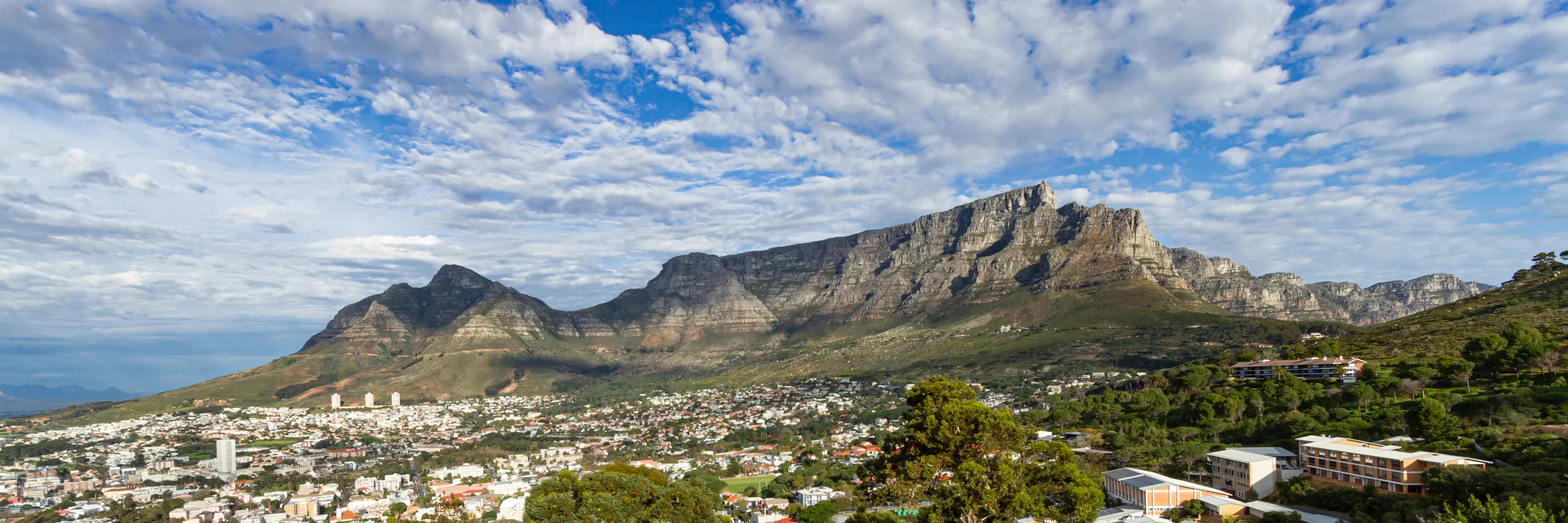
Cape Town: Table Mountain above the city

South Africa

Cape Town: how many days you need and the best month to go

Photo: Pierre-Selim Huard · CC BY 4.0

Cape Town has one of the most dramatic settings of any city and one of the most weather-dependent itineraries. The mountain closes in high wind, the coast changes character with it, and a plan that fixes those to a particular day is a plan that will get rearranged for you.

Short answers

What people ask before booking

How many days do you need in Cape Town?

Cape Town needs four days for the city, the peninsula and the winelands without rushing. The fifth is the spare day the weather will eventually demand.

What is the best month to visit Cape Town?

February to April — The best window of the year. October and November — Spring, green and quieter.

Work out how many hours you will have in Cape Town on your dates

When to go, and remember the hemisphere

Southern hemisphere seasons, a Mediterranean climate, and a famous wind. Summer is dry and windy; winter is green and wet.

  1. January: Worth it, but
  2. February: Go now
  3. March: Go now
  4. April: Go now
  5. May: Worth it, but
  6. June: Worth it, but
  7. July: Worth it, but
  8. August: Worth it, but
  9. September
  10. October: Go now
  11. November: Go now
  12. December: Worth it, but
  • February to April

    Go now

    The best window of the year

    Late summer into autumn: warm, dry, and with the summer wind easing off. The peak holiday crowds have gone and the mountain is open more reliably than in midsummer.

  • October and November

    Go now

    Spring, green and quieter

    Warming up, wildflowers in the region, and well before the peak season crowds. Some wind, but a good balance of price and weather.

  • December and January

    Worth it, but

    Peak season, peak prices, peak wind

    The domestic holiday period: everything is open and busy, prices are at their highest, and the south-easter wind is at its strongest — which is when the cable car most often closes.

  • May to August

    Worth it, but

    Winter: wet, green and cheap

    The rainy season, mild rather than cold, with the landscape at its greenest. Much cheaper and emptier, and this is when whale watching along the coast is at its best. A worse beach trip and a perfectly good everything-else trip.

What to pack for Cape Town, month by month

How many days Cape Town needs

Four days covers the city, the peninsula and the winelands without rushing. Five gives you the spare day that the weather will eventually demand.

This is one of the few destinations where a car makes a real difference. Public transport does not reach most of what people come for, and the peninsula drive is itself one of the best things to do.

How the region is arranged

The mountain sits in the middle of the city, and everything else radiates around it and down the peninsula.

  • The city bowl and the waterfront — between the mountain and the sea, and where most people stay.
  • Table Mountain — the cable car or a walk up. Closes in high wind, which is common.
  • The Cape Peninsula — the coastal drive south, the penguins, the point. A full day and one of the great drives anywhere.
  • The winelands — Stellenbosch and Franschhoek, under an hour inland. A day, with a designated driver or a tour.

Where to stay, and why the wind decides the neighbourhood

Cape Town sits between a mountain and two oceans, which means the weather changes radically from one district to another on the same day. The southeasterly wind, which they call the Cape Doctor, blows hard in summer and batters some areas far more than others: Camps Bay can be unliveable on an afternoon when the centre is calm.

The City Bowl — the basin between the mountain and the port — is the most balanced base and the easiest place to reach everything from. The beach neighbourhoods are beautiful and require driving for practically anything.

AreaWho it suitsThe catch
City Bowl (Gardens, Tamboerskloof)The best base: central, with the mountain behind and good restaurants.Parking is difficult and there are hills.
V&A WaterfrontComfortable and secure, with shops, restaurants and the Robben Island boat.A touristy retail zone; expensive and fairly artificial.
Camps Bay and CliftonBeach, sunsets and the mountain behind. The city's postcard.Very exposed to summer wind, expensive, and you need a car for everything.
Bo-KaapThe coloured houses and a community with its own history, steps from the centre.Little hotel stock and very steep streets.
ConstantiaVineyards inside the city, quiet and green.Residential and spread out: it does not work without a car.

Compare these areas against your priorities

Airport to the city, and why you need a car here

The airport is about twenty kilometres from the centre and there is a direct bus to the Waterfront as well as taxis and apps. The journey is short and simple. What changes the trip is a different decision: whether to rent a car.

And the answer here is fairly clear: yes. The Cape Peninsula, the winelands and the beaches are spread out and public transport between them is thin. You drive on the left and the roads are good. Without a car, every outing becomes an organised tour and you lose the best part of this destination, which is stopping wherever you feel like it.

  • Table Mountain depends on wind, not just rain: the cableway closes in strong gusts, sometimes without warning. It is the plan to do on the first good day that presents itself.
  • Robben Island books ahead and sailings are cancelled in rough seas. Have an alternative plan for that day.
  • Leave nothing visible in the car, and nothing in the boot in front of anyone. It is the basic precaution everyone here gives.
  • At night you go by car or taxi, even short distances. Strolling around the centre after dinner is not what is done.
  • Scheduled power cuts — load shedding — have been common in some years: outages by time slot. Hotels usually have generators, but it affects traffic lights and shops.

The peninsula, the winelands and the day trips

Here the day trips are not an add-on: they are half the reason to come. Within an hour there are penguins, a cliff road among the world's most beautiful, and a first-rate wine region.

  • The Cape Peninsula — a full day by car: Chapman's Peak, Boulders Beach with the penguins, and the Cape of Good Hope. It is the best day of the trip and needs an early start.
  • Stellenbosch and Franschhoek — the winelands, under an hour away. Franschhoek has a tourist tram that loops the estates and solves the problem of driving after tasting.
  • Table Mountain — by cableway or on foot up Platteklip Gorge, which is demanding. The tabletop is vast: there are hours of trails up there.
  • Hermanus — an hour and a half out, for land-based whale watching. It is seasonal, from late winter into the austral spring, and outside those months there is nothing to see.
  • Cape Agulhas — the actual southernmost point of Africa, two and a half hours away. The Cape of Good Hope is not, however much everyone believes it.

Eating and drinking in Cape Town

It is one of the world's best value eating cities. Restaurant standards are high and the prices, for a European or American visitor, are notably low, especially with wine: the region makes excellent wines that cost a fraction of what they do abroad.

Local cooking blends influences found together nowhere else: the Cape Malay tradition, with mild sweet curries; the braai, barbecue as a social institution; and biltong, dried spiced meat eaten as a snack.

  • A braai is not just any barbecue: it is a weekend social event, and many places to stay have an area for it.
  • Cape Malay cooking — bobotie, mild curries, koeksisters — is best tried in Bo-Kaap.
  • Estates offer tastings for very little and many have restaurants. It is among the best value in the wine world.
  • Biltong and droëwors are sold in any shop and are the national snack.
  • Tipping runs around ten to fifteen per cent, and in car parks there are informal attendants you give a coin to.

Where to eat in Cape Town, dish by dish

Cape Town eats extremely well for what it costs, and the food carries the city's history plainly: Malay, Dutch, British and African cooking in the same kitchen. The Waterfront is the easy option and the least interesting one. The good eating is in the Bo-Kaap, in the suburbs, and at the weekend markets — and, unusually for a city this size, a lot of it is outdoors.

  • Bo-Kaap

    Where to look

    Cape Malay cooking, in the place it comes from

    The brightly painted quarter on the slope of Signal Hill, home to the Cape Malay community descended from people enslaved and brought here from Southeast Asia. The food — bobotie, denningvleis, koesisters — exists nowhere else in the world in this form. Several family kitchens do set meals; the neighbourhood is also just worth walking.

    Check it on Wikidata
  • Bunny chow

    What to order

    The South African street food, and where it is from

    A hollowed-out half loaf of white bread filled with curry — invented in Durban, now national, and messy by design. There is no cutlery: you tear off the lid and use it to scoop. It is a large amount of food. A quarter loaf is a normal portion for one person and nobody will blink.

    Check it on Wikidata
  • Braai

    What to order

    The thing that is a meal and an event at once

    The South African barbecue, which is a social institution rather than a cooking method. It is over wood or charcoal, never gas, and that distinction is taken seriously. If you get invited to one, go. Otherwise several places in and around the city do a shared-grill version that gets the format across.

    Check it on Wikidata
  • V&A Waterfront

    Food hall

    The easy option, and what it is actually good for

    The redeveloped harbour with a large food market and dozens of restaurants. It is where every visitor eats at least once and it is the most expensive and least local food in the city. Its real use is the wet afternoon and the group that cannot agree — plus it is where the boats to Robben Island leave, so you will be there anyway.

    Check it on Wikidata
  • Nando's

    Chain

    A reliable cheap meal, and it started here

    The flame-grilled peri-peri chicken chain now found worldwide was founded in Johannesburg in 1987, and Portuguese-Mozambican peri-peri is genuinely part of southern African food. Including it is not a joke: it is consistent, it is everywhere, and eating it in the country it came from is a slightly different and better thing.

    Check it on Wikidata

Things that change the trip

  1. Leave the mountain unscheduled and go on the first clear, calm morning. It closes in high wind, often at short notice, and people miss it by saving it for the last day.
  2. The peninsula drive is a full day, not an afternoon, and it is the single best thing in the region.
  3. Water restrictions and drought conditions vary year to year and there may be usage rules in place. Worth checking rather than assuming.
  4. Take normal precautions with valuables and be deliberate about where you walk after dark. Local advice on specific areas is worth asking for.
  5. The winelands need a plan for how you are getting back. Tours and drivers are common and inexpensive.

Plan Cape Town around the wind

A four-day trip with the peninsula and the winelands needs Premium; the free version covers one destination for up to three days.

Destinations