Skip to content
JoruJoru
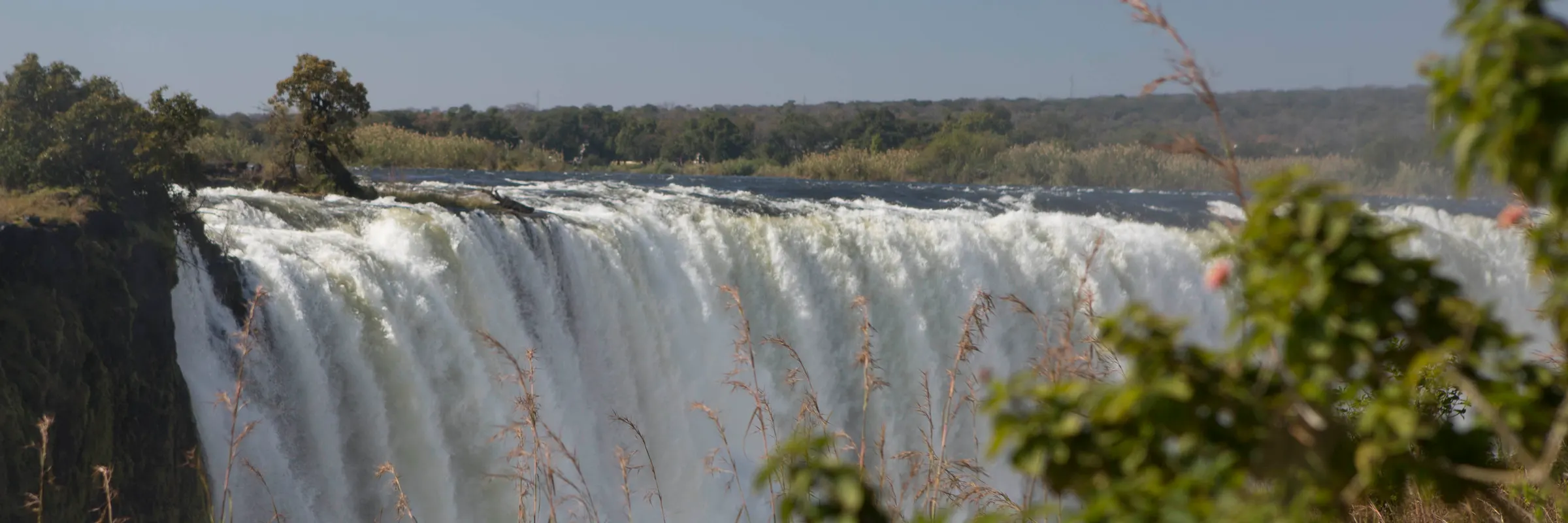
Victoria Falls: the curtain of the Main Falls, from the Zimbabwean side
Photo: ninara from Helsinki, Finland · CC BY 2.0
Zambia and Zimbabwe

Victoria Falls: how many days you need and the best months to go

The Zambezi runs flat across a basalt plateau and then drops the entire width of its channel — over 1,700 metres — into a narrow chasm barely more than a hundred metres away on the other side. That geometry is what makes this different from other waterfalls: you stand on the opposite wall, at eye level, looking across at it. The local name is Mosi-oa-Tunya, the smoke that thunders, and the spray column is visible from tens of kilometres away. Two days covers the falls from both sides. Three is better, and the season matters more than the number.

Short answers

What people ask before booking

How many days do you need in Victoria Falls?

Victoria Falls needs two days to see the falls from both the Zimbabwean and Zambian sides, and a third for the river or a game park. The month matters more than the number.

What is the best month to visit Victoria Falls?

June, July and August — Strong flow, clear views, comfortable weather. September — Falling water, rising heat, and the pool opening.

Which months are worth avoiding in Victoria Falls?

January, February and March — Rainy season: hot, wet, and the river not yet full. December — Wet, hot and busy over the holidays.

How many days you need, and which side

Two days is the working minimum: one for the falls themselves and one for the river, a game drive or the activities. Three lets you see both sides and keeps a spare day for weather or a border crossing that takes longer than expected.

The two sides are not the same and this is the main decision. Zimbabwe holds roughly three-quarters of the falls' face and gives the classic head-on views from a rainforest path — it is the better side for looking at the waterfall. Zambia gets you closer and more physically involved: the Knife-Edge Bridge, the walk down to the Boiling Pot, and the Devil's Pool. Zambia's side also dries up substantially in the low-water months while Zimbabwe's keeps water year-round, which is the single most useful fact on this page.

The flow, which is the entire trip

This is the rare destination where the month does not change the weather so much as change the thing itself. The Zambezi's flow varies enormously through the year, and the falls at peak flood and the falls at low water are two different experiences that happen to share an address.

At the annual peak, around April and May, the volume is so great that the spray rises hundreds of metres and you cannot see the waterfall at all from most viewpoints — you get soaked, you hear it, and the gorge is a wall of white. At low water, around October and November, the rock face is exposed, Zambia's side may be reduced to trickles, and you can see the structure clearly. Neither is wrong. What is wrong is arriving without knowing which one you booked.

  • April and May — maximum volume, maximum spray, minimum visibility. Bring a waterproof and expect to be drenched, camera included.
  • June to August — the compromise most people want: strong flow, the falls visible, dry weather and comfortable temperatures.
  • September and October — low water, clear views of the rock, and the Devil's Pool at its most reliable. Very hot by October.
  • December to March — the rainy season: hot, humid, afternoon storms, and the river building back up.

The Devil's Pool, and when it is actually open

On the Zambian lip of the falls there is a natural rock pool right at the edge, with a rim of stone that holds swimmers back from the drop. It is real, it is guided, and it is one of the most photographed things in Africa.

It only opens when the water is low enough for that rim to do its job — broadly from around August into January, though the exact window is set by the river each year and not by a calendar. In high water it is closed, and no operator can open it for you. If this is the reason for your trip, it dictates your month, and you should confirm the current conditions before booking flights rather than after.

The bridge, the gorge and everything else on offer

The Victoria Falls Bridge was finished in 1905, spanning the gorge just downstream of the falls, and it carries road, rail and pedestrians between the two countries. Cecil Rhodes ordered it built where the spray would fall on passing trains, which is why it sits where it does. You can walk out onto it with a day pass without formally entering the other country, which is worth doing for the view back into the chasm.

Below and around it is the largest concentration of adventure tourism in southern Africa: white-water rafting through the gorge, bungee from the bridge, gorge swings, helicopter flights and sunset cruises upstream. The rafting is genuinely serious water and is only run when the flow allows, roughly in the low-water half of the year; in flood it is closed.

The animals, and the ones that walk into town

Both towns sit inside or beside national parks, and the wildlife is not confined to them. Warthogs graze on verges, baboons work the bins, and elephants cross the roads at the edges of both towns, which is charming until you are between one and its route. Take the local advice seriously: do not walk between lodges after dark, and give elephants a very wide berth.

For a proper safari, Zimbabwe's Hwange National Park is about two hours south and is one of the largest parks in Africa, with a very large elephant population. On the Zambian side, Mosi-oa-Tunya National Park is small but has white rhino. Botswana's Chobe is a long day trip across the border and is the best value big-game day out from here.

Two countries, two borders, one waterfall

The falls are the border. The Zimbabwean town is called Victoria Falls and sits a short walk from the entrance; the Zambian town is Livingstone, about ten kilometres from its own entrance, which means transport on that side rather than a stroll.

Crossing between them is routine but it is a real border, with formalities on both sides and separate park entry fees for each country's viewpoints. A regional visa exists that covers both countries and is the sensible option if you plan to see both sides — check your own nationality's eligibility before you travel, because that is the detail that catches people out at the counter.

What to eat at Victoria Falls, and where

This is a tourism town and much of what is served reflects that. The things worth seeking out are the ones people here actually eat, plus a river fish and a dried meat that are genuinely of southern Africa.

  • Sadza

    What to order

    The staple everything is served with

    Stiff maize meal cooked until it holds its shape, torn by hand and used to pick up relish, meat or vegetables. It is the everyday food of Zimbabwe and the exact equivalent of ugali in Tanzania or pap in South Africa. Plain by design; the point is what it is eaten with.

    Check it on Wikidata
  • Tilapia

    What to order

    The fish from the river in front of you

    A firm white freshwater fish farmed and caught throughout the Zambezi basin, usually grilled whole or filleted with lemon. It is the standard river fish across this part of Africa and it is a far better order than an imported steak. Ask whether it is from the river or a farm; both are common.

    Check it on Wikidata
  • Biltong

    What to order

    The dried meat that is not jerky

    Meat salted, spiced with coriander and vinegar, and air-dried rather than smoked or cooked. It predates refrigeration in southern Africa and it is not the same thing as American jerky — it is thicker, softer and far less sweet. Sold by weight everywhere, and the standard road snack.

    Check it on Wikidata
  • Mopane worm

    What to order

    The caterpillar, and whether to try it

    The caterpillar of an emperor moth that feeds on mopane trees, harvested seasonally, dried and then rehydrated into a stew or fried crisp. It is a serious source of protein across southern Africa and a genuine part of the regional diet, not a dare invented for visitors. Try it fried before you try it stewed.

    Check it on Wikidata
  • Game meat

    What to order

    The meat on every tourist menu

    Kudu, impala, warthog and crocodile appear on most restaurant menus in both towns, usually grilled. It is legitimately farmed or culled rather than poached, but it is a visitor's dish rather than a local one — households here eat sadza and relish. Worth trying once, with that context.

    Check it on Wikidata

When to go, and what each month costs you

Everything here is set by the river rather than the thermometer. The Zambezi peaks around April and May and bottoms out around October and November, and those two extremes produce completely different visits. The middle of the year is the compromise almost everyone should take.

  • June, July and August

    Go now

    Strong flow, clear views, comfortable weather

    The flood is receding but the volume is still large, so the falls are impressive and you can actually see them. Dry, sunny days and cool nights, both sides fully watered, and the game viewing improving as the bush dries. The best all-round window and priced as peak season.

  • September

    Go now

    Falling water, rising heat, and the pool opening

    The rock structure becomes visible, the Zambian side thins, and the Devil's Pool becomes reliable. Excellent for game viewing as animals concentrate on the river. Hot and getting hotter, but the clearest photographs of the year come from this month.

  • April and May

    Worth it, but

    Maximum volume, and you will not see much

    The annual peak. Spray rises hundreds of metres and the roar is audible far away, which is genuinely extraordinary — and from most viewpoints the waterfall itself is invisible behind its own mist. You will be soaked through and so will your camera. Rafting and the Devil's Pool are closed.

  • October

    Worth it, but

    The clearest views and the worst heat

    Low water, exposed rock and the best light of the year, with the Devil's Pool open. It is also the hottest month by some margin and can be uncomfortable in the middle of the day. Zambia's side may be reduced to a trickle.

  • November

    Worth it, but

    The first rains, and the lowest prices

    Afternoon storms begin, the heat breaks a little and the bush turns green. The falls are still low, so this is a cheap month with acceptable conditions. Migratory birds arrive and the game viewing starts to thin.

  • January, February and March

    Think twice

    Rainy season: hot, wet, and the river not yet full

    Humid days with heavy afternoon rain, roads and bush tracks difficult, and the river rising but not yet at its peak. It is the least rewarding combination: neither the clear low-water views nor the full flood. Prices are at their lowest and so is the reason to be here.

  • December

    Think twice

    Wet, hot and busy over the holidays

    The rains are established and the falls are still building, while Christmas and New Year push prices and occupancy up regardless. Green, lush and humid. The one window here where you pay peak rates for off-peak conditions.

Things that change the trip

  • Pick your month by the river, not the weather. April is maximum water and minimum visibility; October is the reverse. June to August is the compromise.
  • See both sides if you can. Zimbabwe has three-quarters of the face and the head-on views; Zambia gets you closer and into the water.
  • Zambia's side dries up in the low-water months and Zimbabwe's does not. If you are coming in October, that decides where to stay.
  • Confirm the Devil's Pool is open before booking flights around it. The window is set by the river each year, not by a calendar.
  • Take a waterproof for the falls path, whatever the month. In high water the spray is heavier than rain, and it comes from below.
  • Check the regional visa for your nationality before you travel. Crossing between the two countries is routine, and it is a real border.

Plan Victoria Falls and the region around it

A trip beyond three days, or one that links the falls with Hwange, Chobe, the Okavango or a route down to Botswana with the river's season arranged around it, is exactly what Premium is for. The free version covers one destination of up to three days.

Destinations