Skip to content
JoruJoru
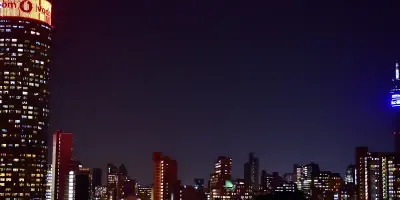
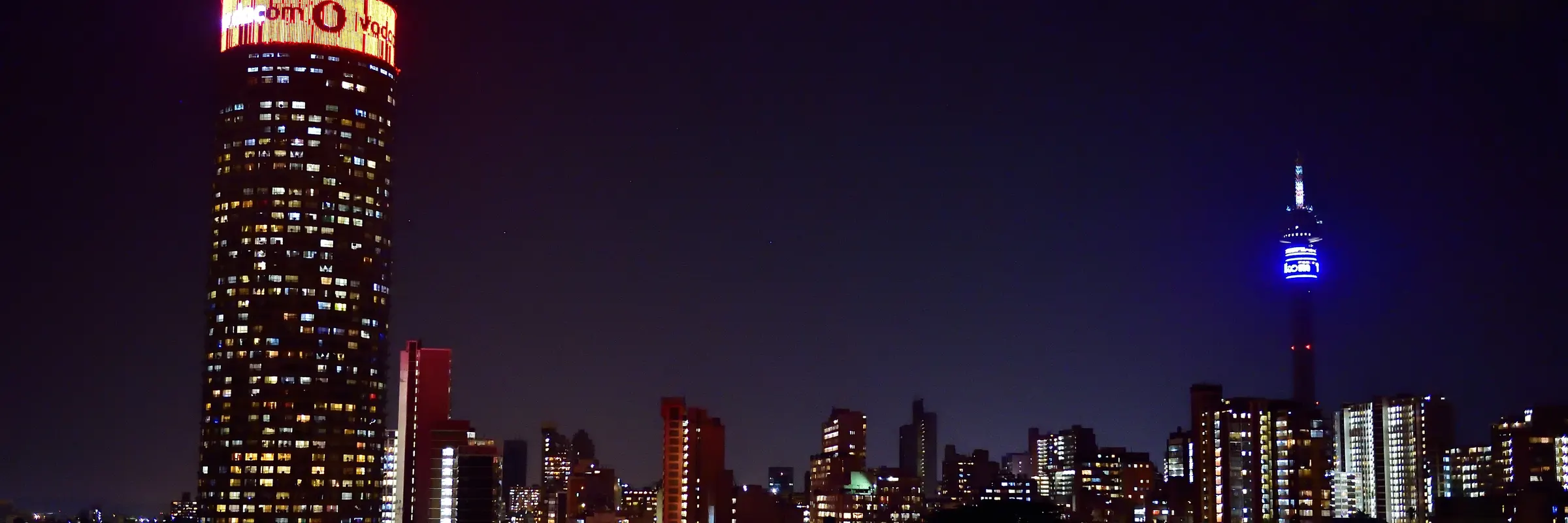
Johannesburg: the city skyline
Photo: South African Tourism · CC BY 2.0
Gauteng, South Africa

Johannesburg: how many days you need and the best months to go

Johannesburg exists because gold was found here in 1886, and everything about it follows from that: it is inland, high, enormous, and it grew outwards rather than upwards. It is also the place that explains South Africa better than anywhere else, through museums and neighbourhoods that deal with apartheid directly rather than politely. The thing to plan around is that it is a car city and always has been.

Short answers

What people ask before booking

How many days do you need in Johannesburg?

Johannesburg needs two days for the Apartheid Museum, Soweto with a guide and one central neighbourhood. Four if you add the Cradle of Humankind and the galleries.

What is the best month to visit Johannesburg?

April and May — Autumn: dry, mild and clear. August and September — The end of winter, with the jacarandas at the end of it.

Which months are worth avoiding in Johannesburg?

December to March — Hot, wet afternoons and the domestic holiday peak.

How many days Johannesburg needs

Two days covers what most people come for: the Apartheid Museum, Soweto with a guide, and Maboneng or Braamfontein for an afternoon. It is a compact itinerary in a very uncompact city, and the time goes on the driving between them.

Four days is worth it if you want the Cradle of Humankind, an art gallery day, and a proper look at more than one neighbourhood. Many visitors use Johannesburg as a one-night stop before a safari or Cape Town, and that is a real waste — the museums here are the best explanation of the country you will get anywhere.

How the city is arranged

Johannesburg is a set of separated districts rather than a centre with suburbs, and the distances between them are large. The city has no walkable core in the European sense, and that is a fact about how it was planned rather than a temporary problem. Getting a sense of it means accepting that you will be in a car between places.

  • The inner city and Braamfontein — the old downtown, the university district, Constitution Hill and a concentration of galleries and student bars. The part that has changed most in twenty years.
  • Maboneng and Jeppestown — a regenerated warehouse district east of the centre, with markets, studios and restaurants. Walkable within itself, which is unusual here.
  • Soweto — a township of well over a million people south-west of the city, with the Hector Pieterson museum, Vilakazi Street and a food and music scene of its own. Go with a local guide, which is both safer and far more informative.
  • Rosebank and Melrose — northern suburbs with malls, hotels and the Sunday African craft market. Comfortable, safe-feeling and where most visitors sleep.
  • Sandton — the financial district that replaced the old downtown, with the highest concentration of money in Africa and very little street life.

Where to stay, and being honest about safety

Johannesburg has a real crime problem and pretending otherwise helps nobody. The practical version for a visitor is narrower than the reputation suggests: most incidents are opportunistic, most visitors have no trouble, and the rules are simple — do not walk around the inner city at night, do not display a phone at a traffic light, use ride apps rather than hailing, and ask your accommodation which specific streets are fine.

That shapes where to stay. The northern suburbs are the default for good reason: they are quiet, they have the hotels, and everything else is a twenty-minute drive. Staying centrally is possible and rewarding in specific pockets, but it needs more local knowledge than a first visit usually has.

AreaWho it suitsThe catch
RosebankFirst visit. Hotels, the Gautrain station, restaurants and the Sunday market.Suburban and mall-centred; you drive to everything interesting.
Melville and ParkhurstLeafy streets with actual pavements, independent restaurants and a walkable strip.Fewer hotels, mostly guesthouses, and further from the Gautrain.
MabonengBeing inside a walkable district, with markets and studios at street level.An island: the streets around it are not for wandering, especially after dark.
SandtonBusiness trips, the securest feeling, and the Gautrain straight to the airport.Expensive and characterless; it is a business district with no street life.
BraamfonteinGalleries, student energy and being near Constitution Hill.Lively by day and quiet in a way that matters at night.

The Gautrain, ride apps, and moving around a car city

The Gautrain is the one piece of public transport a visitor will actually use: a fast, modern line linking the airport, Sandton, Rosebank and Pretoria. It solves the airport transfer completely and connects two of the areas you are most likely to stay in, and it does nothing at all for the rest of the city.

Everything else is by road. Ride apps work well, are cheap by European standards and are the normal way to move; hiring a car makes sense if you want the Cradle of Humankind or day trips, and driving here is straightforward outside rush hour. Minibus taxis carry most of the city and are not designed for visitors to decode.

  • Book Soweto with a guide rather than driving in yourself. The value is the commentary, and a bicycle or walking tour with a local is the standard way to do it.
  • Traffic is severe on weekday mornings and evenings. A twenty-minute drive becomes an hour, so plan museum visits mid-morning.
  • The altitude is 1,750 metres. You will be more tired than you expect on the first day and the sun is stronger than the temperature suggests.
  • Distances are big. Two attractions on the same map page can be forty minutes apart.

The museums, and why they come first

This is the part that makes Johannesburg worth days rather than hours. The Apartheid Museum is the single best explanation of twentieth-century South Africa that exists, and it starts by issuing you a ticket that arbitrarily classifies you by race and sends you through a separate entrance. It takes half a day and it should be the first thing you do.

Constitution Hill is the second: a former prison that held both Gandhi and Mandela, now the site of the country's Constitutional Court, built deliberately from the bricks of the demolished awaiting-trial block. In Soweto, the Hector Pieterson Museum covers the 1976 student uprising on the ground where it happened.

  • Do the Apartheid Museum before Soweto. The order matters; the museum gives you the frame and Soweto gives you the place.
  • The Cradle of Humankind is an hour out — a UNESCO site with some of the richest hominin fossil finds in the world, and a genuine half-day.
  • The Johannesburg Art Gallery and the Wits Art Museum hold major African collections and are consistently under-visited.
  • Sunday markets are a real institution — Neighbourgoods in Braamfontein, the Rosebank craft market — and are where the city socialises.

How eating works here

South Africa's food is a mix of African, Indian, Malay, Dutch and British traditions that have been arguing for three hundred years, and Johannesburg has all of them. The braai is the central institution — not a barbecue but a social event that takes an afternoon, with the fire itself treated as the point.

The other thing to know is that eating here is inexpensive by European standards at every level, from a township shisanyama to the tasting menus in the northern suburbs. Tipping is expected and matters: service staff rely on it.

  • A shisanyama is a meat market and grill in one — you buy raw from the butcher counter and it is cooked for you. Common in Soweto and worth doing.
  • Tipping is around the standard ten to fifteen per cent, and car guards in parking areas are usually given small change.
  • Tap water in Johannesburg is safe to drink, which is not true everywhere in the region.
  • Sunday lunch is the big meal and restaurants fill; book if you are going somewhere specific.

Where to eat in Johannesburg, and what to order

Johannesburg eats across every tradition in the country at once, and the good version of almost everything is cheaper than you expect. The dishes below are South African rather than generically African, and most of them are found in ordinary places rather than restaurants aimed at visitors.

  • Braai

    What to order

    The social meal, and the thing it is not

    Meat cooked over wood or charcoal, at length, as the centre of a gathering. The fire is the event and not a cooking method — it is lit hours before anyone eats. Boerewors, a coiled farm sausage, is the staple. If you are invited to one, go; if not, a shisanyama is the public version.

    Check it on Wikidata
  • Bunny chow

    What to order

    The famous street dish, and where it comes from

    A hollowed-out quarter or half loaf of white bread filled with curry — invented in Durban's Indian community and eaten across the country. The bread you scoop out is the lid and you eat that too. It is enormous, cheap, entirely hand-held and has no cutlery involved.

    Check it on Wikidata
  • Bobotie

    What to order

    The oldest dish on the list

    Spiced minced meat baked with dried fruit under a savoury egg custard, from the Cape Malay tradition and one of the country's oldest recorded dishes. The sweetness surprises people and it is meant to be there. Served with yellow rice and chutney.

    Check it on Wikidata
  • Vetkoek

    What to order

    The cheap thing to eat from a roadside stall

    Deep-fried dough, crisp outside and soft inside, split and filled with mince, cheese or jam. Sold everywhere from petrol stations to school fêtes. Eat it hot and immediately; it is a completely different thing twenty minutes later.

    Check it on Wikidata
  • Chakalaka

    What to order

    The side dish that makes the plate

    A spicy relish of onion, tomato, peppers, carrot and beans, cooked down and served with almost everything. It appears alongside grilled meat, stiff porridge and bread. Ask for it; it is often not offered to visitors and it is what makes a plain plate work.

    Check it on Wikidata
  • Pap

    What to order

    The base of the everyday meal

    Stiff maize porridge, eaten with the right hand alongside meat and relish — the everyday staple across southern Africa. It is deliberately bland: it is the plate, not the flavour. Order it with a grill and relish and you have the standard meal of the region.

    Check it on Wikidata

When to go, and what each month costs you

Johannesburg sits at 1,750 metres on a high plateau, which gives it a climate that surprises people: warm, dry winters with cold nights, and hot summers whose defining feature is a spectacular afternoon thunderstorm rather than steady rain. The seasons are reversed from the northern hemisphere.

  • April and May

    Go now

    Autumn: dry, mild and clear

    The rains have stopped, the air is clear, and the days are warm without being hot. Comfortable for walking tours and for the drive out to the Cradle. The best combination of weather and prices in the year, and a good window for a safari add-on further north.

  • August and September

    Go now

    The end of winter, with the jacarandas at the end of it

    Dry, sunny days and cool nights, with the cold easing through August. From late September into October the jacarandas flower across the city and Pretoria — the peak moves by a couple of weeks each year, so it is a range and not a date.

  • June and July

    Worth it, but

    Winter: bright days, genuinely cold nights

    Dry, clear and sunny by day, and cold enough at night that you need a real jacket — many buildings here have no heating. The landscape is brown and dusty. It is the best time for a safari nearby, since animals gather at water, which is why many people pass through now.

  • October and November

    Worth it, but

    Warm, green and the storms begin

    The city turns green and the afternoon thunderstorms start: short, violent and usually over by evening. Plan the outdoors for the morning. Prices are moderate and the jacarandas are at their best early in this window.

  • December to March

    Think twice

    Hot, wet afternoons and the domestic holiday peak

    The rainy season, with heavy afternoon storms most days and the highest humidity of the year. December and early January are also the South African summer holidays, so prices rise and the city half-empties while the coast fills. The museums are unaffected; everything outdoors is.

Things that change the trip

  • Do the Apartheid Museum first and Soweto second. The museum gives you the framework that makes the township visit mean something.
  • Use ride apps rather than walking between districts, and do not wander the inner city after dark. The rules here are simple and worth following.
  • The Gautrain solves the airport and links Sandton, Rosebank and Pretoria. It does nothing for the rest of the city, so plan accordingly.
  • Book Soweto with a local guide. Bicycle and walking tours run daily and the commentary is the entire value.
  • You are at 1,750 metres. Expect to tire faster on day one, drink more water than usual, and take the sun more seriously than the temperature.
  • Leave a buffer around weekday rush hours. Traffic here turns a twenty-minute drive into an hour with no warning.

Plan Johannesburg around the drives

A trip of more than three days, or one that adds Pretoria, a safari in the north or Cape Town and the flights between them, is what Premium is for. The free version covers one destination of up to three days.

Destinations