Skip to content
JoruJoru
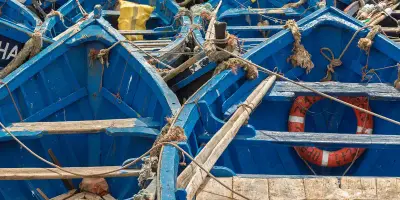
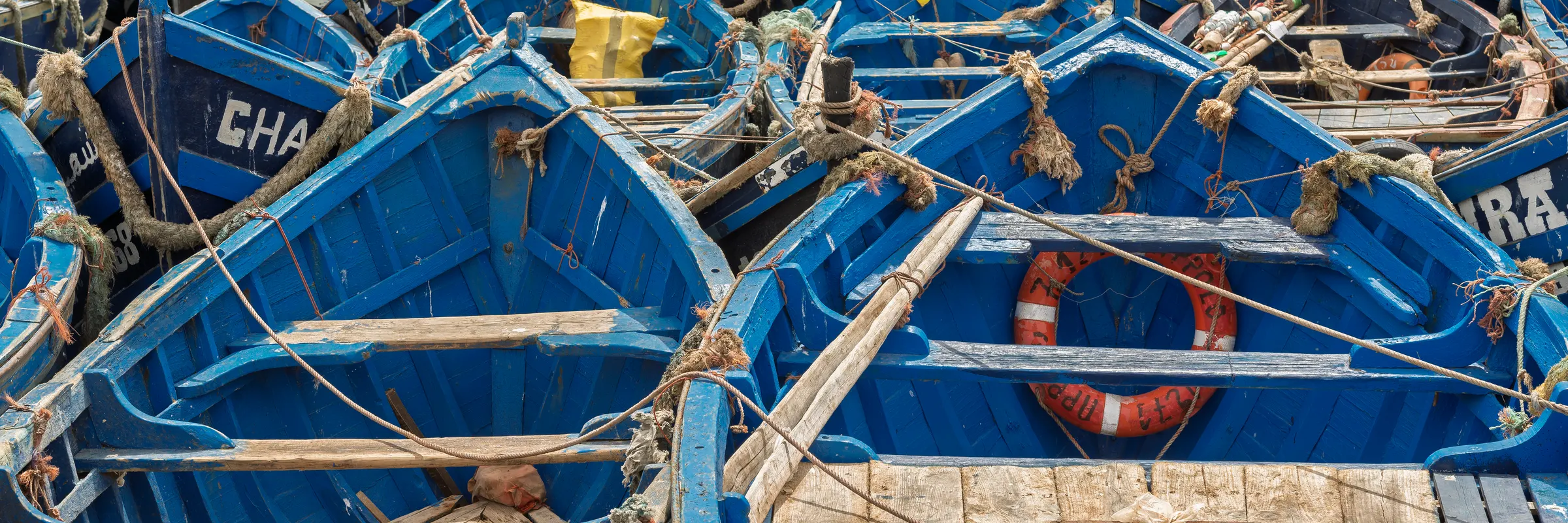
Essaouira: the blue fishing boats in the harbour
Photo: Mustang Joe · CC0
Essaouira, Morocco

Essaouira: how many days you need and the best months to go

Essaouira is the exception to everything people expect from Morocco. Its medina was designed in the 1760s by a European engineer working for a sultan who wanted a port to rival the north, which is why it has straight streets and a rational plan rather than the tangle of Fez or Marrakesh. It is on the Atlantic rather than the Mediterranean, it is windy enough to have become a kitesurfing destination, and it is genuinely relaxed. Two days is enough. Three if you want a day of the beach or the argan road.

Short answers

What people ask before booking

How many days do you need in Essaouira?

Essaouira needs two days — one for the medina, the ramparts and the port, one for the beach and doing very little — and almost everyone who books two wishes they had booked three.

What is the best month to visit Essaouira?

May and June — Warm, clear, and before the summer crowds. September and October — The wind drops and the sea is at its warmest.

Which months are worth avoiding in Essaouira?

December, January and February — Mild but cold in the wind, and the wettest months.

How many days Essaouira needs

Two days is the honest figure and the town rewards slowness rather than coverage: one day for the medina, the ramparts and the port, and one for the beach, a hammam and doing very little.

A third day is the argan road inland, a boat trip, or simply more of the same at a lower speed. Most people arrive from Marrakesh for two nights and wish they had booked three, which is the most common thing said about this town and is usually true.

The medina that was designed rather than grown

This is the thing that makes Essaouira different from every other Moroccan old town. In 1764 the sultan Mohammed III commissioned a fortified port here and hired a French engineer, Théodore Cornut, to lay it out — so the medina has a grid, wide straight main streets and European-style bastions, rather than the organic tangle that grew over centuries elsewhere.

The practical result for a visitor is that you cannot really get lost, and that the pressure to buy is the lowest of any medina in the country. It is a working town rather than a tourist set: fishing, wood carving and a lot of people simply living there. UNESCO listed it in 2001 precisely for being an intact example of a late-eighteenth-century fortified European-planned town in North Africa.

  • The ramparts — the sea walls with the bronze cannons, walkable and free, and the best thing to do at sunset.
  • The port — an active fishing harbour with the blue boats, the auction and the grill stalls. Loud, smelly and completely real.
  • The souks — thuya wood, argan oil, silver and spices, on a grid, without the hustle. The easiest shopping in Morocco.
  • The beach — a long crescent south of the town, used for windsports rather than sunbathing, with camel and horse rides at the near end.
  • Diabat — a village a few kilometres south with the ruins of a palace half-buried in sand, reachable on foot along the beach.

The wind, and what it means for your trip

Essaouira's local name for the wind is the *alizée*, and it blows hard and constantly from spring through summer. This is the single most important planning fact about the town: it is why the beach is a kitesurfing and windsurfing destination rather than a sunbathing one, and it is why the temperature is pleasant in July when Marrakesh is unbearable.

What that means depends on what you came for. If you want to lie on sand in still air, this is the wrong Moroccan beach and Agadir is the right one. If you want to walk a walled town in comfort while the interior bakes, or you actually want the wind, this is the best place on the coast.

Gnawa, and the music you will hear

Essaouira is the centre of Gnawa music in Morocco. The Gnawa are descendants of people brought north across the Sahara as slaves from West Africa, and their music combines sub-Saharan rhythms with Islamic Sufi practice — a heavy three-stringed bass lute, iron castanets, call and response, and ceremonies that run all night and are religious rather than performative.

You will hear it in cafés and squares year-round, and there is a large festival in June that fills the town completely. What is worth knowing is that the tourist-facing version and the ceremonial one are different things: the *lila*, the all-night ritual, is not a concert and is not something to walk into casually.

Getting here, and practicalities

Most people arrive from Marrakesh, which is around three hours by road. There is a small airport, but the bus and the shared taxis are frequent, cheap and the normal way to do it. The road passes the argan groves, which is worth staying awake for.

In town, the medina is closed to cars, so accommodation inside it means walking with your luggage from a gate — a short walk on a grid, unlike the same situation in Fez. Handcarts wait at the gates for exactly this.

  • Book a riad inside the walls and accept the walk from the gate. Cars cannot get to the door.
  • The bus from Marrakesh is three hours and runs several times a day. Book the day before in high season.
  • Bargaining is expected but gentle here compared with the imperial cities. The first price is still not the price.
  • Fridays are quieter. Many shops close for midday prayers and some do not reopen.

Argan, and how to buy it without being cheated

The argan tree grows in a belt of south-western Morocco and essentially nowhere else, and the oil pressed from its kernels is the region's most valuable export. It takes several hours of hand labour to produce a single litre, which is why real argan oil is expensive and why the cheap version on a market stall is usually cut with something else.

The reliable way to buy it is at a women's cooperative on the road inland, where you can watch the cracking and pressing happen. There are two products and they are not interchangeable: cosmetic oil, made from raw kernels, and culinary oil, made from roasted ones, which is darker and smells of nuts. If a stall sells you one labelled as both, it is neither.

What to eat in Essaouira, and where

This is a fishing port, which makes it the best place to eat seafood in Morocco and the cheapest. The rule here is to eat at the harbour rather than in a restaurant: you choose the fish off the ice, they weigh it, they grill it, and you eat it at a plastic table with bread and salt.

  • Sardina

    What to order

    The thing to eat, and where

    Sardines, grilled whole over charcoal at the port, minutes from the boat. Morocco is one of the world's largest exporters of sardines and Essaouira is where you eat them fresh, for very little money, at a row of stalls between the harbour and the walls. Agree the price by weight before they cook.

    Check it on Wikidata
  • Tajine

    What to order

    The national dish, and the fish version

    A slow-cooked stew named after the conical earthenware pot it is made in, which traps the steam and returns it to the food. On the coast it is made with fish and preserved lemon rather than lamb, which is the local variant and better than the version inland. Order it a couple of hours ahead if you can.

    Check it on Wikidata
  • Aceite de argán

    What to order

    The oil that only exists here

    Pressed from the kernels of a tree that grows in south-western Morocco and almost nowhere else. There are two products: raw for cosmetics, roasted for eating, and the culinary one is dark, nutty and served with bread or stirred into a sweet almond paste. Buy it at a cooperative, not a market stall.

    Check it on Wikidata
  • Medina of Essaouira

    Where to look

    The walled town, and why it is easy

    The old town, listed by UNESCO in 2001, laid out on a European grid in the 1760s rather than grown organically. Straight streets, wide gates, sea air and the lowest sales pressure of any medina in Morocco. The souks are inside it and so is most of the eating.

    Check it on Wikidata
  • Gnawa

    Where to look

    The music you will hear, and what it actually is

    The music of the descendants of West Africans brought north across the Sahara, combining sub-Saharan rhythm with Sufi ritual. The town is its Moroccan centre and holds a large festival in June. The cafés play it year-round; the all-night ceremonies are religious rather than a show.

    Check it on Wikidata

When to go, and what each month costs you

The Atlantic keeps Essaouira mild all year, which means it never gets as hot as Marrakesh and never gets properly warm either. The variable that decides your trip is not temperature but wind, which blows hardest from spring into summer and is the reason the town exists as it does.

  • May and June

    Go now

    Warm, clear, and before the summer crowds

    The best combination: comfortable in the sun, long days and everything open, with the wind strong enough to keep the town cool. The Gnawa festival falls in June and fills the town completely — plan around it in either direction, because it is either the highlight or the reason it is impossible to find a bed.

  • September and October

    Go now

    The wind drops and the sea is at its warmest

    The calmest and most pleasant window of the year, with the summer crowds gone and the water at its best. This is the one time the beach works as a beach rather than as a windsports venue. Quieter and cheaper than June.

  • July and August

    Worth it, but

    Cool while the interior burns, and completely full

    The wind makes Essaouira twenty degrees more bearable than Marrakesh, which is exactly why every Moroccan family comes here. Expect a full town, higher prices and a beach that is genuinely windy. It is the right choice if you are travelling Morocco in summer and the wrong one if you wanted quiet.

  • April and November

    Worth it, but

    Mild, cheap and slightly unreliable

    Pleasant days, cool evenings and occasional rain, with far fewer visitors. Everything is open and prices are noticeably lower. Take a layer for the evening, which surprises people who packed for Africa.

  • March

    Worth it, but

    The wind returning, and prices still low

    Warming up, with the spring wind building through the month. Good for walking the ramparts and less good for sitting still. Ramadan moves about eleven days earlier each year, so check whether it falls here: daytime eating thins out and the evenings become something else entirely.

  • December, January and February

    Think twice

    Mild but cold in the wind, and the wettest months

    Not cold by European standards and genuinely cold on an exposed rampart in an Atlantic wind, with most of the year's rain falling in these weeks. Prices are at their lowest and the medina works fine. What you lose is the outdoors, which in a town this small is most of the trip.

Things that change the trip

  • Come for the wind or accept it. This is not a lie-on-the-sand beach; the same wind that makes it comfortable makes it a windsports town.
  • Eat at the port grills rather than in a restaurant, and agree the price by weight before they cook.
  • Book three nights, not two. Almost everyone who books two says the same thing afterwards.
  • Buy argan oil at a cooperative on the road inland, and know that cosmetic and culinary are different products.
  • Walk the ramparts at sunset. They are free, they face west over the Atlantic, and it is the best hour in the town.
  • Take a jacket whatever the month. The Atlantic wind makes the evenings colder than the temperature suggests.

Plan Essaouira and the coast around it

A trip beyond three days, or one that adds Marrakesh, the Atlas or the road south towards Agadir with the driving between them, is exactly what Premium is for. The free version covers one destination of up to three days.

Destinations