Skip to content
JoruJoru
Chefchaouen: the blue town below the Rif mountains
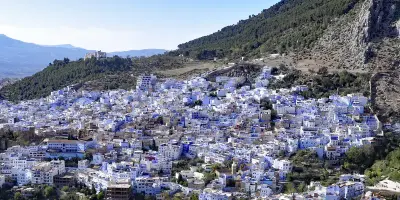
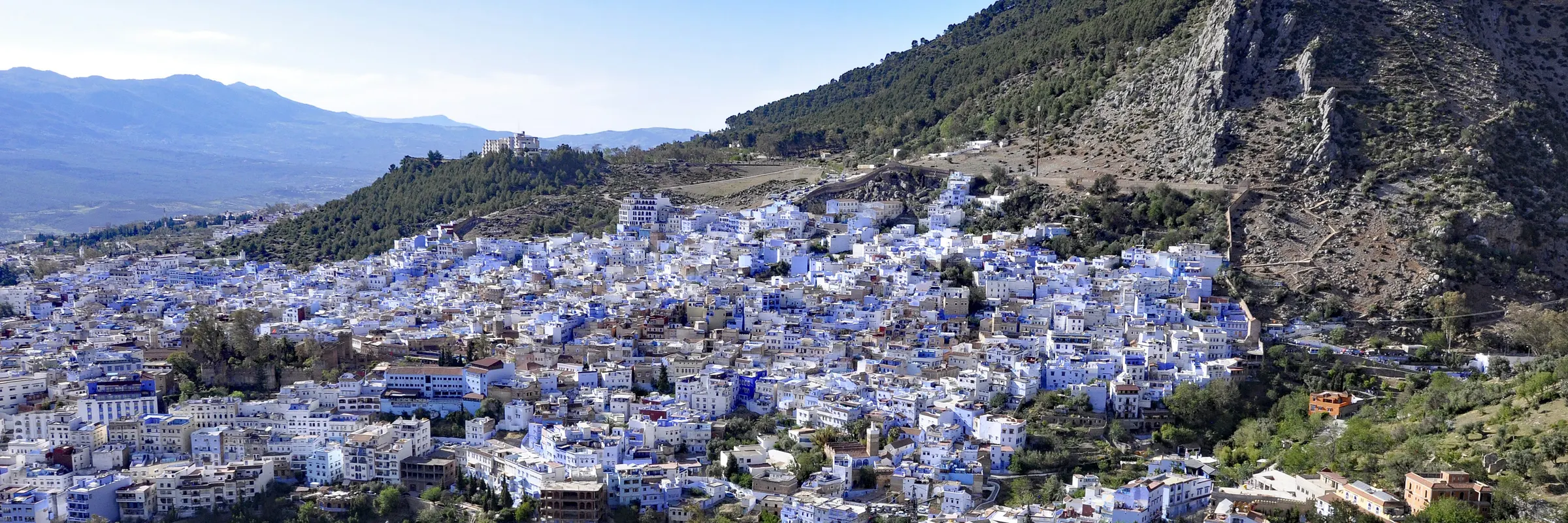
Photo: P. Hughes · CC BY 4.0
Rif mountains, Morocco

Chefchaouen: how many days you need and the best months

Chefchaouen is the most photographed small town in Morocco and one of the most misjudged. The old town is a few hundred metres across and can be walked in a morning, which means the honest planning question is not how many days it needs but what you do with the time once you have arrived — and the answer is the mountains it sits in, which almost nobody plans for.

Short answers

What people ask before booking

How many days do you need in Chefchaouen?

Chefchaouen needs one night for the blue medina, which is a morning's walking, and a second for the Rif mountains and the waterfalls at Akchour, which is what makes the journey worth it.

What is the best month to visit Chefchaouen?

April and May — Green mountains, wildflowers and comfortable walking. September and October — The summer heat breaks and the town empties.

Which months are worth avoiding in Chefchaouen?

July and August — Hot, and the town at its most crowded. December, January and February — Cold, wet and genuinely a mountain winter.

How many days Chefchaouen needs

One night is the honest answer for the town itself. The medina is small, the blue streets are a morning's wandering, the square is where you eat, and the walk up to the Spanish mosque for the view over the valley takes an hour. Anyone telling you three days are needed for the town is describing a different town.

Two nights is what makes the trip worth the journey, because the second day goes to the Rif mountains rather than the streets. The waterfalls and gorges at Akchour, an hour away, are the reason to stay a second night, and they are almost entirely absent from the photographs that bring people here.

How the town is arranged

Chefchaouen is built up the side of a mountain, and the whole place resolves into three parts. The medina is small enough that getting lost is a pleasure rather than a problem — walk downhill and you reach the gate, walk uphill and you reach the edge.

  • The medina — the walled old town, painted blue, a few hundred metres across. Steep, stepped and closed to cars.
  • Place Outa el Hammam — the main square below the kasbah, where the cafés and most of the restaurants are. Everything in the town orients around it.
  • The kasbah and its garden — a small fortress on the square with a walled garden and a tower worth climbing for the rooftop view.
  • Ras el Maa — the spring at the top of the medina, where the water comes out of the mountain and where the town does its washing. Where the streets end and the path begins.
  • The Spanish mosque — a disused mosque on the hill opposite, thirty to forty minutes up a clear path, with the standard view of the whole blue town. Best at either end of the day.

Getting there, because there is no train

Morocco's railway does not reach Chefchaouen and there is no airport. Everything arrives by road, and the practical options are the intercity coach or a shared or private grand taxi. This is the single most important planning fact about the town and it decides where it fits into a longer trip.

It sits between Tangier and Fez, roughly two to three hours from Tangier and four to five from Fez, on mountain roads that are slower than the distance suggests. That geography is what makes it a natural stop between the two rather than a destination in itself.

  • Book the coach in advance in summer. Seats sell out and the services are not frequent.
  • Grand taxis are shared by default and leave when full; paying for the empty seats makes it a private car, which is normal and negotiable.
  • The bus station is downhill from the medina and it is a real climb with luggage. This is worth arranging in advance.
  • No cars inside the medina. Whatever you arrive in stops at a gate and you walk from there.

The blue, and where it came from

The honest answer is that nobody knows, and the guides who tell you otherwise are picking one story. The three usual explanations are that Jewish refugees who settled here in the 1930s brought the colour, that the blue repels mosquitoes, or that it simply cooled the walls — and there is documentary support for none of them being the whole answer.

What is certain is that the painting is maintained, continuously and by residents, and that it is a working town rather than a set. The streets are repainted regularly, which is why the colour is so even, and people live behind those doors.

  • Photograph early. The light is best before nine and the streets are empty of day-trippers, who arrive by coach in the late morning.
  • Ask before photographing people or doorways. Residents are photographed constantly and a fair number will decline, which is entirely their right.
  • The famous stepped alleys with pots are private doorsteps. They are photographed from the street, not from inside.
  • The town has been Muslim, Jewish and Andalusian in turn, and the medina's architecture shows all three if you look at the door frames.

The mountains, which are the reason for the second day

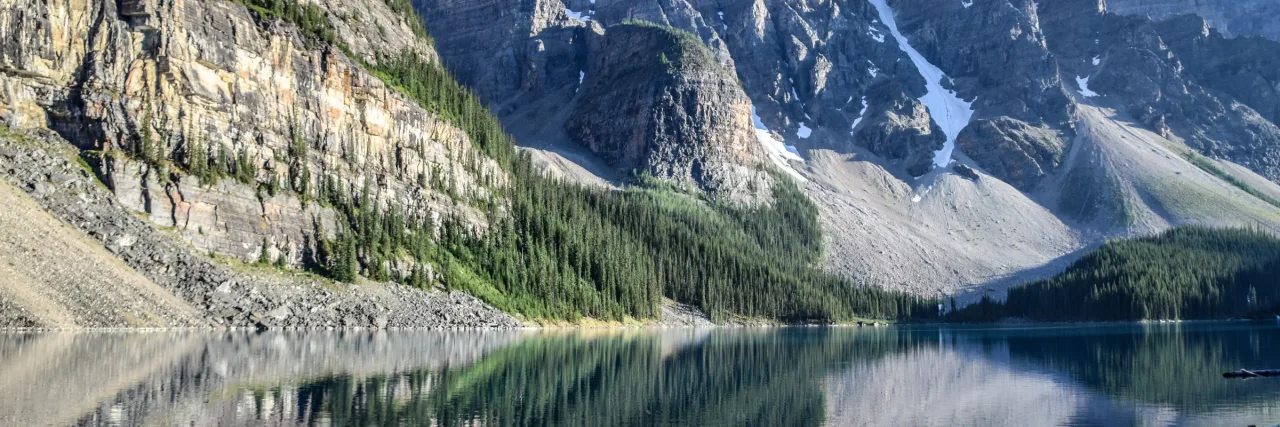
Chefchaouen sits in the Rif, and the mountains are why anybody lived here in the first place. Akchour is the standard trip: a valley an hour north-east with a river, a series of waterfalls and a natural rock arch, reached by grand taxi and walked from the road.

Talassemtane national park surrounds the town and has marked routes of every length. This is a genuinely good walking area with almost no international walking traffic, and it is what separates a two-night stay from a photo stop.

  • Akchour has two walks from the same starting point: a shorter one to the lower falls and a longer one to the rock arch. Both are well trodden and neither needs a guide.
  • Go early and take water. There are cafés at the trailhead and along the river, but the middle sections have nothing.
  • The river is cold and people swim in it anyway. It is a local summer habit and the pools below the falls are the point.
  • Cannabis is grown across the Rif and offers are routine. It is illegal in Morocco, and buying from someone who approaches you in the street is a well-known way for a holiday to go badly wrong.

How eating works here

This is mountain food and it is simpler and heartier than the cooking further south. Breakfast is the meal to get right: bread, olive oil, local cheese and mint tea, eaten early and slowly. The square is where most visitors eat and it is fine and unremarkable; the small places on the streets running off it are better and cheaper.

The other thing to know is the tea. Mint tea is offered constantly, it is poured from a height on purpose to aerate it, and refusing it is possible but slightly cold. It is also very sweet by default — you can ask for less sugar and it is not rude.

  • Alcohol is barely available. This is a conservative small town and most restaurants do not serve it. Plan around that rather than hunting for it.
  • Meals are slower than you expect. A tagine is cooked to order and takes forty minutes; ordering one at nine when you are hungry is a mistake.
  • Cash is essential. Card acceptance is patchy and there are only a few ATMs, mostly outside the medina.
  • During Ramadan the rhythm changes completely — many places close during daylight and open after sunset. The month moves each year through the calendar.

Where to eat in Chefchaouen, and what to order

The food here is Rif mountain food: goat's cheese, beans, bread and slow-cooked stews, with less of the elaborate cooking found in the imperial cities. Eat breakfast properly and eat lunch off the main square, and the town feeds you very well for very little.

  • Bissara

    What to order

    Breakfast, and the thing the town actually eats in the morning

    A thick purée of dried fava beans with olive oil, cumin and paprika stirred in at the table, eaten with bread and nothing else. It is a morning dish, sold from small counters, and it is gone by mid-morning. It costs almost nothing and it is the most local thing you can eat here.

    Check it on Wikidata
  • Tajine

    What to order

    The dinner, and the thing to know before ordering it

    Meat or vegetables cooked slowly under a conical earthenware lid that returns the steam to the pot. It takes around forty minutes and is cooked to order, so order it early or accept the wait. The mountain version is usually goat or chicken with preserved lemon, and the bread is the cutlery.

    Check it on Wikidata
  • Msemmen

    What to order

    The thing to eat standing up, at any hour

    A square flatbread, folded in layers and cooked on a griddle until it flakes. Eaten with honey and butter for breakfast or plain alongside a tagine, it is sold from small hatches all over the medina. Watching it being folded is half the reason to buy one.

    Check it on Wikidata
  • Maghrebi mint tea

    What to order

    The drink you will be offered constantly

    Green tea with a bundle of fresh mint and a great deal of sugar, poured from a height to put a head on it. You can ask for it less sweet and nobody minds. It arrives with every meal, every negotiation and every conversation, and refusing it is possible but reads as cold.

    Check it on Wikidata
  • Rif

    Where to look

    The mountains the town sits in, and what they produce

    The Rif is a green, wet, mountainous region that grows and grazes very differently from the rest of Morocco. The fresh goat's cheese is the local product to look for — sold in the markets and served with bread and honey — and it does not exist in this form in the cities further south.

    Check it on Wikidata

When to go, and what each month costs you

The thing to understand is that Chefchaouen has a mountain climate, not a Moroccan one. It sits in the Rif at altitude, it is markedly cooler than Fez or Marrakesh, it rains here when the rest of the country is dry, and it occasionally snows. Packing for Morocco rather than for a mountain town is the standard mistake.

  • April and May

    Go now

    Green mountains, wildflowers and comfortable walking

    The best window by a clear margin. The rains have stopped, the Rif is green rather than brown, and the temperature suits both the steep streets and the walks at Akchour. Prices are moderate and the day-trip coaches have not reached their summer volume.

  • September and October

    Go now

    The summer heat breaks and the town empties

    Warm, dry and quiet once the Moroccan and European holidays end. The river at Akchour is still swimmable in September. October brings the first rain but also the clearest air of the year over the valley.

  • March and November

    Worth it, but

    Cheap and wet, in an unpredictable pattern

    Shoulder months that can be beautiful or persistently grey. The town is at its emptiest and its cheapest, and the blue is arguably better under cloud than under hard sun. The mountain walks become mud-dependent.

  • June

    Worth it, but

    Hot, dry and filling up

    Warm rather than punishing, with long days and the walks still comfortable in the morning. The coach traffic increases through the month. Ramadan moves through the calendar and falls somewhere in this half of the year for several years running — during it, daytime eating options shrink sharply.

  • July and August

    Think twice

    Hot, and the town at its most crowded

    The peak of domestic and international tourism at once, in a medina a few hundred metres across. The streets that are the reason to come are shoulder-to-shoulder from mid-morning, and the heat makes the climbs hard. The Akchour river is at its busiest and the mountain shade is the only relief.

  • December, January and February

    Think twice

    Cold, wet and genuinely a mountain winter

    The Rif gets real winter weather: cold nights, sustained rain and occasional snow on the higher ground. Many guesthouses have no heating worth the name. The town is beautiful and nearly empty, and the mountain walks are largely off the table.

Things that change the trip

  • Give the town one night and the mountains a second. The medina is a morning's walking; Akchour is what makes the journey worth it.
  • There is no train and no airport. Plan it as a stop between Tangier and Fez, and book the coach ahead in summer.
  • Photograph before nine. The day-trip coaches arrive in the late morning and the streets change completely.
  • Pack a warm layer and something waterproof in every month except high summer. This is a mountain town, not a Moroccan city.
  • Carry cash. Cards are accepted patchily and the ATMs are mostly outside the medina walls.
  • Ask before photographing people and doorways. Residents are photographed all day and refusing is entirely reasonable.

Plan Chefchaouen with the mountains in it

A trip of more than three days, or one that adds Tangier, Fez or the coast and the roads between them, is what Premium is for. The free version covers one destination of up to three days.

Destinations