



Skip to content
JoruJoru
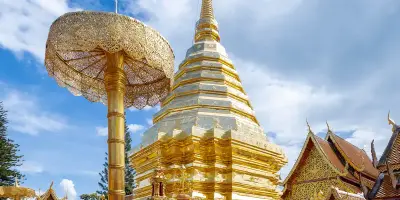
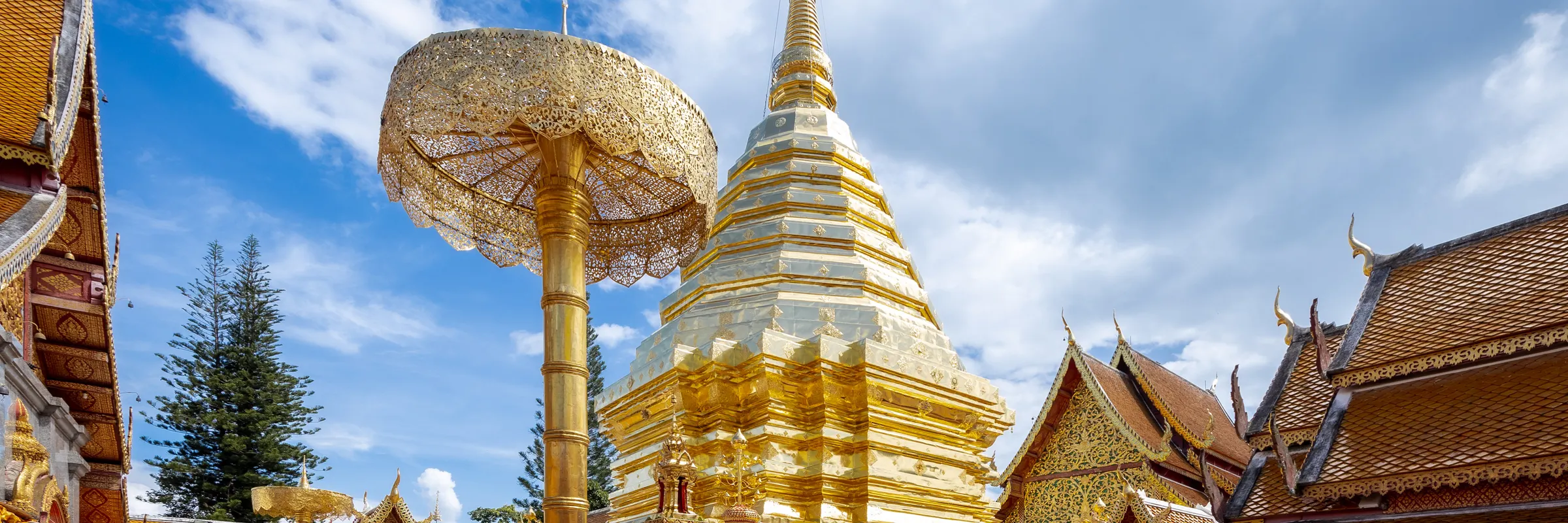
Chiang Mai: the golden chedi of Wat Phra That Doi Suthep
Photo: Supanut Arunoprayote · CC BY 4.0
Northern Thailand

Chiang Mai: how many days you need and the best months to go

Chiang Mai was the capital of the Lanna kingdom for two and a half centuries before Siam absorbed it, and the moat and the square of wall around the old city are still there. It sits about seven hundred kilometres north of Bangkok and roughly three hundred metres higher, which makes it noticeably cooler and is most of why people stay longer than they planned. Three days covers the city. Five is the number that gets you into the hills, and the month you choose matters more here than in almost any other destination on this site.

Short answers

What people ask before booking

How many days do you need in Chiang Mai?

Chiang Mai needs three days for the walled old city, the mountain and a market or a cooking class, and five to get into the hills. Avoid March and April: that is the burning season.

What is the best month to visit Chiang Mai?

November, December and January — The cool season: clear air, cold mornings, everything on. February — Still clear, warming up, before the smoke.

Which months are worth avoiding in Chiang Mai?

March and April — The burning season: the worst air in the world. August and September — The heaviest rain, and roads that wash out.

How many days Chiang Mai needs

Three days covers it properly: one inside the old city walls for the Lanna temples, one for the mountain and the villages on it, and one for a market, a cooking class or a massage course — the city is built for exactly that kind of day.

Five is where most people end up, because the hills north and west take a full day each and because Chiang Mai is unusually easy to stay in. It has a large long-stay foreign population for that reason: it is cheap, cool, well-connected and small enough to be legible in a week.

The burning season, which is the whole planning problem

From roughly late February through April, farmers across northern Thailand, Myanmar and Laos clear fields and forest by burning, and the smoke settles into the valley Chiang Mai sits in. In the worst weeks the city has recorded the worst air quality of any city in the world, and this is a recurring seasonal pattern rather than a one-off event.

It matters for anyone, and it matters a great deal for children, older travellers and anyone with asthma. The mountain views disappear, outdoor activity becomes unwise and the sky is white rather than blue. The awkward part is that Songkran, the Thai new year and the single biggest thing that happens here, falls in mid-April, inside that window. That is the trade this page is not going to hide: the best festival in the city sits in its worst air.

The old city, the moat and three hundred temples

The old city is a square of about one and a half kilometres a side, marked by a moat and the remains of a wall built in the late thirteenth century. You can walk across it in twenty minutes, and inside it are dozens of working temples in the Lanna style — dark teak, gilded stencilwork, low sweeping roofs — which look nothing like the glass-and-mirror temples of Bangkok.

Three are worth the time even if temples are not your thing. Wat Chedi Luang has a huge fifteenth-century brick chedi, partly collapsed by an earthquake and deliberately left that way. Wat Phra Singh is the ceremonial heart of the city. And Wat Chiang Man is the oldest, founded in 1296 when the city itself was founded.

  • Wat Chedi Luang — the ruined giant, and the most impressive thing inside the walls. The monk chat here is genuine and free.
  • Wat Phra Singh — the city's principal temple, and the best example of Lanna woodwork you can walk into.
  • Wat Chiang Man — from 1296, the year the city was founded, with elephant caryatids around the chedi.
  • Wat Phra That Doi Suthep — the golden chedi on the mountain, fifteen kilometres up a switchback road. The one that is worth the trip out.
  • Wat Umong — a forest temple with tunnels, in the woods on the western edge. Quiet in a way the others are not.

The mountain, and the temple on it

Doi Suthep rises directly behind the city, and the temple near its summit is what most visitors come up for. Founded in the fourteenth century, its golden chedi sits on a terrace with the whole valley below, reached by a staircase of over three hundred steps flanked by two nāga serpents — or by a funicular if the steps are not on.

Go on a clear morning and it is the best view in northern Thailand; go in March and you will see white. Beyond the temple the road continues to Doi Pui and a Hmong village, and the national park behind holds waterfalls and walking trails that almost nobody on a three-day trip gets to.

Elephants, and how to choose without doing harm

Chiang Mai is the centre of elephant tourism in Thailand and the quality of what is on offer varies enormously. The animals are expensive to keep — an adult eats for many hours a day — so every camp has to earn money somehow, and the question is how.

Riding is the clearest line. An elephant's spine is not built to carry a howdah, and the training that makes an elephant accept one is the part visitors do not see. Look for camps that do not offer riding at all, that keep the animals in a herd rather than chained individually, that limit group sizes, and that do not run bathing sessions where dozens of tourists scrub the same animal all day. Genuine sanctuaries will tell you where their elephants came from; the rest will change the subject.

Lanterns, water and the two festivals

Two things happen here that are worth planning a trip around, and both move.

Yi Peng, the lantern festival, follows the lunar calendar and falls in November — usually early in the month, but the date shifts by weeks from year to year. It coincides with Loy Krathong, when floating offerings go on the river, and between the two the whole city is lit. Note that the mass lantern releases you have seen photographed are ticketed events outside the city, not the free street festival.

Songkran, the Thai new year, is fixed in mid-April, and Chiang Mai is the most famous place in the country to be for it: three days in which the moat becomes ammunition and nobody stays dry. It is genuinely joyful and it is also the peak of the smoke season, which is the honest caveat.

What to eat in Chiang Mai, and where

Northern Thai food is its own cuisine and it is not the Thai food most people know: less coconut, less sugar, more herbs, more bitterness and a lot of pork. Nothing here tastes like a green curry, and that is the point of eating in this city.

  • Khao soi

    What to order

    The dish to order first

    Egg noodles in a curried coconut broth with a nest of crisp fried noodles on top, pickled mustard greens and shallots on the side. It arrived with Chinese Muslim traders and it is the signature dish of the north — it exists all over Thailand now, and it is best here. Squeeze the lime in before you decide what you think.

    Check it on Wikidata
  • Sai ua

    What to order

    The northern sausage

    A coiled grilled pork sausage packed with lemongrass, galangal, kaffir lime leaf and chilli, sold by weight at markets. The herbs are the whole point and they are what separates northern cooking from the rest of Thailand. Eaten with sticky rice and raw vegetables, standing up.

    Check it on Wikidata
  • Nam phrik num

    What to order

    The dip that comes with everything

    Young green chillies, garlic and shallots roasted until soft and then pounded into a rough dip, eaten with sticky rice, pork crackling and steamed vegetables. This is the everyday northern meal and it is what a local household actually eats, not a restaurant creation. Hotter than it looks.

    Check it on Wikidata
  • Khanom chin

    What to order

    The rice noodles with the curry poured over

    Fermented rice noodles served cold with a hot curry ladled over them and a table of herbs to add yourself. The northern version usually comes with a tomato and pork sauce that is milder than the southern one. Sold from stalls at breakfast, which is when it is best.

    Check it on Wikidata
  • Warorot Market

    Market

    The market to go to, and when

    The city's main fresh market, north-east of the old city and over a century old, spread across several buildings and the streets between them. It is where restaurants shop and where the northern sausage and the dips are made, and it is busiest and best early in the morning. The upper floors sell textiles rather than food.

    Check it on Wikidata

When to go, and what each month costs you

Chiang Mai has three seasons and one of them is a genuine health decision rather than a comfort one. Cool and dry from November to February, smoke from late February to April, rain from May to October. The month you pick changes this trip more than anything else you decide.

  • November, December and January

    Go now

    The cool season: clear air, cold mornings, everything on

    Dry, clear and cool enough to need a jacket at dawn in the hills — a real novelty in Thailand. The mountain views are open, the trekking is comfortable and the whole city is outdoors. Yi Peng and Loy Krathong fall in November and the date moves with the lunar calendar. Peak season and priced accordingly.

  • February

    Go now

    Still clear, warming up, before the smoke

    Warm days, cool evenings and the last reliable clear skies of the dry season. Prices ease slightly from the January peak. The haze usually begins somewhere in the second half of the month, so the earlier you land in February the better the odds.

  • October

    Worth it, but

    The rain ending, the country at its greenest

    Showers are thinning out and the hills are as green as they get all year, with waterfalls at full volume and few visitors. Some days are still wet through. Good value, and the rice terraces are worth the trip out on their own.

  • May, June and July

    Worth it, but

    Wet season, but not the way people fear

    Rain here mostly comes as heavy afternoon storms rather than all-day drizzle, and mornings are often fine. The air is clean again, which is the real argument for these months. Prices are low, the hills are green, and you plan around the afternoon.

  • March and April

    Think twice

    The burning season: the worst air in the world

    Agricultural burning across the region fills the valley with smoke, and Chiang Mai has recorded the worst air quality of any city on earth in the worst weeks. Views disappear and outdoor activity is unwise. Songkran falls in mid-April and is superb — it is simply inside this window, and that is the trade.

  • August and September

    Think twice

    The heaviest rain, and roads that wash out

    The wettest weeks of the year, when hill roads flood and trekking gets cancelled. The city itself carries on and the prices are the lowest of the year. If the trip is about the mountains rather than the temples, this is the wrong window.

Things that change the trip

  • Do not come in March or early April if you can avoid it. The burning season is a health issue, not a weather inconvenience.
  • Check when Yi Peng falls before booking November. It follows the lunar calendar and moves by weeks between years.
  • Choose an elephant camp that does not offer riding. It is the single clearest signal of how the animals are kept and trained.
  • Go up Doi Suthep on a clear morning. The view is the reason to make the trip, and by afternoon it is usually hazed over.
  • Eat northern food, not Thai food. Khao soi, the herb sausage and the roasted chilli dip are why this city is worth eating in.
  • Take a cooking class or a massage course. Chiang Mai is where both are cheapest and best taught, and it fills a day perfectly.

Plan Chiang Mai and the north

A trip beyond five days, or one that links Chiang Mai with Chiang Rai, Pai, Lampang or a run south to Bangkok with the seasons and the buses arranged around them, is exactly what Premium is for. The free version covers one destination of up to three days.

Destinations