Skip to content
JoruJoru
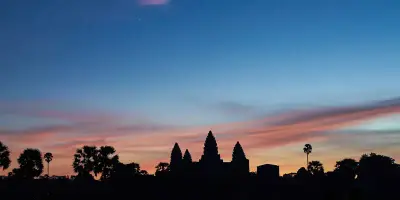
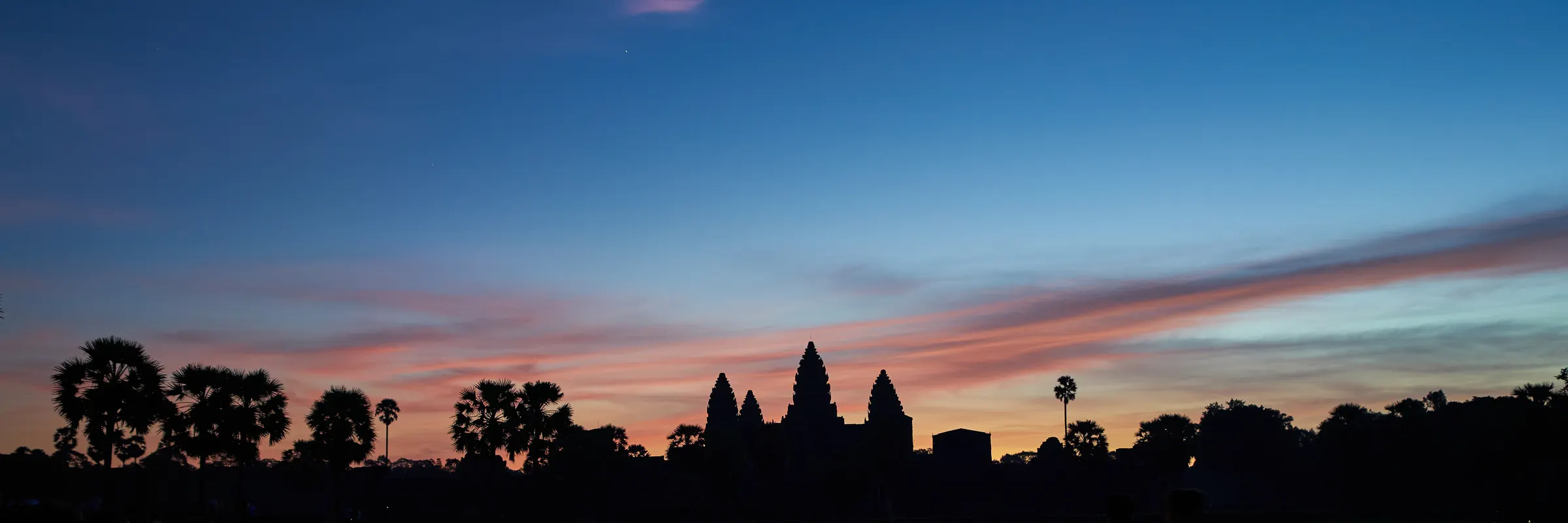
Siem Reap: Angkor Wat at dawn
Photo: Radek Kucharski · CC BY 2.0
Siem Reap, Cambodia

Siem Reap: how many days you need and when to go

Nobody comes to Siem Reap for Siem Reap. The town is the base for Angkor, the capital of the Khmer Empire from the ninth century to the fifteenth, which at its height was one of the largest urban complexes anywhere before the industrial age. What survives is several hundred temples across an area you cannot walk, in a climate that decides how much of it you actually see. Three days is the working figure. Choosing which temples, and at what hour, is the whole of the planning.

Short answers

What people ask before booking

How many days do you need in Siem Reap?

Angkor needs two days as an honest minimum — the central group on one, the outer circuit on the other — and a third to go back to one temple at a different hour, which is the best day of the trip.

What is the best month to visit Siem Reap?

November and December — Dry, green, and the moats still full. January and February — The coolest and driest months.

Which months are worth avoiding in Siem Reap?

April and May — The hottest weeks of the year, by a distance. June, July, August and September — The wet season, with the compensations it brings.

How many days Angkor needs

One day is enough to see Angkor Wat, the Bayon and the temple with the trees, and it is a hard, hot day that ends with all three blurring together. Two days is the honest minimum: the central group on one, the outer circuit and something further out on the other.

Three days is where it stops being a race. The extra day goes to the temples nobody photographs, to the lake, or to going back to one temple at a different hour — which is the single best thing you can do here, because these buildings change completely with the light. Beyond four days almost everyone is done, and that is not a failure of the temples.

How the site is arranged, and which temples to pick

Angkor is not one monument but an archaeological park of several hundred, spread over roughly four hundred square kilometres, and the standard way to see it is two named loops that every driver knows. The small circuit covers the central group in a day; the grand circuit adds the outer ring, and the famous temples are split between them.

The mistake almost everyone makes is trying to see more temples rather than fewer, better. Four in a day is comfortable. Eight is a slideshow you will not remember.

  • Angkor Wat — the largest religious monument in the world by area, built in the first half of the twelfth century for Vishnu and later turned Buddhist. It faces west, which is unusual and is why the sunrise happens behind it.
  • Angkor Thom and the Bayon — the walled royal city, and at its centre a temple mountain covered in enormous carved faces. Late twelfth century, and the strangest thing on the site.
  • Ta Prohm — the one the trees have taken. It was left deliberately unrestored, which is a nineteenth-century decision that turned out to be the best marketing any temple ever had.
  • Banteay Srei — an hour further out, tenth century, cut in pink sandstone and carved more finely than anything else here. Worth the drive; go early or late.
  • Pre Rup and Phnom Bakheng — the two sunset temples. One is calm and one is rationed by a queue; ask your driver which is which this season.

The sunrise, and whether to do it

Sunrise at Angkor Wat is genuinely spectacular and it is not a private experience. Somewhere between several hundred and a couple of thousand people stand at the northern pool for it every clear morning, and the good positions are taken well before there is any light. It is worth doing once, with that expectation.

There is a better version of the same idea. Go to the sunrise on your second or third morning rather than your first, when you already know where the pool is and can get into position in the dark. And do at least one sunset at an outer temple instead, where the crowd is a tenth of the size and the light is doing the same job.

  • Buy the pass at the official ticket centre, not at the temples. It carries your photograph and it is checked at every entrance.
  • Keep the pass on you all day. It is checked repeatedly, including inside the park, and losing it means buying another.
  • Shoulders and knees must be covered to climb to the upper level of Angkor Wat. This is enforced at the stairs, and a scarf does not count.
  • Hire the tuk-tuk for the whole day, not per trip. The driver waits, moves you between temples and knows the loop order that avoids the coaches.

The town, and what it is for

Siem Reap exists to serve Angkor and makes no secret of it. The centre is a few streets of restaurants, bars and massage places around a market, and it is compact enough to walk in fifteen minutes. The bar street is loud, cheap and aimed squarely at visitors; the market behind it is where the town buys its own food.

That said, the town has more to it than the strip. There are silk workshops, a circus school that trains young Cambodians as performers, and the beginnings of a restaurant scene that treats Khmer food as something other than a tourist set menu.

Tonlé Sap, the lake that flows backwards

South of the town is the largest freshwater lake in Southeast Asia, and it does something no other lake does. For part of the year the Mekong rises so high that it pushes water back up the river that drains the lake, reversing the flow and swelling the lake to several times its dry-season size. Whole villages are built on stilts or on floating platforms because of it, and the fishery it supports feeds much of the country.

Visiting it is worth doing and easy to do badly. The nearest floating village to town has a long-standing reputation for pressured selling and inflated boat fees; the villages further out are quieter and more real. Ask specifically which one a tour goes to before booking, and go in the wet season or just after, when the lake is actually full.

Money, history and other practicalities

Cambodia runs on two currencies at once. Prices are quoted in US dollars, ATMs dispense them, and the local riel is used as small change below a dollar — so you will pay in dollars and receive riel back, and both are normal. Carry small notes and check the condition of the dollars you are given: torn ones are refused.

The other thing worth knowing before you arrive is what is missing. The Khmer Rouge held the country from 1975 to 1979 and killed a large share of its population, targeting the educated first. The consequences are visible in the age structure of the country and in the fact that the generation who would now be running institutions largely does not exist. Angkor is what Cambodians point to as evidence of what the country was; that is not a coincidence.

  • Carry small dollar notes, and refuse torn ones politely when you are given them, because you will not be able to spend them.
  • Change below a dollar comes in riel. It is not a trick, and refusing it makes no sense.
  • Stay on marked paths in rural areas away from the park. Parts of the countryside are still being cleared of mines, decades on.
  • Buying from children is the thing not to do, however hard it is. It keeps them out of school, which is the point of putting them there.

What to eat in Siem Reap, and where

Khmer food gets overshadowed by Thai and Vietnamese and should not be: it is milder, more sour and built on a lemongrass and galangal paste rather than on chilli. The one ingredient that defines it is a fermented fish paste that most visitors never knowingly eat, and which is in almost everything.

  • Fish amok

    What to order

    The national dish, and the one to order first

    Fish in a coconut and lemongrass curry, thickened with egg and steamed in a banana-leaf cup until it sets like a savoury custard. It is mild, aromatic and completely unlike a Thai curry, and the steaming is the part restaurants skip — if it arrives as a soup in a bowl, it was made in a hurry.

    Check it on Wikidata
  • Num banhchok

    What to order

    Breakfast, and what the country actually eats

    Fermented rice noodles under a green fish gravy, with a pile of raw banana flower, cucumber, bean sprouts and herbs on top that you mix in yourself. It is sold from a shoulder-pole or a cart in the morning and gone by ten, and it is the most Cambodian thing on this list. Sour, herbal and nothing like a Thai noodle dish.

    Check it on Wikidata
  • Kuy teav

    What to order

    The other breakfast, and the safe one

    A clear pork broth with rice noodles, fried garlic and whatever you point at, assembled to order. It came with Chinese migration and became a Cambodian staple, and every town has its own version. Order it if the fermented one is a step too far on day one.

    Check it on Wikidata
  • Prahok

    What to order

    The ingredient behind everything

    Fish salted, crushed and fermented for months, then used the way a European kitchen uses stock. You almost certainly ate it already: it is in the curry, in the dips and in the noodle gravy, in quantities too small to identify. Eaten straight, as a dip with raw vegetables, it is a different proposition and a fair test of how far you want to go.

    Check it on Wikidata
  • Kampot pepper

    What to order

    The one Cambodian ingredient with a reputation abroad

    Black pepper from the coastal province of Kampot, grown on poles, sun-dried and protected by a geographical indication. French colonial kitchens built their reputation on it and the Khmer Rouge years nearly ended the crop, which was replanted from surviving vines. It turns up fresh and green on the stalk in local dishes, which is worth trying.

    Check it on Wikidata
  • Psar Chas

    Market

    Where the town buys its own food

    The old market in the centre, behind the bar street: produce and fish in the morning, souvenirs by day, and food counters at the back that are considerably better than the strip outside. Prices are negotiated and the first number is for visitors. Go early, when it is a market rather than a shop.

    Check it on Wikidata

When to go, and what each month costs you

There is no cool season, only a dry one and a wet one, and the difference matters more here than in most places because everything you came for is outdoors, unshaded and made of stone that holds heat. The temples are open all year; how long you last in them is the variable.

  • November and December

    Go now

    Dry, green, and the moats still full

    The rains have just stopped, so the landscape is still green and the moats and reservoirs are full — which is what the reflection photographs depend on. Comfortable enough to walk all morning. This is the best combination of the year and it is priced accordingly.

  • January and February

    Go now

    The coolest and driest months

    Peak season: dry, bright and as cool as it gets, which still means warm by most standards. The countryside is browning off and the water levels are dropping. Book the popular temples' sunrise expecting company, and everything else well ahead.

  • March

    Worth it, but

    Still dry, and heating fast

    The end of the comfortable window. Mornings are fine and the middle of the day starts to be genuinely hard work on open stone. Fewer visitors than February and lower prices. Start at first light and stop at eleven.

  • October

    Worth it, but

    The rains ending, and the lake at its fullest

    Showers most afternoons, brief and heavy, and everything intensely green. This is the best month for Tonlé Sap, which is at its maximum extent. Prices are low and the temples are quiet. Take a poncho and plan around the afternoon.

  • April and May

    Think twice

    The hottest weeks of the year, by a distance

    April is the hardest month in Cambodia and the temples offer no shade. Walking Angkor at midday in April is not sightseeing, it is endurance. Khmer New Year falls in mid-April and the whole country travels and shuts for several days, which is worth seeing and worth planning around.

  • June, July, August and September

    Think twice

    The wet season, with the compensations it brings

    Daily heavy rain, usually in the afternoon, and the lowest prices of the year. The temples are empty, the stone is dark with water and the countryside is at its most beautiful, which is a real argument. What you lose is reliability: half your afternoons will be spent waiting somewhere dry.

Things that change the trip

  • See fewer temples properly rather than more badly. Four in a day is the limit before they stop being distinguishable.
  • Buy the pass at the official ticket centre. It carries your photo, and it is checked at every gate and inside the park.
  • Do the sunrise on your second morning, not your first. Knowing where to stand in the dark is the difference between a view and a wall of phones.
  • Hire a tuk-tuk driver for the whole day. The waiting is the service, and the loop order he chooses is worth more than the fare.
  • Cover shoulders and knees if you want to climb to the top level of Angkor Wat. It is enforced at the stairs.
  • Ask which floating village a lake tour actually goes to. The nearest one to town has the worst reputation and the highest prices.

Plan Angkor properly

A trip beyond four days, or one that adds Phnom Penh, the coast or a crossing into Vietnam or Thailand with the transport between them, is exactly what Premium is for. The free version covers one destination of up to three days.

Destinations