Skip to content
JoruJoru
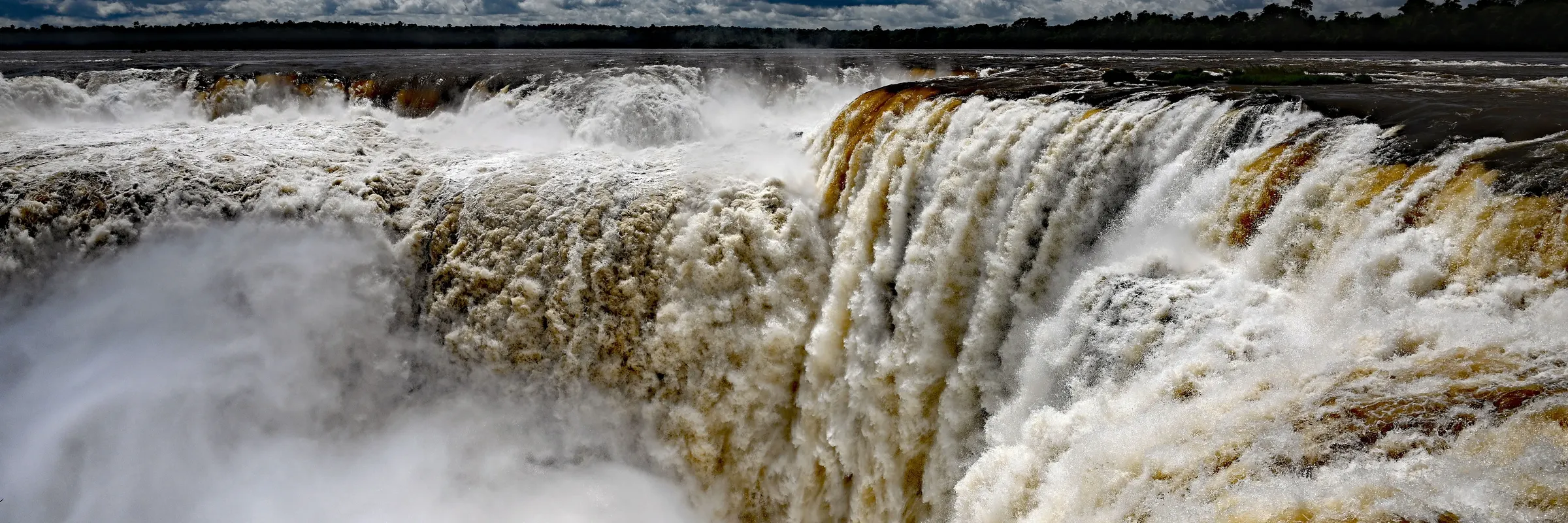
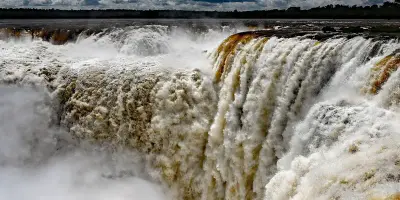
Iguazú Falls: The Devil's Throat, from the Argentine walkway
Photo: P. Hughes · CC BY 4.0
Argentina and Brazil

Iguazú Falls: how many days you need and the best months to go

Iguazú is not one waterfall. It is a chain of somewhere around two hundred and seventy-five falls along a three-kilometre curve of the Iguazú river, dropping up to eighty metres into a gorge, and it sits exactly on the border between Argentina and Brazil with Paraguay a few kilometres upstream. The two countries have separate national parks with separate entrances, and they show you completely different things. Two days is the honest minimum: one per side. Three is comfortable.

Short answers

What people ask before booking

How many days do you need in Iguazú Falls?

Iguazú needs two days, one per side: Argentina puts you inside the falls on kilometres of walkway, Brazil shows you all of them at once. Peak water in December to February is the worst time, not the best — the spray hides the Devil's Throat.

What is the best month to visit Iguazú Falls?

April and May — Autumn: good flow, bearable heat, few people. September and October — Spring: warm, green and still quiet.

Which months are worth avoiding in Iguazú Falls?

December, January and February — Peak water, peak heat, peak crowds — all at once.

How many days Iguazú needs

Two days, one per side, and this is not padding. The Argentine park holds about eighty per cent of the falls and puts you among them on kilometres of walkway — including the Devil's Throat, the huge horseshoe at the top, reached along a catwalk over flat water that gives no warning of what is coming. It is a full day and you will walk a lot.

The Brazilian park is the opposite and takes half a day: a single panoramic trail along the gorge that shows you the whole curve at once, which is the view Argentina cannot give you because in Argentina you are inside it. Both are essential and neither substitutes for the other. A third day buys the boat under the falls, the Paraná river confluence where three countries meet, or the Itaipú dam on the Brazilian side.

Two countries, two completely different visits

This is the single thing to understand before booking. Argentina is immersion; Brazil is the panorama. In Argentina you spend a day on upper and lower circuits, a park train, and the long catwalk to the Devil's Throat, where the water falls away in front of and beneath you and the noise makes conversation pointless. You get wet.

In Brazil you walk a single trail of a couple of kilometres along the opposite bank, with the entire Argentine side laid out across the gorge, ending on a platform in the spray below the Devil's Throat. It takes two or three hours and it is the photograph everyone has seen. The classic advice is Brazil first for the overview and Argentina second for the detail, though either order works. What does not work is choosing one.

Practically: you can stay on either side and visit both. Puerto Iguazú in Argentina and Foz do Iguaçu in Brazil are about half an hour apart by road. Crossing is routine, but check your own visa requirements for both countries before you book, because they differ by nationality and Brazil in particular has changed its rules more than once in recent years.

  • Devil's Throat — the largest fall, on the Argentine side, reached by a long catwalk. Go first thing, before the crowds and the heat.
  • Upper and lower circuits — the Argentine walkways, several hours, and where you get close enough to be soaked.
  • The Brazilian panoramic trail — two hours, the whole falls in one frame, ending on a platform in the spray.
  • The boat trip — a speedboat that goes under a fall on purpose. You will be completely wet; there are dry bags.
  • The Three Frontiers landmark — where the Iguazú meets the Paraná and Argentina, Brazil and Paraguay all touch.

Why more water is not better

This is the counter-intuitive part and almost nobody says it. The falls carry the most water from December to March, in the southern summer — and that is not the best time to see them. High flow means the spray becomes a permanent cloud, the Devil's Throat disappears inside it, and photographs come back white. It also coincides with the worst heat and humidity of the year.

The other extreme matters too. In an unusually dry year the flow can drop far enough that the falls thin out and, very rarely, nearly stop — this has happened, most recently in drought years. The reliable window is the middle: enough water to be spectacular, enough visibility to see it. Occasionally, after heavy rain, the Devil's Throat catwalk is closed for safety, which is worth knowing if you have only one day on the Argentine side. Build in a spare morning if you can.

The jungle, and the coati problem

Both parks sit in Atlantic rainforest, which is a rarer and more threatened ecosystem than the Amazon, and the walkways run through it. You will see toucans, plush-crested jays and hundreds of butterflies; there are jaguars and they are essentially never seen.

What you will absolutely encounter is the coati, a raccoon relative that has learned that people carry food, moves in groups, and will climb on a table or a bag to get it. They look tame and they are not: they bite and scratch, park staff post warnings about it, and the injuries are common enough to be a standing problem. Do not feed them, do not photograph them at arm's length, and keep food inside a closed bag. The other rule is sun: there is very little shade on the Brazilian trail and the catwalks are exposed. Hat, water, sunscreen.

Where to base yourself, and getting there

Puerto Iguazú (Argentina) is smaller and quieter; Foz do Iguaçu (Brazil) is a real city with more choice and lower prices. Both have airports with direct flights from their capitals — Buenos Aires and São Paulo or Rio — and flying is how nearly everyone arrives. The bus from Buenos Aires takes around seventeen hours and is comfortable, but it is a journey rather than a transfer.

Getting between them is a local bus or a taxi, half an hour, and both national parks are served by public buses from their respective towns. Two practical points: entry to each park is paid separately in local currency and a ticket to one is not valid in the other, and Argentina's park offers a discounted second consecutive day if you get it stamped on the way out, which is genuinely worth doing. This is a border region with three currencies in circulation; carrying some cash in each of the two you will actually use saves trouble.

What to eat at Iguazú, and where

This is the Guaraní heartland where Argentina, Brazil and Paraguay meet, and the food crosses all three borders: cassava rather than wheat, river fish rather than sea fish, and a grill on both sides. The yerba you drink here is grown a few kilometres away.

  • Chipá

    What to order

    The bread of the region, on both sides of the border

    A small dense roll of cassava starch and cheese, baked until it puffs and eaten warm, sold from bus windows and street carts across the whole border area. Its origins are Guaraní and it is eaten identically in Argentine Misiones, Paraguay and southern Brazil — it is the one food that ignores the border completely. Buy it hot; cold it is rubbery.

    Check it on Wikidata
  • Surubí

    What to order

    The river fish to order instead of beef

    A large spotted catfish from the Paraná and Iguazú rivers, firm, almost without small bones, usually grilled or in a stew. In a region where everyone defaults to grilled beef, this is the thing that is actually local. Wikidata's entry for the common name has no article in any language; the genus is the reliable record.

    Check it on Wikidata
  • Tereré

    What to order

    What people drink all day in this heat

    Yerba mate brewed with ice-cold water instead of hot, drunk from a shared cup through a metal straw, and the standard drink of the border in summer. Misiones province is where the yerba is actually grown, so this is not an imported habit. Refreshing, bitter, and offered constantly; accepting is polite, and you pass the cup straight back.

    Check it on Wikidata
  • Churrasco

    What to order

    The Brazilian side of the grill

    Meat grilled over embers, salted simply and often served from the skewer at the table until you say stop. The Argentine and Brazilian traditions differ in cut and in ceremony and both are within half an hour of each other here, which is a genuinely good reason to eat dinner on the other side one night.

    Check it on Wikidata
  • Parque Nacional Iguazú

    Where to look

    The Argentine park, and what it holds

    The national park on the Argentine bank, a UNESCO World Heritage site holding around eighty per cent of the falls, with kilometres of walkway, a park train and the catwalk to the Devil's Throat. This is the immersive side and it is a full day. The Brazilian park across the gorge is a separate site with a separate ticket.

    Check it on Wikidata

When to go, and what each month costs you

Subtropical, so it rains all year and the question is heat and crowds rather than a wet and dry season. The trap is assuming peak water is peak experience: December to February is the highest flow, the worst heat and the busiest holidays all at once.

  • April and May

    Go now

    Autumn: good flow, bearable heat, few people

    The best combination of the year. Water levels are still high from the summer rains but the humidity has broken and the spray has thinned, so you can actually see the Devil's Throat. Mild days, comfortable walking, and the crowds of January are long gone. Prices are at their lowest of the good months.

  • September and October

    Go now

    Spring: warm, green and still quiet

    Warming up without the summer's weight, the forest in flower, butterflies everywhere and flow building again after the winter low. The best months for wildlife on the trails. Rain is possible any day and passes quickly. Book around Argentine and Brazilian long weekends, which land here.

  • August

    Worth it, but

    Cool and dry, with the lowest water of the year

    Comfortable temperatures, clear air and the best visibility of the calendar — and the least water, so the falls are at their least overwhelming. In a dry year this is noticeable. Excellent for photography and walking, slightly underwhelming if raw volume is what you came for.

  • June and July

    Worth it, but

    Winter, and the Argentine school holidays

    Cool, sometimes genuinely cold in the mornings, with low water and clear views. July is winter holidays in Argentina and Brazil and the parks fill up, which undoes the main advantage of the season. June is the better half of this pair.

  • March and November

    Worth it, but

    The shoulders of summer: hot, wet and building

    Hot and humid with strong flow and frequent storms, on either side of the peak. March still carries summer's water with fewer people than February; November is warming towards the crush. Both work if you accept heat and a real chance of rain.

  • December, January and February

    Think twice

    Peak water, peak heat, peak crowds — all at once

    The highest flow of the year, which sounds ideal and is not: the spray becomes a permanent cloud, the Devil's Throat vanishes inside it and photographs come back white. Add heat above what most visitors expect, high humidity, and the Argentine and Brazilian summer holidays filling both parks. The most expensive and least comfortable window.

Things that change the trip

  • See both sides. Argentina puts you inside the falls, Brazil shows you all of them at once, and neither replaces the other.
  • Go to the Devil's Throat first thing in the morning. The catwalk fills up, and the light and the crowds both get worse after ten.
  • Do not feed the coatis, and keep food in a closed bag. They bite, and injuries are common enough that the parks post warnings.
  • Get your Argentine ticket stamped on the way out for a discounted second consecutive day. It is a real saving and barely advertised.
  • Check your visa rules for both countries before booking. They differ by nationality and Brazil's have changed more than once recently.
  • Bring a hat, water and sunscreen. There is almost no shade on the Brazilian trail or on the catwalks.

Plan Iguazú and the border region

A trip that combines both sides of the falls with Buenos Aires, Rio or the Jesuit missions of Misiones — with the border crossing, the two park tickets and the flow season worked out around it — is exactly what Premium is for. The free version covers one destination for up to three days.

Destinations