

Skip to content
JoruJoru
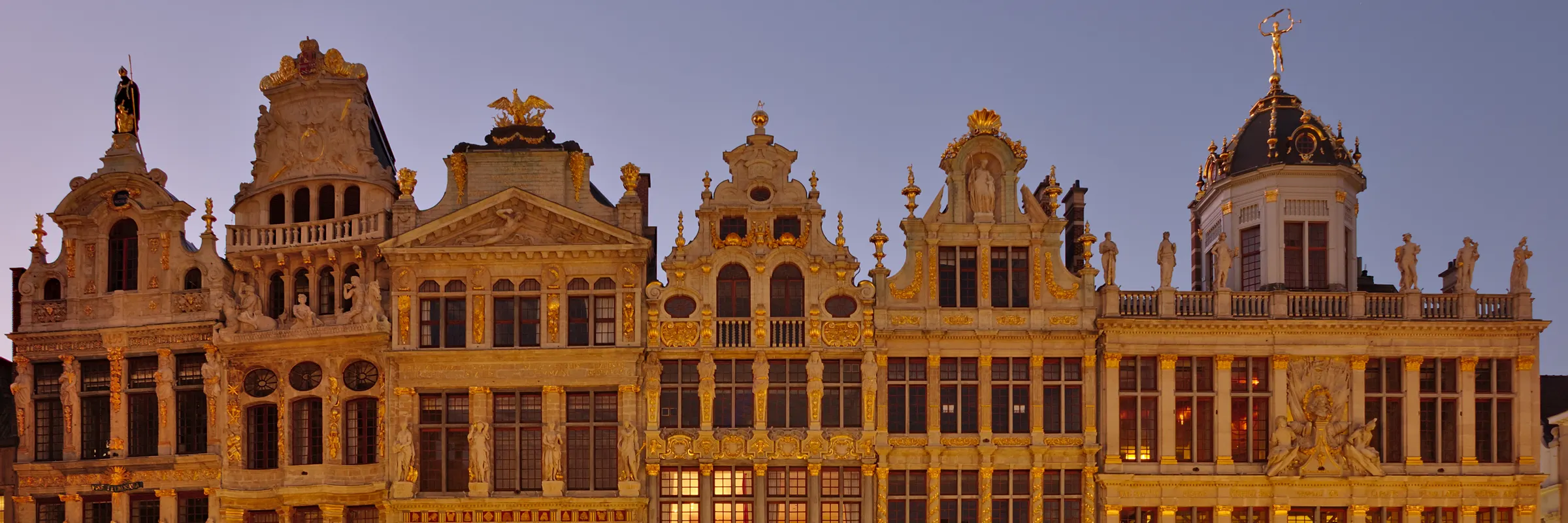
Brussels: The guild houses of the Grand-Place at dusk

Brussels-Capital, Belgium

Brussels: how many days you need and the best months to go

Photo: Trougnouf (Benoit Brummer) · CC BY 4.0

Brussels is a city that does not try to charm, and charms anyway. Its centre is the Grand-Place, one of the most beautiful squares in Europe, ringed by the gilded guild houses rebuilt after a French bombardment in the seventeenth century; around it run lanes of restaurants, covered galleries of the nineteenth century and the bars where Belgium's beers are poured, each in its own glass. Further out are the mansions of the Art Nouveau architects who created the style here, the great museums of Flemish painting and of Magritte, the murals of the comic-strip heroes Belgium gave the world, and the glass towers of the European Union. It is a bilingual city, French and Dutch, a crossroads of nationalities, and a place of grand avenues next to scruffy streets. The planning problem is the city's character and its position. Brussels rewards wandering between very different districts, and it is also the base for Belgium: Bruges, Ghent and Antwerp are each within about an hour by train. Give the city two days, and the rest to the Flemish cities.

Short answers

What people ask before booking

How many days do you need in Brussels?

Brussels needs two days: one for the lower town — the Grand-Place, the royal galleries, the little statue of the boy and the comic-strip murals — and one for the upper town's museums of Flemish painting and Magritte, the Art Nouveau houses, the European quarter and the Atomium. A third day is for Bruges, Ghent or Antwerp, each about an hour or less by train.

What is the best month to visit Brussels?

May to September — Terraces and festivals.

Work out how many hours you will have in Brussels on your dates
When to go, and what each month costs you

Brussels has a mild, wet maritime climate: cool summers, mild winters and rain in every season. The warm months, from May to September, are the best, with terraces and festivals; the Christmas market brightens December.

  1. January: Worth it, but
  2. February: Worth it, but
  3. March: Worth it, but
  4. April: Worth it, but
  5. May: Go now
  6. June: Go now
  7. July: Go now
  8. August: Go now
  9. September: Go now
  10. October: Worth it, but
  11. November: Worth it, but
  12. December: Worth it, but
  • May to September

    Go now

    Terraces and festivals

    Mild to warm days, long evenings and terraces on the squares. In early July a great historical pageant crosses the Grand-Place, and in August of even years a carpet of flowers covers it; summer showers are frequent.

  • October and November

    Worth it, but

    Grey, wet and cultural

    Cool, often rainy days and short afternoons. The season of museums, concerts and beer cafés.

  • December

    Worth it, but

    The winter festival

    Cold, dark days lit by the Christmas market around the Grand-Place and the old fish market, with a light show on the square. Hotels fill at weekends.

  • January to April

    Worth it, but

    Cold, grey and quiet

    Cold, grey days with rain, and lower prices. The royal greenhouses open for a few weeks in April and May, a famous event whose dates move every year; spring arrives in April.

What to pack for Brussels, month by month

How many days Brussels needs

Two days cover the city. One for the centre: the Grand-Place, the covered royal galleries, the little statue of the boy, the comic-strip murals and museum, and the old fish market quarter in the evening. One for the upper town and beyond: the royal museums of fine arts and Magritte, the Art Nouveau houses of Horta, the European quarter and the Atomium on the city's edge.

The third day is for a Flemish city: Bruges with its canals, Ghent with its towers and its altarpiece, or Antwerp with Rubens and its station, each about an hour or less by train.

How the city is arranged, between the lower and upper towns

Brussels grew on two levels, inside a pentagon of ring boulevards that replaced its walls. The lower town holds the Grand-Place and the old lanes; the upper town on the ridge to the east has the royal palace and the museums, with the cathedral on the slope between them. The European quarter lies further east, and the Art Nouveau districts of Ixelles and Saint-Gilles to the south.

  • The Grand-Place and the Îlot Sacré — the great square and the lanes of restaurants and galleries around it.
  • Sainte-Catherine and Dansaert — the old fish market quarter and the street of designers, with bars and seafood restaurants.
  • The Mont des Arts and the royal quarter — the upper town, with the museums, the royal palace and the park.
  • Ixelles and Saint-Gilles — the southern districts of Art Nouveau houses, cafés and the lively Flagey and Châtelain squares.
  • The European quarter — the institutions of the European Union around the Schuman roundabout, with the Parliament and the Cinquantenaire park.

Where to stay, and what each area costs you

The lower town is the classic base, with the sights on foot; Ixelles and Saint-Gilles are more local and lively in the evening, and the European quarter has business hotels that empty and get cheaper at weekends.

Prices can rise in the weeks of the big European summits, and fall at weekends and in August in the business districts. The city charges a tourist tax per room and per night.

AreaWho it suitsThe catch
Around the Grand-PlaceFirst visits: the square, the galleries, the restaurants and the central station on foot.Touristy, with tourist-trap restaurants in the lanes.
Sainte-Catherine and DansaertBars, seafood, designer shops and a younger crowd, five minutes from the Grand-Place.Noisy at night around the squares.
Ixelles and Saint-GillesLocal life, Art Nouveau streets, cafés and restaurants, a tram or metro ride from the centre.Further from the sights, and some rough corners near the Gare du Midi.
The European quarterBusiness hotels, the institutions and the Cinquantenaire park, cheaper at weekends.Dead in the evenings and at weekends.

Compare these areas against your priorities

Getting there, and getting around

Brussels is a rail hub of Europe: high-speed trains reach Paris in about an hour and a half, London through the Channel Tunnel in about two hours, and Amsterdam and Cologne in about two. The main airport is about twenty minutes from the centre by train.

The centre is walkable, with a metro, trams and buses for the rest. Trains to Bruges, Ghent and Antwerp leave several times an hour from the central stations.

  • Some low-cost flights use Charleroi airport, an hour away by bus.
  • The high-speed trains use the Gare du Midi; its surroundings are rough at night.
  • Signs are in French and Dutch: streets, stations and stops have two names.
  • Pay with a contactless card on the metro, trams and buses.

The Grand-Place, Art Nouveau and the comic strip

The Grand-Place is the heart of the city and one of the great squares of Europe: the Gothic town hall with its spire, the King's House facing it, and around them the guild houses with their gilded gables, rebuilt in a few years after the French bombarded the city in 1695. It is a World Heritage Site. See it by day, again at night when it is lit, and in August of even years, when a carpet of flowers covers it for a few days.

  • The royal museums of fine arts — Flemish painting from Bruegel to Rubens, and a museum devoted to Magritte.
  • The Horta house — the home and studio of Victor Horta, one of the creators of Art Nouveau, with its curving ironwork and glass.
  • The royal galleries of Saint-Hubert — covered shopping arcades of the 1840s, among the oldest in Europe.
  • The comic-strip murals and museum — scenes of Tintin and other heroes painted on walls around the centre, and a museum in an Art Nouveau textile store designed by Horta.
  • The Atomium — a giant model of an iron crystal built for the 1958 World's Fair, with views from its top sphere.
  • The little boy — the small bronze fountain of a boy from the seventeenth century, now a copy on its corner, often dressed in one of his more than a thousand costumes.

How eating works here

Belgium eats generously: mussels cooked in white wine with chips, a beef stew in dark beer, mashed potatoes with vegetables, waffles, chocolate, and chips fried twice in a paper cone. And it drinks beer like nowhere else, from the sour lambics brewed only around Brussels to the strong ales of the monasteries, each served in its own glass.

Lunch from noon, dinner from seven. Avoid the restaurants of the lane of touts by the Grand-Place; eat where the locals do, a few streets away.

  • Chips are sold in paper cones from the friteries, with a dozen sauces.
  • Beer cafés pour hundreds of beers, each in its own glass; ask the staff to recommend one.
  • Chocolate shops offer pralines by the piece; the great names are around the Grand Sablon.
  • Service is included: rounding up is enough.

Where to eat in Brussels, and what to order

Brussels eats and drinks Belgian: mussels with chips, a beef stew in dark beer, chips fried twice in a cone, a light waffle, and the sour beer brewed only around the city. Eat away from the Grand-Place, and drink in a beer café.

  • Moules-frites

    What to order

    Mussels with chips

    A pot of mussels steamed with white wine, celery and onion, or in other sauces, with a plate of chips. It is the classic dish of Brussels, served in great pots in the restaurants of the old fish market quarter.

    Check it on Wikidata
  • Frites

    What to order

    Chips from a friterie

    Thick potato chips fried twice, traditionally in beef fat, served in a paper cone with mayonnaise or one of a dozen sauces. Belgium claims to have invented them, and the friteries of the city's squares make the best.

    Check it on Wikidata
  • Carbonade flamande

    What to order

    Beef stewed in dark beer

    Beef stewed slowly with onions in dark beer, with a slice of bread spread with mustard to thicken the sauce. It is the Flemish comfort dish, served with chips.

    Check it on Wikidata
  • Gaufre de Bruxelles

    What to order

    The Brussels waffle

    A light, crisp, rectangular waffle with deep pockets, dusted with icing sugar, or with fruit and cream. The Brussels waffle is lighter than the sweet, dense waffle of Liège, also sold everywhere in the city.

    Check it on Wikidata
  • Gueuze

    What to order

    The sour beer of Brussels

    A blend of young and old lambics, wild-fermented beers made only in and around Brussels, sour, dry and sparkling. A family lambic brewery in the city, working since 1900, opens its doors to visitors; the beer cafés pour it too.

    Check it on Wikidata

Things that change the trip

  1. See the Grand-Place by day and again at night.
  2. Avoid the restaurants with touts in the lanes by the square.
  3. Take the train to Bruges, Ghent or Antwerp for a day.
  4. Order beer in a beer café, and let the staff choose.
  5. Carry an umbrella in every season.
  6. Look for the comic-strip murals as you walk.

Plan Brussels with Belgium

A trip of more than three days, or one that joins Brussels with Bruges, Ghent, Antwerp, Amsterdam or Paris and the trains between them, is what Premium is for. The free version covers one destination of up to three days.

Destinations