
Skip to content
JoruJoru
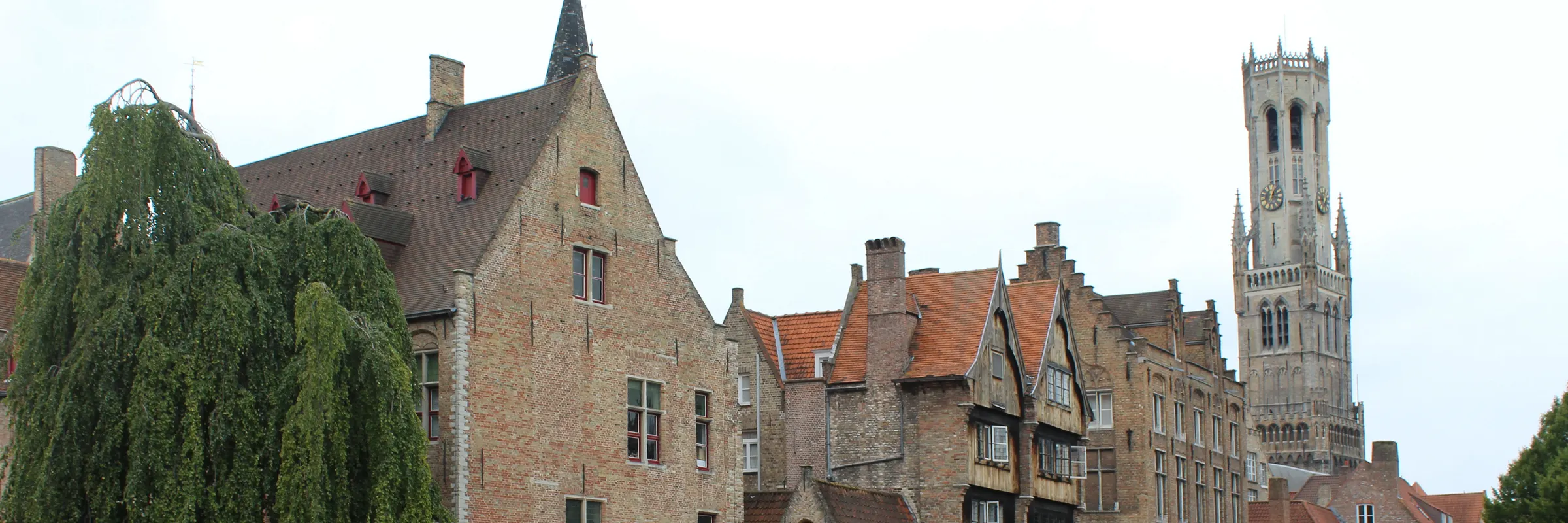
Bruges: Brick gables by the Dijver, with the belfry behind

West Flanders, Belgium

Bruges: how many days you need and the best months to go

Photo: Dguendel · CC BY 4.0

In the Middle Ages Bruges was one of the great trading cities of northern Europe, linked to the sea by an inlet and full of merchants from Italy, Spain and the Hanseatic towns. Its wealth paid for the belfry over the market square, the Gothic town hall, the churches and the paintings of Jan van Eyck and Hans Memling. Then the inlet silted up, trade moved to Antwerp, and the city slept for centuries, poor and almost unchanged, until nineteenth-century writers and visitors rediscovered it and restored it, often in a romantic Gothic style. What remains is an oval of canals and lanes, small enough to cross on foot in half an hour, with stepped brick gables reflected in the water, quiet courtyards and swans on the old harbour. The whole centre is a World Heritage Site. The planning problem is its size and its fame. Millions of visitors come each year, most of them for a few hours, and the centre is packed by late morning. Sleep in the city if you can, walk it early and in the evening, and give the middle of the day to the museums.

Short answers

What people ask before booking

How many days do you need in Bruges?

Bruges needs one full day for the market square and the belfry, the Burg, a boat on the canals and the beguinage. A second day, or a night in the city, lets you see it early and late without the day-trippers, and adds the Flemish painters, the windmills and the brewery. Sleep in the centre if you can.

What is the best month to visit Bruges?

May to September — Long evenings on the canals.

Work out how many hours you will have in Bruges on your dates
When to go, and what each month costs you

Bruges has a mild, wet maritime climate, with cool summers, mild winters and rain in every season. The warm months, from May to September, are the best, and the busiest; December has its Christmas market.

  1. January: Worth it, but
  2. February: Worth it, but
  3. March: Worth it, but
  4. April: Worth it, but
  5. May: Go now
  6. June: Go now
  7. July: Go now
  8. August: Go now
  9. September: Go now
  10. October: Worth it, but
  11. November: Worth it, but
  12. December: Worth it, but
  • May to September

    Go now

    Long evenings on the canals

    Mild to warm days, long evenings and terraces by the water. On Ascension Day, forty days after Easter and so moving every year, the procession of the Holy Blood crosses the city; summer weekends are the most crowded.

  • October and November

    Worth it, but

    Grey, wet and quiet

    Cool, often rainy days and short afternoons, with fewer visitors. The season for museums, beer cafés and misty canals.

  • December

    Worth it, but

    The Christmas market

    Cold, dark days lit by the Christmas market on the Markt and an ice rink. Hotels fill at weekends, and the day-trippers return.

  • January to April

    Worth it, but

    Cold, grey and empty

    Cold, grey days with rain, the emptiest streets and the lowest prices. Few canal boats sail before March; the daffodils of the beguinage bloom in March and April.

What to pack for Bruges, month by month

How many days Bruges needs

One full day covers the heart of the city: the market square and the belfry, the Burg with the town hall and the basilica, a boat on the canals, the beguinage and the old harbour, with a museum at midday. A second day, or a night in the city, lets you see it early and late, without the day-trippers, and adds the Flemish painters, the windmills on the ramparts and a brewery.

A third day is for a trip out: Damme, a village along a poplar-lined canal, by bike; Ghent, half an hour by train; or the coast, a quarter of an hour away.

How the city is arranged, inside its ring of canals

The historic centre is an oval ringed by a canal and the green ramparts of the old walls, about two kilometres across. The market square and the Burg are in the middle, the station just outside the ring to the south-west, and the beguinage and the old harbour at the southern edge.

  • The Markt and the Burg — the market square under the belfry and the square of the town hall and the basilica, the heart of the city.
  • The Dijver and the Rozenhoedkaai — the canal quays south of the Markt, with the classic views, the boat landings and the museums.
  • The Church of Our Lady and the Saint John's quarter — the great brick church and the medieval hospital, between the centre and the beguinage.
  • The beguinage and the Minnewater — the walled courtyard of white houses and the old harbour lake with its swans, at the southern edge.
  • Sint-Anna and the eastern ramparts — the quieter eastern quarter, with the lace centre, the old almshouses and the windmills.

Where to stay, and what each area costs you

Sleeping in the centre is the way to see Bruges at its best, early in the morning and after the day-trippers leave. Everything is within walking distance; the streets around the Markt are the most central, the eastern quarter the quietest, and the station area the most practical for trains.

Prices rise at weekends, in summer and during the Christmas market, and fall on winter weekdays. The city charges a tourist tax per person and per night.

AreaWho it suitsThe catch
Around the Markt and the BurgFirst visits: the squares, the canals and the restaurants on your doorstep.The dearest rooms, and the crowds all day.
Sint-Anna and the eastQuiet canals, local streets and the windmills, ten minutes from the Markt.Fewer restaurants in the evening.
Near the beguinage and the stationTrains for day trips, the quiet south of the city and cheaper hotels.A walk of a quarter of an hour or more to the Markt.

Compare these areas against your priorities

Getting there, and getting around

Bruges is about an hour by train from Brussels, half an hour from Ghent and a quarter of an hour from the coast; Brussels airport is about an hour and a half away by train. The station is just outside the ring of canals, a walk of about twenty minutes or a short bus ride from the Markt.

Inside the ring, you walk or cycle. The centre is small and flat, cars are restricted, and the best way to see it is on foot, with a boat trip on the canals.

  • Leave the car in the car park by the station; driving in the centre is slow and parking is scarce.
  • Canal boats leave from several landings in the centre for a half-hour trip, every day from March to October; in winter only some sail, weather permitting.
  • Rent a bicycle for the ramparts and the canal road to Damme.
  • Watch your step on the cobbles, and for cyclists in the lanes.

The belfry, the canals and the Flemish painters

The belfry rises over the Markt, the symbol of the city's freedom and wealth: a tower of brick and stone with an octagonal top and a carillon of bells, part of a World Heritage listing of the belfries of Belgium and France. Its 366 steps lead to the view over the roofs and canals; visitors are let up in limited numbers, so go early.

  • The canals — the quays of the Rozenhoedkaai and the Dijver, best seen from a boat or at dawn.
  • The Groeninge museum — the Flemish Primitives: Jan van Eyck, Hans Memling, Gerard David, and a Last Judgement by Bosch. It closes in January 2027 for several years of works, and the heart of its collection moves to the BRUSK exhibition hall next door.
  • The Basilica of the Holy Blood — a Romanesque lower chapel and a richly painted upper one, with a relic carried through the city each year in a great procession.
  • The Church of Our Lady — one of the tallest brick towers in the world, and a marble Madonna and Child by Michelangelo.
  • The beguinage — a walled courtyard of white houses round a garden of trees, founded in the thirteenth century, carpeted with daffodils in spring.
  • The windmills — four mills on the grassy eastern ramparts; one still grinds flour and opens to visitors from spring to autumn.

How eating works here

Bruges eats Flemish: beef stewed in beer, a creamy stew of chicken or fish from Ghent, mussels with chips, and chips from the stalls under the belfry. Chocolate shops line the streets, and the city's own brewery has worked in the centre for generations.

Lunch from noon, dinner from half past six or seven. The restaurants on the Markt are dear and touristy; walk a few streets away, and book dinner at weekends.

  • Chips from the stalls by the belfry are the cheapest meal in the centre.
  • Beer cafés pour hundreds of Belgian beers, each in its own glass.
  • Chocolate shops sell pralines by the piece; quality varies, so look for the shops that make their own.
  • Service is included: rounding up is enough.

Where to eat in Bruges, and what to order

Bruges eats and drinks Flemish: chips from the stalls on the Markt, beef stewed in beer, a creamy stew from Ghent, chocolate from the shops that make their own, and a beer from the brewery in the centre.

  • Frieten

    What to order

    Chips under the belfry

    Thick chips fried twice and served in a paper cone with mayonnaise or another sauce, from the stalls at the foot of the belfry. The quickest and cheapest meal in the centre, eaten standing on the square.

    Check it on Wikidata
  • Stoofvlees

    What to order

    Beef stewed in beer

    Beef stewed slowly with onions in dark beer, thickened with bread spread with mustard, and served with chips. The Flemish comfort dish, on the menu of every tavern.

    Check it on Wikidata
  • Waterzooi

    What to order

    The creamy stew of Ghent

    A stew of chicken or fish with leeks, carrots and potatoes in a broth thickened with cream and egg yolk. It comes from Ghent, half an hour away, and is served in the Flemish restaurants of Bruges.

    Check it on Wikidata
  • Belgische chocolade

    What to order

    Belgian chocolate

    Pralines filled with creams, ganaches and nut pastes, sold by the piece in dozens of shops. Bruges has a chocolate museum, and shops that make their own in the back; they are worth seeking out.

    Check it on Wikidata
  • De Halve Maan

    Institution

    The brewery in the centre

    A family brewery that has worked in the old town for generations, with a tour, a tasting and a beer named after the old nickname of the people of Bruges. Its beer runs through a pipeline of about three kilometres under the city to its bottling plant outside the ring.

    Check it on Wikidata

Things that change the trip

  1. Sleep in the city, and walk it early and in the evening.
  2. Spend the busiest hours in the museums.
  3. Climb the belfry early, before the queues.
  4. Take a canal boat, then walk the quays at dawn.
  5. Cycle to Damme along the canal on a fine day.
  6. Eat a few streets away from the Markt.

Plan Bruges with Flanders

A trip of more than three days, or one that joins Bruges with Ghent, Brussels, Antwerp or the coast and the trains between them, is what Premium is for. The free version covers one destination of up to three days.

Destinations