





Skip to content
JoruJoru
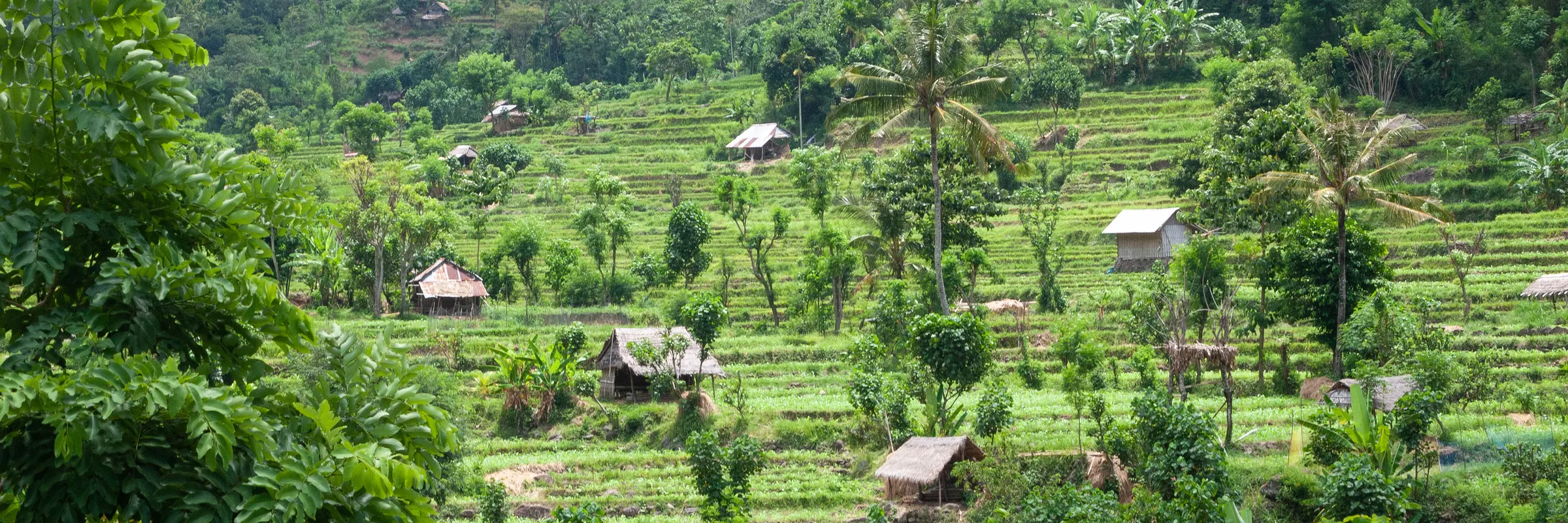
Bali: rice terraces on the volcanic slopes of the east
Photo: Vyacheslav Argenberg · CC BY 4.0
Bali, Indonesia

Bali: how many days you need and the best months to go

The mistake people make with Bali is booking it as a single destination. It is an island of very different places — a temple-and-rice-terrace interior, a surf coast, a cliff coast, a quiet family coast and a set of smaller islands offshore — and the roads between them are narrow, single-lane and slow. A trip planned as a list of sights loses two days in a car. A trip planned around one or two bases does not.

Short answers

What people ask before booking

How many days do you need in Bali?

Bali needs six days at a minimum, split between two bases — three or four nights inland and the rest on a coast. Ten is where it stops being a checklist and the offshore islands fit.

What is the best month to visit Bali?

April, May and June — The dry season starts and nobody has arrived yet. September and October — The other shoulder, quieter than the spring one.

Which months are worth avoiding in Bali?

December, January and February — The wettest and most humid stretch.
How many days Bali needs

Six days is the shortest honest answer, and it means two bases rather than one: three or four nights inland and the rest on a coast, with a single move between them. Anything shorter turns into a series of long drives, because the interior and the beaches are genuinely an hour and a half to three hours apart depending on the hour of day.

Ten days is where Bali stops being a checklist. The extra time goes to the offshore islands, a day with nothing planned, and the parts of the interior that are twenty minutes past where the coaches turn around. This is a destination that rewards staying put, and the people who enjoy it most are the ones who moved the least.

How the island is arranged

The south is where almost all visitors go, and it is the busiest and most built-up part. The island runs from a volcanic spine in the north down to beaches in the south, and the distances look small on a map and are not: there is no motorway across the middle, and a village market can hold up the only road for twenty minutes.

  • Ubud — inland, among rice terraces and river gorges, and the cultural centre of the island. Temples, dance, craft villages and the greenest part of the south. Not on the coast, which surprises people who booked it for a beach holiday.
  • Canggu and Seminyak — the west coast strip: surf, beach clubs, cafés and the highest concentration of foreign residents on the island. Busy, developed and where the traffic is worst.
  • Uluwatu and the Bukit peninsula — the southern cliffs, with the best surf, the clearest water and the most dramatic sunsets. Spread out and hard to move around without wheels.
  • Sanur and the east coast — calm water, a paved seafront path, an older and quieter crowd, and the ferry port for the offshore islands. The most underrated base on the island.
  • The Nusa islands and the north — Nusa Penida and Lembongan by fast boat, and the volcanic north around Munduk and Amed. Different trips, and both worth a night rather than a day.

Where to stay, and why it is the decision that matters

In most destinations the choice of neighbourhood affects your evenings. In Bali it decides the whole trip, because moving between areas costs hours rather than minutes and because the areas are genuinely aimed at different people.

The practical approach is two bases and one move, chosen from the table below. Booking a single base and day-tripping to everything else is the most common plan and the one that produces the most time in a car.

AreaWho it suitsThe catch
UbudCulture, walks, food and green. The best base for the interior and the temples.No beach, and the central streets are congested and noisy by day.
CangguSurf, cafés, nightlife and a young crowd, with the widest choice of places to eat.Traffic that has become a running local complaint, and the least Balinese part of Bali.
UluwatuCliffs, the best waves and the quietest luxury.You need a scooter or a driver for everything; nothing is walkable.
SanurCalm swimming, a flat seafront to walk or cycle, and the boats to the Nusa islands.Quiet in the evenings and sometimes described as dull — which is the point.
Nusa PenidaCliffs, snorkelling and the most dramatic coast in the region.Rough roads and basic infrastructure; not a comfortable first base.

Getting around, and the traffic nobody plans for

There is no train and effectively no useful public transport for a visitor. The realistic options are a hired car with a driver for the day, ride-hailing apps, or a scooter, and which one you choose changes the trip more than any sight on your list.

A driver for a day is inexpensive by European standards and is the standard way to see the interior. A scooter is what most residents use and it is genuinely the fastest way to move in the south — it is also how most visitors get hurt, and an international licence with a motorcycle category is required for both the law and the insurance to work.

  • Journey times are not distances. Twenty kilometres can be forty minutes or two hours depending on the hour and the road.
  • Ride-hailing apps work but not everywhere. Some areas have local transport agreements that restrict pickups, and drivers will ask you to walk a street or two.
  • Cash still matters outside the developed south, and there is a tourist levy payable online before arrival — pay it in advance rather than in a queue.
  • Book the fast boats to the Nusa islands in advance in the dry season. They fill, and the crossings are weather-dependent.

Temples, etiquette and the one day the island stops

Bali is Hindu in a country that is overwhelmingly Muslim, and the religion is not background — there are daily offerings on every pavement and ceremonies that close roads without notice. A sarong and sash are required to enter a temple, are lent or rented at the entrance, and apply to everyone regardless of what else you are wearing.

The thing to plan around is Nyepi, the day of silence. For twenty-four hours the entire island stops: no flights in or out, the airport closed, no vehicles, no work, no lights at night, and everyone — visitors included — expected to stay inside their accommodation. The date moves every year, falling in March or occasionally late in February, because it follows the Balinese lunar calendar. It is extraordinary to experience and catastrophic to arrive into unprepared.

  • Cover shoulders and knees at temples, and menstruating women are traditionally asked not to enter — a rule that is posted at the gate and is not negotiable.
  • Do not step on the small offerings on pavements and doorsteps. They are placed fresh several times a day and walking around them is basic courtesy.
  • Ceremonies close roads with no warning. If your driver says a route is shut, it is shut; there is no arguing with a procession.
  • The night before Nyepi has parades of giant papier-mâché demons in every village, which is the best free spectacle on the island.

How eating works here

The everyday eating happens in warungs — small family-run places, often a single room with a few tables, serving what was cooked that morning. They are inexpensive to the point of surprise, and they are where the food is best. The tourist restaurants are fine and cost several times as much for a lesser version.

The one structural warning is water. Tap water is not drinkable, ice in established places is made from purified water and is fine, and the standard local practice is bottled or refill stations. This is not a reason to avoid warungs, which cook everything through.

  • Rice comes with everything and is the point, not the side. A plate is built around it.
  • Spice level is usually adjustable — *pedas* means spicy, and *tidak pedas* gets you the mild version.
  • Pork is normal in Bali and rare in the rest of Indonesia, because the island is Hindu rather than Muslim. It is one of the clearest ways the island differs from its neighbours.
  • Skip the civet coffee. It is marketed hard to visitors and the production almost always involves caged animals.

Where to eat in Bali, and what to order

Balinese food is not Indonesian food with a beach, and the difference is worth chasing: the island has its own ceremonial dishes, its own spice paste and a pork tradition the rest of the country does not share. Eat in warungs and order the local plate rather than the international menu, and the trip changes.

  • Warung

    Institution

    The kind of place to look for, before the dish

    A small family-run eatery, often one room with a glass case of what was cooked that morning. You point at what you want and it goes over rice. The busy one at midday is the right one — the food is made once a day and the good ones sell out. This is the single most useful word to know here.

    Check it on Wikidata
  • Nasi campur

    What to order

    The everyday meal, and how it is assembled

    Rice in the middle with several small portions around it: vegetables, a protein, something fried, sambal on the side. You are choosing the components, not ordering a dish, which is why pointing works better than reading. It is the cheapest full meal on the island and usually the best.

    Check it on Wikidata
  • Babi guling

    What to order

    The dish Bali is genuinely known for

    Whole suckling pig, stuffed with spice paste and turned over wood until the skin shatters. It began as a ceremonial dish and is now an everyday one, served in specialist places that do nothing else. Go at lunchtime; it is cooked in the morning and when it is gone it is gone.

    Check it on Wikidata
  • Betutu

    What to order

    The slow dish worth ordering ahead

    Duck or chicken rubbed with a complex spice paste, wrapped in leaves and cooked slowly in embers for hours. Some places want a day's notice, which tells you what kind of dish it is. It is the most distinctly Balinese thing on this list and the least like anything elsewhere in Indonesia.

    Check it on Wikidata
  • Sate lilit

    What to order

    The satay that is not on a stick

    Minced fish or meat mixed with coconut and spice, moulded around a stalk of lemongrass and grilled. The stick is the seasoning, which is the whole idea. It is a Balinese speciality and it is nothing like the peanut-sauce satay served across the rest of the country.

    Check it on Wikidata
  • Jimbaran

    Where to look

    Grilled fish on the sand, and how not to overpay

    A stretch of beach on the south-west coast lined with places that grill the day's catch on tables set on the sand at sunset. Agree the weight and the price before it is cooked, which is normal practice and expected. Go for the setting; the fish is good and the view is the reason.

    Check it on Wikidata

When to go, and what each month costs you

Bali sits eight degrees south of the equator, so the temperature barely moves all year and the only real variable is rain and humidity. There is a dry season and a wet one, and the shoulders between them are the sweet spot: dry enough to be reliable and quiet enough to be pleasant. Nyepi falls in this stretch and moves each year — see the section above.

  • April, May and June

    Go now

    The dry season starts and nobody has arrived yet

    Reliably dry, lower humidity, clear water for diving and the island noticeably less crowded than in July. The best combination of weather and price in the year, and the interior is still green from the rains that just ended.

  • September and October

    Go now

    The other shoulder, quieter than the spring one

    The end of the dry season, with warm sea, good surf on the west coast and the July crowds long gone. October brings the first rain but usually as an afternoon shower rather than a day. Prices drop noticeably from September onwards.

  • July and August

    Worth it, but

    The driest weather and the fullest island

    The peak of the dry season and the peak of everything else: the highest prices, the worst traffic in the south, and restaurants and boats that need booking. The weather is genuinely excellent. Whether it is worth it depends entirely on how much you mind queues.

  • March

    Worth it, but

    The rains ease, and the island stops for a day

    The tail of the wet season, with rain becoming intermittent and prices still low. Nyepi usually falls this month and its date moves every year — check it against your dates before booking flights, because the airport closes for twenty-four hours.

  • November

    Worth it, but

    The rains return, cheaply

    The start of the wet season, with heavy afternoon showers and long dry mornings. Good value, few visitors and a green interior. Poor for diving on the east side, where visibility drops.

  • December, January and February

    Think twice

    The wettest and most humid stretch

    Heavy, sustained rain and high humidity, with the worst of it in January. The exception is the fortnight around Christmas and New Year, when prices spike to their annual maximum despite the weather. Roads flood, boat crossings get cancelled and the beaches collect debris carried by the currents.

Things that change the trip

  • Check the date of Nyepi before you book flights. It moves every year, the airport closes for a full day, and arriving into it is not possible.
  • Pick two bases and move once. One base with day trips to everything else is the plan that turns a holiday into a driving tour.
  • Hire a driver for the interior days. It costs little, removes the parking and navigation problem, and the driver will know which road the ceremony has closed.
  • Carry a sarong or expect to rent one. Every temple requires it, and it takes up no space.
  • Eat in warungs at midday. The food is cooked once in the morning, so the busy places at lunchtime are the ones still serving what is good.
  • Pay the tourist levy online before you fly. It is a queue at the airport otherwise, at the end of a long flight.

Plan Bali around where you sleep

A trip of more than three days, or one that adds the Nusa islands, Lombok or Java and the boats and flights between them, is what Premium is for. The free version covers one destination of up to three days.

Destinations